
PharmD scholarships for incoming online students

Co-Founder and Chief Data Scientist
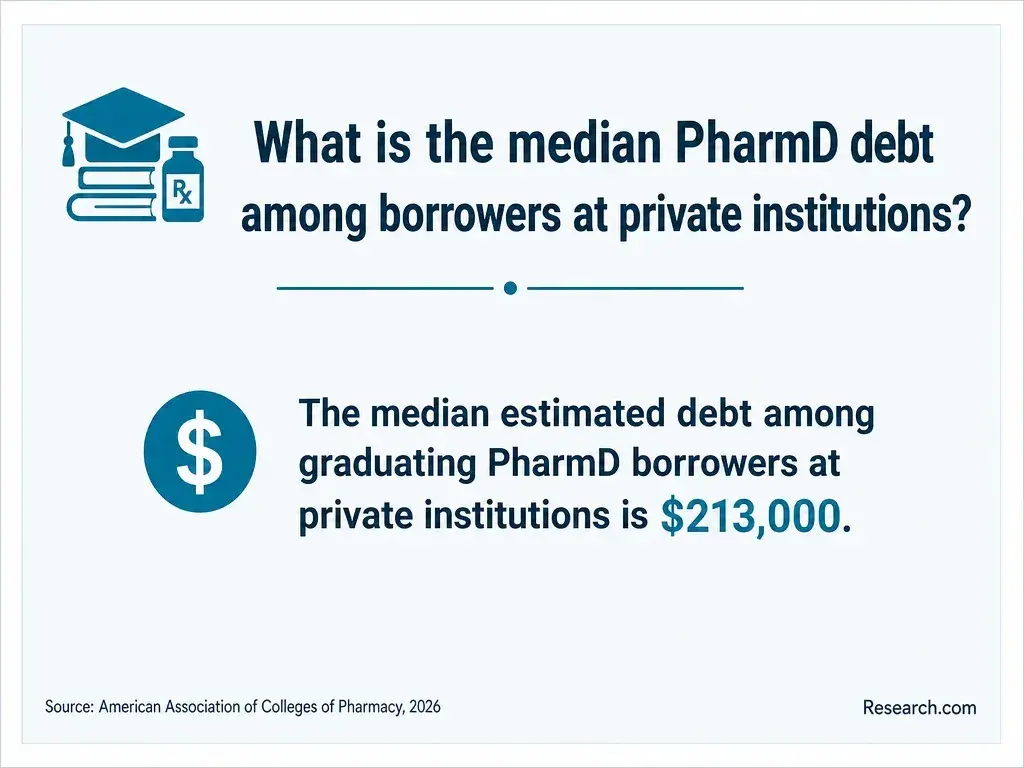
A scholarship can make an online Doctor of Pharmacy (Pharm.D.) program more manageable, but the advertised award may cover only a fraction of the cost of required travel, labs, and clinical training. Incoming students also need to know whether an award applies to their specific pathway and whether it renews. This guide explains where to look, what to ask before accepting an offer, and how to compare scholarships against the full cost of earning a degree that can lead toward pharmacist licensure.
Key Things You Should Know
- Start with the pharmacy school's current incoming-student awards: a scholarship offered by the institution may not apply to its online or distance cohort.
- For 2026-27, compare written award offers against tuition, required travel, clinical-placement costs, and the program's published cost of attendance - not tuition alone.
- Federal borrowing rules changed for many new graduate and professional students beginning July 1, 2026; confirm your individual aid eligibility before counting loans as a solution to a funding gap.
What PharmD scholarships are available for incoming online students?
Incoming students may encounter school-funded merit scholarships, need-based institutional grants, awards tied to service or a particular community, and outside scholarships from pharmacy associations or other organizations. The crucial distinction is eligibility for the distance cohort: an award advertised to "pharmacy students" may be limited to campus-based students, continuing students, or applicants who meet a separate deadline.
Begin with the financial aid and admissions pages for the schools on your shortlist, then ask for the current award terms in writing. A guide to affordable pharmacy doctoral education can help identify cost questions, but it cannot establish your eligibility for a particular scholarship. Treat any award without a current application, eligibility statement, and amount or selection process as a lead - not money already secured.
How much can online PharmD scholarships reduce tuition costs?
There is no standard discount. One award may reduce a single term's tuition; another may renew annually if the student maintains specified academic progress. An award described as covering tuition might not pay mandatory fees, campus-immersion travel, or housing near clinical rotations. Compare the total award over the program, not just its first-year value.
The following cost categories show why a larger tuition award does not always produce a lower overall bill. Use the school's current charges and your likely travel needs when comparing offers.
| Cost category | What to establish |
| Professional-program tuition and mandatory fees | Charges for the online cohort and which charges the award covers |
| Campus attendance | Required lab or immersion trips and their estimated travel and lodging costs |
| Experiential education | Potential travel, housing, and lost work time during in-person rotations |
| Other requirements | Books, technology, background checks, immunizations, and later licensure expenses |
For a broader view of pharmacy program tuition and length, keep degree type and required attendance in view: a shorter pharmacy-related credential is not necessarily a Pharm.D. or a route to pharmacist licensure.
Which online PharmD programs offer scholarships to new students?
No fixed list reliably answers this for every incoming class. Schools can change award funding, deadlines, and distance-cohort eligibility between admission cycles; a university-wide scholarship page is not proof that its professional Pharm.D. students qualify. The most useful answer is the one a school provides for your entry term and delivery pathway.
Use a shortlist of online Pharm.D. pathways for future pharmacists to identify programs to investigate, then request each school's current incoming-student scholarship list. Ask whether awards are automatic with admission or require a separate application, whether online students compete with campus students, and whether funding remains available when offers are issued. Do not choose a program based on an unconfirmed award.
Requirements depend on the award. Common criteria include admission to a particular Pharm.D. cohort, academic performance, demonstrated financial need, residency, service commitments, or continued full-time enrollment. A scholarship can also require satisfactory academic progress or prohibit stacking with another institutional award. Meeting a stated minimum does not guarantee selection.
Check scholarship eligibility separately from admission eligibility. Pre-pharmacy prerequisites are undergraduate coursework completed before the professional Pharm.D. curriculum; a school decides whether prior courses satisfy its admissions rules. Its pharmacy degree credit transfer policies may affect your remaining cost, but accepted prerequisite credit does not automatically transfer into the professional curriculum or qualify you for an award intended for first-time entrants.
Start before the admission deadline. Some schools consider admitted applicants automatically; others require a separate form, essay, financial information, or earlier priority date. Pharmacy College Application Service (PharmCAS) requirements, if the school uses PharmCAS, are distinct from its scholarship application and any supplemental admissions steps.
This sequence prevents an otherwise eligible applicant from missing funding:
- Request the scholarship list and deadlines for your exact online cohort and intended start term.
- Confirm whether admission, a deposit, or a completed financial aid application must come first.
- Submit each required item through the specified portal and keep confirmation of receipt.
- Before accepting, request the award amount, payment schedule, renewal rules, and interaction with other aid in writing.
Students still finishing prerequisites can use pharmacy program admission planning to frame questions about conditional admission. They should also ask whether unfinished coursework affects scholarship consideration.
Usually, yes: filing the Free Application for Federal Student Aid (FAFSA) can establish eligibility for federal aid while a school or outside organization considers you for a scholarship. That does not mean every form of aid is available to every Pharm.D. student. The school determines your aid package under applicable rules, including its cost of attendance and your student classification.
Federal loan rules changed for many new graduate and professional borrowers beginning July 1, 2026, and transitional provisions may depend on prior enrollment and borrowing. Do not rely on an older description of Direct Unsubsidized Loan limits or Grad PLUS availability. Ask the financial aid office for a 2026-27, student-specific aid estimate and whether a new scholarship would replace loans, reduce another award, or change the remaining balance. If a shorter route appears to lower borrowing, verify that pharmacy programs with a fast timeline award the credential your career goal actually requires.
The Accreditation Council for Pharmacy Education (ACPE) accredits professional pharmacy degree programs, including eligible distance pathways; it does not accredit individual students or award pharmacist licenses. A scholarship's own terms determine eligibility, but ACPE status is essential to evaluating a program intended to prepare students for U.S. pharmacist licensure. Verify the specific professional program and its current status in ACPE's official records before committing.
Check three separate issues: ACPE professional-program accreditation, the institution's accreditation, and authorization to enroll you from your state. Also ask about approval and availability of clinical placements where you expect to train. Even accelerated pharmacy school options require these separate checks; a shorter schedule or scholarship does not resolve them.
Requirements vary by school. Applicants generally need specified pre-professional courses, which may include science courses with labs, plus transcripts and school-specific application materials. A completed bachelor's degree is not universally required. Schools set their own policies on grades, course age, interviews, recommendations, courses in progress, and whether applicants use PharmCAS. The Pharmacy College Admission Test (PCAT) was retired in January 2024 and is not a current exam to schedule.
Online delivery does not remove hands-on requirements. Confirm scheduled online classes, campus labs or immersions, and in-person introductory and advanced pharmacy practice experiences (IPPEs and APPEs). Ask who approves placements and whether travel, intern registration, or time away from work may be necessary. If you are assessing how competitive is pharmacy school admission, distinguish a school's minimum requirements from the credentials of applicants who actually receive admission and scholarships.
Graduating from an ACPE-accredited Pharm.D. program is an educational step toward pharmacist licensure, not a license itself. Graduates must satisfy the requirements of the state or jurisdiction where they seek to practice, including the North American Pharmacist Licensure Examination (NAPLEX) and any applicable jurisprudence examination. Do not assume every jurisdiction uses the MPJE: some began transitioning to the UMPJE in 2026. State boards determine the applicable process.
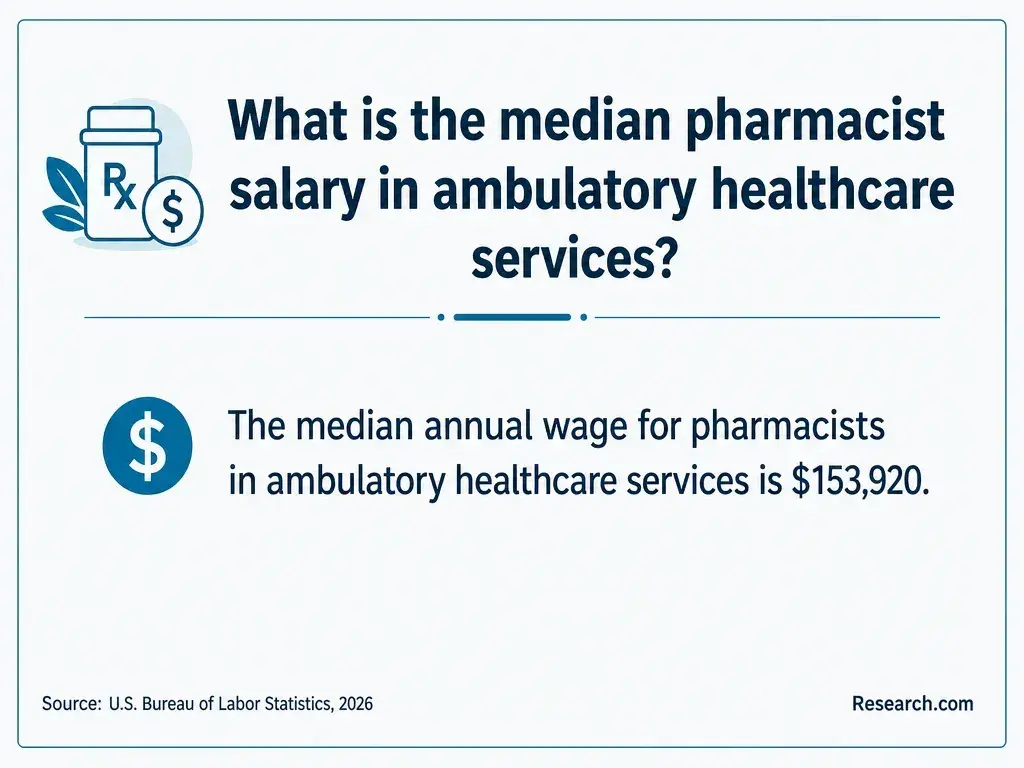
The Bureau of Labor Statistics reports pharmacists' median annual pay at $140,910 in May 2025 and projects 5% growth for 2025-2035. These occupation-wide figures are context for the investment, not an expected salary or return for a new graduate. A residency or fellowship may support particular career goals but is distinct from licensure and is not universally required. Students exploring Doctor of Pharmacy pathways for career transitions should also distinguish pharmacist roles from pharmacy technician work, which does not ordinarily require a Pharm.D.
How should students compare online PharmD scholarships and program costs?
Compare offers using the same entry term and the same expected completion path. This worksheet separates money a school has committed from costs you still need to estimate; fill in one column for each program before paying a deposit.
Favor a higher-priced program only if its verified scholarship and other advantages justify the remaining cost for you. A lower tuition quote may lose its advantage when repeated travel or limited placement flexibility is included. Use doctoral degree length comparisons cautiously: program duration affects living costs and time away from earnings, but another doctoral credential cannot substitute for the professional Pharm.D. required on the U.S.-educated pharmacist pathway. Get unresolved award and placement questions answered in writing before choosing.
Other Things You Should Know About PharmD
Tax treatment depends on how funds are used and the student's circumstances. Scholarship amounts used for expenses other than qualified tuition and required educational expenses may be taxable. Keep the award terms and expense records, and consult current IRS guidance or a tax professional.
Possibly. Employer tuition assistance is separate from a school scholarship and may come with annual limits, grade requirements, or a commitment to remain employed. Check whether the benefit covers professional-degree tuition and whether the program's rotations can fit your work obligations.
Not necessarily. An award may be tied to a particular entering cohort or budget year. Request written confirmation of whether it carries over before accepting a deferred place.
Generally, students should report outside awards to the financial aid office. The school may need to adjust the aid package if total assistance exceeds allowable costs; reporting the award also lets the office explain which part of the package would change.
- School-Determined Requirements - FSA Partner Connect https://fsapartners.ed.gov/knowledge-center/fsa-handbook/2026-2027/vol1/ch1-school-determined-requirements
- Eligibility Requirements | Federal Student Aid https://studentaid.gov/understand-aid/eligibility/requirements
- Scholarships, Grants & Loans | Albany College of Pharmacy and Health Sciences https://www.acphs.edu/admissions-aid/tuition-aid/scholarships-grants-loans/
- Financial Aid & Scholarships - Doctor of Pharmacy https://pharmacy.wisc.edu/pharmd/financial-aid-scholarships/
- College of Pharmacy and Pharmaceutical Sciences | utoledo.edu https://www.utoledo.edu/pharmacy/prospective/scholarships.html
- PharmD FAQs - UNC Eshelman School of Pharmacy https://pharmacy.unc.edu/education/pharmd/pharmd-admissions-faqs/
- PharmD Online Frequently Asked Questions - Pharmacy | Extended & Distance Education https://www.su.edu/pharmacy/programs/pharmd-traditional-program/pharmd-online-frequently-asked-questions/
- R. Ken Coit College of Pharmacy | PharmD | University of Arizona Office of Scholarships & Financial Aid https://financialaid.arizona.edu/types-of-aid/graduate/pharmd
- Key Financial Aid Terms | passhe.edu https://www.passhe.edu/students/financial-aid-terms.html
- Scholarships and Financial Aid - UW School of Pharmacy https://sop.washington.edu/pharmd/student-affairs/financial-aid-scholarships-awards/


