Pharm.D. Medication Safety Coursework

Co-Founder and Chief Data Scientist
Medication safety is a compelling reason to pursue pharmacy school, but a course title alone tells you little about how well a program prepares students to prevent errors. Prospective Doctor of Pharmacy (Pharm.D.) students need to know where safety skills appear in the curriculum, whether they practice them with patients, and what training follows graduation.
This guide explains what to look for in coursework and rotations, how to compare program costs and formats, and when a Pharm.D. is - or is not - the right route to a medication safety career.
Key Things You Should Know
- Strong medication safety training combines error prevention, clinical decision-making, communication, and supervised practice, a course named "Medication Safety" is not the only way a program can teach it.
- An Accreditation Council for Pharmacy Education (ACPE)-accredited Pharm.D. provides the professional education pathway, but graduation alone does not confer pharmacist licensure.
- The Bureau of Labor Statistics reports $140,910 in median annual pay for pharmacists in May 2025, that occupation-wide figure is not a salary estimate for medication safety specialists.
What is PharmD medication safety coursework?
Pharm.D. medication safety coursework teaches students to recognize, prevent, investigate, and respond to risks in medication use. It connects drug knowledge with practical systems: prescribing, dispensing, administration, monitoring, documentation, and communication among patients and care teams.
A school may teach these skills in a dedicated course or across pharmacotherapy, patient-care labs, simulations, and rotations. Undergraduate pre-pharmacy science courses build a foundation, but they are not a substitute for professional Pharm.D. training. When reviewing pharmacy school prerequisites and eligibility, keep admission requirements separate from the safety skills taught after enrollment.
Look for repeated opportunities to identify risks and explain a safe response, not merely a medication safety topic listed once in a course description.
What topics are covered in PharmD medication safety courses?
Content varies by program, but a useful curriculum addresses both individual clinical decisions and the systems in which errors occur. The table shows what common topics should enable a student to do.
| Topic | Practical learning goal |
| Medication reconciliation | Find discrepancies when a patient moves between care settings. |
| Prescribing and dispensing risks | Identify problems involving dose, interactions, allergies, labeling, or similar-looking products. |
| Monitoring and follow-up | Recognize when a treatment needs laboratory monitoring, reassessment, or escalation. |
| Error reporting and systems improvement | Analyze contributing factors and propose changes without assuming one person caused an entire failure. |
| Patient and team communication | Explain a concern clearly, confirm understanding, and document an appropriate response. |
Ask whether students practice these tasks in assessed cases, simulations, and supervised patient care. If you have prior college credit, remember that pharmacy degree programs for transfer students set their own credit-evaluation rules; a transferred science course does not automatically replace professional safety training.
How does medication safety coursework prepare students for pharmacy licensure?
Safety coursework develops knowledge and judgment relevant to pharmacist practice, including evaluating medication orders, identifying harmful interactions, counseling patients, and responding to problems. Supervised introductory pharmacy practice experiences (IPPEs) and advanced pharmacy practice experiences (APPEs) give students opportunities to apply those skills in practice settings.
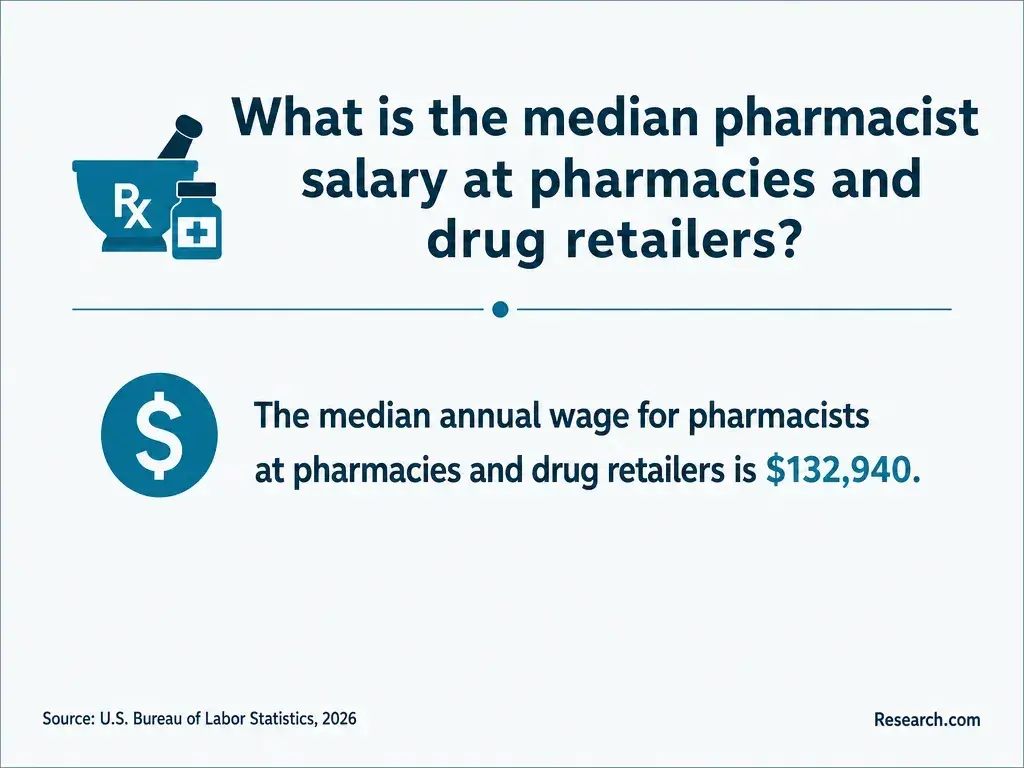
Licensure is a separate process. Graduates generally must meet their state board's eligibility requirements and pass the North American Pharmacist Licensure Examination (NAPLEX), along with any jurisdiction-specific law examination or other requirements. A jurisdiction may use the Multistate Pharmacy Jurisprudence Examination (MPJE), the Uniform MPJE (UMPJE), or another approach; applicants must check the board where they intend to practice. Passing an exam does not itself issue a license.
Even if a student can finish an online pharmacy degree sooner in a different type of pharmacy program, that does not waive Pharm.D. education or state pharmacist licensing requirements. Compare credentials by the role they qualify you to pursue, not by completion time alone.
ACPE accredits professional pharmacy education programs, not individual pharmacists. Within an accredited Pharm.D. program, students may encounter medication safety through classroom cases, skills labs, simulations, IPPEs, and APPEs. The specific sequence and assessment methods differ by school; accreditation alone does not tell you how much hands-on safety practice a particular student receives.
Use these questions when requesting a current curriculum map or speaking with a program. They reveal whether safety is practiced and assessed, rather than simply mentioned.
- Where do students practice medication reconciliation, error investigation, and communication about a potential error?
- Which activities require individual performance or feedback, rather than attendance alone?
- How are safety skills evaluated during IPPEs and APPEs, and who coordinates or approves rotation sites?
- What happens if a student cannot obtain a required placement near home?
Verify the program's current ACPE status separately from the university's institutional accreditation. For a hybrid option, guidance on how to choose an online Pharm.D. program can help frame questions, but confirm the school's actual labs, campus visits, and rotations directly.
If your goal is to work as a pharmacist in medication safety, the usual U.S.-educated route is prerequisite study, an ACPE-accredited professional Pharm.D., and state pharmacist licensure. A bachelor's degree in biology, a pharmacology degree, or pharmacy technician training does not independently qualify someone for pharmacist licensure.
After licensure, pharmacists may enter relevant roles directly or pursue postgraduate training. A postgraduate year one (PGY1) residency develops broad practice skills; a PGY2 residency offers more focused training. Fellowships typically emphasize a defined area such as research or industry. Requirements vary by position, and neither a residency nor a fellowship is universally required for medication safety work. Specialty board certification, where relevant, is a separate credential - not a pharmacist license.
Some accelerated Pharm.D. degree options compress the academic calendar. Before choosing one, compare its prerequisite requirements, assessment pace, experiential schedule, and time available for safety-focused projects. Faster completion is useful only if its workload and placements are workable for you.
Requirements vary by school. Programs specify their own prerequisite courses and labs, acceptable grades, application materials, and policies on older or transferred coursework. Some admit students without a completed bachelor's degree; others have different entry pathways. Pre-professional credits should not be confused with credits earned in the professional Pharm.D. curriculum.
Many schools use the Pharmacy College Application Service (PharmCAS), but applicants should verify each school's application route, deadlines, supplemental requirements, and interview process. The Pharmacy College Admission Test (PCAT) was retired in January 2024 and should not be treated as a currently available admissions exam.
If a prerequisite will still be in progress when you apply, check the school's completion deadline and matriculation conditions. Guides to pharmacy schools and prerequisite completion can help identify questions to ask, but only the receiving program can confirm whether your courses satisfy its rules.
A conventional professional Pharm.D. curriculum commonly takes four academic years after prerequisite study; accelerated calendars may shorten elapsed time. Your actual timeline depends on prerequisites, course sequencing, and required rotations. Compare pharmacy program tuition and length using the same starting point: a shorter professional curriculum may not save time if you first need additional prerequisites.
Published tuition is only part of the cost. This table separates expenses that can change the financial comparison between programs.
| Cost category | What may affect your total |
| Academic charges | Tuition, mandatory fees, and prerequisite courses still needed. |
| Learning and compliance | Books or clinical resources, technology, background checks, and immunizations. |
| Experiential training | Travel, temporary housing, and time away from paid work during rotations. |
| After graduation | Licensure application and examination expenses. |
Request a current, student-specific cost of attendance and financial aid estimate. Federal borrowing rules changed for many new graduate and professional borrowers beginning July 1, 2026; do not assume an older loan package or Grad PLUS access will apply to you. Confirm your classification and eligibility with each school's financial aid office before committing.
They can be, provided the program offers substantive skills assessment and feasible in-person training. "Online" describes some instruction, not necessarily the entire degree. Scheduled live classes, campus-based labs or immersions, and in-person IPPEs and APPEs may still be required. A remote classroom also does not guarantee a rotation near home or one that fits around full-time work.
Before comparing online Doctor of Pharmacy tuition, ask for the current schedule of campus attendance, assessments, and rotations. Find out who arranges placements, whether travel is likely, and which student obligations - such as intern registration, background checks, or immunizations - apply. Check ACPE professional-program accreditation, the school's authorization to enroll you in your state, and your intended state board's licensure rules as distinct questions.
Treat any claim that a pharmacist-qualifying Pharm.D. can be completed entirely from home, without supervised in-person practice, as a reason to request written clarification.
Licensed pharmacists use medication safety skills in community, hospital, ambulatory care, and other practice settings. Some hold dedicated medication safety or quality-improvement positions, investigating reports, examining workflow risks, developing safeguards, and helping teams evaluate whether changes work. Hiring requirements and job titles vary; dedicated positions may favor substantial practice experience or relevant postgraduate training.
A biology or chemistry graduate considering pharmacy doctorate options after biology should distinguish two goals. If the goal is to make pharmacist-level medication decisions, pursue the Pharm.D. and licensure route. If the goal is medication safety research, data analysis, or operational support without practicing as a pharmacist, a different degree or employer-based training may be more direct.
What salary and job outlook can medication safety pharmacists expect?
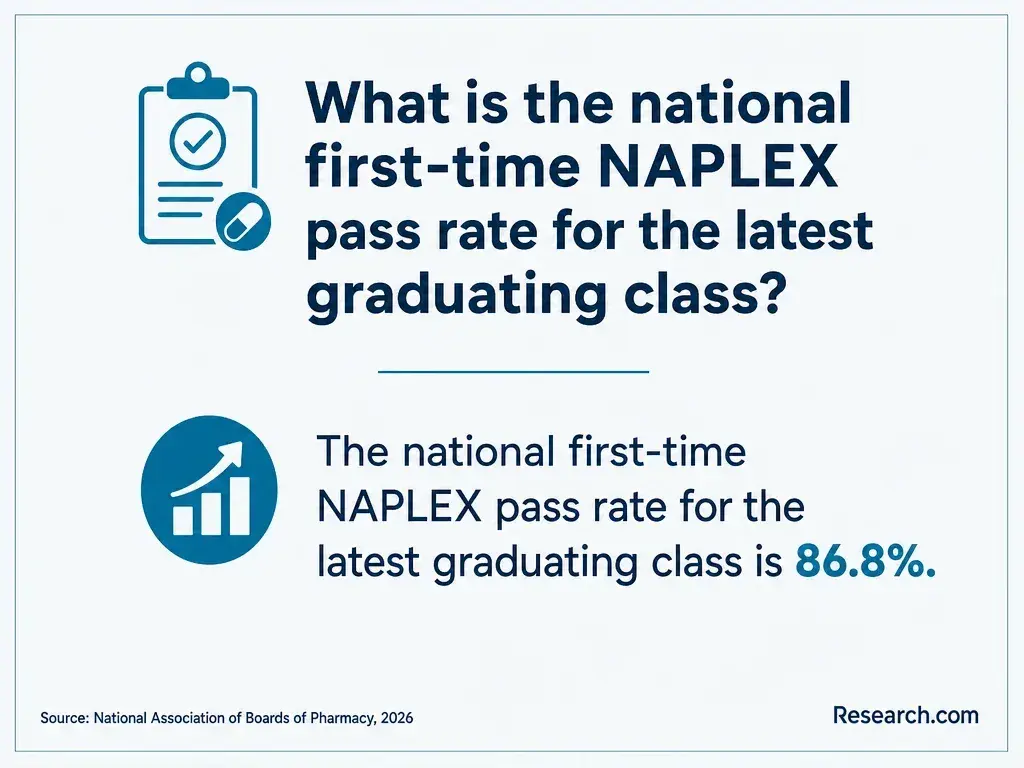
The Bureau of Labor Statistics reports median annual pay of $140,910 in May 2025 for pharmacists. It projects 5% growth from 2025-2035, with about 12,500 openings per year. These figures cover pharmacists across settings, not medication safety specialists specifically; they cannot predict a particular role's pay, hiring prospects, or return on a Pharm.D.
Weigh those occupation-wide figures against your likely education costs and the work you want to do. If pharmacist licensure is not necessary for your goal, compare alternatives, including short doctoral degree completion options - by their actual job requirements. An unrelated doctorate may support a research career, but it cannot replace the professional Pharm.D. and licensure pathway for pharmacist practice.
Other Things You Should Know About PharmD
It is a problem caught before it reaches the patient. Studying near misses can reveal a risky process even when no patient was harmed.
Only as permitted by the school and training site's privacy rules. Ask a supervisor how to remove identifying information and obtain any required approval before using a case.
Not automatically. A program determines whether an experience meets its supervised rotation requirements; prior employment alone should not be assumed to satisfy them.
No independent authority should be assumed. A student must follow applicable law, site policy, and the supervising pharmacist's instructions for escalating and resolving the concern.
- Analysis of Intervention Employability in Pharmacy-Related Medication Safety Reports at a Tertiary Medical Center - PMC https://pmc.ncbi.nlm.nih.gov/articles/PMC10913882/
- Medication Errors and Adverse Drug Events | PSNet https://psnet.ahrq.gov/primer/medication-errors-and-adverse-drug-events
- Medication Reconciliation - Patient Safety and Quality - NCBI https://www.ncbi.nlm.nih.gov/books/NBK2648/
- Program: Doctor of Pharmacy - Palm Beach Atlantic University https://catalog.pba.edu/preview_program.php
- Research article Medication competence: a concept analysis | sciencedirect.com https://www.sciencedirect.com/science/article/abs/pii/S0260691722000284
- Interprofessional education focused on medication safety | tandfonline.com https://www.tandfonline.com/doi/full/10.1080/13561820.2021.2015301
- Curriculum - UW School of Pharmacy https://sop.washington.edu/pharmd/curriculum/
- Advanced Pharmacy Practice Experiences (APPE) | buffalo.edu https://pharmacy.buffalo.edu/academics/pharmd/experiential-education/advanced-pharmacy-practice-experiences--appe-.epa-and-educational-outcomes.html
- PharmD Curriculum | CU School of Pharmacy https://pharmacy.cuanschutz.edu/degreesandprograms/pharmd/curriculum
- Pharmacist Well Being | Patient Safety https://nabp.pharmacy/news/blog/promoting-pharmacist-well-being-and-patient-safety-with-just-culture-approach/