How to Research Pharmacy School Faculty and Teaching Support

Co-Founder and Chief Data Scientist
A pharmacy school can have an impressive faculty directory yet leave students struggling to get feedback, academic help, or reliable clinical placements. If you are comparing Doctor of Pharmacy (Pharm.D.) programs, you need to know who teaches, who supports students, and whether that support reaches the practice settings where much of your training occurs.
This guide shows you how to check evidence beyond promotional claims, ask useful questions, and decide whether a program's teaching model fits your learning needs and schedule.
Key Things You Should Know
- Check the current Accreditation Council for Pharmacy Education (ACPE) status of the professional Pharm.D. program, then investigate teaching quality separately; accreditation is a baseline, not a ranking of faculty access.
- Look for named instructors, a clear advising and tutoring process, and dependable introductory and advanced pharmacy practice experience (IPPE and APPE) support - not just an attractive student-to-faculty ratio.
- Ask how quickly students receive help when a course or rotation goes wrong, and compare the answer with student accounts and published outcomes. The Bureau of Labor Statistics projects 5% growth in pharmacist employment from 2025 to 2035, but workforce demand cannot compensate for weak training.
How can you evaluate pharmacy school faculty qualifications and expertise?
Start with the current faculty directory and course listings. Identify who teaches foundational sciences, therapeutics, patient-care skills, and pharmacy practice. A professional degree should draw on relevant scientific and clinical expertise; a faculty member's title alone does not show whether they teach the subjects you will study or are available to students.
Compare each person's degree, practice background, teaching responsibilities, and recent professional activity. For clinical faculty, look for a current practice role or other evidence that they remain connected to patient care. For research faculty, check whether their work relates to the courses or projects you might pursue. If you are moving from a science major into pharmacy, pharmacy doctorate options after chemistry can help frame which existing strengths you bring - and which patient-care skills you need faculty to help you build.
Choose evidence of relevant teaching and accessible mentorship over a long publication list with no clear connection to student instruction. Ask who actually teaches required classes; a listed faculty expert may not be your instructor.
What teaching support should pharmacy students expect from faculty and staff?
Useful support is a system, not a promise that instructors have an open-door policy. Ask how students get academic advising, course tutoring, skills-lab feedback, disability accommodations, technical assistance, and help resolving rotation problems. Find out whether support is available when students need it, including during demanding clinical periods.
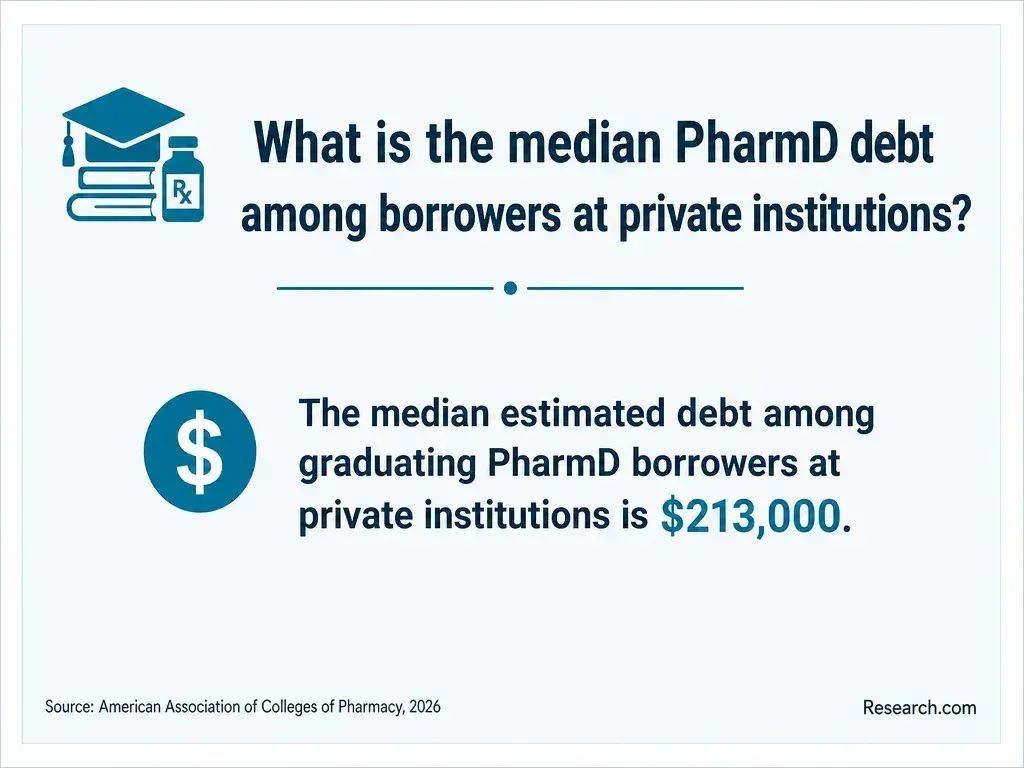
These services can affect the real cost of attendance. A lower tuition figure may be less compelling if students must pay for substantial travel or spend extra time repeating coursework without timely academic help. Compare support alongside total expenses when reviewing Doctor of Pharmacy programs with manageable tuition.
Request the student handbook or support-services guide. A strong answer identifies a responsible office, a way to contact it, and what happens if the first intervention does not work. Be cautious if every concern is directed vaguely to "your professor" without a backup process.
How does ACPE accreditation assess pharmacy faculty and educational quality?
ACPE accredits professional pharmacy education programs and evaluates matters that include curriculum, personnel, student services, assessment, and experiential education. Check the specific Pharm.D. program's current listing and status in ACPE's official directory, including any publicly available status details. Do not substitute a university's institutional accreditation for ACPE professional-program accreditation.
Accreditation establishes that a program is evaluated against professional standards; it does not tell you which instructor gives the best feedback or guarantee an individual student's success. That distinction matters when comparing admission pathways for pharmacy students: an approachable admissions process is not evidence of either weak or strong teaching.
For an online or hybrid option, also check state authorization where you will study. Authorization, ACPE accreditation, and eligibility for pharmacist licensure are different questions. A Pharm.D. graduate must still satisfy the applicable state board's licensing requirements, including required examinations and other conditions.
Review the published course sequence, not just a list of topics. Look for how students move from drug science and therapeutics to patient assessment, medication safety, communication, and supervised practice. Undergraduate pre-pharmacy prerequisites prepare students for admission; they are not the professional Pharm.D. curriculum.
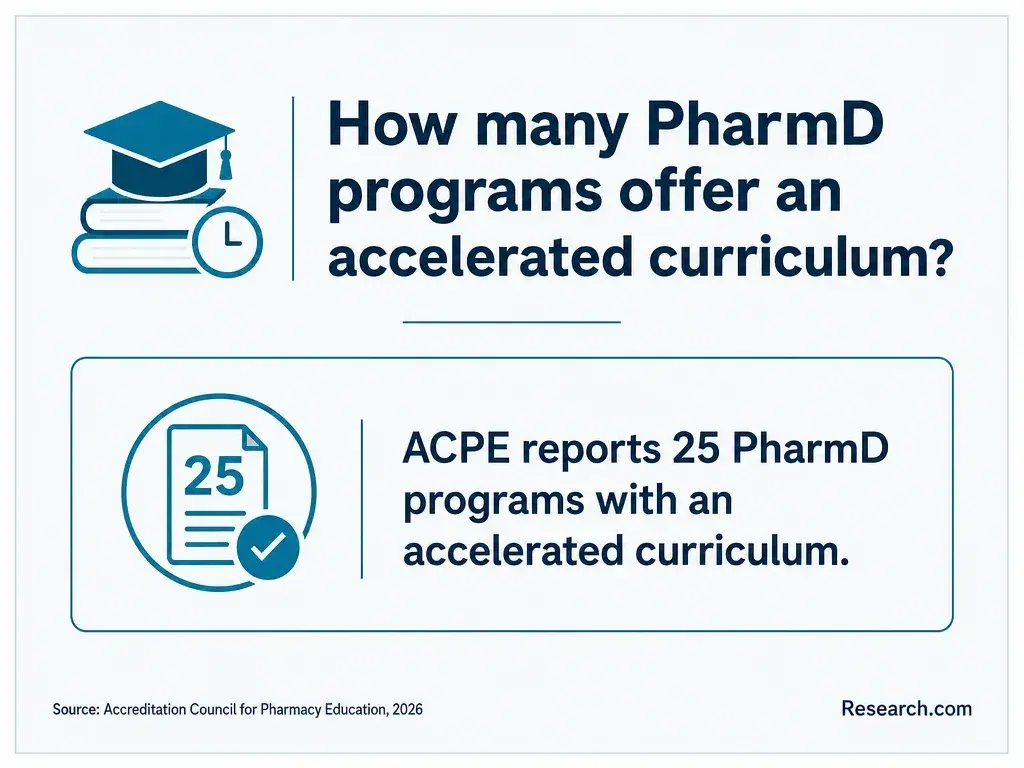
Ask how lectures, case discussions, simulations, laboratory work, and assessments connect. A program that advertises active learning should be able to describe what students do, how instructors observe their work, and when they receive corrective feedback. If you are considering Doctor of Pharmacy accelerated tracks, check whether the compressed calendar changes access to tutoring, remediation, breaks, or rotation planning - not merely the graduation date.
Examine course sequencing before assuming previous college credit will shorten the professional program. The receiving school decides how prior coursework applies, and credit toward admissions prerequisites is different from transfer credit within a Pharm.D. curriculum.
Compare the support a student can actually use, not the label on the delivery format. Online instruction may include scheduled live classes, while either format can require in-person skills work and clinical rotations. When you review online pharmacy doctorate programs, verify each option's credential and requirements; an online pharmacy-related doctorate is not necessarily a professional Pharm.D.
The comparison below separates access to teaching from location. Ask each school for its current schedule and student-support policies before treating any feature as guaranteed.
| Support feature | Online or hybrid delivery | Campus-based delivery |
| Instructor interaction | May combine live meetings, messaging, and virtual office hours | May combine classroom discussion and in-person office hours |
| Skills practice | May require scheduled campus visits or other approved in-person work | Usually uses scheduled campus labs and assessments |
| Technology support | Access to classes and feedback depends heavily on platform reliability | Digital systems still matter, but more teaching occurs on site |
| Clinical supervision | Requires approved in-person experiential arrangements | Requires approved in-person experiential arrangements |
Neither format is automatically more flexible. Confirm live-attendance rules, campus visits, feedback turnaround, technical help, and whether rotation sites can be arranged near you before planning work or caregiving around the program.
There is no single ratio that proves a Pharm.D. program provides good support. A published institution-wide ratio may include students and instructors outside pharmacy and may say little about a large required therapeutics course or a small skills lab. Ask for the size of required classes and lab groups, who grades patient-care work, and how students book time with faculty.
Access matters especially in a compressed schedule, when a delayed answer can affect the next assessment. If you are also considering accelerated online doctoral education, confirm the credential first: a shorter doctorate in another field is not a substitute for the professional Pharm.D. pathway to pharmacist licensure.
A useful comparison is concrete: one school may have larger lectures but frequent small-group coaching; another may advertise a favorable ratio yet rely on limited office hours. Ask current students how often they receive substantive feedback before the next assignment or exam.
IPPEs introduce supervised pharmacy practice during professional study. APPEs provide more advanced supervised experiences, often across multiple practice settings. Faculty, experiential education staff, and site preceptors have different roles; ask who selects and approves sites, prepares preceptors, evaluates students, and intervenes when a placement is not working.
Clarify whether the school assigns sites or expects students to identify potential placements, whether local placements are possible, and who bears travel or temporary-housing costs. Students may also need intern registration, background checks, immunizations, and compliance with site-specific requirements. Rules and availability vary by state, school, and site.
Be especially careful with claims about online pharmacy degree duration. A shorter pharmacy-related program may lead to a different credential; professional Pharm.D. experiential training cannot simply be replaced by remote coursework or assumed to fit around full-time employment.
Ask the same questions at each school, ideally of both a faculty member and a current student. Specific examples are more informative than general assurances about being supportive.
- Who teaches the required courses, and how do students receive feedback on clinical reasoning and patient counseling?
- What happens if a student fails an assessment or needs help during a rotation, and who makes the next decision?
- How are academic advisers assigned, and can students meet faculty outside scheduled class time?
- Who secures IPPE and APPE placements, and what costs or travel might students have to manage?
- May I review the current student handbook, course sequence, and experiential education policies?
Keep admissions questions separate. If you are exploring pharmacy degree options without every prerequisite completed, ask admissions which courses may be in progress when you apply and which must be finished before enrollment. Faculty enthusiasm cannot override the school's published admission conditions.
Cross-check directory biographies against current course schedules, institutional profiles, recent publications, and publicly available professional or practice affiliations. Date matters: a past hospital position does not establish a current clinical role. Ask the school to clarify who will teach you if a profile has not been updated.
For prerequisite questions, distinguish faculty expertise from formal credit decisions. A science instructor may explain whether prior coursework prepared you for a class, but admissions or the designated evaluator determines how credits satisfy program rules. When you evaluate credits for pharmacy prerequisites, request a written determination rather than relying on an informal conversation.
Use the same standard for impressive research claims: verify that the work is attributable to the named person and relevant to the opportunity offered to students. Publication volume alone does not show that undergraduates or Pharm.D. students can join projects or receive mentoring.
How does faculty support influence pharmacy school outcomes and career preparation?
Good teaching support can help students identify gaps early, practice clinical judgment, and navigate difficult rotations. It cannot guarantee graduation, a license, a residency, or employment. Request the school's recent program-level completion, North American Pharmacist Licensure Examination (NAPLEX), and postgraduate-placement information, including the years covered and how each measure was calculated. Consider trends and context rather than treating one outcome figure as a faculty ranking.
The Bureau of Labor Statistics reports median annual pay of $140,910 in May 2025 for pharmacists. That occupation-wide figure is not an expected starting salary or proof that a particular program is worth its cost. Compare tuition, required fees, rotation-related expenses, time away from work, and available support when judging pharmacy program value and duration.
Finally, match support to your intended path. A prospective community pharmacist may prioritize broad supervised practice and counseling feedback; a student interested in residency may also value research access and application mentoring. Residencies and fellowships are postgraduate opportunities, while specialty board certification is a separate credential. None replaces state pharmacist licensure, and none is required for every pharmacist job.
Other Things You Should Know About PharmD
Not necessarily. Schools set their own prerequisite coursework and degree requirements. Check the current admissions policy for each program rather than assuming a bachelor's degree is required everywhere.
No. The Pharmacy College Admission Test was retired in January 2024. Review each school's current application requirements instead of relying on older advice about PCAT scores or waivers.
No. The NAPLEX is part of the licensing process, but the state board determines all requirements and issues the license. Jurisprudence examinations and other conditions vary by jurisdiction.
No. Pharmacy technician and pharmacist are different occupations with different education and legal requirements. A technician credential does not replace a professional Pharm.D. or the applicable pharmacist licensing process.
- Student evaluations of teaching and the development... - PMC https://pmc.ncbi.nlm.nih.gov/articles/PMC8858452/
- Minimum qualifications for clinical pharmacy practice faculty | nih.gov https://pubmed.ncbi.nlm.nih.gov/24877188/
- Supplemental Instruction | Xavier University of Louisiana https://www.xula.edu/saso/advising-supplemental-instruction.html
- Experiential Learning Manual - School of Pharmacy https://www.pharmacy.pitt.edu/experiential-learning-manual
- Pharm.D. Experiential Education - College of Pharmacy https://pharmacy.utexas.edu/programs/pharmd/experiential
- School of Pharmacy, Promotion and Tenure for Tenure Track Faculty, Department of Pharmacy Practice | KU https://services.ku.edu/TDClient/818/Portal/KB/Article/21061/School-of-Pharmacy-Promotion-and-Tenure-for-Tenure-Track-Faculty-Department-of-Pharmacy-Practice
- Supplemental Instruction | Academic Achievement Center https://achieve.uconn.edu/supplemental-instruction/
- Do All Pharmacy Programs Offer Experiential Education? | Belmont University https://www.belmont.edu/stories/articles/2024/pharmacy-program-experiential-education.html