Pharmacist Demand in Rural and Underserved Areas

Co-Founder and Chief Data Scientist
A rural pharmacy job can offer substantial patient-care responsibility, but a vacancy does not automatically mean the position - or the training needed to reach it - is a good fit. For prospective Pharm.D. students and pharmacists considering underserved communities, the decision depends on local access needs, clinical support, state practice rules, education costs, and the employer's expectations.
This guide explains what national demand figures can and cannot tell you, how to prepare for rural practice, and what to verify before choosing a program or accepting a job.
Key Things You Should Know
- The Bureau of Labor Statistics projects 5% growth in pharmacist employment for 2025-2035, but national growth does not establish demand in a particular rural town.
- The median annual pay for U.S. pharmacists was $140,910 in May 2025; a rural offer should also be judged against workload, benefits, debt, and local living costs.
- For rural practice, choose an ACPE-accredited Pharm.D. pathway with suitable clinical placements, then verify the licensing and scope-of-practice rules in the state where you intend to work.
What is the demand for pharmacists in rural and underserved areas?
Rural and underserved communities need pharmacists where residents have difficulty obtaining medications, counseling, or other pharmacy services. But local need is not the same as an available, funded job. A community may have limited pharmacy access while its employers have few open positions or cannot support another pharmacist.
The Bureau of Labor Statistics projects about 12,500 pharmacist openings per year nationwide during 2025-2035. That figure includes openings across practice settings and locations, not a count of rural vacancies. To assess a target area, compare current job postings, employer staffing plans, pharmacy access, and the services the position is expected to provide.
A shortage should not push you toward short doctoral degree completion options without checking the credential: a doctorate in another field does not replace the professional Pharm.D. and state licensure needed to work as a pharmacist.
Why are pharmacists important in underserved communities?
When patients must travel farther for care, a pharmacist may be an especially accessible source of medication counseling, adherence support, immunizations where authorized, and referrals. Rural pharmacists also coordinate with prescribers when a medication is unavailable or a treatment plan is difficult for a patient to follow.
The role can be broad, but it is not unlimited. Immunization, prescribing, testing, and collaborative-practice authority depend on state law, required training, and workplace arrangements. Students drawn to this work should seek supervised experience with diverse patients rather than assume every rural position offers the same clinical scope.
Financial preparation matters as well: a graduate carrying substantial debt may have less flexibility to accept a position in a small community. Exploring affordable pharmacy studies with a focused timeline can be useful, provided the comparison includes the actual Pharm.D. credential, accreditation, and clinical requirements.
What education is required to become a pharmacist in the United States?
U.S.-educated pharmacist candidates generally complete a Doctor of Pharmacy (Pharm.D.) program accredited by the Accreditation Council for Pharmacy Education (ACPE). Before entering the professional program, they complete the school's required undergraduate prerequisite courses. Those pre-pharmacy courses are not the Pharm.D. curriculum, and a bachelor's degree is not a universal admissions requirement.
Applicants who want to build on prior biology or chemistry coursework should request a course-by-course prerequisite review. A school decides whether earlier credits satisfy its requirements; prior science study does not automatically shorten the professional curriculum.
After earning the degree, graduates must satisfy the state board's licensing requirements before practicing independently. A pharmacy technician program, pharmaceutical sciences degree, or pharmacology degree is a different pathway and does not by itself qualify someone for pharmacist licensure.
An ACPE-accredited professional program combines pharmacy science, patient care, and supervised experiential education. Students can use that foundation to manage medication questions across the wide range of conditions they may encounter in a smaller practice. Accreditation establishes a professional education standard; it does not guarantee a rural rotation, a job, or a license.
Rural preparation becomes more concrete when a school offers relevant placement opportunities, qualified preceptors, and experience coordinating with other health professionals. Ask who develops and approves rural sites, whether placements are competitive, and what happens if a site becomes unavailable. These answers are more useful than a general claim that a program prepares graduates for underserved practice.
Before applying, compare those opportunities alongside current pharmacy school admission requirements. Prerequisites, interviews, and application processes vary by school; meeting a published minimum does not guarantee admission.
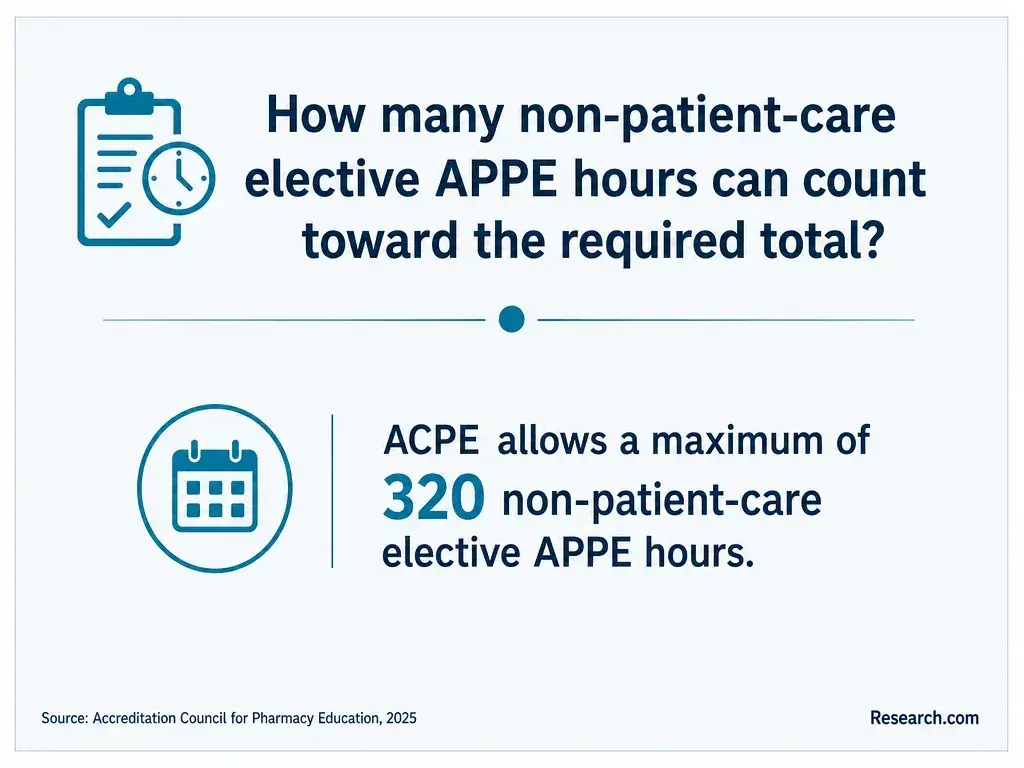
Pharmacotherapy, medication safety, patient assessment, communication, and drug-information coursework support the broad clinical judgment rural practice may require. Introductory pharmacy practice experiences (IPPEs) introduce supervised practice; advanced pharmacy practice experiences (APPEs) provide more extensive rotations later in the professional program. A rural or underserved placement can help students test whether they enjoy the setting, but availability varies.
Clinical placements also have practical costs. Students may need intern registration, background checks, immunizations, transportation, or temporary housing, depending on school, site, and state rules. Ask whether the school arranges the placement or expects students to propose sites, and whether a proposed local preceptor can be approved.
If previous study might change your course plan, review pharmacy degree credit transfer policies separately from prerequisite acceptance. The receiving school determines whether credit applies to its professional curriculum; acceptance of a prerequisite does not imply transfer into a Pharm.D. course.
They can, if the program provides appropriate clinical training and its schedule and placements fit the student's circumstances. "Online" generally describes some academic instruction - not necessarily a fully remote degree. Hands-on activities, campus visits, assessments, IPPEs, and APPEs may require in-person attendance.
When comparing online Doctor of Pharmacy degree options, confirm the specific professional program's ACPE accreditation, required live sessions and travel, and how clinical sites are approved. Institutional accreditation and permission to enroll a distance student in a state are separate questions from ACPE accreditation and eligibility for pharmacist licensure there.
Online delivery may reduce routine campus travel, but it does not remove rotation schedules or make a nearby underserved placement certain. Obtain written answers about clinical placement support before planning to keep a full-time job or remain in one location throughout the program.
Rural pharmacists need a license from the state where they practice; there is no general rural-practice license that substitutes for it. For U.S.-educated applicants, boards typically require graduation from an eligible Pharm.D. program and the North American Pharmacist Licensure Examination (NAPLEX), along with other jurisdiction-specific steps. A board - not a school or examination result alone - issues the license.
Check the intended state board for intern registration, application and background-check rules, and any law examination. Jurisdictions differ: an applicant may encounter the Multistate Pharmacy Jurisprudence Examination (MPJE), the Uniform MPJE (UMPJE), another assessment, or different requirements. The same board and applicable state law determine authority for services such as immunization or collaborative practice.
Advice about how quickly can an online pharmacy degree be completed should not be mistaken for a pharmacist licensing timeline. Confirm that a program awards the qualifying Pharm.D. and account for all board requirements after graduation.
The Bureau of Labor Statistics reports a median annual pay of $140,910 for U.S. pharmacists in May 2025. That is a national figure across locations and settings, not a rural salary estimate. An individual offer may differ with employer, duties, experience, and local hiring conditions.
Compare compensation against the full cost of reaching and keeping the job. Salary alone can obscure loan payments, required travel, on-call expectations, benefits, relocation expenses, and whether the employer provides adequate technician coverage. Likewise, efforts to reduce the cost of pharmacy school should account for fees, rotation travel, housing, and licensure expenses - not tuition alone.
Before accepting an offer, request the written compensation and benefits terms and clarify expected hours, staffing, professional liability coverage, and support for continuing education. A higher salary may not offset an unsustainable workload.
Rural work is not limited to a retail counter. The setting shapes the responsibilities, so compare the work itself rather than treating all rural pharmacist openings as interchangeable.
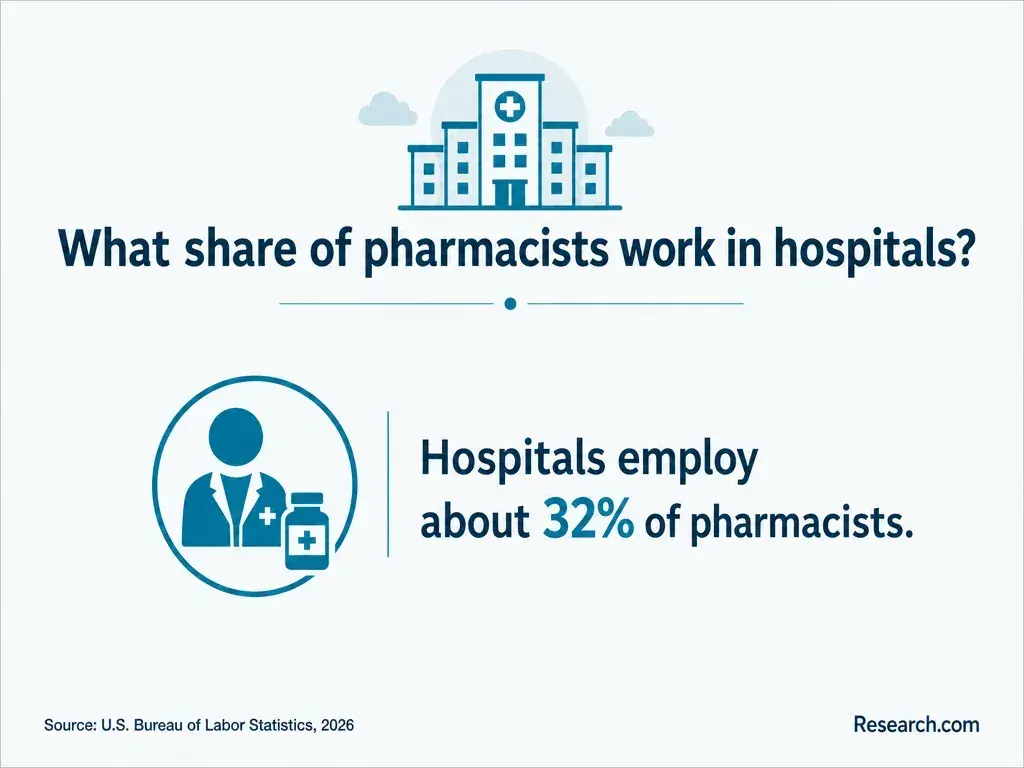
The table shows common settings and a distinguishing feature to investigate in each one.
| Setting | Typical focus | Important distinction |
| Community pharmacy | Dispensing, counseling, access to medications, and authorized patient services | Staffing and service authority vary by employer and state. |
| Rural hospital | Medication-use systems and care-team support | Clinical responsibilities and postgraduate training preferences vary by position. |
| Ambulatory clinic | Ongoing medication management with a care team | Services may depend on agreements, funding, and state practice rules. |
| Independent pharmacy | Community services alongside business operations | Ownership adds financial and regulatory responsibilities. |
A Pharm.D. graduate may enter some positions directly after licensure. A postgraduate year one (PGY1) residency develops general practice skills; a PGY2 residency builds on that training in a specialty. Fellowships generally serve different, program-specific career goals. Board certification is an additional credential, not a pharmacist license, and none of these postgraduate routes is mandatory for every rural job.
For students considering Doctor of Pharmacy accelerated tracks, the useful question is whether the schedule still allows suitable clinical experience and manageable costs - not simply whether graduation could come sooner.
How can students choose a reputable rural pharmacy program?
Start with the location where you may seek licensure and the kind of rural work you want. Then compare schools on verifiable requirements and support, rather than on a promise that demand will produce a job.
Use these checks before paying an enrollment deposit; ask the school for current documentation when an answer is unclear.
- Confirm the exact Pharm.D. program and its current ACPE accreditation status, then separately check institutional accreditation, distance-education authorization if relevant, and the intended state board's licensure rules.
- Request a review of your prerequisites, remaining coursework, application conditions, and any proposed transfer credit; ask whether unfinished requirements may be completed before matriculation.
- Compare required campus attendance, IPPE and APPE placement support, rural site availability, preceptor approval, and likely travel or housing needs.
- Compare the full educational budget, available aid under current rules, and published licensure-exam outcomes in context; ask how the school supports students who need additional preparation.
If you are still finishing prerequisites, pharmacy programs for applicants still completing requirements may help you identify questions to ask. Do not assume permission to apply with coursework in progress means permission to enroll without completing it. Choose a program only after its requirements, costs, and placement logistics work for your circumstances.
Other Things You Should Know About PharmD
Some positions may qualify for federal, state, or employer repayment programs, but eligibility depends on the specific program, site, employment terms, and loan type. Verify the current rules before treating repayment as part of an offer.
Potentially. Ownership requires more than an individual pharmacist license: the business must meet applicable pharmacy permitting and operating rules. Evaluate financing, patient volume, reimbursement, staffing, and local competition before committing.
Not solely on the basis of a pharmacy degree earned abroad. The applicant must satisfy the applicable foreign-graduate certification pathway and the intended state board's licensing requirements, as well as any employment authorization requirements.
Not necessarily. Experience in broad medication and patient-care responsibilities can be valuable elsewhere, but a later hospital or specialty role may have different hiring preferences. Keep records of your work, maintain licensure, and assess any additional training against the roles you want.
- Chronic Disease Management Service Opportunities for Community Pharmacists During the COVID-19 Pandemic | cdc.gov https://www.cdc.gov/pcd/issues/2022/21_0280.htm
- The Rural Pharmacy Practice Landscape: Challenges and Motivators - PMC https://pmc.ncbi.nlm.nih.gov/articles/PMC7060034/
- Health Workforce Shortage Areas | hrsa.gov https://data.hrsa.gov/topics/health-workforce/shortage-areas
- 42 CFR Appendix F to Part 5 - Criteria for Designation of Areas Having Shortages of Pharmacy Professional(s) https://www.law.cornell.edu/cfr/text/42/appendix-F_to_part_5
- Critical Access Pharmacy Designations Could Strengthen Access - December 19, 2025 - USC Schaeffer https://schaeffer.usc.edu/research/critical-access-pharmacy-designations-could-strengthen-access-to-pharmacies/
- State Telepharmacy Policies and Pharmacy Deserts | jamanetwork.com https://jamanetwork.com/journals/jamanetworkopen/fullarticle/2808246
- The growing crisis of pharmacy deserts | osu.edu https://pharmacy.osu.edu/news/growing-crisis-pharmacy-deserts
- Pharmacist - Explore Healthcare Careers | Mayo Clinic College of Medicine and Science https://college.mayo.edu/academics/explore-health-care-careers/careers-a-z/pharmacist/
- Retzky College of Pharmacy Addresses Shortage... - UI Health | University of Illinois Chicago https://uihealth.uic.edu/news-stories/retzky-college-of-pharmacy-addresses-shortage-of-pharmacists-in-rural-areas/
- Traditional and Non-Traditional Career Pathways in Pharmacy | University of Health Sciences and Pharmacy in St. Louis https://www.uhsp.edu/traditional-and-non-traditional-career-pathways-in-pharmacy/