
How to Become a Board-Certified Pediatric Pharmacist

Co-Founder and Chief Data Scientist
Becoming a pediatric pharmacist and earning the Board Certified Pediatric Pharmacy Specialist (BCPPS) credential are related goals, but they are not the same step. You need a pharmacist license to practice; specialty certification comes later, after qualifying pediatric experience or residency training. For prospective pharmacy students and practicing pharmacists, this guide explains the education and eligibility routes, what training costs to consider, and when certification is worth pursuing. Use it to choose a realistic path rather than paying for credentials or training that do not advance your intended job.
Key Things You Should Know
- The usual U.S. route is an accredited Doctor of Pharmacy (PharmD) degree, state pharmacist licensure, qualifying pediatric practice or residency training, and the Board of Pharmacy Specialties (BPS) pediatric certification exam.
- BPS offers experience-based and residency-based BCPPS eligibility routes; a pediatric PGY2 residency is valuable but is not the only route to the exam.
- The Bureau of Labor Statistics reports $140,910 in median annual pay for pharmacists in May 2025, not a pediatric-specific salary. Compare that broad benchmark with local offers and the cost of any additional training.
How do you become a board-certified pediatric pharmacist?
A BCPPS is a licensed pharmacist who has met BPS pediatric pharmacy eligibility standards and passed its specialty examination. The sequence matters: pharmacy school prepares you for licensure, while pediatric practice or postgraduate training prepares you for specialty certification.
Use these steps to identify your next requirement rather than assuming that every candidate needs the same residency:
- Complete the admission prerequisites for an Accreditation Council for Pharmacy Education (ACPE)-accredited professional PharmD program, then earn the degree.
- Meet the requirements of the state or jurisdiction where you will practice and obtain a pharmacist license.
- Build qualifying pediatric experience through direct practice, a postgraduate year one (PGY1) residency followed by practice, or an appropriate postgraduate year two (PGY2) pediatric residency.
- Check BPS's current pediatric eligibility rules, document your qualifying activities, apply, and pass the BCPPS exam.
- Maintain both your state license and BPS credential under their separate renewal rules.
If you are still choosing a PharmD, pharmacy programs with faster completion options may shorten the academic phase. They do not eliminate licensure or BPS experience requirements. A common costly mistake is treating an accelerated degree as an accelerated route to board eligibility.
What education is required for pediatric pharmacy board certification?
For the standard U.S.-educated pathway, start with a professional PharmD from an ACPE-accredited program. Undergraduate pre-pharmacy science courses are admission preparation, not the professional degree.
A pharmaceutical sciences doctorate, pharmacology degree, or pharmacy technician qualification does not substitute for a PharmD when seeking the usual U.S. pharmacist licensure pathway.
The PharmD develops medication-use, patient-care, and clinical reasoning skills through classroom work and supervised practice. Pediatric specialization builds on that foundation: pharmacists must account for growth and development, weight-based dosing, age-appropriate formulations, and communication with patients' caregivers.
BPS separately requires a qualifying pharmacy degree, an active pharmacist license, and eligible specialty experience or training; finishing school alone does not earn BCPPS.
When comparing degree labels, do not assume that a shorter program listed among online doctorate program length options is a professional PharmD. Verify the exact credential and ACPE professional-program accreditation before using any program in a pharmacist career plan.
What are the BCPPS eligibility requirements?
According to BPS, pediatric pharmacy applicants need a qualifying pharmacy degree, an active pharmacist license, and one of its specified specialty practice or residency pathways. BPS evaluates certification eligibility; a state board determines licensure. Neither organization's approval replaces the other's.
The routes below show how prior training changes the amount of pediatric practice an applicant generally needs. Review BPS's current application instructions for what counts as specialty practice and how to document it before relying on a particular job or rotation.
| Eligibility route | Pediatric experience or training generally required | Decision implication |
| Practice experience | Four years of practice, with at least 50% of time spent in pediatric pharmacy activities | Potential route for pharmacists already working substantially in pediatrics |
| PGY1 plus practice | A qualifying PGY1 residency followed by two years of practice with at least 50% of time in pediatric pharmacy activities | Allows general residency training to count alongside later specialty practice |
| Pediatric PGY2 | Completion of a qualifying PGY2 pediatric pharmacy residency | Most direct residency-based route, but admission to a residency is competitive |
Having pediatric patients on your workload does not automatically establish that half your practice qualifies. Before applying, compare your duties and residency documentation with BPS's current definitions. If you have not yet entered pharmacy school, pharmacy programs for applicants still completing requirements concern school admission policies, not a waiver of BCPPS eligibility.
First, compare each school's current prerequisite courses, laboratory rules, grades, and application deadlines. Some admit students after specified college coursework without requiring a completed bachelor's degree; others offer different entry pathways. The Pharmacy College Admission Test (PCAT) was retired and should not be treated as a current admissions exam.
After admission, students complete the professional PharmD curriculum, including introductory pharmacy practice experiences (IPPEs) and advanced pharmacy practice experiences (APPEs).
Pediatric electives or rotations can help you test your interest and build a residency application, but their availability and placement rules vary. ACPE accredits professional pharmacy programs; institutional accreditation and authorization to offer distance education are separate questions.
Applicants who already have biology or chemistry coursework can compare pharmacy programs for students with science credits. Ask each receiving school which courses satisfy prerequisites: previous credits are not automatically accepted, and prerequisite credit does not necessarily transfer into the professional PharmD curriculum.
You need an active pharmacist license in each jurisdiction where your work requires one. A PharmD diploma, a passing examination score, and BCPPS certification do not independently authorize pharmacy practice. Students may also need state intern registration for supervised experiences; requirements depend on the jurisdiction and placement.
For U.S.-educated applicants, licensure commonly involves graduating from an eligible PharmD program, satisfying a board's practical-experience requirements, passing the North American Pharmacist Licensure Examination (NAPLEX), and meeting any applicable law-exam and background-check requirements.
Check the relevant state board and National Association of Boards of Pharmacy (NABP) instructions: jurisdictions differ, and you should not assume every board requires the Multistate Pharmacy Jurisprudence Examination (MPJE). Some began transitioning to the Uniform MPJE (UMPJE) in 2026.
If you are considering pharmacy schools offering online Pharm.D. study, verify ACPE accreditation, your state's licensure eligibility rules, distance-education authorization, and the location of required in-person labs and rotations separately. Online coursework does not make clinical placements remote or guarantee approval in every state.
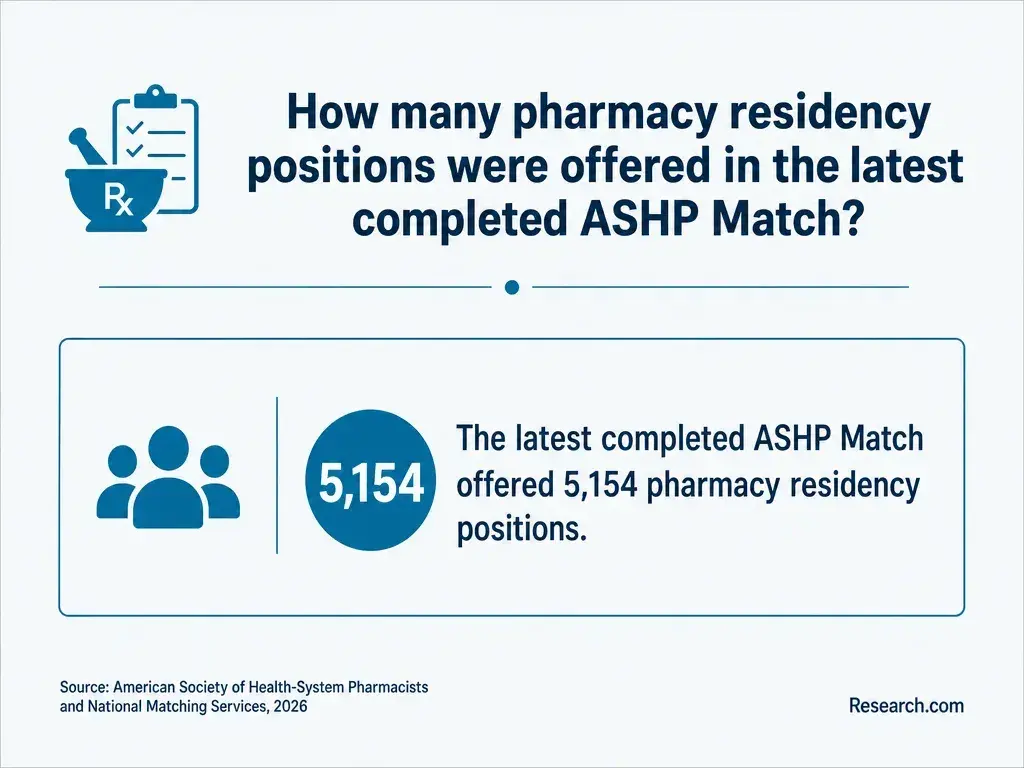
A PGY1 pharmacy residency provides broad postgraduate clinical training; a PGY2 pediatric residency develops deeper specialty practice. Each is generally a year of structured training after the PharmD, with the PGY2 typically following a PGY1 or another qualifying entry route accepted by the program. A fellowship usually emphasizes a different training purpose and should not be assumed to satisfy BPS's pediatric residency route.
A pediatric PGY2 may be particularly useful if you want intensive, supervised exposure to complex children's hospital care or are targeting employers that prefer specialty residency training.
The trade-off is another year of trainee compensation and a competitive application process. If you already have substantial pediatric responsibilities, the BPS practice-experience route may be more practical; if you are early in your career, a PGY1 can broaden your options even if you do not immediately enter a PGY2.
Do not confuse claims about online pharmacy degree time to completion with residency duration. A short online pharmacy-related program is not a substitute for a professional PharmD, a PGY1, or a pediatric PGY2. Check individual residency requirements and whether the program is ASHP-accredited; application and Match participation rules depend on the program.
Pediatric residency training combines supervised patient care with progressively greater responsibility. Experiences may span general pediatrics, neonatal or pediatric intensive care, infectious diseases, medication safety, teaching, and a research or quality-improvement project. The actual rotations, staffing duties, and schedule are program-specific; a listed elective is not necessarily guaranteed to every resident.
When assessing programs, distinguish training breadth from exposure to the patients you want to serve. For example, a pharmacist aiming for neonatal intensive care should examine required neonatal experiences, preceptor expertise, and opportunities for sustained follow-up rather than relying on the program's pediatric title alone.
Prior PharmD coursework or rotations can strengthen an application but should not be assumed to replace residency requirements. If you are still selecting a school, review pharmacy degree transfer credit policies separately from residency curricula: schools decide how prior academic credit applies, while residency programs set their own clinical training requirements.
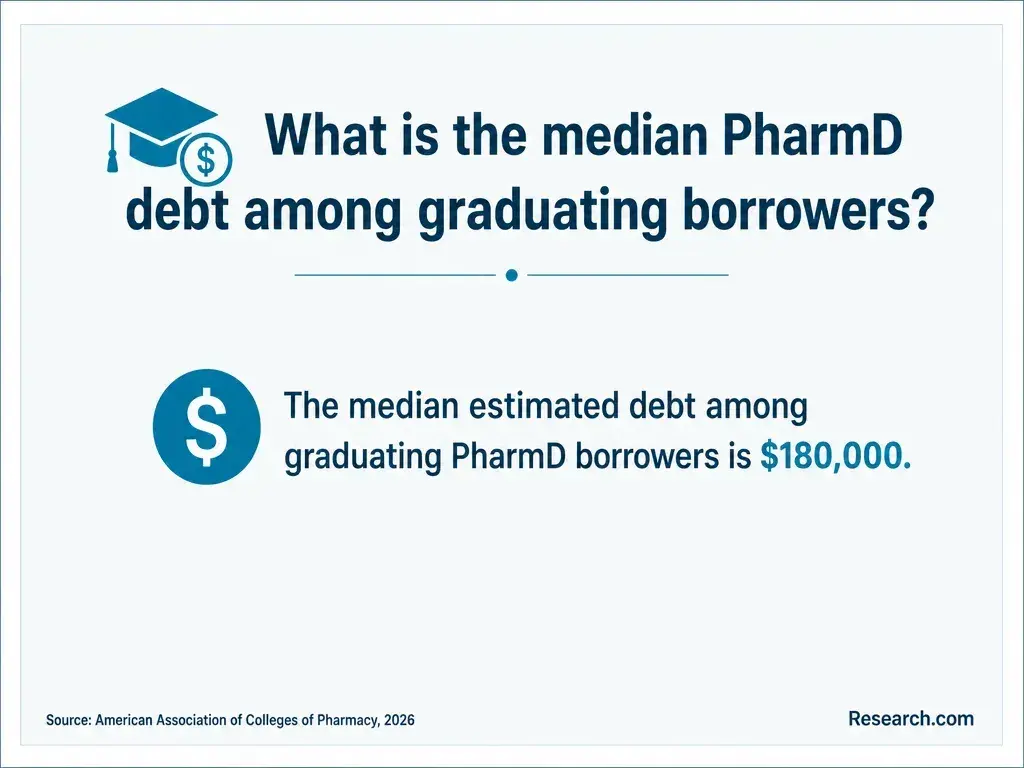
The largest educational expense is usually the PharmD, but there is no reliable single national price for an individual student. Compare each school's current tuition and mandatory fees over the full program, then add prerequisites, books and clinical resources, required equipment, insurance or health clearances, and travel or housing for rotations. Licensure applications, examinations, residency applications or interviews, and BPS certification add later costs.
Residency also has an opportunity cost: residents receive compensation, but accepting a training position can mean postponing earnings from a pharmacist job. Compare that trade-off with the experience-based BPS route and with the hiring preferences of your target employers. The lowest advertised tuition is not necessarily the lowest total cost if rotations require substantial travel.
Use Pharm.D. tuition planning as a starting point, then request a current, program-specific cost of attendance and aid estimate. Federal borrowing rules changed for many new graduate and professional borrowers beginning July 1, 2026; confirm your own eligibility and available loan types with the school's financial aid office rather than assuming older borrowing options still apply.
BCPPS pharmacists may work in children's hospitals, neonatal or pediatric intensive care units, pediatric oncology, ambulatory clinics, health systems, medication safety, academia, or clinical leadership.
Responsibilities can include evaluating medication regimens, recommending age-appropriate doses and formulations, monitoring therapy, educating families and clinicians, and improving medication-use processes. The work remains subject to the pharmacist's state scope of practice and employer policies.
Employers do not uniformly require BCPPS for every pediatric pharmacist position. A job posting may specify only licensure, prefer residency, prefer certification, or require particular experience.
If you are exploring pharmacy-adjacent work rather than independently practicing as a pharmacist, shorter online pharmacy education options may warrant comparison - but they do not qualify someone for pharmacist licensure or BCPPS.
How much do pediatric pharmacists earn and what is their job outlook?
The Bureau of Labor Statistics reports median annual pay of $140,910 in May 2025 for pharmacists. That figure covers the broader pharmacist occupation, not BCPPS holders or pediatric jobs specifically; it cannot tell you what a children's hospital, clinic, or residency will pay. Specialty, location, employer, schedule, and experience can all affect an offer.
BLS projects 5% growth for pharmacists from 2025-2035, with about 12,500 openings per year. Those are occupation-wide projections, not a forecast of pediatric specialty vacancies.
Before investing in extra training, compare actual pediatric postings in your preferred location: note their required credentials, preferred training, salary ranges when disclosed, and whether certification would change your eligibility.
If these career prospects are prompting you to apply to pharmacy school, pharmacy programs with flexible entry requirements can help you investigate possible starting points. Treat admission policies separately from career outcomes: an easier entry route does not guarantee licensure, a residency position, certification, or a particular salary.
Other Things You Should Know About PharmD
Not on the basis of technician training or certification. BCPPS is a pharmacist specialty credential. A technician interested in that path would need to qualify for a professional PharmD program, become a licensed pharmacist, and meet BPS's pediatric eligibility rules.
Potentially, but an international pharmacy degree does not automatically provide U.S. pharmacist licensure. Check NABP's foreign graduate process, the relevant state board's licensing requirements, and BPS's current degree and license eligibility rules before planning a certification application.
No. BCPPS denotes BPS certification in pediatric pharmacy. Neonatal care may be part of a pharmacist's practice, but the credential alone does not document a particular depth of neonatal experience. Employers may assess that experience separately.
The credential is held by the pharmacist, not the employer, so changing jobs does not by itself remove it. You must still meet BPS maintenance requirements and keep any pharmacist licenses needed for your new role active.
- Role of board certification in advancing pharmacy practice | nih.gov https://pmc.ncbi.nlm.nih.gov/articles/PMC6935536/
- NYS Pharmacy: License Requirements - Office of the Professions https://www.op.nysed.gov/professions/pharmacist/license-requirements
- Postgraduate Year Two Pediatric Pharmacy Residency | NYU Langone Health https://medli.nyu.edu/education/other-educational-programs/pharmacy-residency-programs/pgy-2-pediatric-pharmacy-residency
- How to apply to the PGY2 Pediatric Pharmacy Residency Program | Valley Children's Healthcare https://www.valleychildrens.org/healthcare-professionals/medical-education/pharmacy-residency-programs/how-to-apply-to-the-pgy2-pharmacy-residency
- Examination Content Outlines | bpsweb.org https://bpsweb.org/examination-content-outlines/
- Postgraduate Year 2 (PGY2) Pediatric Residency Program | stanfordchildrens.org https://www.stanfordchildrens.org/en/services/pharmacy-services/post-graduate-year-two.html
- Frequently Asked Questions About Board Certification | accp.com https://www.accp.com/careers/boardFAQ.aspx
- Frequently Asked Questions about Board Certification | American Association of Psychiatric Pharmacists (AAPP) https://aapp.org/bcpp/certification/faq


