How PharmD Rotation Sites Are Selected

Co-Founder and Chief Data Scientist
A pharmacy school's rotation network can shape where you live, what you spend, and which areas of practice you experience. Yet a list of affiliated sites does not tell you where you will actually be placed. This guide explains how Doctor of Pharmacy (Pharm.D.) programs approve sites and match students to introductory and advanced rotations. It also shows prospective students and current Pharm.D. students which placement policies to verify before making enrollment, housing, or career plans.
Key Things You Should Know
- Pharm.D. programs approve rotation sites and preceptors, then assign students according to required experiences, available capacity, scheduling, and school-specific preference rules; ranking a site rarely reserves it.
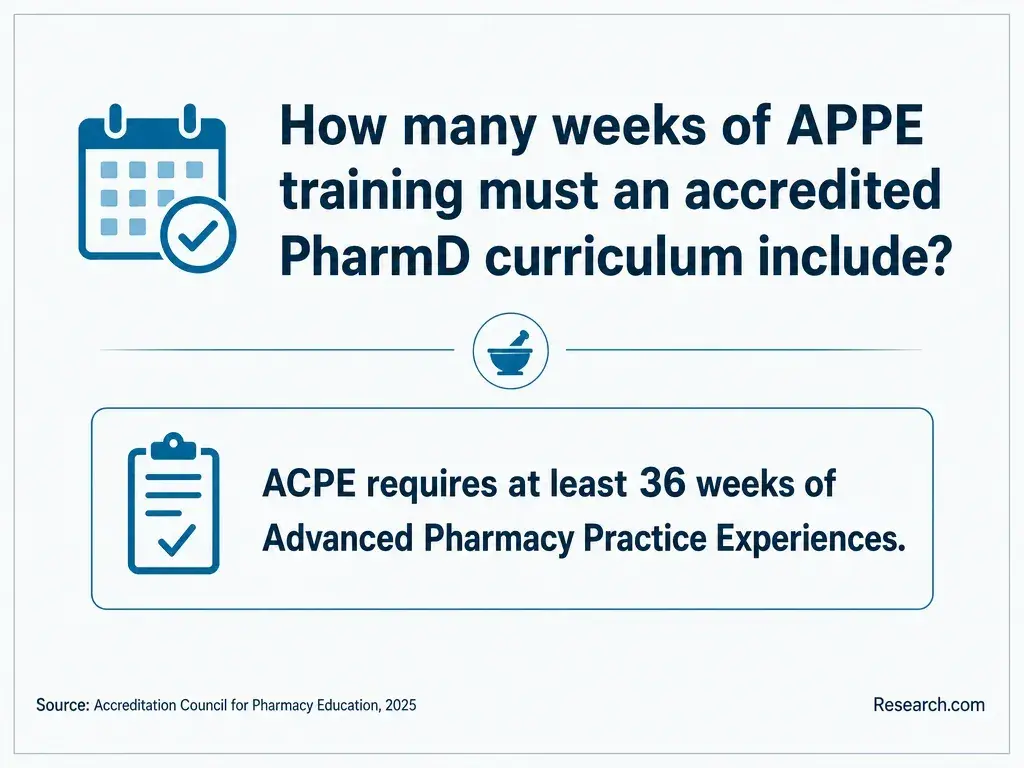
- Accreditation Council for Pharmacy Education (ACPE) standards call for at least 300 hours of introductory experiences and 1,440 hours of advanced experiences. Ask how a school covers those hours across required settings.
- Before enrolling, get the school's written policies on travel, placement requests, student-arranged sites, clearance costs, and what happens if a site cancels.
How are PharmD rotation sites selected?
Pharm.D. rotation sites are selected through a school-run experiential education process - not simply chosen by students from a list. The school identifies practice settings that can deliver its learning objectives, confirms that qualified preceptors can supervise students, establishes necessary agreements, and checks how many students each site can accept. It then assigns approved sites to meet students' required experiences and schedules.
A site's affiliation with a school means it may host students, not that every student can rotate there. Capacity, patient-care opportunities, preceptor availability, and the timing of required rotations can all change. When you compare pharmacy doctorate options, distinguish a program's advertised site network from its actual placement and travel policies.
What types of rotations are required in a PharmD program?
Introductory pharmacy practice experiences (IPPEs) introduce students to supervised pharmacy practice during the professional curriculum. Advanced pharmacy practice experiences (APPEs) involve more sustained responsibilities later in the program. ACPE standards specify at least 300 IPPE hours and 1,440 APPE hours; individual programs set their own calendars and may require more.
APPEs must cover core practice experiences, including community pharmacy, ambulatory care, hospital or health-system pharmacy, and inpatient general medicine. Programs also offer electives, which may include specialty clinical practice, industry, managed care, or other approved settings.
Elective availability varies, and an appealing specialty site cannot replace a required core experience. Undergraduate pre-pharmacy courses - even if you build on prior biology or chemistry coursework - are distinct from supervised experiences in the professional Pharm.D. curriculum.
How do PharmD programs match students with rotation sites?
Experiential education staff generally build a schedule that places each student in required settings while respecting site capacity, calendar blocks, and eligibility restrictions.
Schools may use preference rankings, lotteries, placement software, or manual review; no single matching method applies nationwide. These common constraints explain why an approved site may not appear in a student's final schedule.
The table separates placement constraints from student preferences, which are often considered only after requirements are met.
| Constraint | Effect on placement |
| Required experience and sequence | A student needs an appropriate site during an available rotation block. |
| Site and preceptor capacity | An affiliated site may accept only some students or may not participate every block. |
| Site-specific clearance | Missing documents or an unmet site requirement can prevent an otherwise preferred placement. |
| Student preferences | Rankings help staff allocate openings but do not guarantee a particular site. |
Schools may consider prior professional-coursework credit when planning a student's academic progression, but that is different from assigning a clinical site. If you are changing programs, ask how pharmacy programs review transfer credits and separately whether any prior experiential work can satisfy the receiving school's requirements.
Eligibility has two sides: the site must meet the school's educational and supervision requirements, and the student must qualify to enter that site. Schools assess whether a site offers suitable activities, a qualified preceptor, a workable schedule, and the agreements needed to oversee and evaluate the experience.
Students may need to complete specified coursework, training, immunizations, background checks, drug screening, and site-specific onboarding. State intern registration or other permissions may also apply, especially when a rotation crosses state lines.
Requirements and deadlines vary by school, site, and jurisdiction; a student who misses a clearance deadline may lose a placement. Admissions eligibility is a separate question: if you are considering pharmacy schools and prerequisite completion, confirm what must be finished before matriculation rather than assuming admission makes you rotation-ready.
Schools commonly open a preference window before scheduling APPEs. Students may rank sites, practice areas, geographic regions, or rotation blocks, but the available choices and weighting rules differ. Some schools also permit requests for a new site; approval usually depends on whether the school can establish supervision and agreements in time.
Use a ranking to communicate priorities, not just your most attractive specialty. A practical approach is to:
- Identify the required rotations and any blocks with limited site choices.
- Rank feasible sites after checking travel, housing, schedule, and clearance requirements.
- Submit documented constraints, such as accessibility needs, through the school's stated process and by its deadline.
- Keep backup preferences in case capacity or preceptor availability changes.
Applicants comparing pharmacy programs for nontraditional applicants should ask how placement requests work for students with jobs or caregiving responsibilities. A school may consider those circumstances without being able to promise a particular shift, city, or rotation block.
Sometimes, but only if the school has or approves suitable local sites with available preceptors. A nearby placement is not automatic, even in an online or hybrid Pharm.D. pathway. Required patient-care experiences generally involve in-person participation; an online classroom component does not turn clinical rotations into remote work.
Ask how far students can be assigned from their home address, whether they must move temporarily, who finds sites near home, and whether an out-of-state placement triggers additional intern-registration or site requirements.
State authorization for online instruction is separate from permission to conduct a clinical placement in a state. When you compare online doctorate lengths, do not assume a shorter advertised timeline changes a Pharm.D. program's supervised practice obligations.
A preceptor is the practitioner responsible for supervising and assessing a student at a rotation site. Preceptors help determine which activities a site can offer and how many students it can responsibly host. Their availability can determine whether a particular site opens in a given block, even when the organization remains affiliated with the school.
Schools set expectations for preceptor qualifications, student supervision, feedback, and evaluations. Students should ask how the program trains and supports preceptors and how it handles a mismatch between a student's learning needs and a site's opportunities.
In pharmacy degree programs with accelerated schedules, check the credential being offered: a fast pharmacy-related degree is not necessarily a Pharm.D., and a compressed Pharm.D. calendar still needs appropriately supervised experiences.
ACPE accredits professional pharmacy education programs, including their experiential education. To meet its standards, a program must provide required types and amounts of supervised experience, use appropriate preceptors and sites, assess student performance, and monitor the quality of those experiences. The school remains responsible for its curriculum even when learning takes place at an outside organization.
Check the current ACPE status of the professional Pharm.D. program, not just the university's institutional accreditation. Neither institutional accreditation nor authorization to deliver online instruction substitutes for Pharm.D. program accreditation or approval of a particular placement.
If you are considering Doctor of Pharmacy accelerated tracks, ask how the shorter calendar accommodates required rotations rather than assuming experiences have been waived. Graduation from a Pharm.D. program also does not itself grant a pharmacist license; state board requirements apply after and, in some cases, during school.
Request written policies from experiential education staff, not just examples of prestigious affiliates. The most useful questions expose costs and constraints that may be difficult to change after enrollment:
- Who secures IPPE and APPE sites, and may students propose a new site or preceptor?
- What travel radius is expected, and how often have students needed temporary housing?
- Which sites and electives are regularly available, versus merely affiliated?
- How are preferences, documented constraints, and placement conflicts handled?
- Who pays for travel, housing, clearances, and site-specific onboarding?
- What is the backup plan if a preceptor or site cancels?
Rotation travel and housing can make two programs with similar tuition cost substantially different amounts for a particular student. Compare those potential expenses alongside pharmacy program tuition options, and ask financial aid staff how the school accounts for rotation-related costs in its current cost-of-attendance process. Do not budget on the assumption that every placement will be local or that aid will cover every expense.
How can rotation sites affect pharmacist career opportunities?
Rotations can help students test practice settings, develop supervised skills, and meet pharmacists who may later serve as references or professional contacts. They do not guarantee a job, residency interview, or preferred specialty.
If you are interested in hospital practice, ambulatory care, or another field, compare programs by the reliability and variety of relevant experiences - not by a single high-profile affiliate.
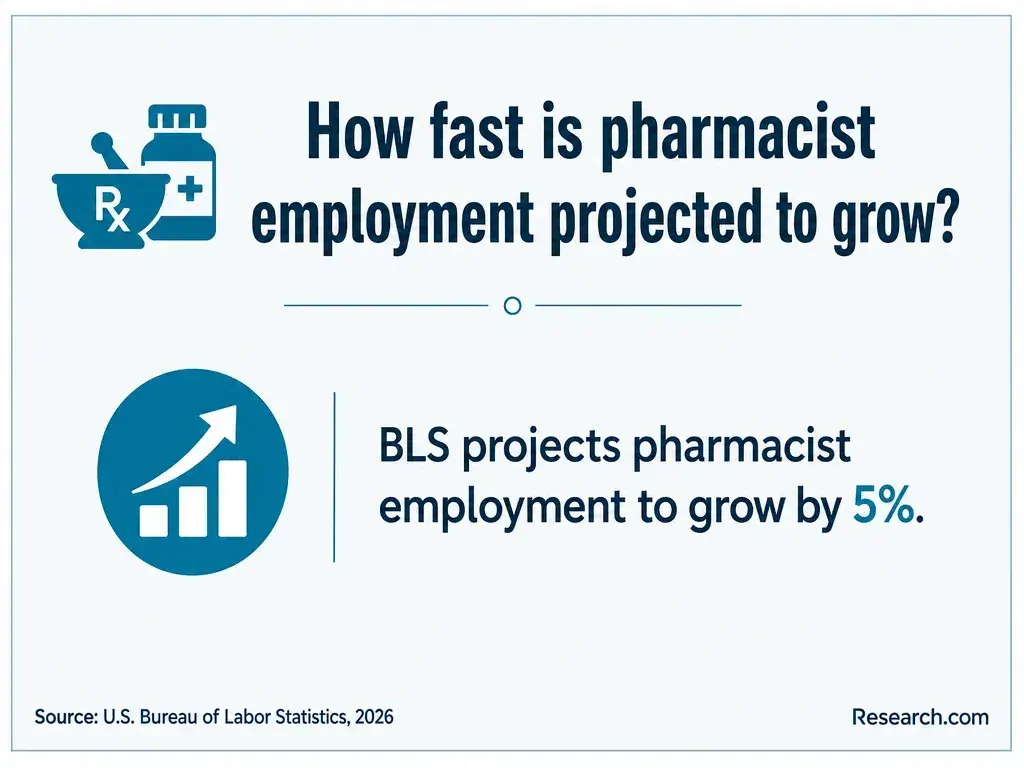
The Bureau of Labor Statistics reports median annual pay of $140,910 in May 2025 for pharmacists. That occupation-wide figure does not predict earnings from a particular rotation or distinguish specialty positions. After the Pharm.D., pharmacist licensure follows state requirements; a residency or fellowship may support particular career goals but is not universally required, and board certification is a separate credential.
Likewise, pharmacy degree programs with shorter timelines may lead to different roles and should not be treated as shortcuts to pharmacist licensure. Choose a rotation network that offers realistic access to the settings you want to explore while keeping its travel and scheduling demands manageable.
Other Things You Should Know About PharmD
Do not assume they are. Compensation policies vary by school and site, and a paid pharmacy job does not automatically count as a rotation. Confirm both policies before budgeting.
Only if the school approves the site, preceptor, activities, and any rules concerning prior employment. Ask whether a different department or supervisor would be required.
The school's experiential education office generally works on a replacement, but the new site or dates may differ. Review the program's cancellation and graduation-delay policies in writing.
Schools have their own procedures for reviewing evaluations and appealing grades. Keep records of feedback and raise concerns promptly through the published process.
- An Advanced Pharmacy Practice Experience in a University's Office of Experiential Education - PMC https://pmc.ncbi.nlm.nih.gov/articles/PMC10159452/
- Preceptor and Student Evaluation Review Process | Client Portal https://help.ohio.edu/TDClient/30/Portal/KB/PrintArticle
- Policy 3.2: Clinical Compliance and Onboarding | Current Students https://students.nursing.uw.edu/policies/policy-3-2-clinical-compliance-and-onboarding/
- Experiential Education Site Selection Policy | ucsf.edu https://pharmd.ucsf.edu/policies/site-selection
- Experiential Learning Manual - School of Pharmacy https://www.pharmacy.pitt.edu/experiential-learning-manual
- Pharmacy Practice Experiences | Doctor of Pharmacy https://pharmacy.wisc.edu/pharmd/pharmacy-practice/
- Pharm D Practice Experience Curriculum | Presbyterian College https://www.presby.edu/graduate-programs/pharmacy/pharmd/practice-experience/
- Background Checking | Vice President for Commonwealth Campuses https://www.campuses.psu.edu/affiliation-agreements-and-student-background-checks-and-compliance/background-checking
- Clinical pharmacy experiential education and training | ajpps.org https://ajpps.org/clinical-pharmacy-experiential-education-and-training-a-white-paper-on-preceptor-development/