Nuclear Pharmacist Career Path and Certification

Co-Founder and Chief Data Scientist
Nuclear pharmacy combines medication expertise with the tightly regulated preparation and delivery of radioactive drugs. For a prospective Pharm.D. student or licensed pharmacist, the important decision is whether this specialized work justifies the education, supervised training, and schedule it may require.
This guide separates pharmacist licensure from nuclear-pharmacy qualifications and optional board certification, then explains training routes, costs, pay, and job prospects. Use it to decide whether to pursue the specialty - and what to verify before enrolling or accepting a position.
Key Things You Should Know
- The usual route is an accredited Pharm.D., state pharmacist licensure, and documented nuclear-pharmacy training; a degree or certificate alone does not authorize someone to practice.
- Federal rules provide a training route to authorized nuclear pharmacist status involving at least 700 hours, including 200 hours of classroom and laboratory instruction and 500 hours of supervised practical experience; applicable state and facility requirements also matter.
- The U.S. Bureau of Labor Statistics reports $140,910 in median annual pay for pharmacists in May 2025, but does not publish a separate median for nuclear pharmacists.
What does a nuclear pharmacist do?
A nuclear pharmacist prepares, checks, dispenses, and helps manage radiopharmaceuticals - medications containing radioactive material used in diagnostic imaging or treatment. Work may include verifying prescriptions, calculating activity and timing, preparing or obtaining doses, performing quality-control checks, maintaining records, and coordinating deliveries with nuclear medicine teams.
If preparing radioactive drugs is not your goal, compare the work itself before committing to pharmacist training. Online doctorate programs with shorter timelines may serve different research or administrative goals, but a non-Pharm.D. doctorate is not a substitute for pharmacist licensure.
How do you become a nuclear pharmacist?
The path has separate education, licensing, and specialty-training stages. Their order matters because supervised nuclear-pharmacy experience is not a replacement for eligibility to practice as a pharmacist.
- Complete the prerequisites for a U.S. Doctor of Pharmacy (Pharm.D.) program and earn the professional degree from a program accredited by the Accreditation Council for Pharmacy Education (ACPE).
- Meet your state board of pharmacy's requirements for pharmacist licensure, including the North American Pharmacist Licensure Examination (NAPLEX) and any applicable law examination or other requirements.
- Enter a nuclear pharmacy that can provide appropriate supervised experience, or pursue another route accepted by the applicable radioactive-materials regulator.
- Document the training, attestation, and approval needed to be designated an authorized nuclear pharmacist where you will work.
Some employers train newly licensed pharmacists; others prefer candidates who already have nuclear-pharmacy experience. A residency may strengthen an application but is not a universal entry requirement. For a science graduate planning the first step, online Pharm.D. options for science graduates are worth comparing against campus programs on prerequisites, in-person requirements, and total cost.
What education and degree does a nuclear pharmacist need?
For the standard U.S.-educated route to pharmacist licensure, you need a professional Pharm.D. from an ACPE-accredited program. Pre-pharmacy coursework is undergraduate preparation for admission; it is not the Pharm.D. itself. Schools differ on prerequisite courses, credits, grades, and whether applicants need a completed bachelor's degree.
The professional curriculum includes drug science, patient care, and supervised introductory and advanced pharmacy practice experiences, known as IPPEs and APPEs. A pharmaceutical sciences, pharmacology, or pharmacy technician degree does not by itself qualify its holder for pharmacist licensure. Internationally educated pharmacists have a different eligibility process and should check the relevant state board and National Association of Boards of Pharmacy requirements.
Prior college study may reduce the prerequisites a prospective student still needs, but the receiving school decides how credits apply. Check pharmacy degree credit transfer policies before assuming earlier science courses - or courses from another Pharm.D. program - will count.
State pharmacist licensure is required to practice as a pharmacist. Graduation and passing the NAPLEX are steps toward licensure, not licenses themselves. Jurisdictions differ on law examinations and other conditions; some use the Multistate Pharmacy Jurisprudence Examination (MPJE), some use another process, and the Uniform Multistate Pharmacy Jurisprudence Examination (UMPJE) began entering use in some jurisdictions in 2026.
Handling and dispensing radiopharmaceuticals introduces a separate regulatory question. Under the Nuclear Regulatory Commission's authorized nuclear pharmacist training route, a licensed pharmacist completes at least 700 hours of specified training and experience, including 200 hours of classroom and laboratory instruction and 500 hours of supervised practical experience, with required documentation and attestation. Regulations also provide a recognized specialty-board certification route. The facility's radioactive-materials license and its regulator - either the NRC or an Agreement State - determine the applicable authorization process.
The Board of Pharmacy Specialties offers the Board Certified Nuclear Pharmacist (BCNP) credential. BCNP is a professional specialty credential, not a state pharmacist license; do not assume that earning it alone adds you to a facility's radioactive-materials license. Ask a prospective employer which authorization route it supports and who verifies your training records.
If you are returning to school without a pharmacist license, pharmacy school routes for returning students may help you plan unfinished prerequisites. They do not bypass the Pharm.D. and licensing steps.
Nuclear-pharmacy instruction builds on the Pharm.D.'s medication and patient-safety foundation. Specialty training typically addresses radiation physics and biology, radiation measurement, dose calculations, handling and disposal, contamination control, radiopharmaceutical preparation, quality control, and the rules governing radioactive materials. Supervised work turns those subjects into documented practical competence.
Program labels can be misleading. A short course may provide useful introductory instruction without supplying the supervised experience or documentation needed for authorized nuclear pharmacist status. Compare online pharmacy course completion timelines with the actual credential awarded and the regulator's training requirements; a short course is not a shortcut to pharmacist licensure.
Some nuclear-pharmacy coursework can be delivered online, and some Pharm.D. programs offer online or hybrid instruction. Neither format makes the entire route remote. Pharm.D. students still need required hands-on learning and in-person clinical experiences; nuclear-pharmacy qualification also involves supervised practical work with radioactive materials at an appropriate site.
Before choosing among pharmacy schools offering online Pharm.D. study, confirm ACPE accreditation, live-class and campus requirements, who arranges IPPE and APPE placements, travel expectations, and whether the school may enroll you in your state. State authorization for distance education is distinct from eligibility for pharmacist licensure or approval of a clinical placement.
A conventional Pharm.D. professional curriculum commonly takes four academic years after prerequisites; some schools offer accelerated schedules. Prior coursework, prerequisite gaps, and program design change the total time. After licensure, the NRC training route specifies at least 700 hours of nuclear-pharmacy instruction and supervised experience, but how quickly someone completes it depends on access to suitable training and supervision.
There is no reliable single price for the full path. Compare Pharm.D. tuition and mandatory fees alongside prerequisite courses, living costs, required travel, licensure expenses, and any specialty-training costs. A paid training position and a separately purchased course can have very different financial consequences. For help framing that comparison, review online pharmacy degree affordability without treating advertised tuition as the total cost.
Ask each school for its current cost of attendance and each prospective trainer who pays for instruction and required travel. If you expect to borrow, verify your eligibility under current federal student-aid rules: rules affecting many new graduate and professional borrowers changed beginning July 1, 2026, so older loan-limit guidance may not apply.
There is no single nationwide application to become a nuclear pharmacist. First-time Pharm.D. applicants must meet each school's prerequisite, grade, application, and interview rules; a bachelor's degree is not universally required. The Pharmacy College Admission Test (PCAT) was retired in 2024 and should not be treated as a current routine entrance exam.
Post-licensure nuclear-pharmacy courses, training positions, and residencies set their own entry criteria. An employer may require an active pharmacist license before training begins, while a school-based elective may be open only to its enrolled Pharm.D. students. Review pharmacy school prerequisites as a starting point, then check each school's current admissions page for exact courses, laboratory rules, and deadlines. For specialty training, ask whether the site can provide qualified supervision and document experience acceptable to its radioactive-materials regulator.
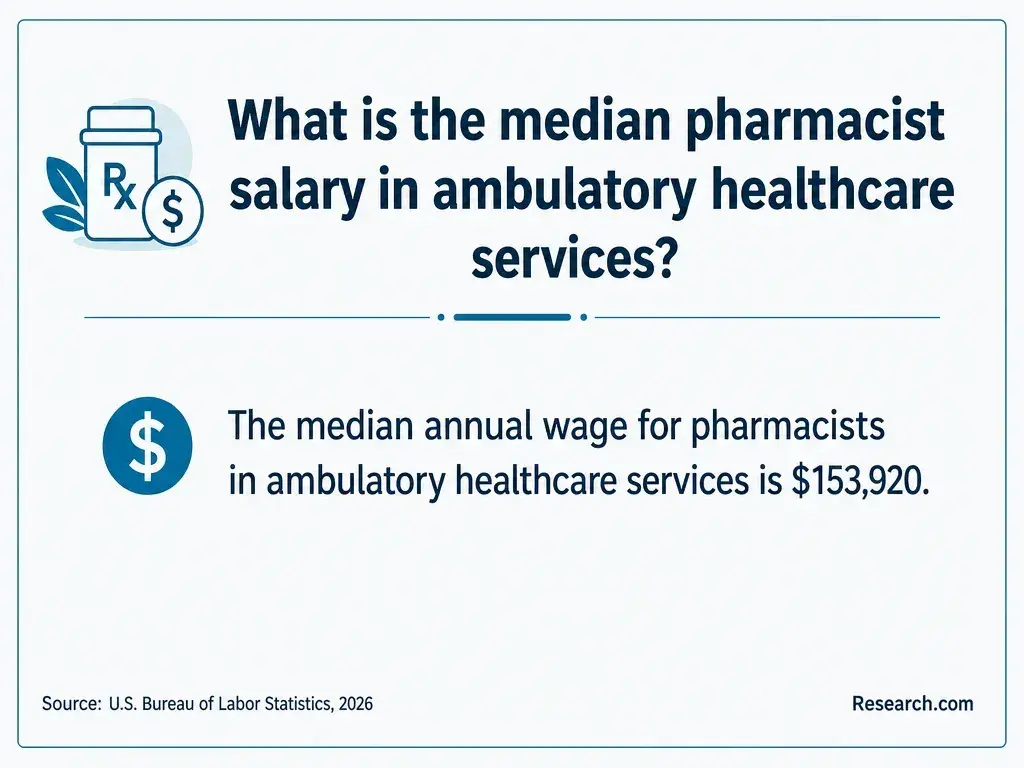
The Bureau of Labor Statistics reports $140,910 in median annual pay for pharmacists in May 2025. That figure covers pharmacists across practice settings, not nuclear pharmacists specifically. It is a useful benchmark, not a predicted offer: location, employer, experience, shift expectations, and specialty responsibilities can affect compensation.
Evaluate an offer against the cost of entering the field, not salary alone. Comparing pharmacy degree costs and duration can clarify the opportunity cost of earning a Pharm.D.; if you are already licensed, focus instead on specialty-training expenses, paid training opportunities, schedule, and the compensation offered for the actual role.
What is the job outlook for nuclear pharmacists?
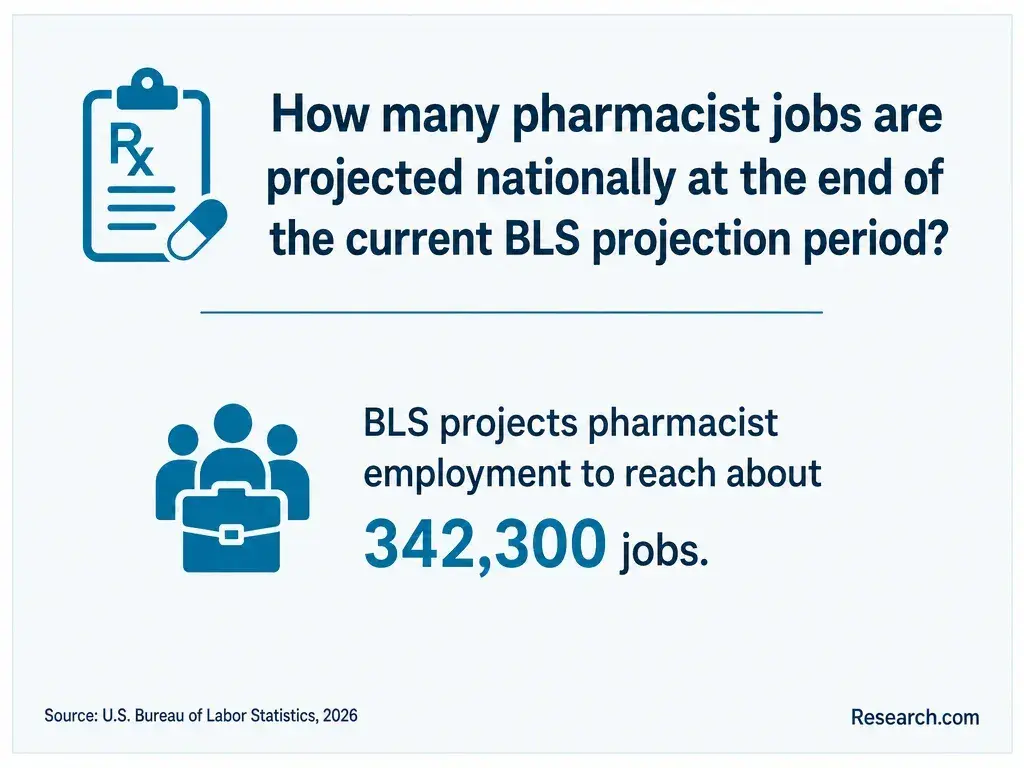
The Bureau of Labor Statistics projects 5% growth in pharmacist employment from 2025 to 2035, with about 12,500 pharmacist openings per year. Those are figures for the broader occupation, not a forecast of nuclear-pharmacy vacancies. Specialty openings may be concentrated near licensed pharmacies and health systems, making location and willingness to work an early or time-sensitive schedule important considerations.
Choose the specialty if you want regulated preparation work and can access supervised training - not because general pharmacist growth guarantees a nuclear-pharmacy position. If your main concern is time to entry, compare pharmacy doctorate program length, then ask local employers whether they hire and train newly licensed pharmacists. A shorter Pharm.D. schedule will not eliminate licensure or radioactive-materials training requirements.
Other Things You Should Know About PharmD
Some do, particularly in hospital settings, but many commercial nuclear pharmacy roles focus on preparing and supplying doses to healthcare facilities. Ask about patient contact if it is central to your career choice.
The work involves radioactive materials, so facilities use shielding, monitoring, handling procedures, and other required safety controls. Ask a prospective employer about its training, monitoring, and radiation-safety practices.
Not always. Diagnostic doses may be needed early in the day, and schedules vary by facility and service. Confirm start times, weekends, and on-call duties before accepting a position.
Yes, technicians may seek nuclear pharmacy technician roles subject to employer and state requirements. Moving from technician to nuclear pharmacist, however, requires the education, licensure, and specialty qualifications of a pharmacist.
- Nuclear Medicine Safety - StatPearls - NCBI Bookshelf https://www.ncbi.nlm.nih.gov/books/NBK603730/
- Authorized Individuals | Nuclear Regulatory Commission https://www.nrc.gov/materials/miau/med-use-toolkit/auth-individuals
- Nuclear Pharmacist | nd.gov https://secure.ruready.nd.gov/Career_Planning/Career_Profile/Career_Profile.aspx
- Nuclear Pharmacist - Florida Board of Pharmacy https://floridaspharmacy.gov/nuclear-pharmacist/
- NYS Pharmacy: Nuclear Pharmacist Certification | nysed.gov https://www.op.nysed.gov/professions/pharmacist/nuclear-pharmacist-certification
- 17 CAR § 160-1209. Nuclear pharmacy | arkansas.gov https://codeofarrules.arkansas.gov/Rules/Rule
- 4 types of pharmacists you may not know about | creighton.edu https://www.creighton.edu/blog/4-types-pharmacists-you-may-not-know-about
- Nuclear Pharmacy Track | ouhsc.edu https://pharmacy.ouhsc.edu/academics-programs/doctor-of-pharmacy-pharmd/degree-options-specialty-tracks/nuclear-pharmacy-track
- What is Nuclear Pharmacy? | purdue.edu https://nuclear.pharmacy.purdue.edu/what-is-nuclear-pharmacy
- Becoming a Nuclear Pharmacist | UAMS College of Pharmacy https://pharmacy.uams.edu/nuclear-pharmacy-program/becoming-a-nuclear-pharmacist/