Ambulatory care pharmacist career path after a PharmD

Co-Founder and Chief Data Scientist
An ambulatory care career can put a pharmacist on a team that manages patients' medications between hospital visits, but the route from a Doctor of Pharmacy (Pharm.D.) degree to that role is not the same for every employer. New graduates and practicing pharmacists need to decide whether direct employment, a residency, or later board certification is worth the time and opportunity cost. This guide explains the work, separates legal requirements from hiring preferences, and gives you concrete criteria for choosing your next step.
Key Things You Should Know
- A Pharm.D. and state pharmacist license are the foundation; a residency and ambulatory care board certification can strengthen an application but are not universal legal requirements.
- The Bureau of Labor Statistics reports median annual pay of $140,910 in May 2025 for pharmacists overall, not specifically ambulatory care pharmacists.
- Pharmacist employment is projected to grow 5% from 2025-2035; assess local outpatient openings rather than treating that occupation-wide projection as a specialty-specific forecast.
What does an ambulatory care pharmacist do after earning a PharmD?
Ambulatory care pharmacists provide medication-focused care to people who are not admitted to a hospital. They may work in primary care clinics, specialty clinics, health systems, or other outpatient services. Depending on the position, they review medication regimens, assess treatment goals, counsel patients, monitor response and adverse effects, and coordinate changes with prescribers.
Some roles include direct patient visits for conditions such as diabetes or hypertension; others emphasize medication access, transitions after hospital discharge, or population health. Whether a pharmacist can adjust therapy, order tests, or prescribe under a protocol depends on state law, organizational privileges, and the applicable collaborative practice arrangement - not the job title alone.
If you are still preparing for a Pharm.D., pharmacy education after undergraduate science coursework can help you assess the transition. Pre-pharmacy science courses are not the professional Pharm.D. curriculum or a substitute for pharmacist licensure.
What education and licensure are required to become an ambulatory care pharmacist?
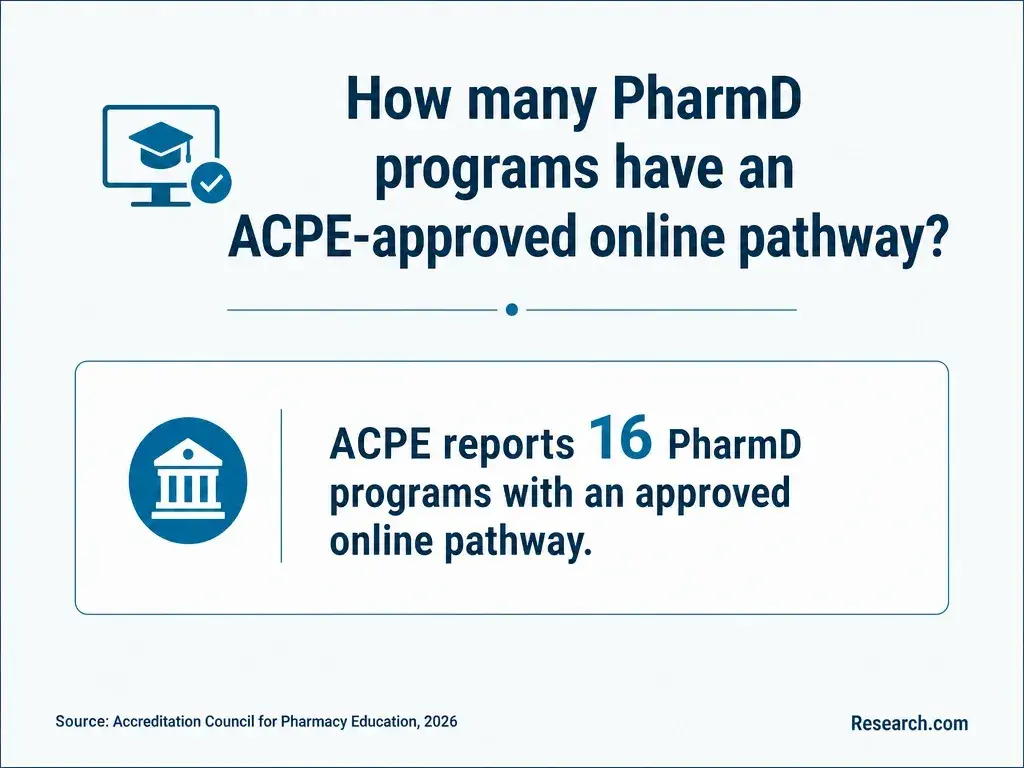
The usual U.S.-educated route starts with a professional Pharm.D. from a program accredited by the Accreditation Council for Pharmacy Education (ACPE). After graduation, candidates must meet their state board's requirements for a pharmacist license, which generally include the North American Pharmacist Licensure Examination (NAPLEX) and any applicable jurisdiction-specific law examination and other conditions. Jurisprudence exam requirements vary by jurisdiction; do not assume every state uses the MPJE. A degree or passing exam alone does not issue a license.
For ambulatory care hiring, distinguish the legal minimum from an employer's preferred qualifications. A posting may require an active pharmacist license while preferring outpatient experience, residency training, or board certification. Skills in patient interviewing, clinical documentation, interpreting monitoring results, and communicating with a care team matter across these routes.
If you have not yet entered pharmacy school, compare pharmacy application eligibility pathways against each school's current prerequisite and matriculation rules. Eligibility to apply is separate from completing the Pharm.D. and qualifying for licensure.
Is a pharmacy residency required for ambulatory care practice?
No universal law requires a residency to practice as an ambulatory care pharmacist. Employers set their own hiring criteria, however, and a clinical outpatient position may require or strongly prefer postgraduate residency training. Read the actual posting before assuming that a license alone - or a particular residency - will qualify you.
A postgraduate year one (PGY1) residency develops broad pharmacy practice skills. A postgraduate year two (PGY2) ambulatory care residency provides more focused training and commonly follows a PGY1 or an accepted equivalent under the program's eligibility rules. Direct employment may be the better choice when you can obtain supervised outpatient experience without delaying full pharmacist employment. A residency may be worth its lower trainee compensation and additional year of training when your target roles call for the experience it offers. A fellowship generally serves a different purpose and is not a routine substitute for clinical residency training.
Students comparing Pharm.D. programs for a faster path should keep that decision separate: a shorter degree timeline does not remove state licensure requirements or an employer's postgraduate training preference.
The pathways differ mainly in when you gain structured outpatient experience. This comparison can help you decide whether to apply for a job or commit to postgraduate training.
| Pathway | What it offers | Main trade-off |
| Licensed pharmacist to outpatient job | Immediate employment and experience in an available clinic or outpatient role | Some clinical positions may prefer residency-trained applicants |
| PGY1, then outpatient employment | Broad clinical training before seeking an ambulatory care position | Additional training time without guaranteed placement |
| PGY1 followed by ambulatory care PGY2 | Focused, supervised specialty experience | More time in training and a competitive selection process |
| Existing pharmacist transitioning from another setting | Builds on established medication and patient-care experience | May require deliberate work to demonstrate outpatient assessment and documentation skills |
For a career changer, the strongest route is the one that closes the gaps visible in your target job postings. Outpatient rotations, clinic projects, mentoring, and employer-sponsored training can help, but none replaces a required license. When comparing online pharmacy education options before earning the degree, verify in-person clinical rotations and any campus requirements rather than assuming online instruction means an entirely remote path.
An ambulatory care residency typically combines supervised patient care with longitudinal responsibilities. Depending on the program, residents may participate in primary care or specialty clinics, medication management, transitions of care, quality improvement, teaching, and practice-based research. They may also learn to document recommendations and evaluate outcomes within the organization's care model.
Program details matter more than a rotation title. Check how much time residents spend seeing patients, which conditions and populations they encounter, whether they work with an interprofessional team, and what authority pharmacists actually have under local rules. For PGY2 programs, confirm current accreditation status and eligibility directly through ASHP and the program; also verify its current application process and Match participation where applicable.
Do not confuse the length of a professional pharmacy degree with a postgraduate residency. Guides to online pharmacy program length may cover credentials other than an entry-to-practice Pharm.D.; a short online program does not replace pharmacist licensure or residency training.
BCACP stands for Board Certified Ambulatory Care Pharmacist, a specialty credential awarded by the Board of Pharmacy Specialties (BPS). It is distinct from a state pharmacist license: certification recognizes qualifying training or practice and an examination, but does not authorize someone to practice pharmacy without licensure.
Applicants must meet BPS's current education, licensure, and ambulatory care practice or residency eligibility criteria, then pass the specialty examination and maintain the credential under BPS rules. BPS offers eligibility routes involving qualifying practice experience and residency training; the applicable route depends on your record. Before paying an application fee or accepting a role partly for certification eligibility, check the current BPS candidate guide for how your duties, residency accreditation, and practice time will count.
If you have yet to enroll in a Pharm.D., evaluate pharmacy admissions criteria as an earlier decision. Admission to pharmacy school does not establish future BCACP eligibility.
Relevant titles include ambulatory care clinical pharmacist, primary care clinical pharmacist, outpatient specialty clinic pharmacist, transitions-of-care pharmacist, and population health pharmacist. The titles are not standardized: two jobs with the same name may differ substantially in patient visits, prescribing protocols, dispensing duties, schedules, and required experience.
When screening a posting, look past the title to identify whether the pharmacist will provide direct care, support clinicians through consultations, manage medication access, or supervise an outpatient pharmacy service. That distinction tells you whether your strongest evidence is clinic rotations, chronic disease management, operational experience, or quality-improvement work. With experience, pharmacists may move into program development, precepting, management, or teaching, subject to employer qualifications.
If your primary goal is a quicker entry into pharmacy-related work, compare affordable short pharmacy programs carefully. A pharmacy technician or other shorter credential does not qualify someone to work as a licensed pharmacist.
The Bureau of Labor Statistics reports $140,910 in May 2025 as the median annual pay for pharmacists overall. It does not identify that figure as an ambulatory care pharmacist median. Use it as broad context, not a salary offer or a forecast of what a new graduate, resident, or experienced outpatient clinician will earn.
Compensation can vary with location, employer, responsibilities, experience, and whether a position is a residency rather than a staff role. Compare an offer's pay and benefits with its training value, schedule, and any required relocation. If you are still choosing a Pharm.D., online pharmacy degree affordability deserves a separate calculation that includes required travel and clinical-placement costs, not just advertised tuition.
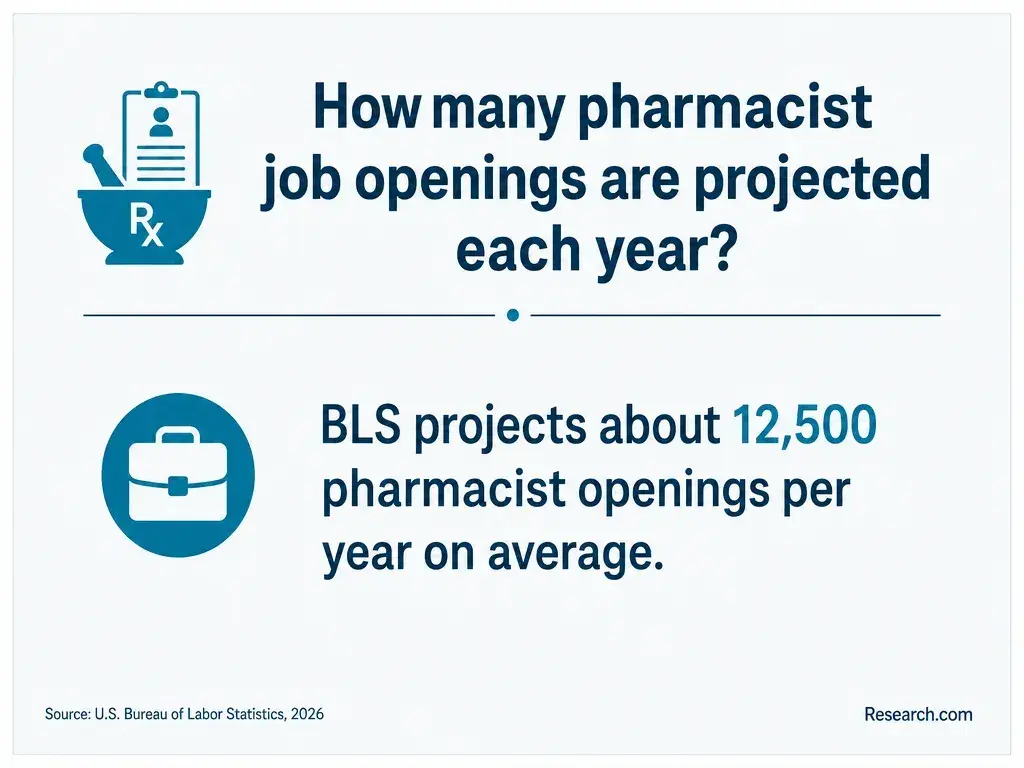
The Bureau of Labor Statistics projects 5% growth for pharmacists from 2025-2035, with about 12,500 openings per year. These are projections for the entire pharmacist occupation, not a count or growth rate for ambulatory care positions. They indicate a broader labor market in which to search, but cannot tell you how many clinic jobs your preferred region will offer.
Local demand also depends on how health systems staff outpatient services, fund pharmacist positions, and use pharmacists under state practice rules. To test your prospects, compare current postings in your target region: count positions that accept your experience, note repeated residency or certification preferences, and ask local preceptors which clinics hire new graduates. A discussion of online doctorate time to completion cannot substitute for this job-market check or establish the timeline for a licensed pharmacist career.
How should pharmacists choose an ambulatory care residency program?
Start with the job you hope to hold after training, then compare programs against the experience that job requires. A program's reputation matters less to your decision than its actual patient-care opportunities, supervision, and graduates' subsequent roles.
Use these checks when reviewing program materials and interviewing residents and preceptors:
- Confirm current accreditation, application requirements, Match participation if applicable, and whether your training meets the program's entry criteria.
- Ask which clinics residents staff, how independently they work under supervision, and how much direct patient care they provide.
- Compare required projects, teaching, call or staffing duties, schedule, compensation, benefits, and relocation costs.
- Ask where recent residents obtained jobs and whether the program's experience aligns with the qualifications in your target postings.
A warning sign is a program that describes extensive clinical exposure but cannot explain residents' actual responsibilities. If you are still selecting a pharmacy school, review pharmacy school transfer admission separately; accepted prior credit does not guarantee a residency position or shorten postgraduate training.
Other Things You Should Know About PharmD
Some roles include telehealth visits or remote medication reviews, but others require on-site clinic work. Check the position's location, patient-care duties, and applicable state licensure requirements before assuming it can be done remotely.
Some do, but many positions focus on clinical assessment and medication management rather than routine dispensing. The employer's service model determines the mix of duties.
Yes, if the pharmacist meets a position's requirements. Patient counseling and medication expertise can transfer; documenting clinical decisions, managing follow-up, and working within clinic protocols may require additional experience.
Seek outpatient advanced pharmacy practice experiences (APPEs), relevant introductory experiences when available, and projects that develop patient interviewing, documentation, and team communication. Ask prospective preceptors what students actually do, not just which clinic they attend.
- PGY2 Ambulatory Care Pharmacy Residency Program | Veterans Affairs https://www.va.gov/kansas-city-health-care/work-with-us/internships-and-fellowships/pgy2-ambulatory-care-residency/
- Pharmacists' Patient Care Process: A State "Scope of Practice" Perspective - PMC https://pmc.ncbi.nlm.nih.gov/articles/PMC7592868/
- Advanced Pharmacist Practitioner Information | California State Board of Pharmacy https://www.pharmacy.ca.gov/applicants/app.shtml
- PGY2 Ambulatory Care | ucsf.edu https://pharmacyresidencyprograms.ucsf.edu/pgy2-ambulatory-care
- How to Become a Pharmacist: A Step-by-Step Guide | MCPHS https://www.mcphs.edu/admission-and-aid/blog/how-to-become-a-pharmacist
- Ambulatory Care Career Tool | ashp.org https://www.ashp.org/-/media/assets/pharmacy-practice/resource-centers/ambulatory-care/ambulatory-care-career-tool.ashx
- PGY2 Ambulatory Care Pharmacy Residency | UF Health https://ufhealth.org/pharmacy-residency-program/pgy2-ambulatory-care
- BCACP - Board Certified Ambulatory Care Pharmacist https://careers.accp.com/career-resources/on-the-job-3/bcacp-board-certified-ambulatory-care-pharmacist-a-practical-guide-for-clinical-pharmacy-professionals-139
- Ambulatory Care Residency | Harris Health System https://jobs.harrishealth.org/ambulatory-care-residency
- From Inpatient Pharmacist to Ambulatory Care Pharmacist | ashp.org https://careers.ashp.org/career-resources/on-the-job-3/from-inpatient-pharmacist-to-ambulatory-care-pharmacist-a-health-system-pharmacy-career-path-101