Pharmacist Benefits and Total Compensation Guide

Co-Founder and Chief Data Scientist
A pharmacist job offer is worth more than its salary - but a strong benefits package may not offset substantial pharmacy school debt or a schedule you cannot sustain. This guide is for prospective Pharm.D. students and pharmacists comparing career options.
It explains what total compensation includes, how pay can differ across practice settings, and what education and licensing require. You will also learn how to compare offers and program costs without treating a national salary figure as a personal earnings forecast.
Key Things You Should Know
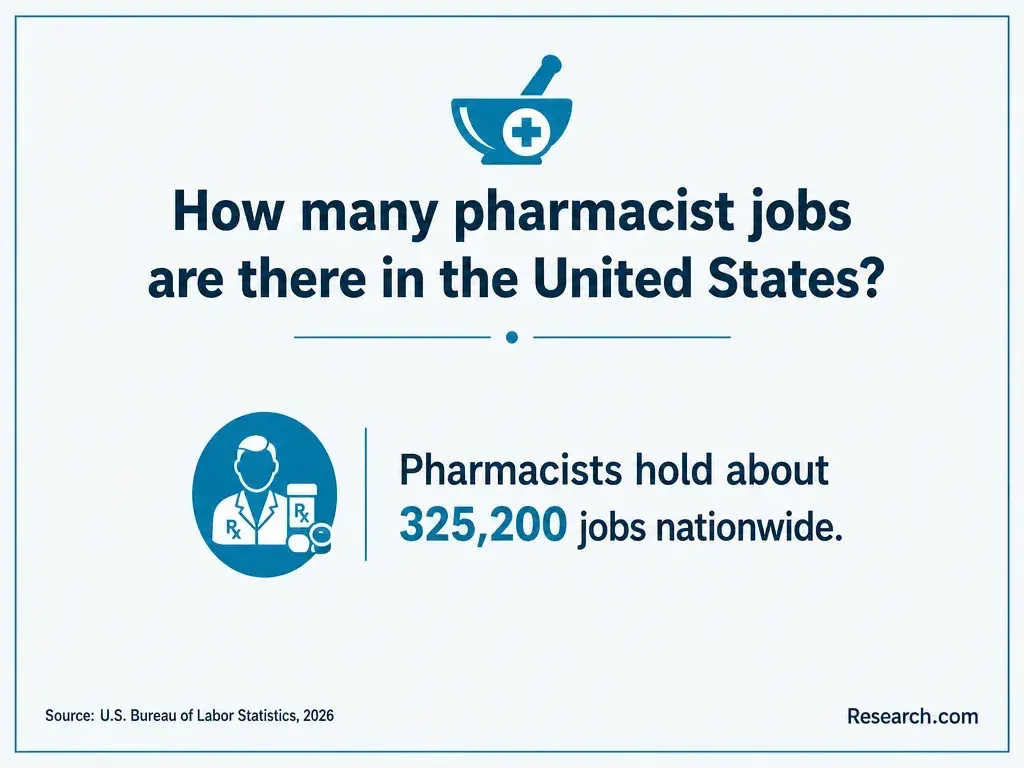
- The Bureau of Labor Statistics reports pharmacist median annual pay of $140,910 in May 2025; that figure is wages, not the value of health coverage, retirement contributions, or paid leave.
- Compare offers using guaranteed pay, expected hours, insurance costs, employer retirement contributions, paid time off, and any repayment or bonus conditions - not salary alone.
- A U.S. pharmacist generally needs a professional Pharm.D. from an Accreditation Council for Pharmacy Education (ACPE)-accredited program and a state license; the degree alone does not authorize practice.
What benefits are included in a pharmacist's total compensation package?
Total compensation combines wages with employer-provided financial benefits. A job posting may advertise a bonus or tuition assistance without explaining eligibility, so compare the written terms of each offer rather than assuming every listed benefit applies to you.
The following categories show what to include in an offer comparison and where a benefit's stated value can be misleading.
| Component | What to check | Why it matters |
| Base pay and differentials | Guaranteed salary or hourly rate; evening, weekend, holiday, or on-call pay | A higher rate may come with fewer guaranteed hours. |
| Health coverage | Premiums, deductibles, provider network, and dependent coverage | Employer coverage is valuable, but your out-of-pocket costs vary. |
| Retirement | Employer match or contribution, eligibility, and vesting | An advertised match is not necessarily money you receive immediately. |
| Paid leave | Vacation, sick leave, holidays, and rules for using time off | Leave has less practical value if staffing makes it difficult to take. |
| Professional support | License renewal, continuing education, professional dues, and training funds | These can reduce recurring career expenses. |
| Incentives and repayment | Bonus targets, student loan assistance, and repayment or clawback terms | Conditional payments should not be counted as guaranteed income. |
Student loan assistance is especially relevant when weighing employment benefits against pharmacy program tuition options. Ask whether assistance is taxable, when payments begin, and whether leaving the job triggers repayment.
How much do pharmacists earn in salary and total compensation?
The Bureau of Labor Statistics reports $140,910 in May 2025 as the median annual pay for pharmacists in the United States. Half earned more and half earned less. This wage measure does not tell you what a particular employer contributes toward insurance or retirement, and it is not a forecast of a new graduate's pay.
For an offer comparison, start with guaranteed annual wages based on the hours the employer commits to provide. Then add the employer's documented retirement contribution and other benefits you can reasonably value. Keep performance bonuses and overtime separate as potential compensation. Finally, compare premiums, expected out-of-pocket costs, commuting, scheduling demands, and any student loan payments you would still owe.
That calculation is also useful before enrolling: pharmacy program value and duration depend on the full cost of attendance and time away from earnings, not a national median wage. A well-paid job can still be a poor financial fit if debt payments or working conditions are unsustainable.
How does pharmacist compensation vary by practice setting and specialty?
Retail pharmacies, hospitals, ambulatory clinics, specialty pharmacies, long-term care organizations, and industry employers structure work differently. Pay can reflect local labor demand, shift coverage, supervisory duties, clinical responsibilities, and employer size. A specialty title alone does not establish a higher salary.
The comparison below focuses on the trade-offs that a national pharmacist median cannot capture; actual duties and benefits depend on the employer.
| Setting | Possible compensation feature | Trade-off to examine |
| Community pharmacy | Potential shift differentials or store-management incentives | Weekend coverage, staffing, and performance expectations |
| Hospital or health system | Potential shift differentials and structured benefits | Overnight, weekend, or holiday rotations |
| Ambulatory care | Potentially predictable clinic scheduling | Role availability and experience requirements |
| Industry or managed care | Potential bonus or equity components | Variable pay, travel, or different hiring criteria |
A science graduate exploring pharmacy degree options for science majors should first determine whether the desired role legally requires pharmacist licensure. Some industry and research jobs do not; pursuing a Pharm.D. solely for a presumed specialty pay premium may add unnecessary cost.
The usual U.S.-educated route is to complete a school's required undergraduate pre-pharmacy coursework, enter a professional Doctor of Pharmacy (Pharm.D.) program, and then meet state licensing requirements. Pre-pharmacy courses prepare applicants for admission; they are not the professional Pharm.D. curriculum. Schools differ on whether applicants need a bachelor's degree, which prerequisites they accept, and whether courses can be unfinished when an application is submitted.
Applicants planning to apply to pharmacy school while finishing prerequisites should confirm which courses must be completed before enrollment. Admission with outstanding coursework is not permission to skip it. The Pharmacy College Admission Test was retired in 2024 and should not be treated as a current admissions requirement.
A pharmacy technician credential or a degree in pharmaceutical sciences does not, by itself, qualify someone for pharmacist licensure. Internationally educated pharmacists may have a separate credential-evaluation and licensing route; they should check the relevant state board and National Association of Boards of Pharmacy (NABP) requirements rather than assuming the U.S.-educated pathway applies unchanged.
ACPE accredits professional pharmacy education programs, not individual pharmacists. Before enrolling, check the program's current status in ACPE's directory. Also distinguish that status from an institution's accreditation and, for distance education, its authorization to enroll students in your state. None of these alone establishes eligibility for a clinical placement or a pharmacist license in a particular state.
After completing the degree, graduates generally must satisfy their state board's application, experiential-hour, examination, and other requirements. The North American Pharmacist Licensure Examination (NAPLEX) assesses pharmacy knowledge, but passing it does not itself issue a license. Jurisprudence testing varies: a board may use the Multistate Pharmacy Jurisprudence Examination (MPJE), the Uniform Multistate Pharmacy Jurisprudence Examination (UMPJE), another assessment, or different requirements. Check the board where you intend to practice.
When considering top online pharmacy doctorate programs, verify ACPE status, state authorization, required in-person activities, and where clinical placements can be completed. Online coursework does not make a professional Pharm.D. fully remote or remove state licensing requirements.
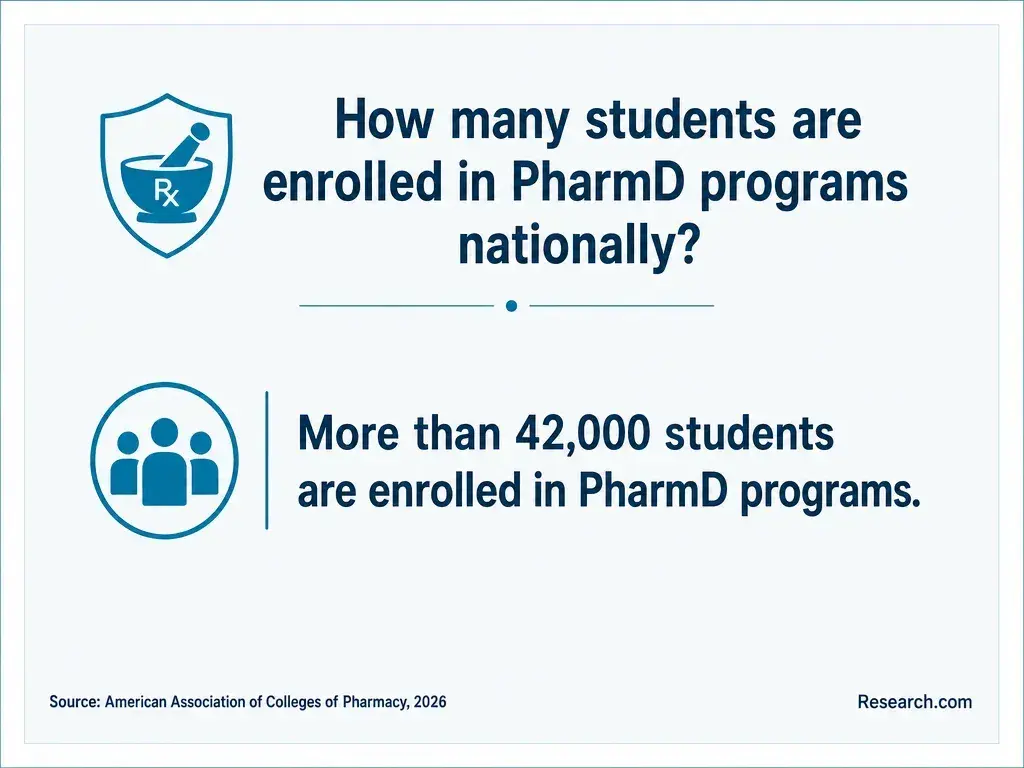
Prospective pharmacists can reach a professional Pharm.D. through different entry routes. Some programs admit students after specified undergraduate prerequisites; others are part of a longer, structured pre-pharmacy-to-Pharm.D. pathway. Certain schools offer accelerated professional curricula. The starting point and calendar may differ, but applicants must still meet the program's academic and experiential requirements.
Someone with prior college coursework should request a school-specific evaluation of pharmacy transfer credit requirements. Acceptance of undergraduate prerequisites is different from transfer into professional Pharm.D. courses, which may be limited by sequencing and school policy. The receiving institution decides how credits apply.
Choose the route that lets you complete verified requirements at a manageable total cost - not simply the one with the shortest advertised timeline. If your goal is a pharmacy-adjacent job rather than licensed pharmacist practice, compare that job's actual hiring requirements before committing to a Pharm.D.
A professional Pharm.D. curriculum typically integrates biomedical and pharmaceutical sciences with pharmacotherapy, medication safety, calculations, patient communication, and supervised practice. Pharmacotherapy connects disease and drug knowledge to treatment decisions; communication training develops the ability to explain medication use and coordinate with patients and clinicians.
Students also complete introductory pharmacy practice experiences (IPPEs) and later advanced pharmacy practice experiences (APPEs). These supervised placements expose students to practice settings and responsibilities at different stages of training. Schools determine placement processes and schedules, while sites and states may impose requirements such as intern registration, immunizations, and background checks.
Be careful when comparing fast online pharmacy program choices: a short pharmacy-related credential is not necessarily an initial professional Pharm.D. and may not lead to pharmacist licensure. Confirm the exact credential, its ACPE status where applicable, and its in-person requirements.
Many professional Pharm.D. curricula take four academic years after prerequisites; some follow accelerated calendars. Time spent completing prerequisite coursework comes before the professional curriculum and varies by applicant and school. A shorter calendar does not necessarily mean fewer required experiences - or a lower total cost.
Advertised tuition is only one part of the decision. Budget for mandatory fees, books and clinical resources, equipment, health and background-check requirements, rotation travel or temporary housing, and eventual licensing expenses. Compare each school's current cost of attendance with the schedule it would allow you to work. Faster Doctor of Pharmacy routes may reduce time out of the workforce but compress coursework and limit opportunities for paid work.
Ask financial aid offices for borrowing guidance tied to your start date and classification. Federal loan rules changed for many new graduate and professional borrowers beginning July 1, 2026; do not assume earlier borrowing limits or unrestricted Grad PLUS access apply to you. Estimate debt using an actual aid offer before comparing it with plausible, rather than guaranteed, earnings.
There is no universally highest-paying pharmacist path. Management, hard-to-staff shifts or locations, specialized clinical work, and industry roles may offer greater compensation potential, but openings, entry requirements, variable pay, and schedules differ. A manager's higher salary, for example, should be weighed against staffing and operational responsibility.
The Bureau of Labor Statistics projects 5% growth for pharmacists from 2025-2035, with about 12,500 openings per year. Those occupation-wide figures indicate opportunities may arise, not that a particular specialty or location will have openings at a desired salary.
For clinical specialization, a postgraduate year one (PGY1) residency provides broad advanced training; a PGY2 residency builds on that foundation in a specialty area. Fellowships often emphasize research or industry-focused development. Board of Pharmacy Specialties certification is a separate credential with its own eligibility rules, not a substitute for state licensure. None is universally required for pharmacist employment. Compare the additional training time and forgone full pharmacist earnings against requirements in actual job postings. General doctoral degree timeline options are not substitutes for a qualifying Pharm.D. when the job requires pharmacist licensure.
How should students choose an accredited pharmacy program?
Start with the job you want and the state where you expect to seek licensure. Then compare programs on the facts that affect your eligibility, debt, training, and ability to finish - not on advertised salary outcomes alone. Published licensure-exam results can provide context, but they do not predict an individual student's result.
Use these checks before accepting an offer of admission; each calls for a specific answer from the school or relevant authority.
- Confirm the professional Pharm.D. program's current ACPE accreditation status and your target state board's licensing requirements.
- Get a written prerequisite and transfer-credit evaluation, including any courses that must be finished before enrollment.
- Compare full cost-of-attendance estimates and aid eligibility for your entry year, including rotation travel and potential lost wages.
- Ask who arranges IPPE and APPE sites, where placements may occur, and what travel, registration, or time away from work may be required.
- Review the actual weekly schedule, campus attendance requirements, student support, and published NAPLEX outcomes.
If admission eligibility is uncertain, pharmacy programs with flexible entry requirements can be a starting point for comparison - not evidence that admission is assured or standards are equivalent. Obtain current rules directly from each school before paying an application deposit.
Other Things You Should Know About PharmD
Not necessarily. Eligibility for insurance, retirement contributions, and paid leave often depends on employment classification and hours worked. Request the benefit documents for the exact position offered.
Possibly. Employers may have more flexibility on scheduling, professional development funds, relocation support, or a start date than on base pay. Ask which terms are negotiable before accepting.
No. Treat it as a one-time payment unless the agreement says otherwise. Read any service commitment, payment schedule, tax treatment, and repayment clause before factoring it into your decision.
That depends on the plan's vesting rules. Your own contributions generally remain yours, but you may forfeit some employer contributions if you leave before they vest. Check the plan documents.
- Pharmacists' Professional Satisfaction and Challenges - PMC https://pmc.ncbi.nlm.nih.gov/articles/PMC11511086/
- The Health Care Industry and Calculating Overtime Pay | dol.gov https://www.dol.gov/agencies/whd/fact-sheets/54-healthcare-overtime
- More Than 60% of U.S. Pharmacists Were Women but They Earned Less Than Their Male Counterparts | Census.gov https://www.census.gov/library/stories/2024/10/american-pharmacists-month.html
- Employee benefits | Internal Revenue Service https://www.irs.gov/businesses/small-businesses-self-employed/employee-benefits
- Which Job Offer Should You Choose? Here's a Great Tool To Evaluate Compensation Packages. - eCornell #IMPACT https://ecornell-impact.cornell.edu/which-job-offer-should-you-choose-heres-a-great-tool-to-evaluate-compensation-packages/
- How Much Do Pharmacists Make? Salary, Pay and Career Outlook | PCOM https://www.pcom.edu/pharmacy/news/how-much-do-pharmacists-make.html
- Employer-Sponsored Health Insurance 101 | KFF https://www.kff.org/health-costs/health-policy-101-employer-sponsored-health-insurance/
- Competitive Pay and Benefits for Health-System Pharmacy Teams 2026 | American Society of Health-System Pharmacists https://careers.ashp.org/career-resources/employer-4/competitive-pay-and-benefits-for-health-system-pharmacy-teams-2026-27
- Specialty | pharmacist.com https://www.pharmacist.com/Career/Career-Pathways/Career-Option-Profiles/Specialty