PharmD interprofessional education curriculum

Co-Founder and Chief Data Scientist
A Pharm.D. program may promise collaboration with future physicians, nurses, and other clinicians, but the experience can range from occasional classroom exercises to sustained work with real care teams. That difference matters when you are comparing schools, especially if you expect to learn online or complete clinical rotations far from campus. This guide explains what interprofessional education (IPE) should teach, where it fits in the Doctor of Pharmacy curriculum, and how to assess whether a program provides meaningful opportunities rather than simply advertising them.
Key Things You Should Know
- Strong Pharm.D. interprofessional education combines shared learning with other health professions, supervised patient-care experiences, and assessment of how students work on a team - not just attendance at events.
- The four IPEC competency areas are values and ethics, roles and responsibilities, communication, and teams and teamwork. Ask how a program assesses each area across its professional curriculum and rotations.
- A Pharm.D. professional curriculum commonly takes four years after prerequisite study; online instruction does not eliminate in-person clinical experiences or make degree completion equivalent to pharmacist licensure.
What Is Interprofessional Education in a PharmD Curriculum?
Interprofessional education means students from two or more health professions learn with, from, and about one another to improve collaboration and patient care. In a Pharm.D. program, that might mean a pharmacy student and nursing students jointly develop a medication-safety plan, then discuss who communicates each recommendation to the patient and care team.
IPE is part of the professional Doctor of Pharmacy curriculum, not a substitute for undergraduate pre-pharmacy prerequisites. A student exploring pharmacy doctorate options after biology should distinguish prior science coursework from the supervised clinical judgment and team-based practice developed during a Pharm.D. program. Having multiple professions in a room is not, by itself, meaningful IPE; students should have a shared task, feedback, and a chance to improve.
Why Is Interprofessional Education Required in PharmD Programs?
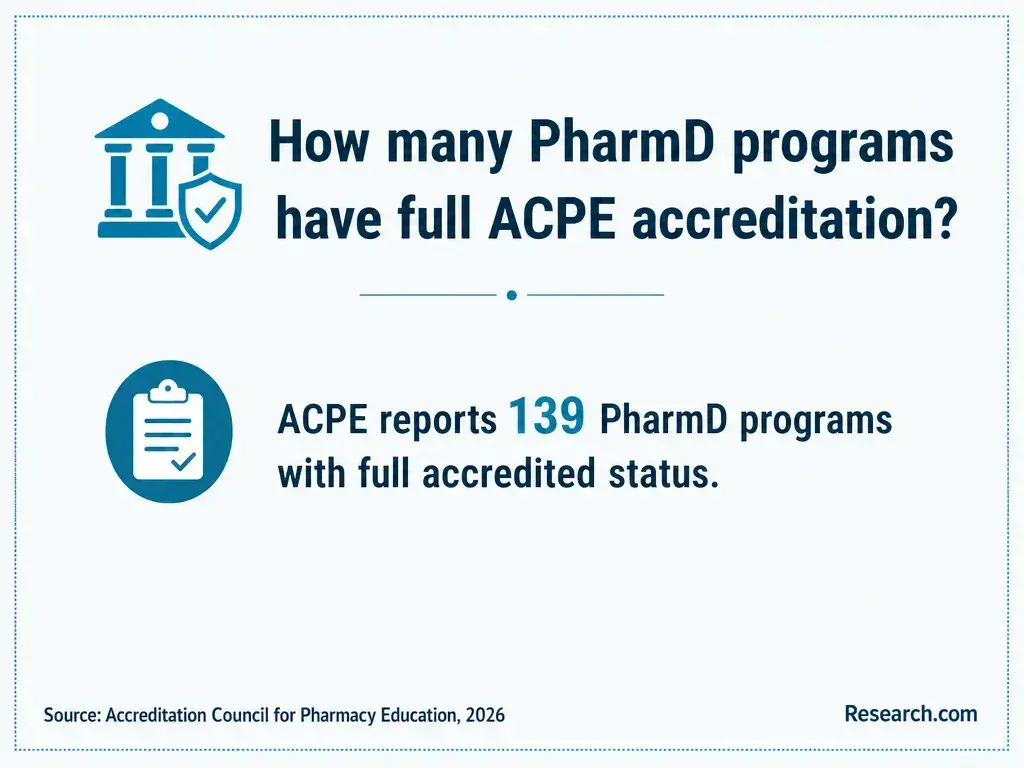
The Accreditation Council for Pharmacy Education (ACPE) sets standards for professional Pharm.D. programs that address collaborative patient care and interprofessional learning. The aim is practical: medication decisions depend on information and responsibilities shared among pharmacists, prescribers, nurses, patients, and other professionals. Students need practice explaining a drug-therapy concern, understanding another clinician's perspective, and reaching a workable plan.
ACPE accredits professional programs; it does not certify individual pharmacists. Its program accreditation is also different from a university's institutional accreditation or permission to enroll an online student in a particular state. Applicants considering pharmacy schools and prerequisite completion should likewise separate entry requirements from the IPE and clinical requirements they must complete after entering the professional program. A school should be able to show where those experiences occur and how performance is evaluated.
What Does an Interprofessional PharmD Curriculum Include?
IPE usually develops from structured exercises into supervised patient care. The following comparison helps distinguish activities that introduce teamwork from experiences that test whether a student can use it.
| Curriculum setting | Typical collaborative work | Evidence of learning |
| Classroom or simulation | Discuss a patient case with learners from other professions and agree on a care plan. | Observed communication, role identification, and feedback. |
| Introductory pharmacy practice experiences (IPPEs) | Observe and participate in supervised pharmacy practice, with team contact where the site permits. | Preceptor feedback on professional communication and participation. |
| Advanced pharmacy practice experiences (APPEs) | Contribute to supervised patient-care activities across clinical settings and, where available, established care teams. | Assessment of clinical reasoning, recommendations, follow-through, and teamwork. |
IPPEs build early practice skills; APPEs provide more advanced supervised experiences later in the professional curriculum. Team composition varies by site, so an APPE does not guarantee daily contact with every profession. When comparing online doctorate lengths, do not mistake a shorter advertised academic schedule for permission to skip required Pharm.D. experiential education.
Programs may use shared seminars, simulated patient encounters, case conferences, community health activities, and supervised clinical placements. The strongest sequence lets students first clarify each profession's role, then practice a joint decision, receive feedback, and apply those skills in later experiences. A simulation can provide consistent practice; a clinical rotation adds the uncertainty and workflow constraints of patient care.
Availability depends on partner schools and placement sites. A pharmacy school without a medical school on the same campus can still arrange meaningful collaboration, while a school with several health colleges does not automatically provide it on every rotation. Students considering whether to complete a Pharm.D. on an accelerated schedule should ask when shared sessions occur and whether compressed terms leave adequate time for preparation, feedback, and required in-person experiences.
For clinical placements, confirm who secures and approves sites, whether travel is likely, and what the student must arrange. Site and state rules may require intern registration, immunizations, background checks, or other clearance before participation.
The Interprofessional Education Collaborative (IPEC) organizes collaborative practice into four connected competency areas. They describe observable behavior, not a separate license or specialty credential.
- Values and ethics: Respect patients, families, and professional colleagues while making shared decisions.
- Roles and responsibilities: Explain the pharmacist's contribution and recognize when another professional's expertise is needed.
- Interprofessional communication: Convey medication concerns clearly, listen, and confirm that recommendations are understood.
- Teams and teamwork: Coordinate tasks, manage disagreement constructively, and reflect on how the team performed.
Competency labels are less informative than the assessment behind them. Ask whether students receive individual feedback during team activities and can demonstrate improvement on later rotations. In a broader comparison of pharmacy program value and duration, a low price or short timeline should not outweigh missing evidence of supervised practice and evaluated teamwork.
An online or hybrid Pharm.D. program can bring students from different professions together through scheduled video discussions, virtual patient cases, and collaborative simulations. It may also require campus visits for hands-on instruction and assessments. IPPEs and APPEs still involve supervised practice at approved sites; "online" should not be read as fully remote, self-paced, or compatible with an unrestricted full-time work schedule.
When reviewing best online Doctor of Pharmacy programs, look beyond the course-delivery label. Ask whether live IPE meetings are required, which professions actually participate, how individual contributions are assessed, and whether the school can explain its placement process in your area. Confirm separately the program's current ACPE status, the institution's accreditation, state authorization for your location, and any restrictions affecting clinical placements or eventual licensure eligibility.
Admissions requirements vary by school. Applicants generally need specified pre-professional coursework, often including laboratory sciences, but a completed bachelor's degree is not universally required. Schools set their own rules for minimum grades, grade-point averages, course age, coursework in progress, interviews, recommendations, and credit earned elsewhere. Meeting a published minimum does not guarantee admission.
Use each school's current admissions page and, where applicable, its PharmCAS directory entry to check pharmacy school prerequisites and eligibility. Confirm whether that school uses PharmCAS, requires a supplemental application, and accepts your particular labs or transfer credits. The receiving school determines how prior coursework applies. The PCAT was retired in January 2024 and should not be treated as a current routine admissions test.
IPE should enter the admissions decision as a program-quality question, not as an assumed prerequisite: ask what preparation new students receive before their first shared patient-care exercise.
A traditional professional Pharm.D. curriculum commonly takes four years after the required pre-professional coursework; accelerated and other sequences vary. IPE is usually integrated into that curriculum rather than charged as a separate course. Its real costs can still include travel to campus sessions or rotations, temporary housing, missed work, and required clinical clearances.
Compare a school's published tuition and mandatory fees with its full cost-of-attendance estimate, then check which IPE and placement expenses that estimate includes. A low-cost online pharmacy doctorate may be less economical for a student who must travel repeatedly or arrange housing near a rotation site. Ask for the current academic-year figures rather than relying on an older advertised price.
If borrowing is necessary, review the current school financial-aid offer and Federal Student Aid rules for your enrollment period. Federal borrowing rules changed for many new graduate and professional borrowers beginning July 1, 2026; do not assume prior Grad PLUS availability or loan limits apply to a new student. A workable comparison includes both borrowing needs and the time clinical placements may take away from paid employment.
IPE helps students practice communication, patient safety, and collaborative judgment that they will need as pharmacists. It is not a separate licensing exam and does not itself satisfy every state requirement. A U.S.-educated graduate generally must complete an eligible Pharm.D. program and meet the relevant board's requirements, including the North American Pharmacist Licensure Examination (NAPLEX) and any applicable law examination or other state requirements. Jurisdictions differ: do not assume every board uses the MPJE, particularly as some transitioned to the UMPJE beginning in 2026. Passing an exam alone does not issue a license.
Shorter pathways described in discussions of online pharmacy degree time to completion should not be confused with a licensure-qualifying Pharm.D. A pharmacy technician qualification, for example, serves a different occupation. For career context, the Bureau of Labor Statistics reports pharmacists' median annual pay at $140,910 in May 2025 and projects 5% employment growth for 2025-2035. Those figures describe the occupation, not a salary or job outcome promised by an IPE-intensive program.
How Should Students Evaluate PharmD Programs With Strong IPE?
Favor a program that can document repeated collaboration, individual feedback, and realistic access to supervised clinical experiences. A program with one impressive annual event may be a weaker fit than one that teaches and assesses teamwork throughout the curriculum. Use the following questions with each school so the answers are comparable.
- Confirm the professional Pharm.D. program's current ACPE accreditation status, then ask where IPE appears in the required curriculum.
- Request examples of shared activities, participating professions, required attendance, and how individual students receive feedback.
- Ask which IPPE and APPE sites involve care teams, who approves placements, and whether travel or relocation may be required.
- For online or hybrid study, verify live meetings, campus visits, state authorization, and placement restrictions separately.
- Compare current tuition, required fees, estimated travel costs, and the time you may need away from work before accepting an offer.
If you are bringing prior college coursework, obtain a school-specific pharmacy prerequisite credit evaluation before assuming it shortens your path. Treat vague answers about placement support, the professions involved, or assessment methods as reasons to investigate further - not as proof that IPE is absent.
Other Things You Should Know About PharmD
Do not assume so. Employment may strengthen your experience, but the school decides whether an activity meets a specific curricular requirement and how it must be documented and assessed.
Not universally. Employer expectations vary by role. A residency provides postgraduate training; it is different from the Pharm.D. degree, state licensure, and optional specialty board certification.
Students participate within their training, supervision, and applicable site and state rules. An educational exercise is not independent authority to prescribe or practice pharmacy.
No. Pharmacist scope of practice, including any prescribing or collaborative-practice authority, depends on the applicable state law, credentials, and practice arrangements - not IPE participation alone.
- Recommendations for the Next Generation of Accreditation Standards for Doctor of Pharmacy Education - PMC https://pmc.ncbi.nlm.nih.gov/articles/PMC3631720/
- IPE Curriculum - UW School of Pharmacy https://sop.washington.edu/pharmd/interprofessional-education-and-collaborative-practice/ipe-curriculum/
- Interprofessional Education (IPE) - College of Pharmacy https://pharmacy.utexas.edu/programs/pharmd/interprofessional-education
- Interprofessional Practice and Education - Pharmacy Students https://students.pharmacy.wisc.edu/interprofessional-practice-education/
- An assessment of interprofessional education in schools/colleges of pharmacy in the United States - ScienceDirect https://www.sciencedirect.com/science/article/abs/pii/S1877129720300563
- Interprofessional Education Collaborative (IPEC) Competencies | sfsu.edu https://slhs.sfsu.edu/ipe/interprofessional-education-collaborative-ipec-competencies