
PharmD Academic Warning and Remediation Policies: What to Check

Co-Founder and Chief Data Scientist
A Pharm.D. program's academic warning policy can determine whether one difficult course leads to tutoring, a delayed rotation, or dismissal. For applicants comparing schools - and students trying to understand their options - the details matter as much as the stated grade minimum.
This guide explains what commonly triggers intervention, how remediation and appeals work, and which questions to ask before accepting an offer. You can use it to compare written policies, estimate the consequences of a setback, and identify support that is available when you need it.
Key Things You Should Know
- There is no nationwide Pharm.D. GPA or course-grade cutoff for academic warning; compare each program's published rules for coursework, skills assessments, and clinical rotations.
- Ask whether a failed course can be remediated without repeating it, when a retake is offered, and whether either outcome delays progression or adds tuition and living costs.
- Before enrolling, get the current handbook and confirm probation conditions, appeal deadlines, dismissal triggers, and whether remediation preserves eligibility for required rotations and graduation.
What are PharmD academic warning and remediation policies?
Academic warning is an early notice that a student's performance is at risk. Remediation is a program-approved process for addressing a deficiency, such as reassessment after targeted study or repeating a course. Academic probation is generally a more formal status with conditions for continued enrollment. These terms do not have identical meanings at every school; the student handbook and academic catalog control.
Check whether the rules apply to individual exams, course grades, cumulative or term GPA, laboratory skills, professionalism, and supervised patient-care experiences. Also identify who makes progression decisions and whether the policy gives the school discretion to impose a different remedy when patient safety is involved.
Prerequisite undergraduate classes are distinct from the professional Pharm.D. curriculum. A student exploring pharmacy education after undergraduate science coursework should therefore compare both admissions-grade rules and the separate policies that govern performance after enrollment.
What happens when a PharmD student is placed on academic probation?
Probation usually means a student may continue under specified conditions, not that dismissal is automatic. A notice may require a minimum grade or GPA by a deadline, meetings with an adviser, a learning plan, or restrictions on advancing to certain courses or rotations. The school should state how probation is removed and what happens if the conditions are not met.
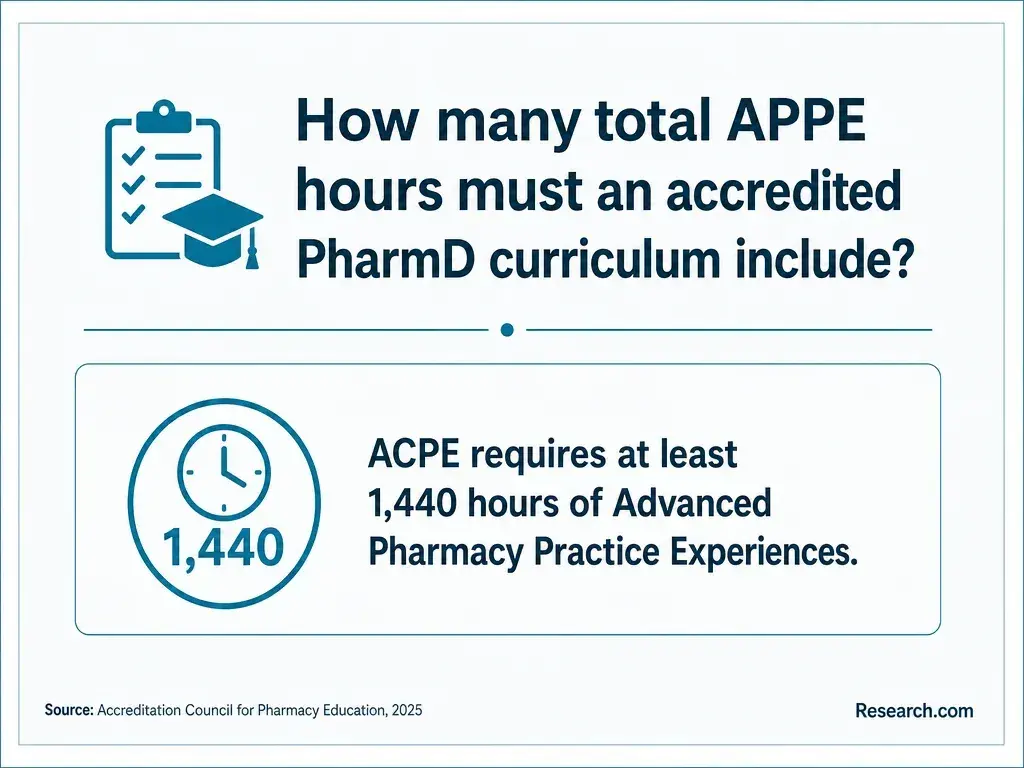
The practical issue is sequencing. If a prerequisite professional course is offered only at certain points in the curriculum, repeating it could postpone later courses or advanced pharmacy practice experiences (APPEs), which are supervised clinical rotations. When reviewing doctoral programs with flexible timelines, do not assume advertised scheduling flexibility also applies to Pharm.D. course retakes or rotations.
Request a sample probation notice or a written explanation of its required elements. Confirm whether probation affects financial aid satisfactory academic progress, scholarships, or rotation eligibility under separate policies; an academic standing decision does not answer those questions by itself.
Which PharmD remediation rules should applicants review before enrolling?
Read the current handbook alongside the catalog and your enrollment agreement. The most useful comparison is not simply whether a school "offers remediation," but whether you can predict what a setback would cost and when you could resume normal progression.
Use these questions with every program you are seriously considering:
- Which course, GPA, skills, conduct, and rotation outcomes trigger a warning, mandatory remediation, probation, or dismissal?
- How many remediation attempts are allowed, and does a successful attempt replace the original grade or only permit progression?
- When are reassessments and repeat courses available, and can a delay prevent entry into the next rotation block?
- Who pays for a repeated course, additional term, travel, or required assessment?
- Which decisions can be appealed, by what deadline, and under what grounds?
Keep admissions rules separate: acceptance with outstanding prerequisites does not mean deficiencies in the professional curriculum can be handled the same way. If you are researching pharmacy admissions for students with prior credits, obtain a written evaluation of remaining prerequisites as well as the professional-program progression policy.
The Accreditation Council for Pharmacy Education (ACPE) accredits professional Pharm.D. programs and expects them to document and assess student achievement, progression, and support. ACPE does not impose one national passing grade, GPA cutoff, remediation attempt limit, or appeal outcome for every school. Programs establish their own published requirements within the applicable accreditation framework.
Verify a program's current professional accreditation status in ACPE's official program records, then read that school's policies. ACPE accreditation is different from institutional accreditation and, for an online or hybrid pathway, authorization to enroll students in a particular state. Those distinctions also matter when comparing Pharm.D. programs for a faster path: a shorter schedule does not eliminate academic or experiential requirements.
There is no universal trigger. A program may intervene after a low exam score, a grade below its course-passing minimum, a term or cumulative GPA below its progression threshold, an unsuccessful skills assessment, or an unsatisfactory clinical evaluation. Some policies distinguish an early warning from a failed course; others require satisfactory performance in every specified competency even when an overall course average is passing.
Ask for the exact thresholds in the current catalog and the syllabus for courses that concern you. Check whether a retake changes the transcript grade, counts toward GPA, or satisfies progression without changing the original record. An admissions minimum is a different measure: resources on understanding pharmacy school admissions cannot tell you what grades a particular program requires after matriculation.
Options can include faculty-directed study, tutoring, a learning-skills plan, reassessment, repeating a course or clinical experience, or an individualized plan addressing professionalism or patient-care skills. The remedy depends on the deficiency and the school's policy; passing a reassessment may not erase the initial grade or restore an interrupted rotation schedule.
Ask which options are available for your type of deficiency, who approves them, and whether a student can continue other coursework while completing the plan. A failed clinical rotation may require a new approved site and preceptor, making its timeline different from an exam reassessment.
Shorter online pharmacy study options may serve other educational goals, but they do not substitute for remediation that a Pharm.D. program requires for degree completion.
An appeal is a request for review under a school's stated grounds and deadlines; it is not an automatic second remediation attempt. Policies commonly distinguish an appeal of a grade from an appeal of an academic standing decision. Dismissal may follow a specified failure, repeated deficiencies, or failure to meet probation conditions, while readmission - if offered - has its own eligibility and timing rules.
If you receive an adverse decision, preserve the notice and follow the written process rather than relying on an informal conversation. The sequence below helps prevent a missed deadline:
- Identify the decision being appealed, the authorized reviewer, and the submission deadline in the current policy.
- Request the relevant grades, evaluations, and written rationale; document any factual error or policy ground for review.
- Submit the required form and evidence on time, and ask whether you may attend classes or rotations while review is pending.
- Get the final decision and any conditions for continuation or readmission in writing.
If continuing elsewhere is a possibility, ask the receiving school - not the departing school - how it evaluates prior professional coursework. Pharmacy program credit acceptance is school-specific, and transferring may not preserve your place in the curriculum.
Compare the consequences of remediation, not just the delivery format. Online instruction may still involve scheduled classes, in-person skills assessments, campus visits, and in-person introductory and advanced pharmacy practice experiences (IPPEs and APPEs). A required repeat can affect travel, employment, and clinical placements differently for a remote student than for a campus student.
This comparison sheet captures the policy details most likely to change a student's schedule or budget. Fill each blank from the current handbook or a written answer from the program.
| Policy field | Program A | Program B |
| Reassessment format and location | ________ | ________ |
| Next opportunity to repeat a required course | ________ | ________ |
| Effect of a repeat on IPPE/APPE scheduling | ________ | ________ |
| Required campus travel after an unsuccessful assessment | ________ | ________ |
| Additional tuition, fees, and travel exposure | ________ | ________ |
When reviewing online Doctor of Pharmacy degree options, also confirm who coordinates clinical placements, whether a replacement site can be arranged near you, and which state authorization and intern-registration rules apply.
Remediation primarily affects whether and when a student completes the Pharm.D. and meets a state board's requirements to apply for licensure. Finishing an ACPE-accredited professional program does not itself issue a pharmacist license. Boards set jurisdiction-specific requirements that can include examinations, internship experience, and other application conditions; applicants should check the board where they intend to practice.
The North American Pharmacist Licensure Examination (NAPLEX) is part of the licensing process, but passing it alone does not confer a license. Jurisprudence requirements also vary: do not assume every jurisdiction uses the Multistate Pharmacy Jurisprudence Examination (MPJE), particularly as some jurisdictions have adopted the Uniform MPJE (UMPJE). A delayed graduation can affect an exam and employment timeline, so confirm dates with both the school and the relevant board.
A lower-cost or shorter credential can be worthwhile for a different goal, but affordable pharmacy studies with a focused timeline should not be mistaken for a substitute for the professional Pharm.D. pathway to U.S. pharmacist licensure.
How can students evaluate a PharmD program's academic support and outcomes?
Look for support you can access before a failure: course-level feedback, tutoring, faculty office hours, skills practice, advising, and a clear route to help during rotations. Ask whether support is available to online students and during evenings or clinical blocks. A generous-sounding remediation policy is less useful if repeat courses are infrequent or students cannot obtain timely help.
Request published graduation and NAPLEX outcomes, noting the cohort and reporting period, and ask how the school defines each measure. These outcomes provide context, not a prediction of your result or proof that one remediation policy caused a particular pass rate.
Finally, compare the financial downside of an extra term: tuition and mandatory fees, living costs, travel, and time away from paid work. When weighing Doctor of Pharmacy programs with manageable tuition, ask financial aid staff how a repeat term affects your individual aid eligibility. Federal borrowing rules changed for many new graduate and professional borrowers beginning July 1, 2026, so do not budget using an older loan-limit assumption.
Best decision rule: favor a program that gives you clear written thresholds, a feasible path to recover from a setback, accessible support, and costs you can manage if graduation is delayed. Treat vague answers about retakes, rotations, or appeals as a reason to obtain clarification before committing.
Other Things You Should Know About PharmD
A leave and remediation serve different purposes. A school may allow a leave for qualifying circumstances, but time away usually does not resolve an unmet academic requirement. Check approval, return, and course-sequencing rules before requesting one.
It depends on the school's recordkeeping policy. Ask which academic standing notations, course grades, and repeat attempts appear on an official transcript and whether a warning is recorded only internally.
Possibly, but required meetings, assessments, or repeated rotations may conflict with work hours. Obtain the expected schedule before committing to employment, especially if clinical attendance must occur at an approved site.
Eligible students can request accommodations through the school's established process. Contact its disability services office promptly to discuss assessments and clinical requirements; an accommodation request and an academic appeal generally follow separate procedures.
- School-Determined Requirements - FSA Partner Connect https://fsapartners.ed.gov/knowledge-center/fsa-handbook/2026-2027/vol1/ch1-school-determined-requirements
- Staying Eligible | Federal Student Aid https://studentaid.gov/understand-aid/eligibility/staying-eligible
- Successful Remediation of an Advanced Pharmacy Practice Experience for an At-risk Student - PMC https://pmc.ncbi.nlm.nih.gov/articles/PMC6291671/
- Academic Warning - UVA College of Arts & Sciences https://college.as.virginia.edu/academic-warning
- Remediation | icom.edu https://policies.icom.edu/hc/en-us/articles/11469997203607-Remediation
- Program: Pharmacy, PharmD | south.edu https://catalog.south.edu/preview_program.php
- Academic Standing, Leaves of Absence, and Reinstatement | princeton.edu https://ua.princeton.edu/policies-resources/academic-regulations/academic-standing-leaves-absence-and-reinstatement
- Student Progression Policies by Program | South University https://catalog.southuniversity.edu/student-progression-policies-by-program
- Student Progression Policy | ucsf.edu https://pharmd.ucsf.edu/policies/progression
- Academic Guidelines for Progression in the Doctor of Pharmacy Curriculum | UNC Eshelman School of Pharmacy https://pharmdstudenthandbook.web.unc.edu/academic-guidelines/academic-progression-guidelines/academic-guidelines-for-progression-in-the-doctor-of-pharmacy-curriculum/


