Community Pharmacist Career Path After a PharmD

Co-Founder and Chief Data Scientist
A Pharm.D. can lead directly toward community pharmacy, but the degree is only part of the path: you still need a state pharmacist license, and the right first job depends on the work you want to do. This guide is for prospective pharmacy students and new graduates weighing retail practice against other options. It explains the training and licensing sequence, what the workday involves, where advancement can lead, and how to judge education costs against the career you actually want.
Key Things You Should Know
- The usual route is prerequisite coursework, an accredited professional Pharm.D. program, state-required examinations and other licensing steps, then employment; a residency is not generally required for community pharmacy.
- Community pharmacists dispense and review medications, counsel patients, provide services permitted by state law, and oversee pharmacy operations. Choose this path if both patient contact and a busy dispensing environment appeal to you.
- The Bureau of Labor Statistics reports $140,910 in May 2025 as the median annual pay for pharmacists across settings - not specifically community pharmacists - and projects 5% growth from 2025-2035.
What is the community pharmacist career path after earning a PharmD?
The direct route is to complete a professional Doctor of Pharmacy (Pharm.D.) degree, meet a state board's licensing requirements, and seek a staff pharmacist position in a community setting. Community pharmacies include chains, supermarkets, independent pharmacies, and other outpatient dispensing locations. The degree does not itself authorize you to practice.
The stages below show where decisions remain open. A student interested in Pharm.D. programs for students with a pre-pharmacy background should first check how each school evaluates previously completed coursework.
| Stage | What it involves | Decision point |
| Before the Pharm.D. | Complete a school's undergraduate prerequisites; a bachelor's degree is not universally required. | Confirm course, laboratory, grade, and credit rules. |
| Professional program | Complete pharmacy coursework and supervised clinical experiences. | Seek substantial community-pharmacy exposure. |
| After graduation | Meet the state board's examination and other licensing requirements. | Check the rules where you intend to practice. |
| Early career | Enter staff practice or pursue optional additional training. | Compare direct employment with training suited to a specific goal. |
| Advancement | Pursue management, clinical-service leadership, operations, or ownership where opportunities exist. | Decide whether you want more patient-care specialization or business responsibility. |
A postgraduate year one (PGY1) residency can deepen general practice skills, and some graduates pursue further specialized training. Neither a residency nor a fellowship is the standard prerequisite for a community staff pharmacist job. Employer requirements for leadership and specialized service roles can differ.
What education and licensure requirements do community pharmacists need?
First, complete the admitting school's pre-professional coursework. That undergraduate study is distinct from the professional Pharm.D. curriculum; prerequisites and whether a bachelor's degree is needed vary by school. Compare current requirements rather than treating a single school's admissions threshold as a national rule. Resources on understanding pharmacy school admissions can help frame the questions to ask each program.
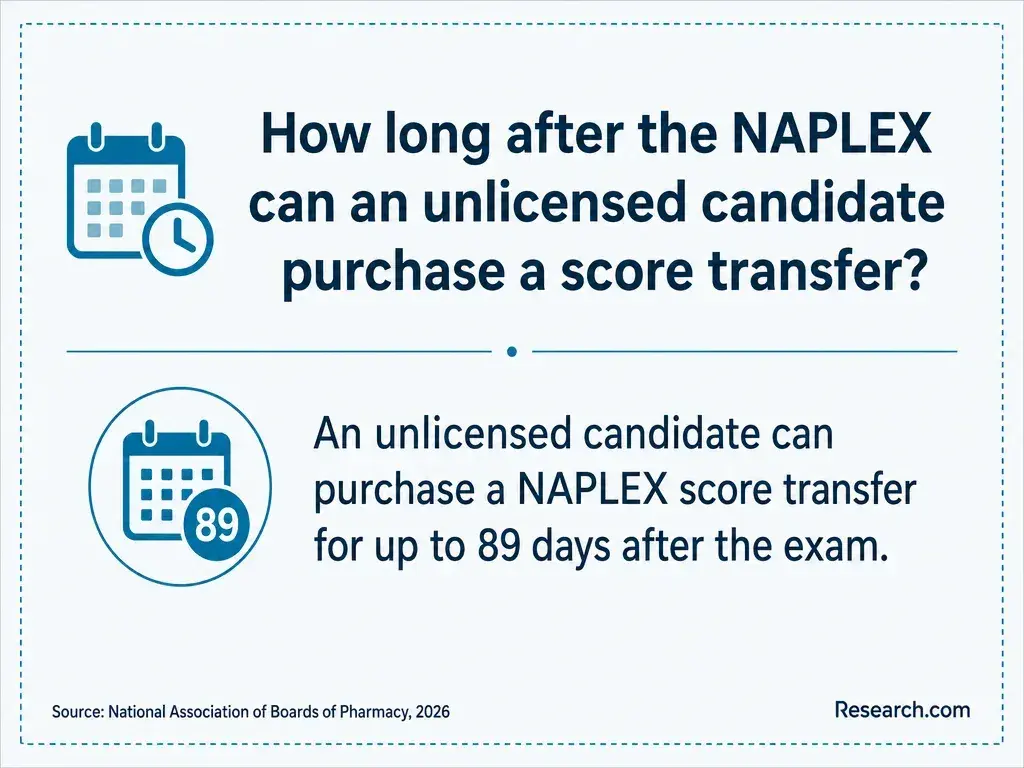
After earning a qualifying Pharm.D., graduates typically apply to a state board, meet its practical-experience and background requirements, and pass the North American Pharmacist Licensure Examination (NAPLEX). Jurisprudence requirements vary: a board may require the Multistate Pharmacy Jurisprudence Examination (MPJE), the newer Uniform Multistate Pharmacy Jurisprudence Examination (UMPJE), another assessment, or no separate jurisprudence examination. Passing an exam alone does not issue a license.
Check the board for your intended state before graduation, including intern registration and experience-credit rules. Internationally educated pharmacists have a different eligibility pathway and should not assume that a foreign pharmacy degree follows the U.S.-educated graduate process. Once licensed, pharmacists must meet the applicable renewal and continuing-education rules.
What jobs can you pursue after completing a PharmD?
A Pharm.D. can support applications across pharmacy practice, but jobs involving independent pharmacist practice require licensure. For a graduate considering community practice, the most relevant alternatives differ in patient contact, workflow, and additional training expectations.
| Role or setting | Typical focus | Important distinction |
| Community staff pharmacist | Medication dispensing, patient counseling, and pharmacy services | A common direct-employment route after licensure |
| Community pharmacy manager | Pharmacist duties plus staffing, compliance, and operations | Usually requires relevant experience and employer selection |
| Hospital pharmacist | Medication use within a health system | Training preferences vary by position and employer |
| Ambulatory care pharmacist | Outpatient medication management, often with a care team | May favor residency or relevant practice experience |
| Specialty pharmacy pharmacist | Complex medications, access coordination, and patient support | Role and credential expectations vary |
If your goal is research, teaching, or another field rather than licensed patient care, compare that goal before committing to a Pharm.D. Even the shortest online doctoral programs are not substitutes for a qualifying professional pharmacy degree and state licensure when the job is pharmacist.
A community pharmacist evaluates prescriptions for appropriateness, checks for medication-related problems, verifies dispensing, counsels patients, and communicates with prescribers and other care professionals. The role also includes supervising pharmacy technicians, maintaining required records, and responding to insurance or supply issues. Available services - such as immunizations, testing, or prescribing under a specific authority - depend on state law, training, and the practice site.
The trade-off is that direct patient access comes with interruptions, operational targets, and responsibility for safe decisions under time pressure. Ask prospective employers about pharmacist overlap, technician staffing, breaks, service expectations, and the share of time available for counseling. If you mainly want a shorter route into dispensing support rather than responsibility for pharmacist decisions, short online pharmacy degree timelines may describe other educational routes; a pharmacy technician role is a separate occupation and does not confer pharmacist authority.
The Accreditation Council for Pharmacy Education (ACPE) accredits professional Pharm.D. programs, not individual pharmacists. For a prospective U.S. pharmacy student, the program's current ACPE status is a fundamental licensure-eligibility check. Institutional accreditation addresses the institution as a whole; it does not replace professional-program accreditation. State authorization to offer distance education is a separate question again.
Verify the specific professional program and its current status in ACPE's official program records, then ask the licensing board where you plan to work whether that pathway meets its education rules. This matters especially if you are changing schools: a guide to pharmacy degree programs for transfer students cannot establish that professional credits will transfer. The receiving program decides what prior coursework it accepts and how it applies.
Professional Pharm.D. study builds on prerequisites such as foundational science. It commonly covers pharmacology, therapeutics, drug information, calculations, patient assessment, medication safety, communication, and the laws governing practice. The decision-relevant question is not merely whether a course appears in a catalog, but whether students practice applying its content to patients and prescriptions.
Supervised introductory pharmacy practice experiences (IPPEs) expose students to practice earlier in the program; advanced pharmacy practice experiences (APPEs) provide more sustained clinical rotations later. A prospective community pharmacist should examine the school's published community placements, patient-care activities, preceptor support, and rotation geography. For pharmacy school routes for returning students, also confirm which prerequisites must be finished before matriculation; flexibility at application does not eliminate professional coursework or rotations.
Schools coordinate or approve experiential sites under their policies, but students may still need intern registration, health documentation, background checks, transportation, or temporary housing. Do not assume a current pharmacy job can replace a required rotation.
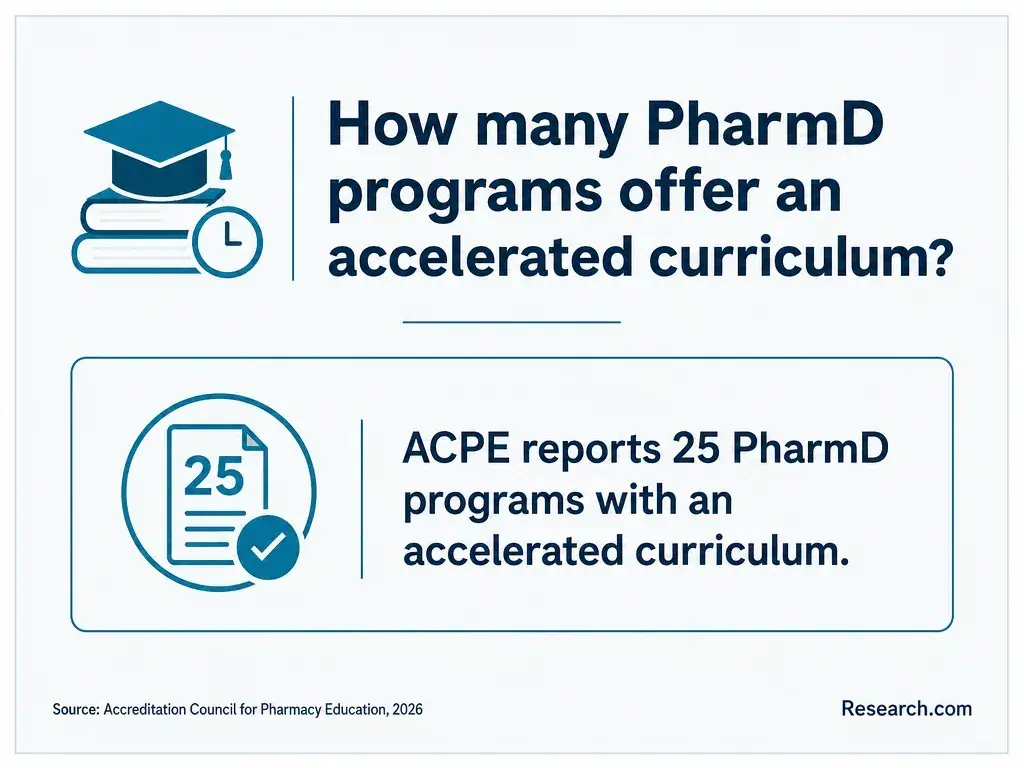
The professional Pharm.D. curriculum commonly takes four academic years after prerequisites, though some programs use accelerated schedules. Time spent completing prerequisites depends on what you already have and each school's rules. Pharm.D. programs with an accelerated format may reduce calendar time, but a compressed schedule can limit paid-work opportunities and make rotations harder to arrange.
There is no reliable single tuition figure for pharmacy school: residency status, program, fees, and living arrangements change the total. Compare each school's published 2026-27 tuition and required fees using the same unit, then add prerequisite coursework, supplies, travel or housing for rotations, and licensing expenses. Request a full cost-of-attendance estimate and distinguish expenses billed by the school from costs you must arrange yourself.
Financing deserves a separate check. Federal borrowing rules changed for many new graduate and professional borrowers beginning July 1, 2026; eligibility and available loan types can depend on the student and applicable transition rules. Ask each financial aid office to explain your eligibility rather than assuming older Grad PLUS or borrowing arrangements still apply. The better-value program is the one whose total cost, schedule, and clinical opportunities support your intended career - not simply the one with the lowest advertised tuition.
Some professional Pharm.D. programs deliver part of their instruction online or in a hybrid format. That does not mean the degree can be completed from home: hands-on training, assessments, campus visits, IPPEs, and APPEs may require in-person attendance. "Online" also does not tell you whether classes are live, recorded, or compatible with full-time work.
When comparing online Doctor of Pharmacy degree options, get a term-by-term schedule of required live sessions, campus attendance, and rotations. Ask who secures and approves clinical sites, whether placements near your home are possible, and what happens if a local site is unavailable. Confirm professional accreditation, distance-education authorization where you live, and prospective licensure eligibility as separate checks.
The Bureau of Labor Statistics reports median annual pay of $140,910 in May 2025 for pharmacists across settings. That figure is not a community-pharmacist starting salary or a promise of earnings. Location, employer, experience, shift schedule, managerial duties, and hours worked can all affect an individual offer.
To judge an offer, compare pay with benefits, weekend and evening expectations, staffing, and the cost of reaching the job. Likewise, compare school debt with a realistic range of jobs you would accept rather than the occupation-wide median alone. Lists of lower-cost online Pharm.D. pathways are a starting point for cost research, not evidence that a particular program or job will produce a better financial return.
What is the job outlook for community pharmacists in the United States?
The Bureau of Labor Statistics projects 5% growth for pharmacists from 2025-2035 and about 12,500 openings per year. Those occupation-wide estimates include settings beyond community pharmacies, so they cannot predict hiring at a particular chain, independent pharmacy, or location. Openings also reflect workers leaving or changing occupations, not just newly created positions.
Community practice may be a strong fit if you value accessible patient care and can work effectively alongside dispensing systems and technicians. It may be a weaker fit if you want most of your day reserved for lengthy clinical visits. Before committing, shadow in more than one community setting, compare local job postings and staffing expectations, and weigh the full cost of training against roles you would genuinely take. Guides to pharmacy programs that may offer strong value can help start that comparison, but local employment conditions and your actual costs should decide it.
Other Things You Should Know About PharmD
Not universally. Some schools may recommend or value pharmacy experience, but their current admissions rules control. Shadowing or paid experience can also help you test whether the work suits you.
Potentially, subject to state ownership and permit rules. A pharmacist license does not replace the business planning, financing, premises approval, and pharmacy permits an owner may need.
Yes, but the transition is not automatic. Employers may seek relevant experience, additional training, or demonstrated skills, particularly for specialized clinical positions.
They should not practice under an expired license. Reinstatement steps vary by board and may include an application, fees, continuing education, or other conditions; check the applicable board before returning to work.
- The role of community pharmacy-based vaccination in the USA | nih.gov https://pmc.ncbi.nlm.nih.gov/articles/PMC5741029/
- Pharmacist Licensure by Exam - Texas State Board of Pharmacy https://www.pharmacy.texas.gov/applicants/pharmacist-exam.asp
- What Can You Do With a PharmD Degree? | Bouvé College of Health Sciences https://bouve.northeastern.edu/news/what-can-you-do-with-a-pharmd-degree/
- What Do Pharmacists Do? A Day in the Life of a Pharmacist | Roseman University https://www.roseman.edu/student-experience/news/a-day-in-the-life-of-a-pharmacist/
- Pharmacy Technician vs. Pharmacist | American Career College https://americancareercollege.edu/blog/pharmacy-technician-vs-pharmacist
- Pharmacy Residency Programs - What Is a Residency? | PCOM https://www.pcom.edu/pharmacy/news/pharmacy-residency-programs.html
- Rewards, recognition, and advancement for clinical pharmacists | wiley.com https://accpjournals.onlinelibrary.wiley.com/doi/10.1002/jac5.1775
- How Long is Pharmacy School? | kgi.edu https://www.kgi.edu/news/2021/how-long-is-pharmacy-school.html
- A Roadmap to Pharmacy | University of Health Sciences and Pharmacy in St. Louis https://www.uhsp.edu/a-roadmap-to-pharmacy/
- How to Become a Pharmacist: A Step-by-Step Guide | MCPHS https://www.mcphs.edu/admission-and-aid/blog/how-to-become-a-pharmacist