Bachelor's in pharmacy versus Doctor of Pharmacy in the U.S.

Co-Founder and Chief Data Scientist
A pharmacy-related bachelor's degree and a Doctor of Pharmacy (Pharm.D.) can lead to very different careers. That distinction matters if you are choosing a major, returning to school with prior credits, or planning to become a licensed pharmacist. This guide compares the degrees on admissions, time, cost, coursework, and career options. It also explains the steps between earning a Pharm.D. and receiving a pharmacist license, so you can choose a route that matches the work you actually want to do.
Key Things You Should Know
- For a new U.S.-educated pharmacist, an accredited professional Pharm.D. is the standard educational route; a pharmacy-related bachelor's degree alone does not qualify a new graduate for pharmacist licensure.
- A Pharm.D. commonly requires prerequisite college coursework followed by a professional curriculum that typically lasts four academic years; accelerated and integrated pathways can have different schedules.
- A bachelor's degree may be the more direct choice for pharmaceutical science or other non-pharmacist work. For context, pharmacists' median annual pay was $140,910 in May 2025, but that occupation requires licensure, not merely a degree.
What is the difference between a bachelor's in pharmacy and a PharmD?
A pharmacy-related bachelor's degree is undergraduate education, often in pharmaceutical sciences or a related subject. A Doctor of Pharmacy is the professional degree designed to prepare students for pharmacist licensure. In the U.S., the older Bachelor of Science in Pharmacy was once a pharmacist-qualifying degree, but it is not the current entry-level professional pathway for new students.
The comparison below separates the credential you earn from the job it can help you pursue. Program names matter: "pharmacy," "pharmaceutical sciences," and "pre-pharmacy" do not necessarily describe the same curriculum.
| Decision point | Pharmacy-related bachelor's degree | Pharm.D. |
| Educational level | Undergraduate degree | Professional doctoral degree |
| Primary focus | Varies by major; may emphasize drug development, laboratory science, or preparation for further study | Medication therapy, patient care, pharmacy systems, and supervised practice experiences |
| Pharmacist licensure | A newly earned bachelor's degree alone is not the current U.S. educational route | Completion of an appropriately accredited program meets the educational component, but a state license requires additional steps |
| Potential fit | Students seeking non-pharmacist roles or an undergraduate foundation | Students whose goal is to practice as pharmacists |
A Pharm.D. is also different from a research Ph.D.: its central purpose is preparation for professional pharmacy practice. Doctoral degree length comparisons can provide broader context, but they should not be used to assume that a shorter doctorate meets pharmacist-licensing requirements.
Is a PharmD required to become a licensed pharmacist in the U.S.?
For someone beginning U.S. pharmacy education now, the professional Pharm.D. is the standard degree route to pharmacist licensure. Graduating from a Pharm.D. program does not itself issue a license. Applicants must satisfy their state board of pharmacy's requirements, which generally include an approved education, required practical training or intern-hour conditions, the North American Pharmacist Licensure Examination (NAPLEX), and any applicable law examination or other board requirements.
Do not assume that every jurisdiction uses the Multistate Pharmacy Jurisprudence Examination (MPJE). Jurisdictions' law-exam rules differ, and some began transitioning to the Uniform Multistate Pharmacy Jurisprudence Examination (UMPJE) in 2026. Check the board where you intend to practice before planning exams or internships.
People who qualified under an older U.S. Bachelor of Science in Pharmacy pathway are a different case from students earning a new pharmacy-related bachelor's degree. A returning student should confirm prior licensure status and current board rules rather than assume an old credential automatically confers a new license. Pharmacy school routes for returning students may help frame education options, but the state board determines licensure eligibility.
How long does it take to earn a bachelor's degree or PharmD?
A bachelor's degree is commonly planned as four years of full-time undergraduate study, although transfer credits and course sequencing can change that timeline. A traditional Pharm.D. usually follows prerequisite college coursework and has a professional curriculum lasting four academic years. Some schools offer accelerated professional curricula or integrated pathways that begin before a student earns a separate bachelor's degree.
The fastest advertised timeline is not necessarily your fastest realistic route. Missing science prerequisites, courses offered only in a particular term, required in-person training, and limits on transfer credit can extend completion. Compare the date you could start the professional curriculum - not just its advertised length - when considering Pharm.D. programs for a faster path.
Coursework depends on the credential. A pharmaceutical sciences bachelor's program may emphasize chemistry, biology, drug formulation, laboratory methods, and how medicines are developed. Pre-pharmacy coursework instead prepares an applicant to meet a particular Pharm.D. program's undergraduate prerequisites; it is not the professional curriculum.
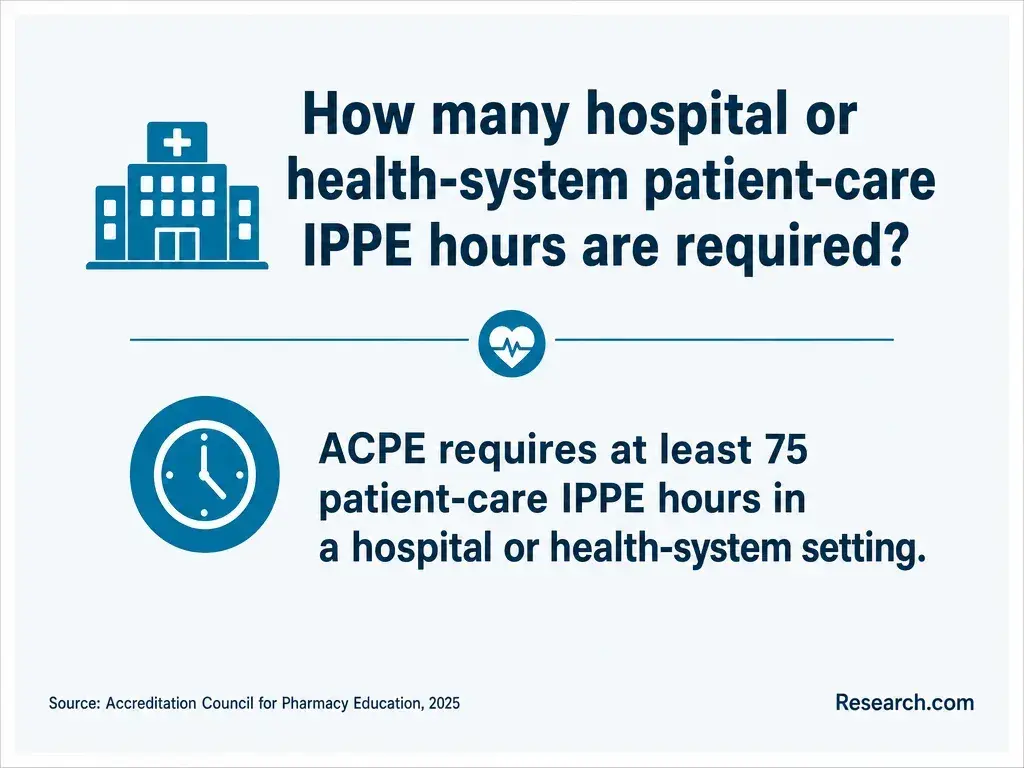
In a Pharm.D. program, students study subjects such as pharmacology, therapeutics, medication safety, drug information, patient assessment, and pharmacy law, then apply that learning under supervision. Introductory pharmacy practice experiences (IPPEs) expose students to practice settings during the program. Advanced pharmacy practice experiences (APPEs) provide more extensive supervised rotations later in the curriculum. Schools set their own schedules and placement processes within accreditation requirements.
Shorter pharmacy-related programs can teach useful skills, but they are not substitutes for the professional degree and experiential education required on the current U.S. pharmacist pathway. Treat short online pharmacy degree timelines as options to investigate for their specific credentials and career goals, not as promises of a two-year route to pharmacist licensure.
Bachelor's admissions generally follow the institution's undergraduate process. Pharm.D. admissions are program-specific: schools evaluate prerequisite courses and labs, grades, academic records, and other application materials. Some accept applicants after completing required undergraduate credits without a bachelor's degree; others have different entry pathways. Meeting a published minimum does not guarantee admission.
Before applying, use this sequence to find out whether your existing coursework actually puts you on schedule:
- Check each Pharm.D. program's current prerequisite list, including labs, minimum grades, and any course-age rules.
- Ask how the school evaluates community-college, advanced-placement, online, repeated, and international coursework if any applies to you.
- Confirm whether the school uses PharmCAS, the centralized pharmacy-school application service, and identify any separate interview, supplemental application, or deadline.
- Request a written prerequisite review when available; acceptance of undergraduate credit does not mean it transfers into the professional curriculum.
The Pharmacy College Admission Test (PCAT) was retired in January 2024, so it is not a current exam to schedule. Lists of pharmacy schools with accessible admissions can be a starting point, but compare each school's actual entry rules and accredited program status before applying.
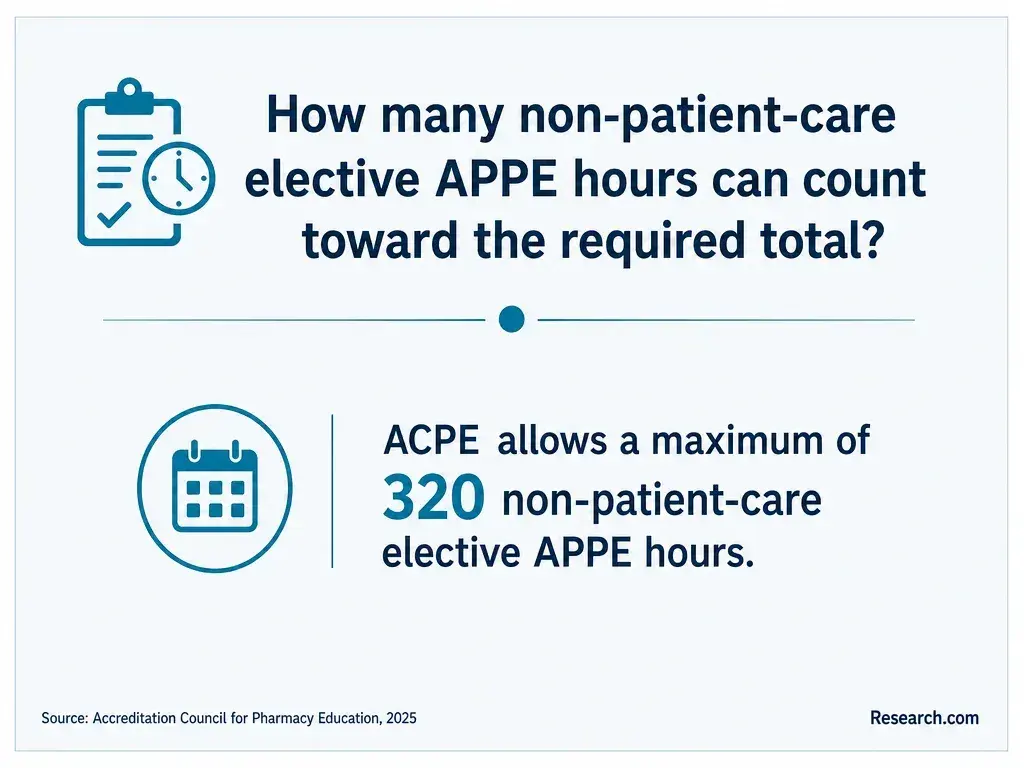
Online and hybrid pharmacy-related bachelor's programs exist, and some Pharm.D. programs deliver portions of instruction online. "Online" does not necessarily mean asynchronous, fully remote, or compatible with full-time work. A professional program may require scheduled live classes, campus visits, hands-on activities, and in-person IPPE and APPE placements.
For a Pharm.D., verify the specific professional program's status with the Accreditation Council for Pharmacy Education (ACPE). ACPE program accreditation is distinct from the university's institutional accreditation. Both are separate from state authorization to enroll a distance-learning student and from the state board's rules for intern registration, rotations, and eventual licensure.
When reviewing top online pharmacy doctorate programs, ask who approves rotation sites, whether placements can occur near you, and what travel, time away from work, or state-specific restrictions may apply. Do not assume your current workplace can serve as a rotation site.
There is no single national price that fairly compares these routes. A bachelor's degree and a Pharm.D. have different credit loads, tuition categories, and possible prerequisite costs. Published tuition may exclude mandatory fees, supplies, background checks, immunizations, rotation travel or housing, and eventual licensure expenses.
For a useful comparison, request each school's current cost of attendance and build estimates for the entire remaining path, including prerequisites you still need. A bachelor's degree may cost less than a Pharm.D. yet be the wrong investment if your goal requires pharmacist licensure. Conversely, paying for professional training may not make sense when a non-pharmacist role meets your goals.
Financial aid eligibility depends on the program, your status, and the applicable aid year. Federal borrowing rules changed for many new graduate and professional borrowers beginning July 1, 2026; do not rely on older assumptions about loan limits or Graduate PLUS access. Confirm your individual options with the financial aid office before using budget-friendly pharmacy degree programs to narrow a shortlist.
A pharmacy-related bachelor's degree may support applications for laboratory, quality, manufacturing, regulatory-support, or other pharmaceutical-industry roles. Opportunities depend on the major's coursework, internships, employer requirements, and local market. It does not authorize the holder to dispense medications or provide services reserved for a licensed pharmacist.
Pharmacy technician is a separate occupation with its own state and employer requirements; a Pharm.D. is not ordinarily needed for it, and a bachelor's degree may not be needed either. If patient-facing pharmacist practice is not your goal, compare the bachelor's program with the entry requirements of jobs you actually want before taking on professional-degree costs. For a student changing direction from a science major, Pharm.D. programs for biology majors illustrate another route to investigate - but only if becoming a pharmacist is the intended outcome.
According to the U.S. Bureau of Labor Statistics, pharmacists' median annual pay was $140,910 in May 2025. That is a midpoint for the occupation, not an expected starting salary or a return guaranteed by a Pharm.D. For a personal decision, compare likely borrowing, years in school, and earnings you would forgo while studying with the roles you intend to pursue.
The Bureau of Labor Statistics projects 5% pharmacist employment growth from 2025-2035, with about 12,500 openings per year. Openings across an occupation do not predict hiring in a particular city or practice setting. If cost and time are central to your decision, compare pharmacy program tuition and length against the full educational path and the qualifications employers request - not salary alone.
How can you choose an accredited pharmacy program?
Start with the job title. If it requires a pharmacist license, prioritize an ACPE-accredited professional Pharm.D. and check the licensing board for the state where you expect to practice. If it does not, compare bachelor's programs and shorter alternatives against actual job postings before committing to more education.
Use these checks to turn a school shortlist into a defensible decision:
- Confirm the exact credential awarded and, for a Pharm.D., the professional program's current ACPE accreditation status.
- Have each school review your prerequisites and explain whether prior credits satisfy entry requirements or reduce time in the professional curriculum.
- Compare remaining tuition and required expenses in the same units, including prerequisite study and rotation-related costs.
- Request the class schedule, campus-attendance requirements, rotation-placement policy, and published licensure-exam outcomes; ask what each outcome measure includes.
- Check institutional accreditation, distance-education authorization where relevant, and your intended state board's licensure rules separately.
The receiving school decides how previous coursework applies, even when both institutions are accredited. If you have credits already, evaluate credits for pharmacy prerequisites before making deposits or assuming an accelerated graduation date.
Other Things You Should Know About PharmD
Not automatically. Pharmacists must meet the requirements of each jurisdiction where they practice. Ask the destination board about its current license-transfer process and any additional exam or other conditions.
Requirements vary by state and placement. Ask the program and relevant state board when registration is needed, particularly if a rotation would take place outside your school's state.
Potentially, but it is a separate pathway from earning a new U.S. Pharm.D. Eligibility may involve foreign-graduate certification and additional state-board requirements. The degree alone does not authorize U.S. practice.
No. A residency is structured postgraduate practice training; a fellowship generally emphasizes a particular professional or research area. Board certification is a separate credential with its own eligibility rules. None replaces a state pharmacist license.
- U.S. Graduate Pharmacy References | EducationUSA https://educationusa.state.gov/your-5-steps-us-study/research-your-options/graduate/graduate-student/what-graduate-programs-a-4
- Pharmacist Licensure Guide | Department of State https://www.pa.gov/agencies/dos/resources/professional-licensing-resources/licensure-processing-guides-and-timelines/pharmacist-guide
- NYS Pharmacy: License Requirements - Office of the Professions https://www.op.nysed.gov/professions/pharmacist/license-requirements
- Pharmacists - Texas State Board of Pharmacy https://www.pharmacy.texas.gov/consumer/broch5.asp
- How to Become a Pharmacist: A Step-by-Step Guide | MCPHS https://www.mcphs.edu/admission-and-aid/blog/how-to-become-a-pharmacist
- Entry Level Pharmacy Degree (PharmD) | CU School of Pharmacy https://pharmacy.cuanschutz.edu/degreesandprograms/pharmd
- Tuition and Fees " Pharm.D. Admissions " | ufl.edu https://admissions.pharmacy.ufl.edu/financial-aid/tuition-and-fees/
- Admissions: USC Mann PharmD Program https://mann.usc.edu/program/doctor-of-pharmacy-pharmd/admissions/
- Fast Track to PharmD - UM College of Pharmacy https://pharmacy.umich.edu/pharmacy-programs/bs-in-pharmaceutical-sciences/fast-track-to-pharmd/
- FAQ | OSU College of Pharmacy - Oregon State University https://pharmacy.oregonstate.edu/programs-admissions/pharm-d/faq