Oncology Pharmacist Salary and Residency Pathway

Co-Founder and Chief Data Scientist
An oncology pharmacy career can mean years of education and postgraduate training, so the decision is about more than whether cancer care interests you. Prospective Pharm.D. students and licensed pharmacists need to weigh the work itself against salary evidence, training time, debt, and the availability of oncology roles.
This guide separates requirements from employer preferences, explains the common residency pathway, and shows how to compare programs and job opportunities before committing.
Key Things You Should Know
- There is no reliable national median specifically for oncology pharmacists; the Bureau of Labor Statistics reports $140,910 in May 2025 for pharmacists overall, which should not be treated as an oncology salary offer.
- The common hospital-based route is an accredited Pharm.D., state pharmacist licensure, a postgraduate year one (PGY1) residency, and a postgraduate year two (PGY2) oncology residency. Residency is not universally required for every oncology-titled job.
- Compare the paid residency years and potential lost pharmacist earnings with the positions you want. Board Certified Oncology Pharmacist (BCOP) certification is a separate specialty credential, not a license or a substitute for required experience.
What does an oncology pharmacist do?
An oncology pharmacist helps patients and care teams use cancer medicines safely and effectively. Depending on the setting, the work can include reviewing chemotherapy and supportive-care orders, checking doses against clinical and laboratory information, identifying interactions, counseling patients, monitoring adverse effects, and helping manage access to costly specialty medicines. Preparation and verification of hazardous medications follow workplace procedures and applicable safety requirements.
The balance of responsibilities varies. An inpatient clinical pharmacist may join rounds and advise on complex treatment plans, while an infusion-center or specialty-pharmacy pharmacist may spend more time on treatment verification, patient education, adherence, and coordination with insurers. These are licensed pharmacist responsibilities; a pharmacy technician can support medication workflows but does not independently perform the pharmacist's clinical role. If that distinction changes your career goal, compare shorter online pharmacy education options before investing in a Pharm.D.
How much do oncology pharmacists earn?
The Bureau of Labor Statistics (BLS) does not publish a separate national wage median for oncology pharmacists. Its pharmacist-wide median annual pay was $140,910 in May 2025. That is a useful benchmark, not an estimate of what an oncology resident or a particular oncology pharmacist will earn. Pay depends on employer, location, duties, experience, and whether a role is a residency or a permanent position.
BLS projects 5% pharmacist employment growth from 2025-2035, with about 12,500 pharmacist openings per year. Those projections cover pharmacists across practice settings; they do not measure openings for oncology specialists. A residency typically pays a stipend, so its immediate financial trade-off is earning that stipend instead of pursuing a potentially higher-paid pharmacist position. When evaluating the route, compare actual residency stipends and benefits with local job offers, anticipated borrowing, and online Doctor of Pharmacy tuition rather than assuming specialization will produce a salary premium.
What is the oncology pharmacist residency pathway?
The most direct structured path to many specialized clinical roles is a Pharm.D., pharmacist licensure, a PGY1 pharmacy residency, then a PGY2 oncology pharmacy residency. PGY1 develops broad clinical practice; PGY2 concentrates on oncology after that foundation. Many candidates apply through the Pharmacy Online Residency Centralized Application Service (PhORCAS) and participate in the ASHP Resident Matching Program, but application and Match arrangements should be checked for each program.
Residency is training, not a licensing step. Some employers hire licensed pharmacists into oncology-related positions without an oncology residency and provide substantial workplace training. Highly specialized clinical positions may favor or require PGY2 training. A fellowship is different again: its focus may be research, industry, or another defined area rather than the patient-care training of a residency. For someone still planning pharmacy school, doctoral programs with flexible timelines may offer a scheduling comparison, but Pharm.D. flexibility does not make a subsequent full-time residency flexible or remote.
For the standard U.S.-educated pharmacist pathway, the professional degree is a Doctor of Pharmacy (Pharm.D.) from a program accredited by the Accreditation Council for Pharmacy Education (ACPE). Applicants complete a school's required pre-professional coursework before entering the professional curriculum; a completed bachelor's degree is not universally required. The Pharm.D. includes classroom learning and supervised clinical experiences, but graduation alone does not grant a pharmacist license.
If you already studied the sciences, ask schools how you can build on prior biology or chemistry coursework. The receiving school decides whether courses satisfy its prerequisites. A pharmacology degree, pharmaceutical-sciences degree, or pharmacy technician credential does not replace the professional Pharm.D. for this U.S. licensure pathway. Internationally educated pharmacists should check the separate credentialing and state-board rules that apply to their education.
To practice as a pharmacist, a candidate needs a license from the relevant state board of pharmacy. State processes generally involve education and examinations, including the North American Pharmacist Licensure Examination (NAPLEX), but jurisprudence examinations and other conditions vary by jurisdiction. A state may use the MPJE, the newer UMPJE, another assessment, or different rules; passing an examination does not itself issue a license.
The Board Certified Oncology Pharmacist (BCOP) credential, awarded by the Board of Pharmacy Specialties, is optional specialty certification rather than state licensure. Candidates must meet the board's current eligibility, experience or training, examination, and renewal requirements. Employers may prefer BCOP for certain roles, but neither residency nor certification is a universal legal prerequisite for every oncology pharmacist job. If considering top online pharmacy doctorate programs, verify ACPE professional-program accreditation and your intended state's licensure eligibility separately; online coursework still entails required in-person clinical education.
PGY2 oncology residents develop the ability to manage medication therapy across cancer care settings under supervision. Experiences may cover hematologic and solid tumors, inpatient and ambulatory care, infusion services, supportive care, investigational therapies, medication safety, patient counseling, and collaboration with physicians and nurses. Programs also commonly include teaching, presentations, and a research or quality-improvement project. The actual rotations and patient populations depend on the site.
Residency is intensive, scheduled practice with assessment and feedback - not a set of online courses completed at a student's pace. Online pharmacy course completion timelines therefore should not be used to estimate how quickly someone can finish PGY2 clinical training. When comparing residencies, ask how much oncology work residents perform, which disease services they encounter, who precepts them, and whether required experiences align with the jobs they want afterward.
PGY2 oncology programs generally expect completion of an eligible PGY1 residency, along with pharmacist licensure or eligibility to obtain the license required by the residency site. Programs set their own application documents, interview criteria, licensure deadlines, and other conditions; consult each current listing rather than assuming a single national checklist. Some positions may be filled through an early-commitment process for eligible internal PGY1 residents.
A strong application shows why your clinical experience fits the specific program. Relevant oncology rotations, thoughtful recommendations, evidence of clinical reasoning, and a clear explanation of your interests can matter more than simply expressing enthusiasm for cancer care. If you are not yet in pharmacy school, how competitive is pharmacy school admission is a separate question: Pharm.D. admission does not reserve a future PGY1 or PGY2 position. Review current PhORCAS, Match, and program deadlines well before your intended start date.
A conventional route includes school-specific pre-pharmacy prerequisites, a professional Pharm.D. curriculum commonly completed in four years, and - if chosen - a one-year PGY1 followed by a one-year PGY2 residency. Actual time depends on prior credits, program design, licensure timing, and whether the pharmacist enters oncology through residency or employment. Fast-track Doctor of Pharmacy programs may shorten the degree portion for eligible students, but they do not eliminate licensure requirements or compress a subsequent residency.
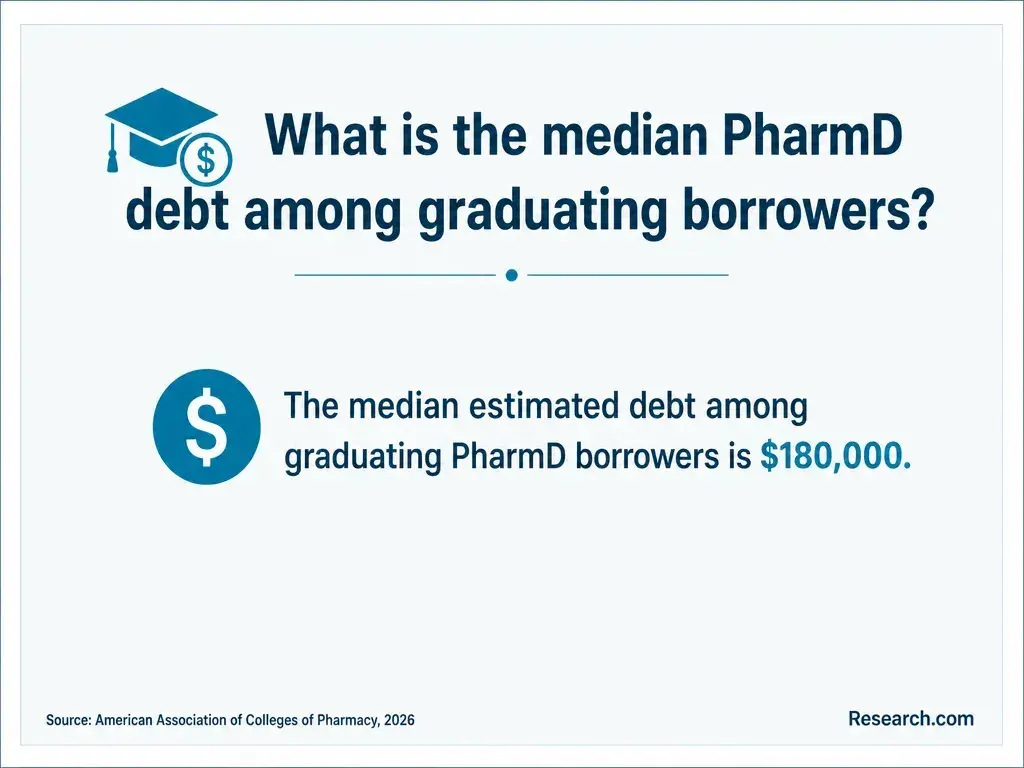
The main education expense is usually the Pharm.D.; compare tuition and mandatory fees with prerequisite costs, supplies, clinical-rotation travel, housing, and licensure expenses. Residencies pay stipends, but the opportunity cost can still be substantial compared with entering full-time pharmacist work. For students borrowing after July 1, 2026, federal graduate and professional loan rules have changed; confirm your own eligibility and available aid with a school's financial aid office rather than relying on older borrowing assumptions. A sensible calculation compares total educational cost, expected debt payments, residency compensation, and real job opportunities - not tuition alone.
Oncology pharmacists work in hospitals and cancer centers, outpatient infusion clinics, specialty pharmacies, health systems, and other organizations involved in cancer treatment. Titles and responsibilities vary: one job may emphasize direct patient care and rounds, another oral anticancer therapy counseling and access, and another sterile-product operations or medication safety. Leadership, teaching, research, and industry-related work can become options with relevant experience, though they may call for different preparation.
For a career changer, prior laboratory, research, or patient-service experience can help, but it does not replace pharmacist training and licensure. Pharmacy school routes for returning students may help you assess the first education step. Before choosing oncology-specific training, compare local postings: note which roles require PGY2, accept comparable experience, prefer BCOP, or primarily involve operational rather than clinical work. Those differences determine whether residency advances your target career.
How do you choose a reputable oncology pharmacy program?
Evaluate the Pharm.D. and the residency as separate decisions. For a Pharm.D., confirm ACPE professional-program accreditation, prerequisite and clinical-placement policies, total costs, and eligibility for licensure where you intend to practice. Institutional accreditation and authorization to offer distance education answer different questions; neither substitutes for checking the professional program and state-board rules. If you have previous college study, ask specifically how pharmacy school prior learning credits apply to prerequisites versus the professional curriculum.
For a residency, check its current ASHP accreditation status, oncology experiences, preceptor expertise, stipend and benefits, licensure deadline, research expectations, and recent graduates' roles. Use the following checks to turn a promising program description into a decision:
- Identify the jobs you would realistically seek and record which qualifications their current postings require or prefer.
- Confirm each Pharm.D. or residency program's current status and written eligibility rules with the accreditor, program, and relevant state board.
- Ask for a rotation schedule and discuss patient populations, supervision, workload, and any experiences you must arrange or travel to complete.
- Compare full costs, residency stipends, benefits, and likely time away from higher-paid work; do not treat a published pharmacist median as a personal salary forecast.
A warning sign is a program that implies its degree, residency, or certificate automatically grants licensure, certification, or an oncology job. Choose the route that meets the actual requirements of your target roles at a cost and time commitment you can sustain.
Other Things You Should Know About PharmD
Some specialty-pharmacy, medication-access, or clinical-support positions may permit remote work. Many infusion, inpatient, and direct-care duties require an on-site presence. Check each posting and the states in which the employer expects you to hold a license.
Review any current Match or post-Match opportunities and ask mentors to assess your application. You can also consider a licensed pharmacist role that provides relevant oncology experience, while checking whether it meets the qualifications for future positions or specialty certification.
It can be. Pharmacists may support patients through serious illness, treatment complications, and end-of-life care. Speaking with practitioners in more than one setting can help you assess the work alongside its clinical rewards.
Potentially, but eligibility depends on the program, required U.S. pharmacist licensure or license eligibility, and any applicable employment authorization. International education may require additional credentialing and examinations before state licensure; confirm those steps with the relevant authorities and residency program.
- The Expanding Role of the Oncology Pharmacist - PMC - NIH https://pmc.ncbi.nlm.nih.gov/articles/PMC7557441/
- Admissions | Pharmacy Residency Programs https://pharmacyresidencyprograms.ucsf.edu/admissions
- PGY2 Oncology - WVU School of Pharmacy https://pharmacy.hsc.wvu.edu/residency-program/programs/pgy2-oncology/
- Call to action: Pharmacists needed for cancer care https://www.pharmacist.com/APhA-Press-Releases/call-to-action-pharmacists-needed-for-cancer-care
- Oncology Pharmacy Specialty Certification | bpsweb.org https://bpsweb.org/oncology-pharmacy/
- PGY1 Pharmacy Residency - A Practical Guide for Clinical Pharmacy Professionals | American College of Clinical Pharmacy https://careers.accp.com/career-resources/on-the-job-3/pgy1-pharmacy-residency-a-practical-guide-for-clinical-pharmacy-professionals-148
- Oncology Pharmacists in the Spotlight Amid Rising Drug Costs and Workforce Pressures | AJMC https://www.ajmc.com/view/oncology-pharmacists-in-the-spotlight-amid-rising-drug-costs-and-workforce-pressures