PharmD Therapeutics Sequence Explained

Co-Founder and Chief Data Scientist
A Pharm.D. curriculum may list several semesters of "therapeutics," but the course titles alone rarely show what you will learn - or whether the sequence will prepare you for clinical rotations. For prospective pharmacy students, the important questions are how courses build on one another, when patient cases begin, and how classroom decisions are tested in practice.
This guide explains the sequence, its scheduling and prerequisites, and the program details worth comparing before you enroll.
Key Things You Should Know
- A Pharm.D. therapeutics sequence teaches students to select, monitor, and adjust medication plans using patient-specific evidence; it is professional-degree coursework, not a substitute for prerequisite science classes.
- Schools organize therapeutics differently, so compare the published semester map, case-based assessments, and timing of introductory and advanced pharmacy practice experiences - not course titles alone.
- A Pharm.D. typically follows undergraduate prerequisites and often takes four professional years; accelerated schedules may be shorter, but degree completion does not itself grant a pharmacist license.
What is a PharmD therapeutics sequence?
A Pharm.D. therapeutics sequence - often called pharmacotherapy - is a connected set of professional courses about using medicines to prevent and treat disease. Students learn to interpret patient information, weigh treatment benefits and risks, recommend a medication plan, counsel the patient, and determine whether the plan is working.
It is not simply a series on memorizing drugs. A useful sequence brings together pharmacology, which explains drug effects; pharmacokinetics, which examines drug movement through the body; pathophysiology, which explains disease processes; and clinical evidence. The aim is to support defensible decisions for a particular patient, including when a medication should be avoided or a concern referred to another clinician.
These courses occur within the professional Doctor of Pharmacy curriculum. Undergraduate pre-pharmacy courses prepare applicants to enter that curriculum; they are not the therapeutics sequence itself. If you are moving from a biology, chemistry, or other background, Doctor of Pharmacy pathways for career transitions can help frame the difference between prior science study and professional patient-care training.
What courses are included in a PharmD therapeutics sequence?
There is no nationwide list of required course titles. One school may teach organ systems in separate pharmacotherapy courses; another may use integrated blocks combining disease mechanisms, medicinal chemistry, pharmacology, and treatment. Read the syllabus or curriculum map to see what is taught and assessed.
The following table shows common content areas, not a required course sequence. It can help you compare differently named curricula.
| Common content area | What students typically practice |
| Foundations of patient assessment | Interpreting histories, laboratory results, medication lists, and treatment goals |
| Cardiovascular and metabolic conditions | Evaluating treatment options and monitoring plans for conditions such as hypertension and diabetes |
| Infectious diseases | Selecting and reassessing antimicrobial therapy using patient and infection information |
| Other system-based or specialty topics | Applying the same decision process to respiratory, neurologic, psychiatric, oncologic, and other conditions |
| Integrated cases and skills | Communicating recommendations, counseling, documenting, and identifying medication-safety problems |
Some schools place drug-information evaluation, calculations, or communication in separate courses rather than inside therapeutics. If you have previous professional coursework, ask the receiving school how it evaluates transfer credits for pharmacy school; a similarly named course does not automatically replace a course in its sequence.
How does therapeutics prepare PharmD students for patient care?
Therapeutics turns scientific knowledge into a repeatable clinical process: identify the patient's medication-related problems, establish goals, compare options, recommend a plan, and specify follow-up. Cases become more demanding when patients have several conditions, conflicting guidelines, uncertain adherence, or changing laboratory results. Students should learn to explain both why they chose a treatment and what information could change their recommendation.
Classroom cases and simulations provide supervised practice before students encounter similar decisions in introductory pharmacy practice experiences (IPPEs) and advanced pharmacy practice experiences (APPEs). Those experiences involve approved sites and preceptors; students do not gain independent authority to practice by completing a course. Ask how a program evaluates case reasoning, counseling, documentation, and medication safety, rather than relying on a description that merely says its curriculum is "clinical."
Depth matters more than a fast-looking course calendar. Claims about pharmacy degree programs with accelerated schedules may describe credentials other than an entry-to-practice Pharm.D.; verify the exact degree and its supervised practice requirements before comparing timelines.
Most programs build from foundational science and early patient cases toward more complex therapeutics, then provide substantial advanced clinical experiences. Exact course order, semester count, and the point when rotations begin vary. A published curriculum map is more useful than assuming that "Therapeutics I" covers the same material everywhere.
This table illustrates the progression to look for; it is not a universal semester plan.
| Stage | Typical emphasis | Why the timing matters |
| Early professional study | Biomedical foundations, medication-use processes, patient assessment, and initial cases | Establishes knowledge needed for later treatment decisions |
| Middle professional study | System-based or integrated therapeutics with increasingly complex cases | Builds reasoning before more independent work under supervision |
| Later professional study | Advanced cases and APPEs across required and elective settings | Tests whether students can apply and communicate decisions in practice |
A standard professional curriculum often spans four years after prerequisites, while some schools offer shorter, more intensive schedules. When considering shorter pharmacy doctorate pathways, compare breaks, course load, rotation timing, and time available for paid work - not just the graduation date. Ask what happens if a required therapeutics course is offered only once a year and must be repeated.
There are two different kinds of prerequisites. Admission prerequisites are undergraduate courses completed before entering a Pharm.D. program. Course prerequisites are professional-curriculum requirements - such as foundational pharmacology or an earlier therapeutics block - that students must complete before advancing. Each school sets its own policies.
Applicants should check the current school's admissions requirements for accepted science courses and labs, minimum grades, coursework-age rules, and whether unfinished prerequisites may be completed before matriculation. A bachelor's degree is not universally required. Once enrolled, check the academic catalog for progression rules: a low grade in one course can affect the timing of later therapeutics courses or rotations.
For applicants who still need coursework, pharmacy programs with flexible entry requirements are worth investigating, but distinguish permission to apply with courses in progress from permission to begin professional courses without completing required foundations. Get a written evaluation of any proposed substitution or transferred credit.
Both formats can teach clinical reasoning through readings, discussion, patient cases, and faculty feedback. The practical difference is how and when students participate - and where required hands-on training occurs. "Online" does not necessarily mean asynchronous, self-paced, or fully remote.
This comparison identifies scheduling questions that course-format labels often leave unanswered.
| Feature | Online or hybrid delivery | Campus-based delivery |
| Therapeutics instruction | May combine recorded work with scheduled live cases or assessments | Typically follows scheduled on-campus classes and assessments |
| Hands-on skills | May require campus visits or other approved in-person sessions | Usually takes place through campus labs and scheduled skills sessions |
| Clinical experiences | IPPEs and APPEs still require approved practice sites and supervision | IPPEs and APPEs likewise require approved practice sites and supervision |
| Planning risk | Travel, site availability, and live-session times can limit flexibility | Commuting and fixed campus schedules can limit flexibility |
For online Pharm.D. program selection, obtain the actual live-session calendar, immersion schedule, and rotation-placement policy. Ask who secures or approves sites, whether placements near home are possible, and whether employment can continue during APPEs. State authorization for online enrollment, approval of a clinical site, and eligibility for pharmacist licensure are separate questions.
A Pharm.D. commonly takes four professional academic years after required undergraduate coursework; some programs use an accelerated calendar. Your total timeline also depends on prerequisites you still need and whether the course sequence permits a delayed or part-time progression. A shorter calendar can reduce time away from a pharmacist career, but it may leave less room for paid work during intensive classes and rotations.
There is no single reliable national price for the therapeutics sequence: it is generally part of overall Pharm.D. tuition rather than separately priced. For Pharm.D. tuition planning, request the school's current tuition and mandatory-fee schedule, then budget for prerequisite courses, supplies, reference resources, background checks, immunizations, campus visits, rotation travel or housing, and licensure-related expenses. Compare costs across the same academic period and include any tuition increases the school says may apply.
Ask the financial aid office for an aid-year-specific borrowing estimate based on your status and start date. Federal borrowing rules changed for many new graduate and professional borrowers beginning July 1, 2026, so older descriptions of loan limits or Grad PLUS access may not apply to you. A lower advertised tuition figure is not necessarily the lower total cost if it requires more travel or time away from work.
The Accreditation Council for Pharmacy Education (ACPE) accredits U.S. professional Pharm.D. programs against standards covering the curriculum and other elements of pharmacy education. Accreditation applies to the program, not to an individual therapeutics course or graduate. It is distinct from institutional accreditation and from a state's authorization for distance education.
Before enrolling, confirm the program's current status in ACPE's official program directory and ask how its curriculum meets experiential-education requirements. Accreditation is a necessary program-quality and licensure-eligibility consideration, but it does not establish that a particular course format suits your learning style or that you will pass a licensing exam. Published outcomes, assessment methods, academic support, and rotation logistics provide additional evidence.
If you are comparing pharmacy schools that may be easier to enter, do not treat admission accessibility as a substitute for checking ACPE status and the school's progression policies. An offer of admission has little value if the program cannot meet your educational and licensing goals.
Graduating from a Pharm.D. program and obtaining a pharmacist license are separate steps. U.S.-educated candidates generally apply through a state board of pharmacy, meet that jurisdiction's education and supervised-experience requirements, and pass the North American Pharmacist Licensure Examination (NAPLEX). Jurisdictions also set their own law-exam rules: some use the Multistate Pharmacy Jurisprudence Examination (MPJE), some have transitioned to the Uniform Multistate Pharmacy Jurisprudence Examination (UMPJE), and requirements differ elsewhere. The board - not the school or an exam result alone - issues the license.
Therapeutics prepares students to reason through medication-related patient problems, but it should not be mistaken for a complete exam-preparation course or permission to practice independently. Before choosing a program, check the boards in states where you may seek licensure for current eligibility, intern-registration, experience, and examination rules.
Lists of programs with a short online doctorate time to completion are especially easy to misread here: completing a doctorate quickly is not the same as completing an ACPE-accredited entry-to-practice Pharm.D. and qualifying for pharmacist licensure.
What careers, salaries, and job outlook follow PharmD therapeutics training?
Therapeutics is central to pharmacist work in community, hospital, ambulatory care, and other medication-focused settings. Responsibilities differ by employer and state law, but may include reviewing therapy, counseling patients, monitoring treatment, and collaborating with other clinicians. A pharmacy residency can provide structured postgraduate training; a fellowship commonly emphasizes areas such as research or industry. Neither is universally required for pharmacist employment, and specialty board certification is a separate credential - not a state license.
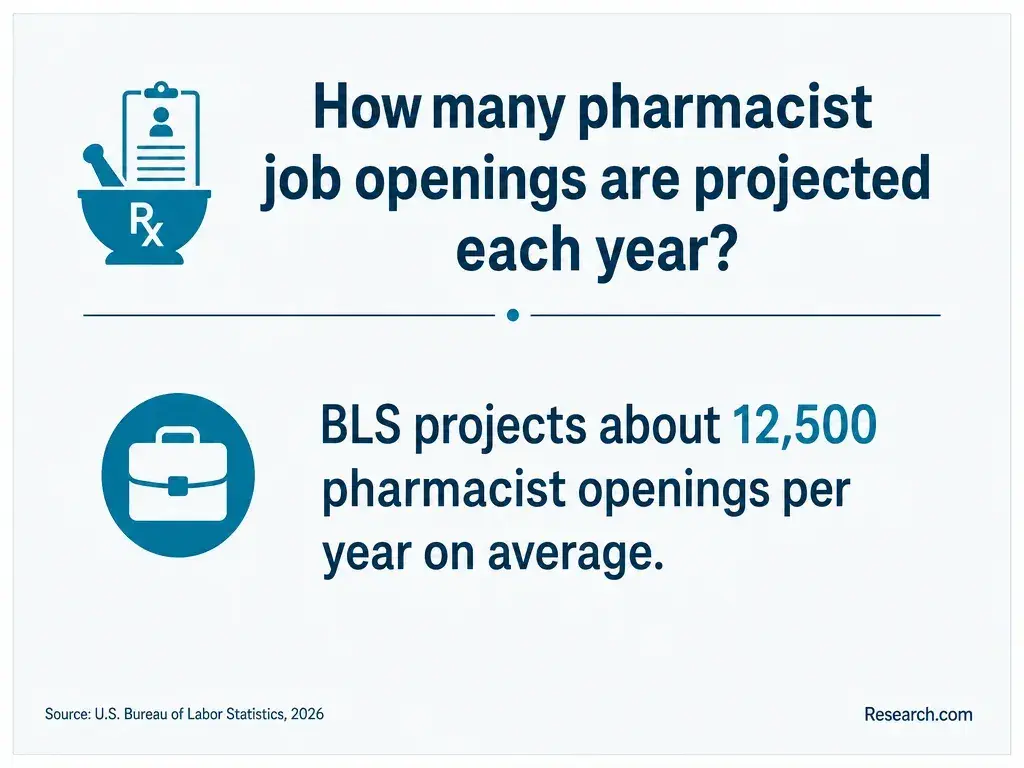
The U.S. Bureau of Labor Statistics reports median annual pay for pharmacists of $140,910 in May 2025 and projects 5% job growth for 2025-2035, with about 12,500 openings per year. These occupation-wide figures do not predict an individual graduate's pay or describe a particular specialty. They give you a market reference for weighing program cost and time against the work you want to pursue.
That calculation differs if your goal is a pharmacy-adjacent job rather than licensed pharmacist practice. Compare pharmacy programs balancing cost and time against the actual credential your target role requires; a shorter, less expensive route may suffice for some roles, but it does not replace a Pharm.D. for U.S. pharmacist licensure.
Other Things You Should Know About PharmD
Yes, students must know important drug and disease facts. Assessments also commonly require applying those facts to a patient case, explaining a recommendation, and planning monitoring.
Schools may offer electives or focused clinical experiences, but the core therapeutics curriculum usually covers many conditions. Ask whether an advertised concentration changes required courses, elective choices, rotations, or only the program's description.
Contact the course team and academic support staff promptly. Ask about case-practice resources, reassessment policies, and whether a repeat would delay later courses or rotations; those rules are school-specific.
Ask how often they work through realistic cases, what feedback they receive on clinical reasoning, and whether course assessments match the decisions expected during rotations. Their experience can help you interpret a curriculum map, though it may not reflect a recent course change.
- Preprofessional Curriculum in Preparation for Doctor of... - PMC https://pmc.ncbi.nlm.nih.gov/articles/PMC2828316/
- Pharmacokinetics - StatPearls - NCBI Bookshelf - NIH https://www.ncbi.nlm.nih.gov/books/NBK557744/
- Pharmacist's Role in Medication Safety | PSNet https://psnet.ahrq.gov/primer/pharmacists-role-medication-safety
- PharmD Courses & Timeline - Doctor of Pharmacy https://pharmacy.wisc.edu/pharmd/coursework/
- Curriculum - UW School of Pharmacy https://sop.washington.edu/pharmd/curriculum/
- Pharmacy | South University https://catalog.southuniversity.edu/pharmacy/doctor-of-pharmacy-pharmd/pharmacy
- Pharmacy Practice | Midwestern University https://catalog.il.midwestern.edu/pharmacy-practice
- Curriculum mapping of accredited pharmacy programs in the United States - ScienceDirect https://www.sciencedirect.com/science/article/abs/pii/S1877129723001545
- Didactic Curriculum - Touro College of Pharmacy https://tcop.touro.edu/pharmd/curriculum/didactic-curriculum/
- PharmD Courses | umaryland.edu https://catalog.pharmacy.umaryland.edu/courses/pharmd