
PharmD Admission After a Long Academic Break

Co-Founder and Chief Data Scientist
A long break from school does not necessarily close the door to a Doctor of Pharmacy (Pharm.D.) degree. The harder question is whether your previous coursework still meets a program's rules - and whether you can realistically return to science classes and a demanding professional curriculum.
This guide is for career changers and former students weighing that decision. It explains how to check eligibility, build a credible application, compare schedules and costs, and avoid committing to a program before resolving credit, clinical training, and licensure questions.
Key Things You Should Know
- A long academic gap is not, by itself, a nationwide bar to Pharm.D. admission; each school decides how it evaluates older prerequisites, grades, and recent academic work.
- Most traditional professional Pharm.D. curricula take about four academic years after prerequisite study. An accelerated format may shorten the calendar but can make working while enrolled harder.
- For new graduate and professional borrowers, federal loan rules changed beginning July 1, 2026. Confirm your own aid eligibility and full cost of attendance before enrolling.
Can you enter a PharmD program after a long academic break?
Yes. Pharm.D. programs admit students with varied educational and work histories, but admission depends on the current program's criteria, not the number of years since you last attended school. Your first decision is whether your existing credits satisfy its prerequisites or whether you need additional coursework before applying.
Time away may have strengthened your communication, leadership, or patient-facing skills. It does not replace required science courses or prove that you are ready for intensive study. If you are considering Pharm.D. programs with an accelerated format, weigh the shorter calendar against a potentially denser schedule. Neither a previous bachelor's degree nor an accelerated option automatically waives prerequisites.
What PharmD admission requirements apply to returning students?
Returning students generally apply under the same published admission rules as other applicants. Schools set their own prerequisite, grade, grade-point average (GPA), coursework-age, interview, and recommendation policies. Some require a bachelor's degree; others admit applicants who complete specified undergraduate prerequisite credits without one. A published minimum is an eligibility threshold, not a promise of admission.
The distinction below helps you identify which part of your record needs review. Undergraduate prerequisites prepare you to enter the professional program; they are not the Pharm.D. curriculum itself.
| Admission component | What it means for a returning applicant |
| Prerequisite coursework | The school determines whether each prior course, lab, grade, and completion date meets its current requirements. |
| Application materials | Transcripts, recommendations, essays, interviews, or supplemental materials depend on the school and application cycle. |
| Professional curriculum credit | Acceptance of an undergraduate prerequisite does not mean it transfers into the Pharm.D. curriculum. |
Check the current school directory and admissions page before applying. Not every school uses the Pharmacy College Application Service (PharmCAS), and a PharmCAS submission may not replace a school-specific application. Some schools permit prerequisites to be in progress when you apply but require completion before enrollment; policies and deadlines differ. If you still have outstanding courses, pharmacy programs before all requirements are complete can be a starting point for comparison, not a substitute for each school's written rule. The Pharmacy College Admission Test (PCAT) was retired in January 2024 and is not a current exam to schedule.
How can you demonstrate academic readiness after time away from school?
Recent, graded coursework relevant to a school's prerequisites is often more persuasive than an unsupported statement that you are ready to return. It can also reveal whether your study schedule is sustainable before you take on professional-program tuition. Pharmacy work or volunteering may clarify your motivation, but it does not substitute for academic requirements.
Use these steps to build evidence without paying for courses that will not count:
- Collect transcripts and course descriptions for older or unusually titled classes, including laboratory details where relevant.
- Ask each target school which courses it accepts, whether any have expired under its policy, and whether community-college or online laboratory work qualifies.
- If coursework is needed, choose a manageable initial load and seek strong recent grades in approved subjects.
- Request recommendations from people who can describe your current performance, judgment, and readiness; follow each school's rules about who may write them.
The receiving school decides how previous study applies. Resources on pharmacy programs for students with prior coursework can help you identify questions to ask, but an informal comparison is not an official credit evaluation.
There is no single nationwide prerequisite list. Programs commonly specify undergraduate work in subjects such as chemistry, biology, mathematics, and communication, but exact courses, laboratory requirements, allowable substitutions, minimum grades, and recency limits vary. Your old transcript may satisfy one school's requirements and leave gaps at another.
For each school, compare its current prerequisite list against your transcript course by course. Ask admissions staff to clarify whether repeated courses, Advanced Placement or International Baccalaureate credit, military coursework, and courses completed elsewhere are accepted. Confirm when remaining courses must be finished and whether a lab must be taken in person. Guidance on Pharm.D. admission after pre-pharmacy coursework may help you frame the comparison; the school's evaluation controls the result.
It can affect how an admissions committee interprets your record, but its importance depends on the school and the rest of your application. A gap may draw attention to old science grades or an untested study plan. Conversely, recent successful coursework and relevant work experience can give reviewers stronger evidence of current readiness.
Do not assume that a faster program cancels out missing prerequisites or reduces academic risk. Listings of pharmacy programs with a fast timeline may include credentials that are not entry-to-practice Pharm.D. degrees. Check the exact credential and required clinical training before treating a short advertised duration as a route to pharmacist licensure.
Explain the break briefly and factually, then spend more space on what has changed and why pharmacy is a considered choice now. You need not disclose more personal or medical detail than is necessary to answer the prompt. An explanation is strongest when the rest of the application supports it through recent coursework, experience, or a realistic enrollment plan.
A useful structure is to identify the transition, describe the skills or perspective you gained, and connect specific experiences to the work of a pharmacist. If earlier grades were weak, acknowledge them without blaming others and point to concrete evidence of improvement. Avoid claiming that life experience alone replaces scientific preparation. When comparing pharmacy programs for nontraditional applicants, prioritize published requirements and your fit over labels suggesting admission will be easy.
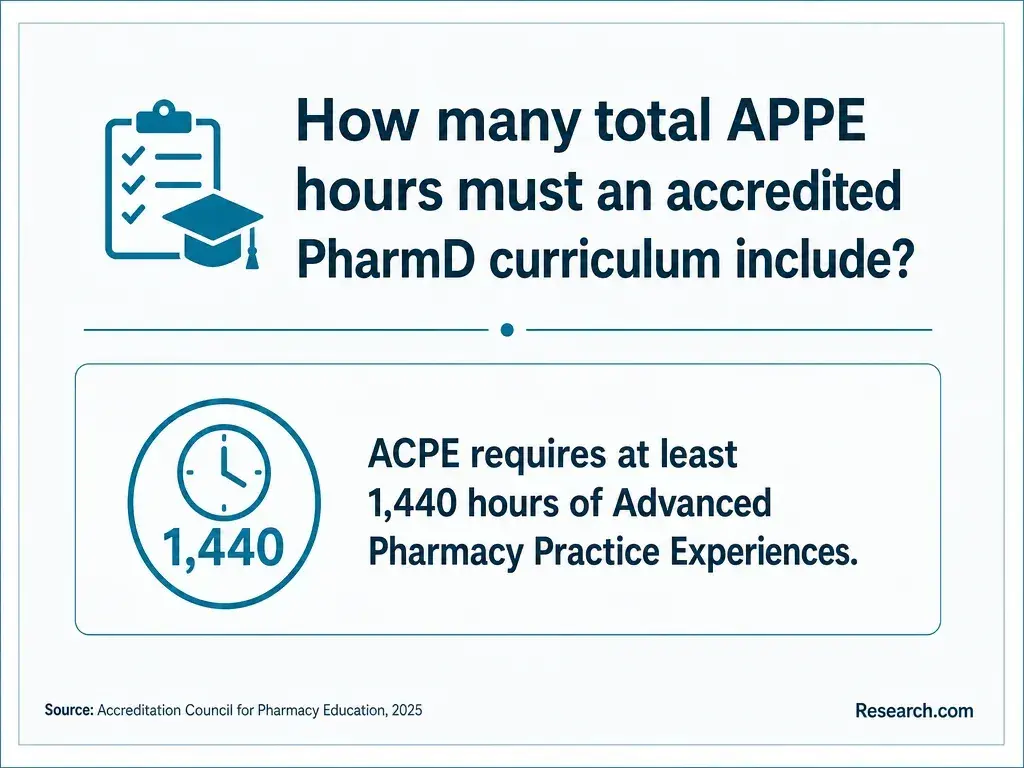
Some Pharm.D. programs offer online or hybrid instruction, but "online" does not mean fully remote, self-paced, or compatible with unrestricted full-time work. Programs may require scheduled classes, campus visits for hands-on learning, and in-person introductory and advanced pharmacy practice experiences - often called IPPEs and APPEs.
Before choosing a format, ask who arranges clinical sites, whether placements near your home are possible, and what travel, schedule, background-check, immunization, or pharmacist-intern registration obligations apply. A current pharmacy job is not automatically an approved rotation. Use compare online Doctor of Pharmacy programs as a shortlist, then verify each program's actual calendar, placement policies, and eligibility to enroll students in your state.
A traditional professional Pharm.D. curriculum commonly spans four academic years after required pre-professional study. An accelerated curriculum may use a shorter calendar, while prerequisite courses can add time before either pathway. The practical timeline also depends on course availability, cohort start dates, and whether you can study full time.
Published tuition is only one part of the decision. These cost categories matter particularly if returning to school means reducing paid work or traveling for required training.
| Cost category | Potential expense beyond advertised tuition |
| Before enrollment | Additional prerequisites, applications, transcripts, and any required travel for interviews. |
| During the program | Mandatory fees, learning materials, equipment, campus visits, and clinical-placement travel or housing. |
| After graduation | Licensure applications, required examinations, and related preparation or travel. |
Request the school's current cost-of-attendance estimate and an individual aid review, then compare it with your expected lost income. For pharmacy doctorate financial planning, verify federal borrowing rules that apply to your start date: changes beginning July 1, 2026, affect many new graduate and professional borrowers, and eligibility or transitional exceptions depend on individual circumstances. Do not assume an older student's loan options will be yours.
Check the Accreditation Council for Pharmacy Education (ACPE) record for the professional Pharm.D. program and its current status. That is distinct from the institution's accreditation and, for online study, its authorization to enroll students in your state. A program's ability to enroll you also does not establish that a particular clinical placement is approved or that you will meet your intended state's licensing rules.
Next, consult the board of pharmacy in the state where you intend to practice. U.S.-educated graduates generally must meet board requirements that include the North American Pharmacist Licensure Examination (NAPLEX), but intern experience, applications, background checks, and law-exam requirements vary.
Depending on the jurisdiction, a law examination may be the MPJE, the UMPJE, or another requirement; do not assume every state uses the MPJE. The National Association of Boards of Pharmacy and the state board publish the applicable examination and eligibility procedures. Completing the degree - or passing an exam - does not itself issue a pharmacist license.
Be cautious when comparing online doctoral study duration: a short doctorate in another field is not interchangeable with an ACPE-accredited entry-to-practice Pharm.D. Internationally educated pharmacists may face a separate credentialing pathway and should check the relevant board's requirements rather than assuming U.S. graduate rules apply.
What careers, salaries, and job outlook follow a PharmD degree?
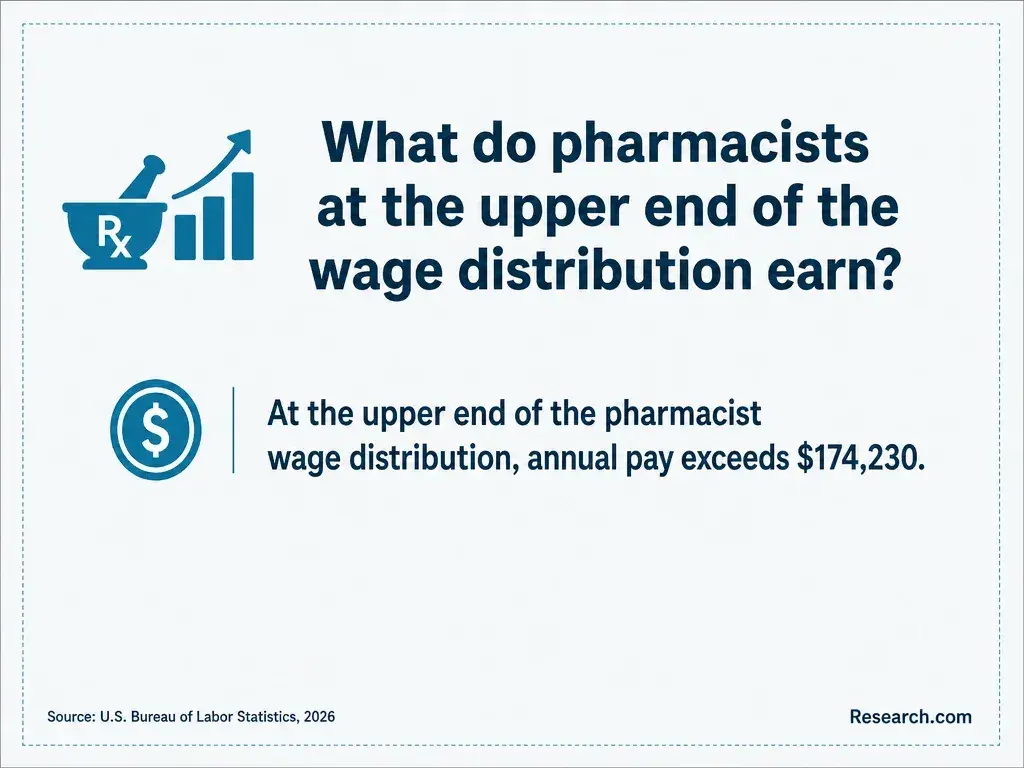
After meeting state licensure requirements, pharmacists may work in community, hospital, ambulatory care, specialty, or other settings; duties and hiring expectations vary. The U.S. Bureau of Labor Statistics reports pharmacists' median annual pay of $140,910 in May 2025 and projects 5% growth, 2025-2035, with about 12,500 openings per year. These occupation-wide figures are useful context, not a prediction of your first salary, local job market, or return on tuition.
A postgraduate year one (PGY1) residency develops broader practice skills; a PGY2 focuses on an area of practice. Fellowships typically emphasize a different, often industry-oriented training path. Neither residency nor fellowship is universally required for pharmacist employment, and optional specialty board certification is distinct from state licensure. A pharmacy technician role is also a separate occupation that does not ordinarily require a Pharm.D.
If your goal is to become a licensed pharmacist, compare accredited Pharm.D. programs on prerequisites, total cost, schedule, rotations, and your intended state's rules. If your goal is a pharmacy-adjacent job rather than pharmacist practice, investigate whether a less extensive credential meets it first. When you compare pharmacy degree costs and duration, confirm that every option leads to the same credential before using salary expectations to justify the investment.
Other Things You Should Know About PharmD
Possibly. Schools set their own recommender rules, including whether an academic reference is required. Choose someone who knows your recent work well, but check each program's instructions before requesting the letter.
Potentially, but you must follow each application's disclosure rules. Ask the school whether dismissal affects eligibility and what evidence of subsequent academic improvement it considers.
That depends on the school's policy and any required transcript evaluation. Acceptance as an admission prerequisite is a separate question from eligibility for a U.S. pharmacist license.
Yes. Contact a prospective school's disability services office to learn its documentation and accommodation process. Also ask the relevant examination administrators about their separate procedures for licensure-exam accommodations.
- Cost of Attendance (Budget) | 2025-2026 Federal Student Aid Handbook https://fsapartners.ed.gov/knowledge-center/fsa-handbook/2025-2026/vol3/ch2-cost-attendance-budget
- Are Prerequisite Courses Barriers to Pharmacy Admission or the Keys to Student Success? - PMC https://pmc.ncbi.nlm.nih.gov/articles/PMC10159397/
- Pharmacy Admissions | University of Health Sciences and Pharmacy in St. Louis https://www.uhsp.edu/admissions/pharmd-admissions/
- Pharmacy (PharmD) - Bouvé College of Health Sciences https://bouve.northeastern.edu/programs/pharmacy-pharmd/
- PHARMD Program - Pharmacy | University of Utah Catalog https://catalog.utah.edu/programs/PHARMD
- PharmD FAQs - UNC Eshelman School of Pharmacy https://pharmacy.unc.edu/education/pharmd/pharmd-admissions-faqs/
- FAQ | OSU College of Pharmacy - Oregon State University https://pharmacy.oregonstate.edu/programs-admissions/pharm-d/faq
- International Students and Graduates | AACP https://www.aacp.org/resource/international-students-and-graduates
- Application Instructions - Before You Apply | PharmCAS https://www.pharmcas.org/application-instructions/before-you-apply


