
PharmD application after a chemistry degree

Co-Founder and Chief Data Scientist
A chemistry degree can give you a strong start toward pharmacy school, but it does not tell you which prerequisites you have met - or whether a Doctor of Pharmacy (Pharm.D.) is the right next step. This guide is for chemistry graduates considering pharmacist practice in the United States. It explains how to check course eligibility, build a realistic application timeline, compare program costs and formats, and account for licensing after graduation. You can use it to identify gaps before spending money on more classes or applications.
Key Things You Should Know
- Yes, chemistry graduates can apply to Pharm.D. programs; schools evaluate required courses and other admissions criteria, not the chemistry major alone.
- A chemistry transcript may cover substantial science prerequisites, but biology, anatomy, physiology, microbiology, statistics, or other requirements may remain. The receiving school decides what counts.
- Most applicants should plan for several years of professional study after prerequisites. A Pharm.D. is not a pharmacist license, and tuition, clinical placements, and state licensing requirements all affect the decision.
Can you apply to a PharmD program with a chemistry degree?
Yes. U.S. Pharm.D. programs commonly consider applicants from many majors, including chemistry, provided they meet that school's admission and prerequisite rules. Some require a bachelor's degree; others admit students after specified undergraduate coursework. Your chemistry degree therefore may exceed one school's minimum education requirement while leaving you short of another school's required classes.
The key distinction is between pre-professional coursework, which establishes eligibility to enter pharmacy school, and the professional Pharm.D. curriculum, which teaches medication-focused patient care and includes supervised practice. A chemistry bachelor's degree does not replace the professional degree. When reviewing pharmacy school for biology and chemistry graduates, compare your actual transcript with each school's requirements rather than relying on the title of your major.
What PharmD prerequisites are required after a chemistry degree?
Requirements vary by school. Chemistry graduates often have general and organic chemistry, mathematics, and laboratory work, but may need additional biological sciences or general education. Schools can also differ on minimum grades, whether a lab must be taken in person, how recently a science course was completed, and whether a missing course may be in progress when you apply.
Build a school-by-school prerequisite audit before enrolling in another class. This sequence helps you avoid taking a course that will not satisfy the requirement:
- List each target program's current prerequisite courses, labs, minimum grades, and completion deadline.
- Match each requirement to your transcript using course titles, credits, dates, and descriptions - not titles alone.
- Ask admissions staff to review uncertain matches and confirm any approved substitution in writing.
- Schedule remaining courses so final grades are available by each school's required deadline.
Policies on community-college classes, online labs, advanced-placement credit, and older coursework also differ. If your transcript has gaps, pharmacy programs for students with varied academic backgrounds can be a starting point for comparison, but confirm what must be finished before enrollment.
How long does a PharmD take after earning a chemistry degree?
A traditional professional Pharm.D. curriculum commonly takes four academic years after prerequisites. Some programs offer a compressed three-year calendar, generally with shorter breaks and a heavier year-round schedule. If you still need prerequisites, add the time required to complete them; a chemistry degree does not automatically shorten the professional curriculum.
Review shortened Doctor of Pharmacy pathways by calendar and workload, not just the advertised number of years. An accelerated schedule may reduce time away from full-time earnings but leave less room for paid work, course recovery, or family obligations. Ask whether previous undergraduate credit satisfies admission requirements only or can actually reduce professional coursework; those are different policies.
General chemistry, organic chemistry, and their labs are common candidates. Analytical chemistry, biochemistry, calculus, and physics may also be relevant, depending on the school's list. An upper-level chemistry course does not necessarily substitute for a named biology or biochemistry prerequisite.
This comparison shows where a chemistry transcript may help and where an individual course review matters. It is not a universal transfer-credit policy.
| Course on a chemistry transcript | Potential prerequisite use | What to confirm |
| General and organic chemistry with labs | May satisfy corresponding science and laboratory requirements | Credit amount, grades, lab format, and course age |
| Biochemistry | May satisfy a named biochemistry requirement | Required department, content, and lab rules |
| Calculus or statistics | May satisfy a mathematics requirement | Whether the school requires one, the other, or both |
| Analytical or physical chemistry | May demonstrate preparation without fulfilling a specific prerequisite | Whether a substitution is explicitly approved |
The receiving Pharm.D. program decides whether previous coursework applies. That decision is separate from transferring into the professional curriculum, which may be limited even when undergraduate prerequisites are accepted. Use pharmacy transfer planning to frame questions, then request a transcript evaluation from each school.
Beyond prerequisites, a school may evaluate overall and science grades, recommendations, an interview, a personal statement, and evidence that you understand pharmacist work. Published minimums establish eligibility, not a promise of admission. Chemistry research can demonstrate analytical skill, but you should also be ready to explain why you want a patient-care profession.
Application procedures are program-specific. Many schools use the Pharmacy College Application Service (PharmCAS), while others use their own process; a participating school may also require a supplemental application, separate fee, or deposit. Check the current admissions page and PharmCAS school entry, if applicable, for transcript, recommendation, interview, and deadline instructions. Comparing pharmacy programs with flexible entry requirements can help you build a list, but flexibility on one criterion does not predict your admission result.
The Pharmacy College Admission Test (PCAT) was retired in January 2024, so applicants should not plan to take it for a current application. Check each school's current admissions instructions for any other assessment, interview format, or English-language proficiency requirement that applies to you. Do not treat an old page describing a PCAT waiver as current policy.
Test requirements also depend on the credential: admissions rules for online doctoral degree options outside pharmacy do not establish Pharm.D. rules. For your shortlist, rely on each pharmacy school's current application instructions rather than a general claim that doctoral programs are "test-free."
Some Pharm.D. programs deliver academic instruction online or in a hybrid format, but a chemistry graduate must still meet their admissions requirements. "Online" does not mean fully remote or self-paced: hands-on activities, campus visits, scheduled classes, and in-person supervised experiences may be required.
Pharmacy training includes introductory pharmacy practice experiences (IPPEs) and advanced pharmacy practice experiences (APPEs). Before applying, ask who arranges placements, whether sites near you are possible, when full-time rotations begin, and whether you must travel or obtain intern registration. Compare these commitments alongside tuition in an online pharmacy program comparison.
Confirm the program's Accreditation Council for Pharmacy Education (ACPE) professional accreditation status. Separately confirm that the school can enroll students where you live and that your planned placements and education meet the licensing board's rules where you intend to practice. Institutional accreditation, ACPE accreditation, state authorization, and licensure eligibility answer different questions.
There is no single price for chemistry graduates. Your cost depends on missing prerequisites, residency status, program tuition and fees, living expenses, and travel for campus activities or rotations. A lower advertised tuition figure can lose its advantage if you need additional coursework or extended time away from work.
Request each school's current cost-of-attendance estimate and use Pharm.D. tuition planning to compare like with like. These are the main amounts to include in a personal budget:
- Remaining prerequisite tuition, labs, and application expenses
- Professional-program tuition, mandatory fees, books, technology, and required supplies
- Living costs and potential lost earnings during classes and full-time rotations
- Travel, temporary housing, health requirements, background checks, and licensing expenses
Ask the financial aid office which federal aid rules apply to your entry date and borrower status. Federal borrowing rules changed for many new graduate and professional students beginning July 1, 2026; older descriptions of Grad PLUS access or loan limits may not apply. Compare expected borrowing with a conservative career budget rather than treating a pharmacist salary as guaranteed repayment capacity.
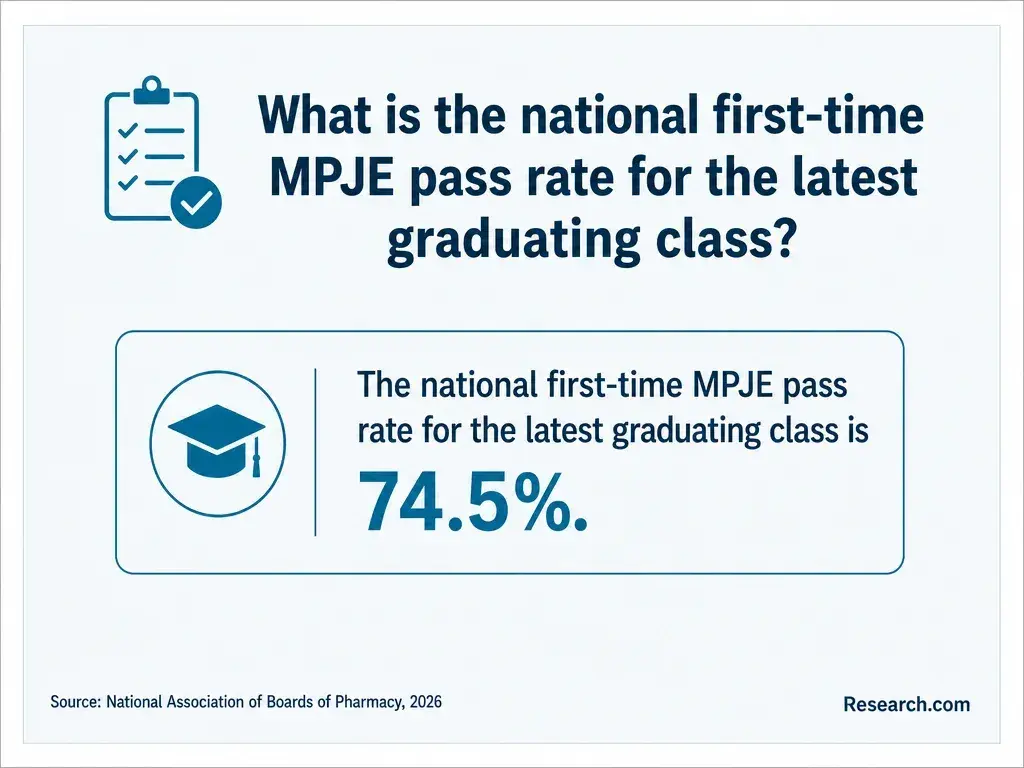
Graduating from a Pharm.D. program does not issue a pharmacist license. A U.S.-educated applicant generally must satisfy the intended jurisdiction's education, supervised-experience, application, and examination rules. The North American Pharmacist Licensure Examination (NAPLEX) assesses pharmacy knowledge for licensure; jurisdictions also set their own law-exam requirements, which may involve the Multistate Pharmacy Jurisprudence Examination (MPJE), the Uniform Multistate Pharmacy Jurisprudence Examination (UMPJE), another assessment, or no separate jurisprudence exam.
Check the relevant state board of pharmacy and the National Association of Boards of Pharmacy before scheduling exams or assuming an intern registration or rotation qualifies. Requirements can change and may differ if you later seek a license in another state. Be especially cautious with claims about fast-track online pharmacy education: a short pharmacy-related course is not necessarily an entry-level Pharm.D. or a route to pharmacist licensure.
What careers, salaries, and job outlook follow a PharmD degree?
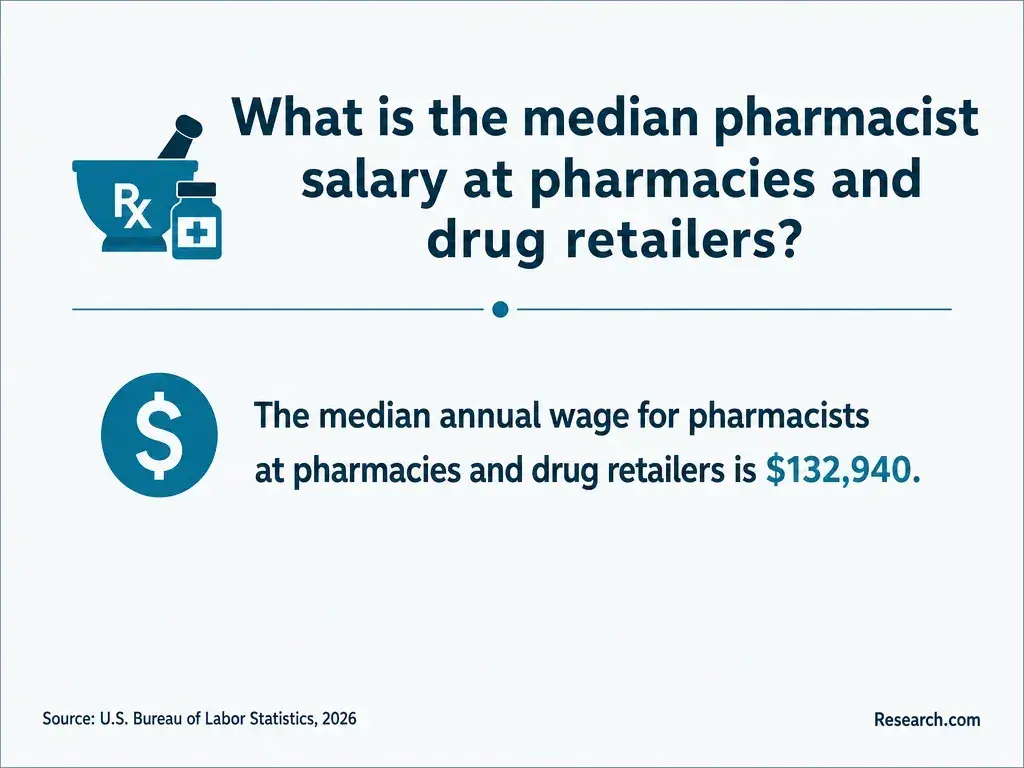
Licensed pharmacists work in settings including community pharmacies, hospitals, ambulatory care, and specialty pharmacy. Their responsibilities vary but can include evaluating medication orders, counseling patients, and collaborating with other clinicians. The Bureau of Labor Statistics reports a pharmacist median annual pay of $140,910 in May 2025 and projects 5% job growth from 2025-2035, with about 12,500 openings per year. Those national figures describe an occupation, not what a new graduate in a particular location will earn.
A postgraduate residency can provide structured practice training; a fellowship usually emphasizes a different specialized training goal, such as industry work. Neither is universally required for pharmacist practice. Specialty board certification is a separate credential, not a state license. If your goal is laboratory research or pharmaceutical development rather than licensed patient care, compare the Pharm.D.'s cost and duration with the qualifications employers actually request for that role. That distinction matters when assessing pharmacy program value and duration.
Bottom line: Apply if pharmacist practice is your goal and your transcript can meet a program's prerequisites on a manageable timeline. Before committing, obtain written answers on course equivalencies, full cost, required in-person training, accreditation, and eligibility in your intended licensing jurisdiction.
Other Things You Should Know About PharmD
Often, yes. Schools set their own rules for courses in progress and when final transcripts must arrive. Confirm that both your degree and remaining prerequisites can be completed by the program's enrollment deadline.
Not generally as a nationwide requirement. Pharmacy employment can help you understand the profession, but check each school's stated experience expectations and your state's rules before taking a technician job.
Possibly. Check the school's required number and types of recommenders. Choose someone who can describe your academic work specifically, while making sure your application also addresses your interest in pharmacy practice.
It may, but schools differ in how they define and evaluate experience. Describe your duties and supervision accurately, and do not present observation or volunteer work as licensed patient care.
- Admissions: USC Mann PharmD Program https://mann.usc.edu/program/doctor-of-pharmacy-pharmd/admissions/
- FAQ | OSU College of Pharmacy - Oregon State University https://pharmacy.oregonstate.edu/programs-admissions/pharm-d/faq
- Pharmacy School Application Requirements | Rosalind Franklin University https://www.rosalindfranklin.edu/academics/college-of-pharmacy/doctor-of-pharmacy-pharmd/application-requirements/
- PharmD Prerequisites - Doctor of Pharmacy https://pharmacy.wisc.edu/pharmd/prerequisites/
- PharmD Application Process and Requirements | umich.edu https://pharmacy.umich.edu/pharmacy-programs/pharmd-program/application-process-requirements/
- Prerequisites - College of Pharmacy - University of Minnesota https://www.pharmacy.umn.edu/doctor-pharmacy/admissions/how-apply/prerequisites
- PharmD Apply Now - UW School of Pharmacy https://sop.washington.edu/pharmd/admissions/application-procedures/
- PharmD FAQs - UNC Eshelman School of Pharmacy https://pharmacy.unc.edu/education/pharmd/pharmd-admissions-faqs/
- Doctor of Pharmacy Admissions | UAMS College of Pharmacy https://pharmacy.uams.edu/future-students/doctor-of-pharmacy-admissions/
- Prerequisite Coursework | School of Pharmacy https://www.pharmacy.pitt.edu/academics/doctor-pharmacy/apply-pharmd-program/prerequisite-coursework


