
Questions to Ask During a Pharmd Information Session

Co-Founder and Chief Data Scientist
A PharmD information session is a chance to test whether a program fits your goals, not just hear its admissions pitch. For prospective U.S. pharmacy students, the consequential details are often easy to miss, prerequisite rules, clinical placement logistics, total costs, and eligibility for pharmacist licensure.
This guide gives you specific questions to ask, explains what a useful answer sounds like, and helps you compare schools on the same terms. Bring it to each session and record answers you can confirm in writing before you apply or pay a deposit.
Key Things You Should Know
- Ask whether the specific PharmD program holds Accreditation Council for Pharmacy Education accreditation, then confirm its status independently; institutional accreditation and online enrollment authorization answer different questions.
- Request written estimates of total attendance costs and a term-by-term schedule, including in-person labs and clinical rotations. A shorter or online pathway may still require substantial travel and time away from work.
- Ask for recent, cohort-specific licensure exam outcomes and graduate destinations. The U.S. median pay for pharmacists was $140,910 in May 2025, but that occupational figure is not a graduate salary promise.
What is a PharmD degree, and what does a pharmacist do?
A Doctor of Pharmacy (PharmD) is the professional degree that prepares U.S. students for pharmacist licensure. Pharmacists dispense and review medications, counsel patients, identify medication-related problems, and collaborate with other health professionals. Their duties depend on the practice setting and state law. A pharmaceutical sciences or pharmacology degree is not a substitute for the professional PharmD when pursuing the usual U.S.-educated pharmacist licensure route.
Ask: "Which practice settings will I experience, and what will students actually do under supervision?" Request examples from community, hospital, ambulatory care, or other placements rather than accepting a list of possible careers as evidence of access. If you are transitioning into a Doctor of Pharmacy program from another science major, also ask which previous courses satisfy prerequisites and which professional courses must still be completed.
A pharmacist is not the same as a pharmacy technician. Technicians support pharmacy operations within their permitted duties and do not ordinarily need a PharmD. If your goal is a technician role rather than pharmacist licensure, ask whether a less extensive educational route meets it.
What accreditation should you look for in a PharmD program?
Ask, "What is this professional PharmD program's current Accreditation Council for Pharmacy Education (ACPE) status, and where can I verify it?" Check the specific program in ACPE's official directory, including any conditions or upcoming review. ACPE accredits professional pharmacy education programs; it does not license pharmacists. Accreditation matters for the usual U.S. licensure pathway, but completing an accredited program does not itself grant a license.
Keep three separate checks on your notes: ACPE professional-program accreditation, the university's institutional accreditation, and, for distance learners, authorization to enroll students in your state. Ask who verifies that clinical placements can occur where you live. None of these checks means previous coursework will automatically count: when considering pharmacy programs with transfer pathways, get the receiving school's written evaluation of how each course applies.
What are the requirements to become a licensed pharmacist?
For a U.S.-educated applicant, the usual route involves completing an eligible PharmD program, meeting the intended jurisdiction's supervised-experience and application requirements, passing the North American Pharmacist Licensure Examination (NAPLEX), and satisfying any required law examination or other state-board conditions. Ask: "Which steps do graduates still have to complete in my intended state, and how does the school help them prepare?" Confirm the answer with that state's board of pharmacy before enrolling.
Do not assume every jurisdiction requires the Multistate Pharmacy Jurisprudence Examination (MPJE). Jurisprudence requirements vary, and some jurisdictions began transitioning to the Uniform Multistate Pharmacy Jurisprudence Examination (UMPJE) in 2026. Passing an exam alone does not issue a license. If a session promotes pharmacy programs with a fast timeline, ask whether the advertised credential is actually a licensure-eligible PharmD; a shorter pharmacy-related degree may serve a different goal.
Separate pre-professional prerequisites from the professional PharmD curriculum. Many professional programs are structured around four academic years, while accelerated programs may use a more compressed calendar. Your time to graduation also depends on prerequisites you still need, course sequencing, and whether you progress on schedule.
Ask: "Starting with my completed coursework, what is the earliest realistic graduation term - and what happens if I must repeat a course or cannot attend a scheduled rotation?" Request a term-by-term calendar showing summer enrollment, breaks, campus attendance, and experiential blocks. When comparing accelerated pharmacy education options, weigh the shorter calendar against its workload and reduced opportunity to earn income during study.
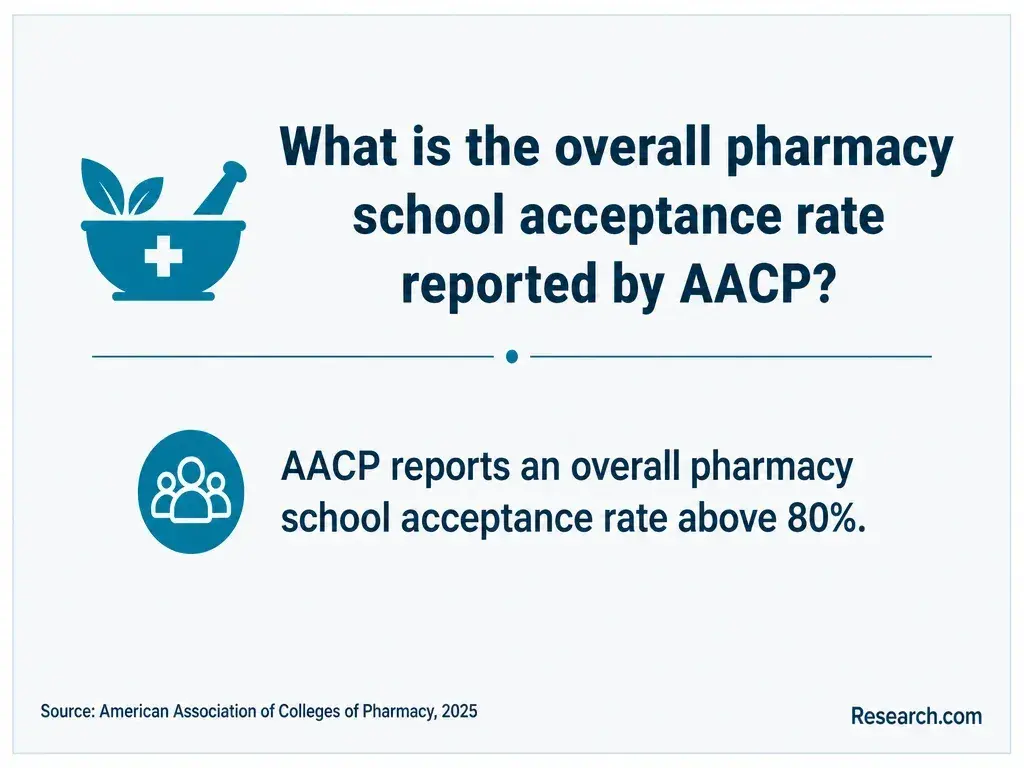
Requirements differ by school. A completed bachelor's degree is not universally required; programs may instead specify undergraduate prerequisite courses, labs, grades, or credits. Schools also set their own policies for interviews, recommendations, course age, and work still in progress. The Pharmacy College Admission Test (PCAT) was retired in January 2024, so it is not a current exam to schedule.
Bring an unofficial transcript and ask admissions staff the following questions. Their answers should identify your actual gaps, not just restate a general applicant checklist.
- Which of my courses meet each prerequisite, and who provides a written evaluation of substitutions, repeated courses, or transfer credit?
- May outstanding courses be in progress when I apply, and when must they be finished?
- Does this school use PharmCAS, and what separate application, interview, deposit, and deadline rules apply?
A minimum eligibility threshold is not an admission guarantee. If you are exploring pharmacy school admission requirements, compare published requirements with your own transcript and ask what the school considers in a competitive application.
Professional coursework commonly connects drug science with therapeutics, patient assessment, medication safety, communication, law, and supervised practice. Introductory pharmacy practice experiences (IPPEs) introduce practice settings; advanced pharmacy practice experiences (APPEs) involve more sustained rotations later in the curriculum. These professional experiences are distinct from undergraduate prerequisites.
Ask: "Show me where students practice counseling, clinical decisions, and hands-on skills before APPEs. Who arranges and approves each rotation, and what placements might require travel?" Also ask about intern registration, background checks, immunizations, and expenses you must arrange yourself. Do not assume an employer or nearby pharmacy can replace an assigned experience. Comparisons with accelerated online doctoral education should account for these PharmD-specific supervised requirements; not every doctorate prepares a student for pharmacist licensure.
Some PharmD pathways deliver academic instruction online or in a hybrid format, but "online" does not necessarily mean self-paced or fully remote. Hands-on labs, campus visits, assessments, IPPEs, and APPEs may require attendance at set times and locations. Campus programs may simplify access to on-site activities, though their rotations can also involve travel.
Ask: "Which meetings are live, how often must I come to campus, and can required rotations be completed near my home?" Request a sample calendar and a written explanation of who secures placements. For online Pharm.D. pathways for future pharmacists, confirm ACPE status, authorization to enroll you, and whether placements in your state are feasible. Enrollment authorization is not the same as eligibility for that state's pharmacist license.
Published tuition is only one part of the decision. Ask: "Can you provide an itemized, cohort-specific cost of attendance for every term, including mandatory fees and expected rotation expenses?" Compare the same attendance period and residency status across schools. The cost categories below are worth checking because some are not obvious in an advertised tuition figure.
- Prerequisite courses, tuition, mandatory fees, books, clinical references, technology, and lab supplies.
- Campus-visit travel, rotation transportation or temporary housing, background checks, immunizations, and required testing.
- Licensure applications and examinations after graduation, plus income you may give up during intensive study or rotations.
Ask the financial aid office to explain eligibility for your entry date and student classification. Federal borrowing rules changed for many new graduate and professional borrowers beginning July 1, 2026; do not rely on an older assumption about Grad PLUS access or borrowing limits. When reviewing affordable online Pharm.D. programs, include travel and placement costs before deciding which offer is less expensive.
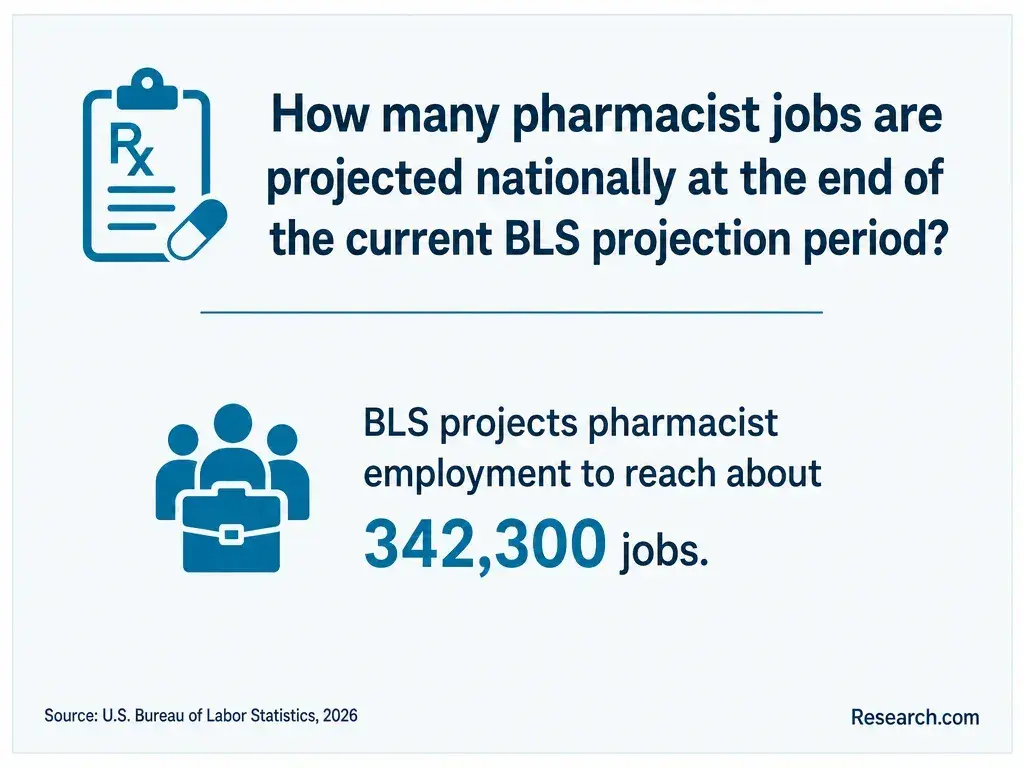
Licensed pharmacists work in settings including community pharmacies, hospitals, ambulatory care, and other medication-focused services; openings and hiring preferences differ by setting. The Bureau of Labor Statistics reports median annual pay for pharmacists of $140,910 in May 2025 and projects 5% job growth, 2025-2035. Those occupation-wide figures do not predict pay or employment for a particular school's graduates.
Ask: "Where did recent graduates work, how were those outcomes collected, and how many graduates responded?" If the school highlights residency placements, ask for cohort counts and distinguish a postgraduate year one (PGY1) residency from subsequent postgraduate year two (PGY2) specialty training. Residencies, fellowships, and optional specialty board certifications serve different purposes; none substitutes for state licensure, and none is required for every pharmacist job.
Before using affordable pharmacy studies with a focused timeline to compare career routes, check the credential behind each advertised role. A shorter pharmacy-related program may be appropriate for another occupation, but it should not be treated as an equivalent route to licensed pharmacist practice.
How do you choose the right PharmD program?
Compare schools using evidence you can revisit after the session, not the quality of the presentation. The scorecard below gives you consistent fields for two programs; fill it with dated answers and note where written confirmation is still missing.
| Decision factor | Program A | Program B |
| ACPE program status and date checked | ________ | ________ |
| My remaining prerequisites | ________ | ________ |
| Expected graduation term | ________ | ________ |
| Required campus visits and rotation travel | ________ | ________ |
| Total estimated attendance cost and aid assumptions | ________ | ________ |
| Recent licensure outcomes and cohort covered | ________ | ________ |
Next step: Send each school your unresolved questions and request links to its current catalog, cost estimate, rotation policies, and outcome disclosures. Favor the program whose verified requirements, schedule, and likely debt fit your intended practice setting - not simply the shortest advertised timeline. If you are investigating pharmacy application eligibility pathways, establish whether missing courses can be completed before matriculation rather than assuming you can skip them.
Treat vague answers about accreditation, placements, or total cost as reasons to pause before paying a deposit. A useful information session ends with a list of confirmed facts and a short list of questions the school still owes you in writing.
Other Things You Should Know About PharmD
Yes. Attending early can reveal prerequisites or scheduling constraints while you still have time to adjust your coursework. Tell staff your expected application cycle so they can distinguish current rules from policies that may change.
Bring an unofficial transcript, a list of courses in progress, your intended state of practice, and a realistic budget or work-schedule constraint. These details make follow-up answers more useful.
Ask whether the school can connect you with students at different stages, including someone currently completing rotations. Their experience can illuminate workload and support, but confirm formal policies with the school.
Ask who owns the policy, where it is published, and when you can expect a written response. An unanswered question is not necessarily a warning sign; an important claim that cannot be documented is.
- An Overview of Accreditation of Higher Education in the United States | Congress.gov | Library of Congress https://www.congress.gov/crs-product/R43826
- Cost of Attendance (Budget) | 2025-2026 Federal Student Aid Handbook https://fsapartners.ed.gov/knowledge-center/fsa-handbook/2025-2026/vol3/ch2-cost-attendance-budget
- Measuring Student Success In IPEDS: Graduation Rates (GR), Graduation Rates 200% (GR200), And Outcome Measures (OM) https://nces.ed.gov/ipeds/use-the-data/measuring-student-success-in-ipeds
- Experiential Education in Pharmacy Curriculum - PMC - NIH https://pmc.ncbi.nlm.nih.gov/articles/PMC7839036/
- Accreditation in the U.S. | ed.gov http://www.ed.gov/laws-and-policy/higher-education-laws-and-policy/college-accreditation/accreditation-in-the-us
- General Program Admission Requirements | Pepperdine University https://healthscience.pepperdine.edu/mspas/admission/general-program-admission-requirements.htm
- General Program Admission Requirements | Austin College PA Program https://paprogram.austincollege.edu/admissions/program-admission-requirements/
- Current PharmD Students Rx for Success | CU School of Pharmacy https://pharmacy.cuanschutz.edu/current-students/on-campus-pharmd-students/rx-for-success
- Pharmacy Practice Experiences | Midwestern University https://catalog.il.midwestern.edu/pharmacy-practice-experiences
- Academic Support Services | University of Health Sciences and Pharmacy in St. Louis https://www.uhsp.edu/academics/academic-support-services/


