How to Prepare for Lab Assessments in Pharmacy School

Co-Founder and Chief Data Scientist
A pharmacy lab exam can test more than whether you remember a procedure: you may need to calculate a dose, prepare a product, explain your work, and catch a safety problem under time pressure. This guide is for prospective and current Doctor of Pharmacy (Pharm.D.) students deciding how to prepare and what laboratory training to look for in a program. You'll learn how to turn an assessment rubric into a practice plan, identify errors that matter most, and ask schools the questions that reveal whether their labs offer enough hands-on feedback.
Key Things You Should Know
- Start with your course rubric: identify the assessed tasks, permitted references, time limits, and steps designated as critical for safety.
- Practice complete stations - not just isolated calculations - and use a two-pass check: verify the order and math before starting, then verify the finished work and documentation.
- Confirm where hands-on assessments take place before choosing a Pharm.D. program; online coursework does not necessarily mean remote labs or exams.
What are pharmacy school lab assessments?
Pharmacy school lab assessments are observed or submitted demonstrations of skills taught in the professional Pharm.D. curriculum. Depending on the course, you might prepare a compounded product, work through a simulated prescription, counsel a standardized patient, document a clinical decision, or complete an objective structured clinical examination (OSCE) - a series of timed skills stations. These assessments test whether you can apply knowledge safely, not just recall it on a written exam.
Formats, permitted resources, and grading rules vary by school and course. Before practicing, read the current syllabus and ask whether the assessment is an individual demonstration, a team exercise, a simulation, or an in-person practical. If you are still applying, distinguish prerequisite science labs from professional Pharm.D. labs: meeting pharmacy school admission requirements does not mean you have already completed the program's practice-skills training.
How can you prepare effectively for pharmacy lab practicals?
Build your practice around the task you will actually perform. A student entering pharmacy school after biology or chemistry may know laboratory technique yet still need practice with prescription interpretation, patient communication, and pharmacy-specific documentation.
Use this sequence when preparing for a scheduled practical; adapt it to your instructor's rules rather than memorizing a generic script.
- Translate the rubric into a station checklist, marking critical safety steps and tasks you cannot perform from memory yet.
- Watch the approved demonstration, then perform the task yourself using the equipment and references allowed in the exam.
- Practice untimed until your method is reliable; next, repeat the entire station within its time limit.
- Ask a peer or instructor to observe against the rubric, then correct the specific errors they identify.
- On the final review, rehearse setup, execution, final checks, documentation, and cleanup as one continuous workflow.
If practice space or equipment is limited, prioritize supervised lab access for tasks that require hands-on technique. Use home study for terminology, calculations, and verbal explanations, not for unsupervised preparation of medications.
What skills are tested in pharmacy school laboratory assessments?
The exact mix depends on the course. Common domains include calculations; interpreting and evaluating medication orders; nonsterile or sterile compounding where taught; dispensing workflows; medication reconciliation; patient counseling; use of drug-information resources; communication with other clinicians; documentation; and infection control. Some stations assess a single technique, while others require you to recognize a problem, decide what to do, and explain why.
Look beyond the task name when reading a rubric. "Compounding" may include verifying ingredients and quantities, choosing equipment, following an approved procedure, labeling, and recording what was done. "Counseling" may include confirming patient identity, explaining key directions in plain language, and checking understanding. Prior coursework or transfer-friendly pharmacy education options may help with preparation, but the receiving school decides how credit applies; previous credit does not necessarily replace its assessed professional skills.
For calculations, practice identifying what is being asked before choosing a formula. Write the given values with units, calculate, then check whether the answer is plausible for the order and dosage form. Rotate among problem types covered in your course rather than repeating only familiar examples. During timed practice, set aside time to recheck unit conversions and any answer that would change the amount prepared or administered.
For compounding, study the approved procedure and its purpose, then rehearse the physical sequence under supervision. Know how your course expects you to select and use equipment, maintain an appropriate work area, measure ingredients, document the preparation, and label the finished product. Sterile and nonsterile work have different procedures; follow your program's current instructions rather than carrying a technique from one setting into the other.
If you are applying before all prerequisite courses are complete, review pharmacy application requirement flexibility against each school's actual policy. Permission to apply with a course in progress is separate from the preparation you will need for professional calculations and compounding labs.
Accuracy improves when every station follows the same deliberate pattern, even when the clinical details change. Do not let the clock persuade you to skip an identity check, ignore an unclear order, or proceed after spotting a discrepancy. Your rubric may treat some of those omissions differently from minor presentation errors.
Use these checks during practice so they become part of your normal workflow:
- Before acting, confirm the patient or order details, intended product, required calculation, and any information that needs clarification.
- During the task, keep materials organized, follow the taught safety procedure, and avoid relying on memory when an approved reference is available.
- Before finishing, compare the result with the original order, inspect the label or documentation, and communicate unresolved concerns rather than concealing a possible error.
A common mistake is practicing for speed by repeating an incorrect method. Get feedback first, then increase pace. Also budget for required supplies and travel when comparing online pharmacy degree cost comparison resources: a lower advertised price does not tell you whether a program provides sufficient supervised practice.
Practice with the equipment your course will assess, using the school's instructions. Depending on the lab, that may include balances, graduates, syringes, counting devices, compounding tools, protective equipment, simulated dispensing systems, or sterile-work equipment. Equipment familiarity means knowing its limitations and correct use - not merely recognizing it in a demonstration.
Ask instructors which procedures require supervised access and which can be rehearsed through an approved simulation. Before an exam, confirm whether you must bring a calculator, protective clothing, references, or other materials and whether the school supplies them. When comparing programs, read pharmacy doctorate tuition and fees alongside disclosed lab, equipment, technology, and required travel costs; these can affect the practical cost of attending.
The important distinction is where and how a student demonstrates a hands-on skill, not where lectures are viewed. An online or hybrid Pharm.D. pathway may still require scheduled campus visits, local in-person assessments, and supervised clinical experiences. Requirements vary by program, so do not assume that online means asynchronous, fully remote, or compatible with an unrestricted work schedule.
This comparison identifies logistics to verify in a current program schedule; it does not imply that every program in either format operates the same way.
| Feature | Primarily campus program | Online or hybrid program |
| Routine skills practice | May be built into scheduled campus labs | May combine remote preparation with scheduled in-person sessions |
| Practical assessment | Often scheduled at campus facilities | May require campus travel or another approved in-person location |
| Travel planning | Usually tied to the regular campus commute | May involve separate immersion travel and lodging |
When you review online pharmacy doctorate programs, request the current lab calendar, assessment locations, attendance rules, and plans for missed in-person sessions. Also ask separately about introductory and advanced pharmacy practice experiences (IPPEs and APPEs): these supervised clinical placements are not substitutes for every campus lab, and nearby placement should not be assumed.
Schools commonly use rubrics to evaluate both the finished result and the process used to reach it. A rubric may address technique, accuracy, communication, documentation, and safety, with particular steps designated as critical. Passing thresholds, consequences of a critical error, and opportunities to repeat an assessment are course- or program-specific; consult the current syllabus and student handbook rather than assuming a second attempt is automatic.
Remediation may involve reviewing feedback, targeted practice, and a repeat demonstration, but its format and timing vary. If you do not pass, promptly request your scored rubric and confirm the deadline, required preparation, reassessment method, and effect on course progression. Students considering accelerated online Pharm.D. program timelines should pay particular attention to whether a missed or repeated lab delays the next course or an experiential placement.
Students who may need disability-related accommodations should contact the school's disability-services office early and follow its documentation and request process. Depending on an individual determination and the assessment, accommodations might address timing, accessible equipment, communication, or the testing environment. The school must evaluate requests in context; an accommodation is not a blanket waiver of an essential safety or competency requirement.
Ask how approved accommodations apply to timed stations, simulated patients, required campus sessions, and clinical placements. Keep disability-services staff and course instructors informed through the school's process rather than negotiating a change for the first time on exam day. If scheduling is a concern, compare the actual course sequence and attendance policies - not just advertised online doctorate program length - before committing to a pathway.
How can you choose a pharmacy program with strong laboratory training?
Start with eligibility: confirm the Pharm.D. program's current Accreditation Council for Pharmacy Education (ACPE) accreditation status, then separately check institutional accreditation, distance-education state authorization if applicable, and the licensing board's requirements where you expect to practice. ACPE accredits professional programs, not individual pharmacists. Completing a Pharm.D. does not itself grant a pharmacist license; state licensure has additional requirements.
Once eligibility is clear, ask each school the same questions so the answers are comparable:
- Which skills are assessed in person, how often can students practice with the assessed equipment, and who provides feedback?
- Where are required labs and practical exams held, and what travel, attendance, and makeup rules apply?
- What are the critical-error, remediation, and course-progression policies?
- What lab supplies, technology, campus visits, and clinical-placement expenses are excluded from advertised tuition?
- Who coordinates or approves IPPE and APPE sites, and what student obligations might affect travel or scheduling?
Favor the program whose documented practice opportunities, feedback, schedule, and full cost work for you - not simply the shortest advertised route. In particular, online pharmacy programs under two years may describe credentials other than a professional Pharm.D.; verify the exact credential before treating a short program as a path to pharmacist licensure.
Other Things You Should Know About PharmD
Contact the course team promptly and follow the published absence procedure. Ask what documentation, if any, is required and whether a makeup assessment is available.
Ask permission first. Recording rules may restrict videos that include other students, simulated patients, or assessment materials.
Request the scored rubric and use the school's stated review or appeal process by its deadline. Identify the specific criterion you believe was applied incorrectly.
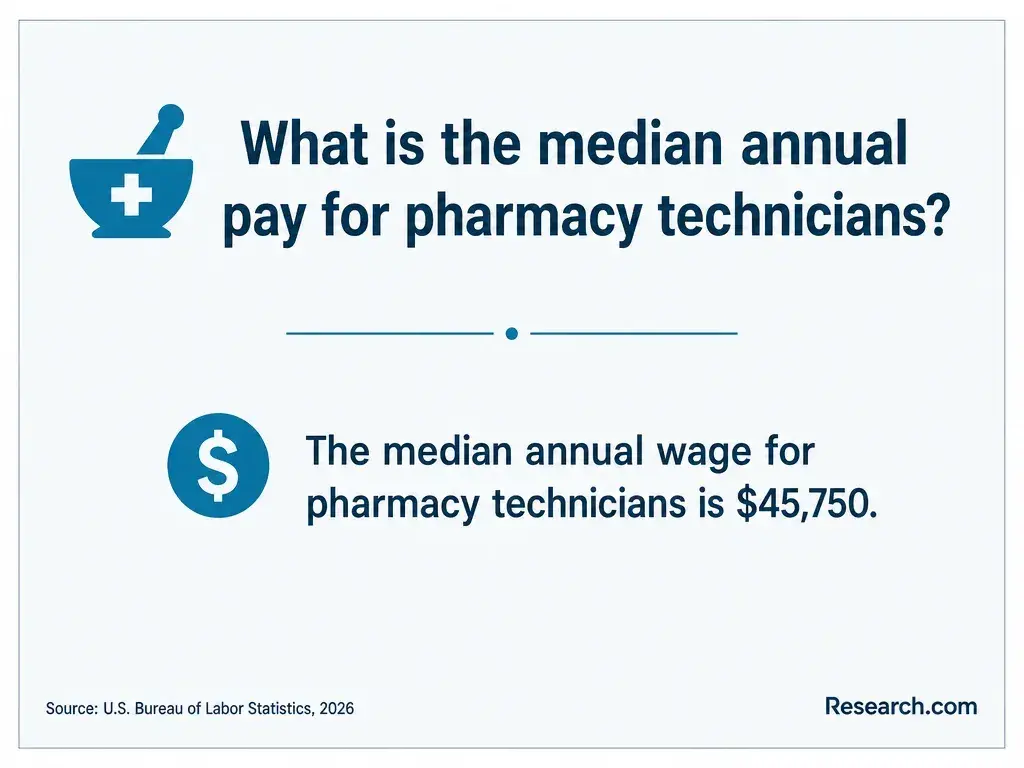
No. Prior experience may make some workflows familiar, but pharmacy technicians and pharmacists have different education and responsibilities. A Pharm.D. program determines which professional assessments every student must complete.
- Patient safety | who.int https://www.who.int/news-room/fact-sheets/detail/patient-safety
- Pharmacy Calculations - StatPearls - NCBI Bookshelf - NIH https://www.ncbi.nlm.nih.gov/books/NBK560924/
- The impact of simulation-based training in medical education | nih.gov https://pmc.ncbi.nlm.nih.gov/articles/PMC11224887/
- Guidance for Industry | fda.gov https://www.fda.gov/media/71026/download
- Assessing Student Learning | Center for Innovative Teaching and Learning | Northern Illinois University https://www.niu.edu/citl/resources/guides/assessing-student-learning.shtml
- Research Compounding Education in US PharmD Curricula | sciencedirect.com https://www.sciencedirect.com/science/article/abs/pii/S0002945923001183
- Aseptic Techniques | unc.edu https://pharmlabs.unc.edu/labexercises/compounding/sterile/atech/
- Practice for knowledge acquisition (not drill and kill) | apa.org https://www.apa.org/education-career/k12/practice-acquisition
- Inspection Trends in Compounding Pharmacies | nabp.pharmacy https://nabp.pharmacy/news/blog/common-findings-from-nabp-pharmacy-inspections/
- Compounded Sterile Preparations Pharmacy | bpsweb.org https://bpsweb.org/compounded-sterile-preparations-pharmacy/