What Happens During a Pharmd Campus Immersion?

Co-Founder and Chief Data Scientist
An online Doctor of Pharmacy (Pharm.D.) program may still require you to travel to campus, practice clinical skills in person, and take time away from work. Those visits - often called campus immersions - can be valuable, but their schedules and costs can change whether a program is realistic for you.
This guide explains what students typically do during an immersion, how it fits with clinical rotations, and which questions to ask before enrolling. You'll be able to judge both the educational value and the practical commitment.
Key Things You Should Know
- A PharmD campus immersion is a scheduled, in-person part of a professional degree program, commonly used for skills practice, simulation, assessment, and interaction with faculty and classmates.
- An immersion does not replace supervised introductory or advanced pharmacy practice experiences; online students should plan for both campus visits and in-person clinical placements.
- Before enrolling, obtain the required visit dates and locations, attendance rules, travel costs, and rotation-placement policies in writing.
What happens during a PharmD campus immersion?
A campus immersion brings Pharm.D. students together for activities that are difficult to teach or assess through online coursework alone. Depending on the program and stage of training, a visit may combine faculty demonstrations, small-group practice, simulated patient encounters, laboratory work, and practical assessments. Schools set their own schedules, so an immersion may be a concentrated visit rather than a weekly campus class.
A typical sequence starts with instructions or demonstrations, moves into supervised practice, and ends with feedback or an assessment. For example, students might review a medication-related case before arriving, practice interviewing a simulated patient on campus, then receive feedback on both their clinical reasoning and communication. An assessment may require the student to perform a skill, not just describe it on an exam.
Before you commit: Request the current academic calendar and a sample immersion agenda. Check how often attendance is required, whether activities run into evenings or weekends, and whether travel is needed between campuses. A comparison of pharmacy degree affordability and completion time is more useful when it includes these required visits - not just online course dates.
How do PharmD immersions differ from clinical rotations?
An immersion is generally a school-organized learning or assessment event. A clinical rotation places a student in an approved practice setting under a qualified preceptor's supervision. Pharm.D. programs call their earlier supervised experiences introductory pharmacy practice experiences (IPPEs) and their later, more intensive experiences advanced pharmacy practice experiences (APPEs). Neither is interchangeable with a campus skills lab.
The distinction matters when you plan work, housing, and transportation. This table shows what each requirement contributes and what to confirm with a school.
| Requirement | Usual setting and purpose | Scheduling issue to verify |
| Campus immersion | Campus labs or simulations for supervised practice and assessment | Required dates, location, attendance, and make-up policy |
| IPPE | Approved practice site for introductory, supervised experience | Placement process, site availability, and student eligibility |
| APPE | Approved practice sites for advanced, supervised patient-care and other practice experiences | Rotation schedule, travel expectations, and time away from other work |
Ask who coordinates and approves sites, whether placements near your home are possible, and what you must arrange yourself. Requirements can include intern registration, background checks, immunizations, and site onboarding; state and site rules vary. A list of ways to finish an online pharmacy degree sooner should not be read as evidence that a professional Pharm.D. waives its required experiential education.
What hands-on skills do students practice during PharmD immersions?
Activities depend on the curriculum, but immersions can give students supervised opportunities to take a medication history, explain a treatment plan, identify medication-safety concerns, use compounding equipment, or practice procedures in a simulation lab. Some schools use standardized patients - people trained to portray a clinical scenario - so students can practice communicating before working with patients at a practice site.
Practice and demonstrated competence are different. Ask whether you will observe a demonstration, perform the skill yourself, receive individual feedback, and complete a practical assessment. Also ask which equipment and simulations the school actually uses; the presence of a topic in an online syllabus does not establish hands-on access.
Students comparing pharmacy doctorate options after biology should pay particular attention to patient communication and medication-use activities. Prior science coursework may support clinical reasoning, but it is not a substitute for supervised pharmacy skills practice. Student activities remain subject to applicable supervision and practice rules.
Online and hybrid programs may deliver lectures, discussions, or casework remotely while reserving campus time for laboratories, simulations, teamwork, and in-person assessment. Online does not necessarily mean asynchronous or self-paced: a program may also require live online sessions, fixed exam times, and a cohort schedule. Clinical rotations are a separate in-person commitment.
When you review online pharmacy doctorate programs, look for a complete attendance calendar covering online meetings, campus visits, and IPPEs and APPEs. Ask whether immersion dates are published before you accept an offer, whether students must use a particular campus, and what happens if a visit conflicts with work or family obligations. A program may offer geographic flexibility for coursework while offering little flexibility during required visits and rotations.
Pre-pharmacy prerequisites and professional Pharm.D. coursework serve different purposes. Undergraduate science and other prerequisites prepare applicants for admission; they are not themselves the professional curriculum. Once enrolled, students may use coursework in pharmacology, therapeutics, calculations, drug information, and patient assessment to prepare for the cases and skills they will practice during an immersion. The exact courses and sequence depend on the school.
Preparation may include reviewing a patient case, checking a drug-information resource, or completing a calculation before arriving on campus. That allows in-person time to focus on applying knowledge and receiving feedback. Ask for the curriculum map so you can see which courses precede each immersion and whether a practical assessment must be passed to progress.
If you already have college credit, use pharmacy transfer planning to frame questions for the receiving school. Acceptance of prerequisite credits does not mean that credits will replace professional Pharm.D. courses or required immersions; the receiving institution decides how prior coursework applies.
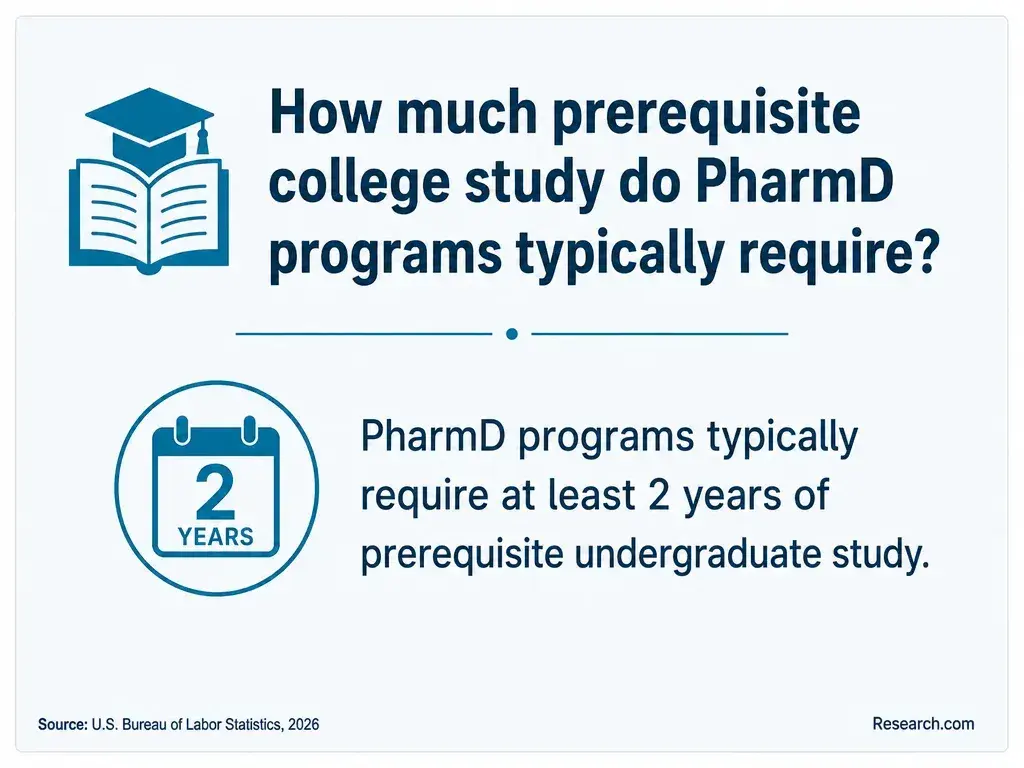
Online delivery does not create a separate, easier professional credential. Applicants generally need a school's specified pre-professional coursework and must complete its application process, but required courses, labs, grades, credit totals, interviews, and deadlines vary. Some schools admit students without a completed bachelor's degree; others have different entry pathways. The Pharmacy College Admission Test (PCAT) was retired in January 2024 and should not be treated as a current exam to schedule.
Check the school's current admissions page and, if it participates, its PharmCAS listing. Confirm whether it requires PharmCAS, a supplemental application, recommendations, an interview, or completion of outstanding prerequisites before matriculation. Also ask how it evaluates online labs, older coursework, and international transcripts if those apply to you. Published pharmacy admissions criteria can help you identify questions, but a minimum requirement is not a promise of admission.
Many professional Pharm.D. curricula run across four academic years after prerequisite study, while some schools offer accelerated professional sequences. Your total timeline also depends on prerequisites you still need, the program's course sequence, and when IPPEs and APPEs occur. Campus immersions are normally built into that sequence rather than added as a separate degree after graduation.
When comparing shortened Doctor of Pharmacy pathways, request a term-by-term calendar showing campus visits and rotations. A shorter calendar may compress coursework or breaks without reducing the time you must be available. If continuing full-time employment matters, ask specifically when attendance or rotations would make that schedule impractical.
There is no reliable single price for an online Pharm.D. or its immersions. Schools may charge tuition by term or credit and assess different required fees; a visit may also create costs that do not appear in advertised tuition. To compare programs, use each school's current cost-of-attendance information and separate billed charges from your likely out-of-pocket travel and living costs.
Build your estimate around the expenses that could change your decision:
- Tuition, mandatory fees, course materials, technology, and lab supplies
- Transportation, lodging, meals, and lost wages for each required campus visit
- Prerequisite courses and costs associated with rotation onboarding or travel
- Licensure-related expenses after the degree, which are separate from immersion costs
An affordable route to a Pharm.D. depends on the full educational cost, not the tuition figure alone. Ask the financial aid office which expenses its budget covers and which aid rules apply to your enrollment. Federal rules changed for many new graduate and professional borrowers beginning July 1, 2026, so do not build a borrowing plan around older Grad PLUS assumptions.
The Accreditation Council for Pharmacy Education (ACPE) accredits professional Pharm.D. programs. Its standards address the professional curriculum and experiential education, making accreditation an essential program-selection check. Accreditation alone, however, does not tell you how often you will visit campus, how useful an individual simulation will be, or whether a nearby rotation site will be available. Ask for the program's current assessment methods and placement policies as well as its accreditation status.
Check the exact professional program and status in ACPE's official records. Institutional accreditation is a separate matter, as is state authorization to enroll distance-learning students or arrange placements where you live. Even among doctoral programs with accelerated timelines, speed cannot substitute for checking the credential and its licensing relevance.
Graduating from an accredited Pharm.D. program does not itself issue a pharmacist license. State boards set licensure conditions, including examination and other requirements. The North American Pharmacist Licensure Examination (NAPLEX) is part of the U.S. pharmacist licensing process; jurisprudence requirements vary by jurisdiction, including use of the MPJE, UMPJE, or another approach. Verify the rules with the board where you intend to practice.
What careers and salaries can PharmD graduates pursue after graduation?
With the required state license, a Pharm.D. graduate may pursue pharmacist roles in community, hospital, ambulatory care, or other practice settings, subject to employer and state requirements. The U.S. Bureau of Labor Statistics reports median annual pay of $140,910 in May 2025 for pharmacists and projects 5% growth, 2025-2035, with about 12,500 openings per year. Those occupation-wide figures are useful context, not a prediction of an individual graduate's pay or access to a particular specialty role.
Some positions favor postgraduate training. A residency provides structured practice training; a fellowship usually emphasizes a different, often research- or industry-focused path. Specialty board certification is another credential and is not a state pharmacist license. None is universally required for every pharmacist job. Pharmacy technician work is a separate occupation that does not ordinarily require a Pharm.D.
If admission requirements or immersion travel make the degree unrealistic, exploring pharmacy application requirement flexibility can clarify your options - but first decide whether your target job legally requires pharmacist licensure. That distinction prevents you from paying for a professional doctorate when a different credential would meet your goal, or choosing a shorter credential that cannot qualify you to become a pharmacist.
Other Things You Should Know About PharmD
That depends on the school and the activity. Ask for the written absence and make-up policy before enrolling, particularly for practical assessments that may require special equipment or evaluators.
Students can contact the school's disability or accessibility office about the accommodation process. Discuss needs early enough for the school to address both campus activities and any separate practice-site requirements.
Programs may grade individual assessments, record competency, or include immersion performance in a course grade. Check the syllabus for evaluation criteria, remediation rules, and progression requirements.
Follow the school's pre-visit instructions. They may specify identification, dress, required equipment, completed preparatory work, or documentation needed to participate in a lab.
- Learning practical nursing skills in simulation centers - PMC https://pmc.ncbi.nlm.nih.gov/articles/PMC11080493/
- Cost of Attendance (Budget) | 2025-2026 Federal Student Aid Handbook https://fsapartners.ed.gov/knowledge-center/fsa-handbook/2025-2026/vol3/ch2-cost-attendance-budget
- Understanding College Costs | studentaid.gov https://studentaid.gov/resources/prepare-for-college/students/choosing-schools/consider-costs
- Admissions Frequently Asked Questions and Tips | ucsf.edu https://pharmd.ucsf.edu/admissions/faq-tips
- Doctor of Pharmacy Degree | Texas A&M University Irma Lerma Rangel College of Pharmacy https://pharmacy.tamu.edu/pharmd/index.html
- Travel Reimbursement | Financial Affairs | UTSA PaCE https://www.utsa.edu/financialaffairs/resources/financial-guidelines/0904.html
- Human patient simulation | Washington State University https://pharmacy.wsu.edu/pharmd/curriculum/human-patient-simulation/
- PharmD Application Process and Requirements | umich.edu https://pharmacy.umich.edu/pharmacy-programs/pharmd-program/application-process-requirements/