Residency Competitiveness: Building a PharmD Portfolio

Co-Founder and Chief Data Scientist
A pharmacy residency application is built long before its submission deadline. Strong grades matter, but programs also need evidence that a Doctor of Pharmacy (Pharm.D.) student can care for patients, learn from feedback, and contribute to a team.
This guide is for students deciding which experiences deserve their limited time and whether residency fits their career goals. It explains what to document, how to choose rotations and references, and how to navigate the application and Match without mistaking a long résumé for a competitive one.
Key Things You Should Know
- Prioritize documented clinical growth: strong advanced pharmacy practice experiences, specific preceptor assessments, and projects you can explain are more useful than a long list of unexplained activities.
- Build toward a target: PGY1 applicants should demonstrate readiness for broad patient care; PGY2 applicants need evidence of specialty fit and, generally, completed PGY1 training.
- Evaluate the financial trade-off. The Bureau of Labor Statistics reports $140,910 in May 2025 as the median annual pay for pharmacists overall - not a residency stipend or a promised post-residency salary.
What makes a PharmD residency application competitive?
A competitive application gives a program credible reasons to expect that you will succeed in its particular training environment. Reviewers may consider academic performance, clinical rotations, work experience, leadership, projects, recommendations, and interviews. Individual programs set their own eligibility rules and selection priorities; there is no universal GPA, publication count, or activity checklist that guarantees an interview.
Look for a consistent story across your materials. If you claim an interest in ambulatory care, for example, a relevant rotation, a thoughtful project, and a preceptor who can describe your patient-care skills make that interest more convincing. If your interests are still broad, show adaptability, sound clinical reasoning, and measurable improvement instead of inventing a narrow specialty narrative.
Residency selection happens after professional pharmacy education, not during admission to pharmacy school. If you are still choosing where to earn a Pharm.D., compare pharmacy school application eligibility separately from the clinical opportunities you would need to pursue residency later.
What should a PharmD portfolio include for residency applications?
A Pharm.D. residency portfolio is your organized record of experiences and results, not necessarily a single file submitted to programs. Keep evidence while experiences are fresh so that your curriculum vitae (CV), letters of intent, references, and interview answers agree.
Maintain these records for each substantial experience; they will make your eventual application more specific and easier to verify:
- Clinical rotations: setting, dates, responsibilities, types of clinical decisions made under supervision, feedback received, and what changed in your practice.
- Employment and service: duties, patient populations, teamwork, leadership, and concrete contributions without disclosing protected patient information.
- Projects and presentations: your exact role, methods, audience, deliverable, and outcome; distinguish completed work from work in progress.
- Professional development: teaching, quality improvement, research, awards, and skills relevant to your target programs.
- Reference planning: preceptors or supervisors who observed your work directly, with notes on examples they could discuss.
Keep a master CV and supporting documents, but tailor what you submit to each program's instructions. Prior undergraduate coursework can help you reach a Pharm.D. program; pharmacy transfer credit requirements are determined by the receiving school and should not be confused with evidence of professional-level clinical performance.
How do you build a strong PharmD residency portfolio?
Start with the residency roles you might pursue, then select experiences that let you test those interests and demonstrate growth. The sequence below is a planning tool, not a claim that every student must follow the same schedule.
- Review several current program descriptions and note their stated eligibility, training settings, application materials, and preferred experiences.
- Choose coursework, employment, service, and projects for the skills they develop - not just the titles they add to a CV.
- Before advanced rotations begin, discuss your goals with a faculty mentor and identify possible preceptors who could later assess your work.
- After each major experience, record a specific contribution, a challenge, feedback, and how you responded; protect all patient information.
- Before applying, cut activities you cannot explain and tailor your CV and intent letter to each program's actual opportunities.
Ask for feedback early enough to change course. A polished CV cannot repair weak clinical examples at the last minute. Students comparing pharmacy degree programs with accelerated timelines should also check when advanced rotations occur and how much time the curriculum leaves for mentoring and application preparation; a faster degree does not shorten a residency's requirements.
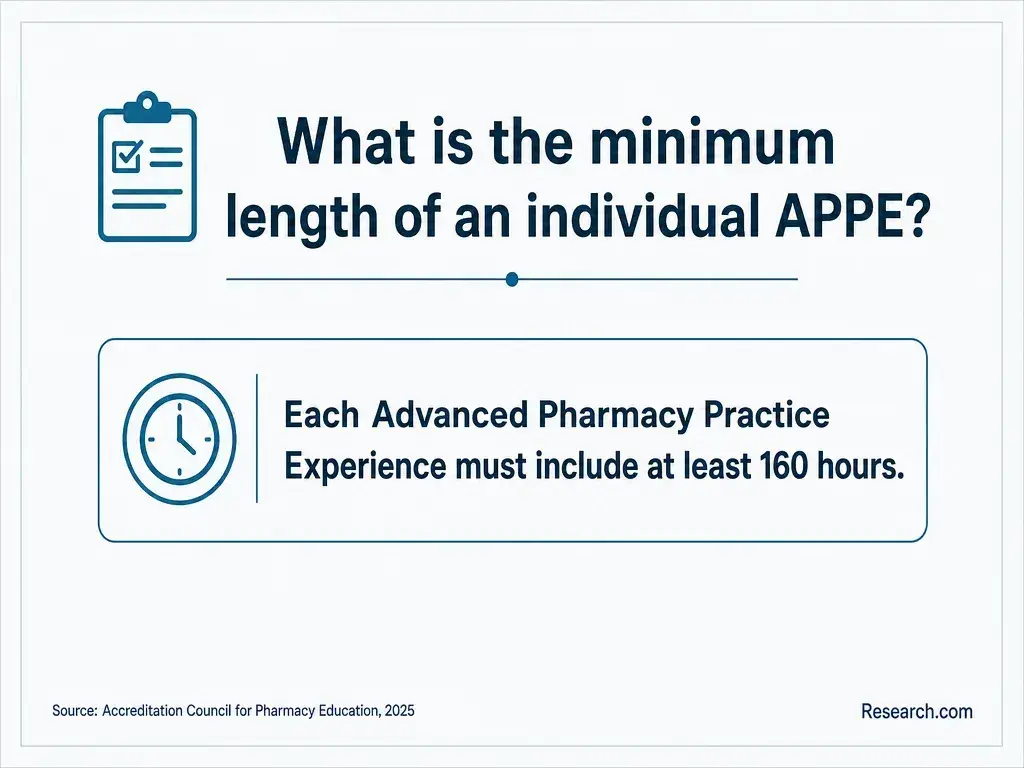
Experiences are strongest when they show skills the target residency will teach and use. Advanced pharmacy practice experiences (APPEs) - the supervised clinical rotations in the professional Pharm.D. curriculum - can reveal how you assess patients, communicate recommendations, and respond to feedback. Introductory pharmacy practice experiences (IPPEs) provide earlier exposure, but generally offer less evidence of advanced clinical responsibility.
Hospital or community pharmacy employment, ambulatory care exposure, medication safety work, teaching, research, and quality improvement can all be relevant. Their value depends on your contribution and the program's focus. A modest project you can defend is stronger than a prestigious-sounding project for which you cannot explain your role. Do not assume research is required for every PGY1 program.
Rotation access matters when selecting a school, including a pharmacy doctorate program with distance learning. Online instruction does not make IPPEs or APPEs remote; ask who approves placements, what travel may be required, and whether relevant practice settings are available. Students may also need site-specific clearances or intern registration.
Grades can help establish academic readiness, particularly when a program states a minimum GPA or requests transcripts. They are not a substitute for strong patient-care performance. Programs differ in how they weigh grades against rotation evaluations, work history, references, and interviews, so do not treat any single GPA as a nationwide competitiveness threshold.
For rotations, depth of performance matters more than collecting specialty names. A preceptor's detailed account of your clinical reasoning, communication, reliability, and improvement may help a reviewer interpret your CV. If a grade or rotation went poorly, be ready to explain what you learned and point to later evidence of progress without blaming the evaluator.
Undergraduate pre-pharmacy science grades and professional Pharm.D. performance serve different purposes. Students with prior science coursework can consider pharmacy programs for students with science credits, but admission or credit acceptance does not predict residency selection.
Check each program's current listing before preparing an application. Common materials include a CV, letter of intent, academic transcript, and references or recommendation forms. Some programs request additional essays or have particular eligibility documents; deadlines and instructions vary.
Your letter of intent should connect your evidence to the program's training opportunities rather than repeat your CV. Ask references who have directly observed relevant work, provide them with your updated CV and program list, and give them adequate time. Confirm that a person agrees to serve as a reference before entering their details into an application system.
If you have not yet entered pharmacy school, pharmacy program admission planning is a separate task: Pharm.D. admission requirements and residency application materials are not interchangeable. Once enrolled, use the residency programs' current instructions - not an old application checklist - as your submission authority.
PhORCAS is the centralized application service used by participating pharmacy residency programs. The ASHP Match, administered by National Matching Services, is a separate process that matches participating applicants and programs based on their submitted rank-order lists. Applying through PhORCAS does not, by itself, register you for the Match or rank programs.
The distinction makes the application sequence easier to manage:
- Check each target program's current eligibility, PhORCAS participation, Match participation, deadlines, and required materials.
- Submit complete applications as instructed, then interview with programs that invite you.
- Register for the Match when required and rank only programs where you would accept a position, in your genuine order of preference.
- Follow the current Match rules for results and any subsequent application opportunities if you do not match.
Match participation has binding commitments under its rules, so read the current applicant agreement before ranking. A residency application cycle is also distinct from online pharmacy program length; a shorter educational pathway does not change a residency program's deadlines or eligibility requirements.
Postgraduate year one (PGY1) generally builds broad pharmacy practice competence after the Pharm.D. Postgraduate year two (PGY2) develops advanced capability in a defined specialty area. The comparison below helps you decide which level matches your current training; individual accredited programs may impose additional requirements.
| Decision point | PGY1 | PGY2 |
| Typical entry stage | After Pharm.D. completion and satisfaction of program licensure requirements | After PGY1 training, generally through an accredited PGY1 for accredited PGY2 eligibility |
| Training focus | Broad patient care and professional practice | Advanced practice in a named specialty |
| Most useful application evidence | Clinical readiness, adaptability, teamwork, and growth | PGY1 performance, specialty experience, and a clear training goal |
A residency is supervised postgraduate training, not another route to the Pharm.D. or an automatic pharmacist license. It also differs from a fellowship, which may emphasize research, industry, or another program-defined focus. Shorter online doctorate pathways are not substitutes for the professional pharmacy degree, licensure eligibility, or PGY training.
Confirm both your educational eligibility and the residency program's status. The Accreditation Council for Pharmacy Education (ACPE) accredits professional pharmacy education programs; ASHP accredits pharmacy residencies. Institutional accreditation and authorization to offer distance education are separate matters. Verify a Pharm.D. program's current ACPE status and a residency's current accreditation status through the respective organizations' official records.
A Pharm.D. does not itself confer a pharmacist license. State boards set licensure requirements, which can include examinations, training or registration conditions, and other approvals. The North American Pharmacist Licensure Examination (NAPLEX) is part of the process, but jurisprudence examination requirements vary by jurisdiction; do not assume every state uses the Multistate Pharmacy Jurisprudence Examination (MPJE). Some jurisdictions have begun using the Uniform MPJE (UMPJE).
Residency programs and states may set different deadlines for obtaining a license. Before accepting an offer, confirm the program's policy, the applicable board's requirements, and what happens if licensure is delayed. Include examination, application, and possible relocation costs in pharmacy doctorate financial planning rather than treating tuition as the full cost of the pathway.
What career outcomes and salaries follow a pharmacy residency?
A residency can strengthen preparation for positions that value advanced clinical training, including some health-system, ambulatory care, and specialty roles. It does not guarantee a particular job, specialty appointment, board certification, or salary. Some pharmacist positions do not require residency, and employers' preferences differ.
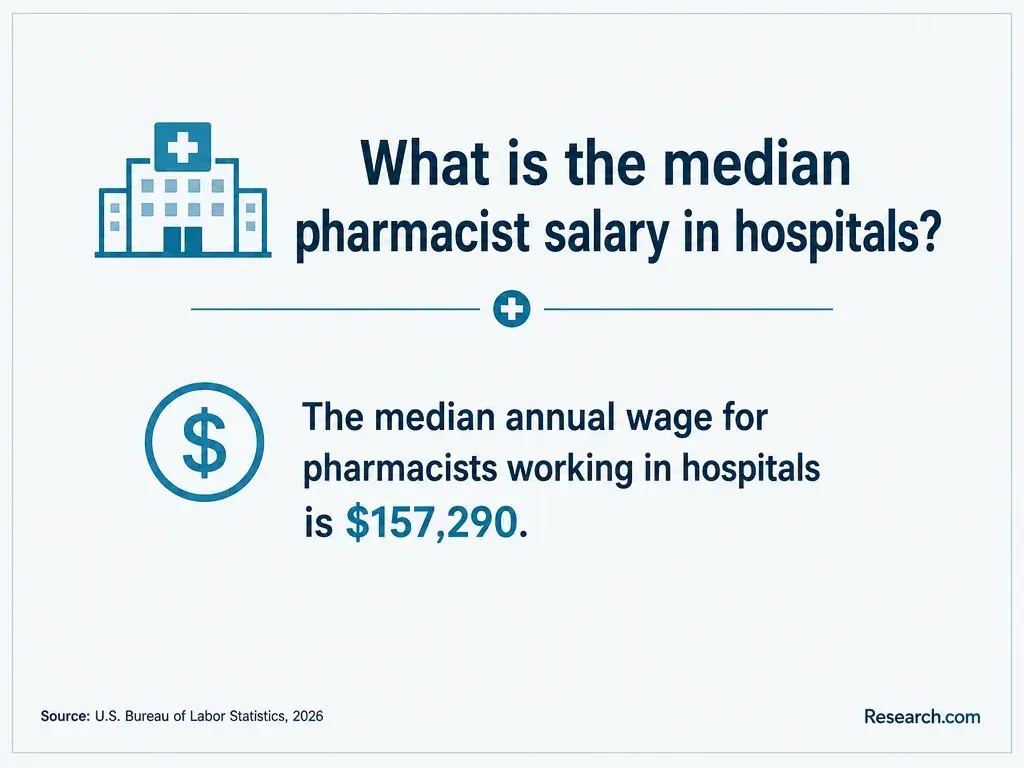
The Bureau of Labor Statistics reports median annual pay of $140,910 in May 2025 for pharmacists and projects 5% employment growth from 2025-2035, with about 12,500 openings per year. Those occupation-wide figures include pharmacists with varied training and settings; they cannot measure a residency pay premium or predict your offer. A residency stipend should be evaluated separately from a pharmacist salary.
Compare the program's published stipend and benefits with living costs, licensure expenses, relocation, and the earnings you might forgo by entering training instead of taking a pharmacist job. Weigh those costs against the specific roles you want and whether their employers commonly prefer residency. If you are still choosing a degree program, budget-friendly pharmacy education options may reduce earlier costs, but verify professional accreditation and clinical opportunities before using price as the deciding factor.
Other Things You Should Know About PharmD
Yes, if a program's eligibility rules permit it. Explain why structured training fits your current goals and show recent evidence of clinical learning, teamwork, and readiness for the schedule and pay change.
Potentially, but eligibility varies by program and state. Confirm the program's degree and work-authorization policies, and verify the applicable state board's foreign-graduate and licensure requirements before applying.
They can help you assess the practice setting, resident support, staffing expectations, and whether a program's training matches your goals. Attend with specific questions; participation is not a substitute for application evidence.
Not generally. Complete the scholarly or quality-improvement work required by your program and describe your contribution accurately. Publication expectations vary, so check a program's current requirements rather than assuming every project becomes a journal article.
- Application - UW Medicine Pharmacy Residency https://sites.uw.edu/rxresidency/application/
- When Do They Require IRB Review? | bu.edu https://wwwapp.bumc.bu.edu/ocr/ClinicalResearchNewsletter/article.aspx
- Residency program directors' views on ideal applicant | springer.com https://link.springer.com/article/10.1186/s12909-024-06234-z
- ASHP Match | Statistics of the Match https://natmatch.com/ashprmp/stats.html
- Association between student characteristics: American Journal of Health-System Pharmacy | Ovid https://www.ovid.com/journals/ajhp/fulltext/10.1093/ajhp/zxz216~association-between-student-characteristics-and-rankings
- National Matching Service | ashp.org https://www.ashp.org/Professional-Development/Residency-Information/Residency-Program-Resources/National-Matching-Services