
2027 What Careers Can You Pursue With a Communication Disorders Degree? Salary Potential, Job Outlook, and Next Steps

Co-Founder and Chief Data Scientist

Reviewed by Rhea Paul, PhD
SLP Education & Research Expert
A communication disorders degree is a practical starting point for people who want to work with speech, language, hearing, swallowing, learning support, or communication access. The key decision is whether you want to use the degree as a bridge into licensed clinical practice, such as speech-language pathology or audiology, or apply it sooner in assistant, education, rehabilitation, research, technology, or health communication roles.
The field matters because communication challenges affect children, older adults, people with disabilities, patients recovering from injury or illness, and communities that need accessible services. Employment of speech-language pathologists and audiologists is projected to grow 21% through 2031, much faster than average, reflecting demand across healthcare, schools, private practice, and related service settings.
This guide explains what you can do with a communication disorders degree, which paths tend to pay more, what usually requires graduate school or certification, and how to choose your next step based on salary goals, licensure plans, work setting, and long-term career fit.
Key Things to Know About the Careers You Can Pursue With a Communication Disorders Degree
- Careers with a communication disorders degree span healthcare, education, research, and technology sectors, reflecting the field's interdisciplinary nature and broad employment opportunities.
- Skills in assessment, intervention, and communication strategies are highly transferable to roles in counseling, special education, and speech technology development.
- Advanced education supports certification and licensure, aligning with long-term professional growth and higher earning potential, with a 17% job growth projected through 2035 per BLS data.
What careers can you pursue with a communication disorders degree?
A communication disorders degree can lead to clinical, educational, research, and support roles focused on how people understand, produce, hear, and use language. The degree is especially useful for students considering speech-language pathology or audiology, but it also prepares graduates for adjacent careers where knowledge of communication, disability, development, and patient support is valuable.
The most important distinction is credential level. Some jobs are available with a bachelor's degree, depending on state rules and employer requirements. Licensed clinical roles usually require graduate education, supervised clinical experience, and state licensure.
- Speech-Language Pathologist: Speech-language pathologists assess, diagnose, and treat speech, language, voice, fluency, cognitive-communication, and swallowing disorders. They work in schools, hospitals, rehabilitation centers, nursing facilities, private practices, and telepractice settings. A communication disorders bachelor's degree is a common undergraduate foundation, but independent practice typically requires a master's degree and licensure. Students comparing graduate options may also review online speech language pathology programs when planning the path to clinical eligibility.
- Audiology Assistant: Audiology assistants support audiologists with hearing screenings, equipment preparation, patient intake, documentation, and follow-up tasks. Requirements vary by state and employer, so graduates should check local rules before assuming the role is available immediately after graduation.
- Audiologist: Audiologists evaluate and manage hearing and balance disorders. They may work with hearing aids, cochlear implant teams, tinnitus management, auditory processing concerns, and vestibular testing. This path generally requires doctoral-level preparation and state licensure after the undergraduate degree.
- School-Based Specialist: Graduates may work in schools as assistants, aides, intervention support staff, or related service team members. These roles often involve helping students follow communication goals, supporting classroom access, assisting with documentation, and collaborating with teachers and licensed professionals.
- Research or Clinical Coordinator: Graduates can support studies, clinical programs, university labs, hospital departments, or community initiatives related to language development, hearing health, disability services, or therapy outcomes. These roles are a strong fit for students who enjoy organization, data, compliance, and evidence-based practice.
In short, the degree is strongest when it is matched to a clear goal: direct licensed practice, school support, healthcare support, research, assistive technology, or a broader human services career.
What are the highest-paying careers with a communication disorders degree?
The highest-paying careers connected to communication disorders are usually licensed, specialized, or leadership roles. A bachelor's degree can start the pathway, but the strongest salary potential often comes after graduate education, clinical credentials, supervisory responsibilities, or work in higher-paying healthcare settings. Specialists in this area can earn anywhere from $70,000 to over $130,000 annually depending on experience and specialization.
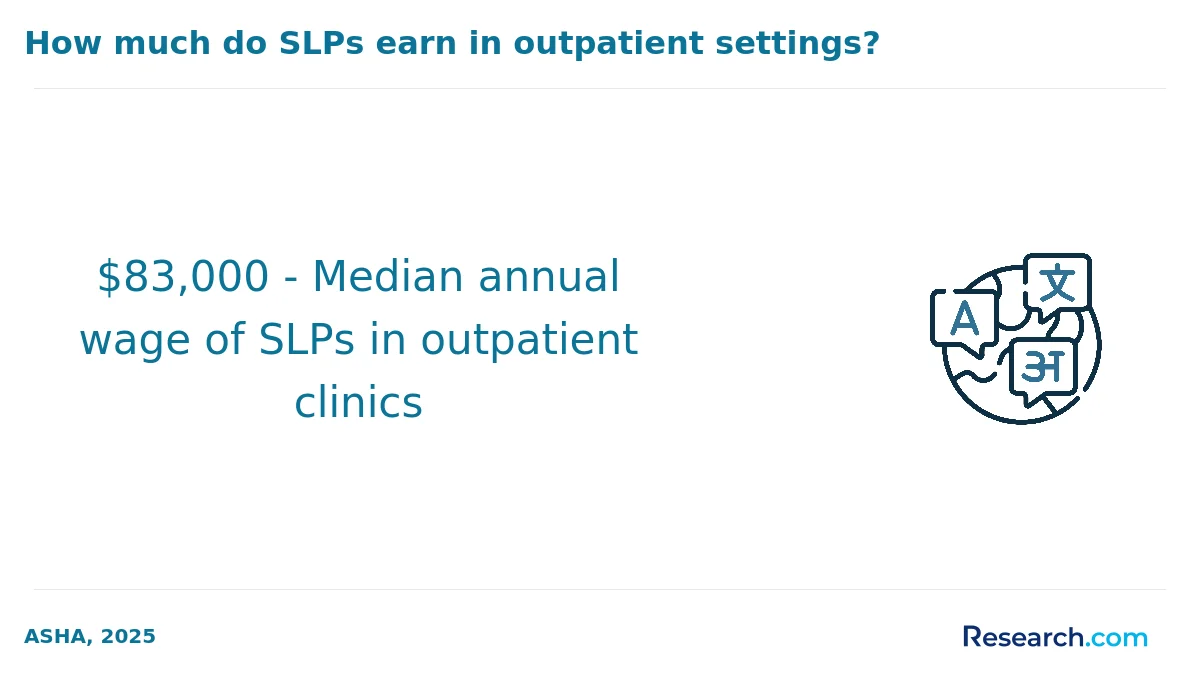
- Speech-Language Pathologist: Speech-language pathologists diagnose and treat communication and swallowing disorders in schools, hospitals, private practice, rehabilitation centers, and other settings. Median wage is near $80,000, while experienced clinicians in specialized settings sometimes exceed $120,000. Pay can vary substantially by employer type, caseload, state, and whether the role includes medical, supervisory, or private practice responsibilities.
- Audiologist: Audiologists specialize in hearing and balance care and often enter the profession after doctoral study. Median salaries are about $85,000, while leading audiologists can make upwards of $130,000 annually. Earning potential may be higher for those in private practice, specialty clinics, leadership, or high-demand markets.
- Clinical Director or Program Manager: Professionals who move into administration oversee clinical teams, service delivery, budgets, compliance, scheduling, and quality improvement. Salaries in these leadership positions typically range from $90,000 to $130,000, reflecting the combination of clinical knowledge and management accountability.
- Speech Scientist or Researcher: Researchers study language, speech, cognition, swallowing, hearing, technology, or intervention outcomes. Salaries vary widely, starting near $70,000 in academia or industry, with potential increases tied to experience and funding. Industry roles may pay differently from university or grant-funded positions.
For individuals who want to move toward healthcare operations rather than direct therapy, adding business or management preparation can help. For example, a healthcare administration degree online may support a transition into program leadership, compliance, service management, or executive-track roles.
What is the job outlook for communication disorders degree careers?
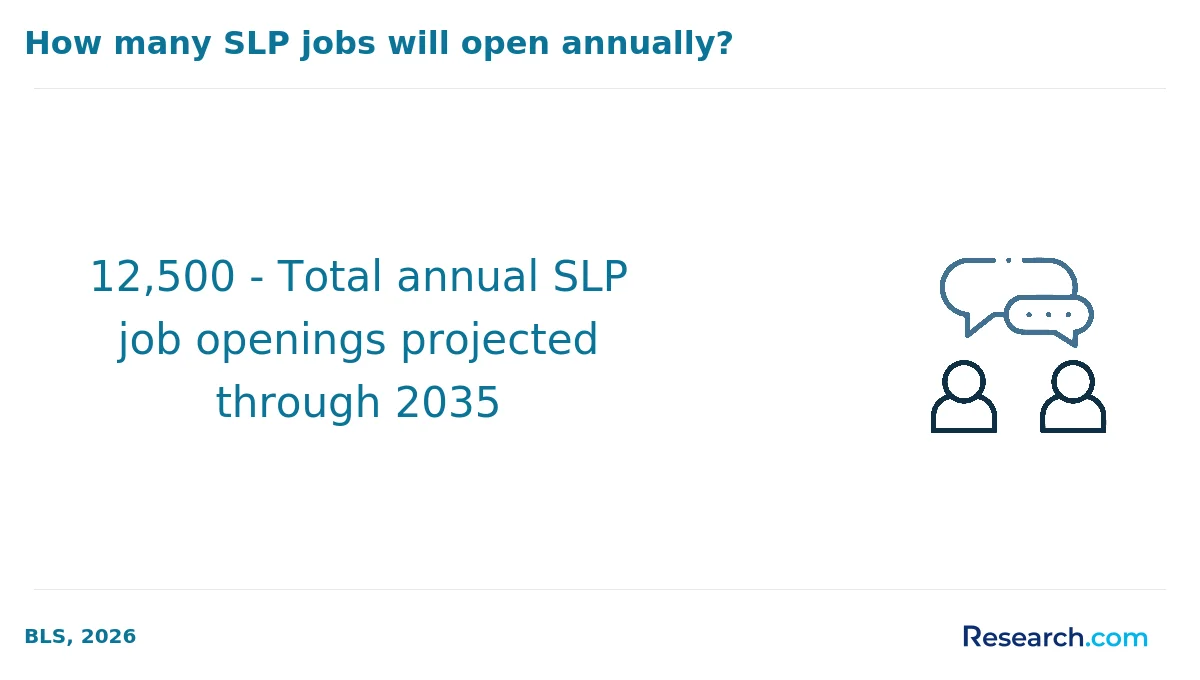
The job outlook for communication disorders careers is strong, especially for licensed clinicians. The U.S. Bureau of Labor Statistics forecasts a 17% increase from 2025 to 2035 for speech-language pathology, which is faster than average job growth. Demand is tied to multiple settings rather than a single industry, which can give graduates more flexibility over time.
Several forces support long-term demand. Schools need professionals and support staff who can help students with language, speech, and learning-related communication needs. Healthcare providers need clinicians and assistants to support patients after stroke, brain injury, illness, surgery, or age-related changes. Private clinics and telepractice models also continue to expand access for families and adults who need services outside traditional settings.
The outlook is not the same for every graduate, however. Bachelor's-level roles may be more limited and more dependent on state rules, local school staffing, clinic budgets, and whether an employer is allowed to hire assistants. Licensed roles usually offer clearer professional pathways, but they require more time, tuition, clinical hours, exams, and licensure steps.
When asked about the job outlook, a professional with a degree in communication disorders said that early career planning can feel overwhelming because of the number of specialties and credential requirements. He explained, "Navigating through certifications and adapting to new digital platforms required patience and ongoing learning."
He also emphasized why many professionals stay in the field: "Seeing patients regain their ability to communicate makes every hurdle worthwhile." That perspective reflects the main trade-off of communication disorders careers: the path can be demanding, but the work often has visible human impact.
What entry-level jobs can you get with a communication disorders degree?
Entry-level jobs for communication disorders graduates are usually assistant, aide, technician, school support, or program support roles. These positions help graduates apply knowledge of speech, language, hearing, development, disability, and documentation while deciding whether to pursue graduate school. About 65% of these graduates find employment within six months, highlighting steady demand for entry-level communication disorders jobs in the US.
- Speech-Language Pathology Assistant: Speech-language pathology assistants support licensed speech-language pathologists by helping with therapy activities, preparing materials, recording progress, and carrying out assigned tasks within legal and supervisory limits. State requirements vary, so graduates should confirm whether additional registration, training, or supervision is required.
- Audiology Aide: Audiology aides help audiologists with scheduling, room preparation, equipment setup, patient intake, hearing screening support, and administrative tasks. This can be a useful entry point for students considering an audiology doctorate.
- Rehabilitation Technician: Rehabilitation technicians work alongside therapy teams in hospitals, outpatient centers, rehabilitation facilities, or long-term care settings. Their duties may include preparing treatment areas, assisting patients, maintaining records, and supporting therapy plans under supervision.
- Special Education Assistant: Special education assistants help students with communication, learning, behavioral, or developmental needs. They may support individualized education plan activities, classroom participation, communication devices, and collaboration between teachers, families, and related service professionals.
To improve entry-level readiness, students should prioritize supervised observation, practicum exposure, volunteer work, documentation experience, child or adult care experience, and familiarity with privacy rules. Some candidates also compare formats such as best accelerated programs when they want a faster route into foundational coursework or a related credential.
What skills do you gain from a communication disorders degree?
A communication disorders degree develops both technical knowledge and people-centered skills. Students learn how speech, language, hearing, cognition, swallowing, and communication access affect daily life. They also practice observation, documentation, collaboration, and ethical decision-making. Roughly 85% of employers in health and human services prioritize communication-related competencies like active listening and critical thinking in recent graduates.
- Analytical Skills: Students learn to review case information, identify patterns, compare developmental or clinical features, and connect symptoms with possible communication needs. This supports stronger reasoning in clinical support, research, education, and human services roles.
- Effective Communication: Coursework and observation help students explain information clearly, listen actively, adapt language to the audience, and collaborate with families, teachers, clinicians, and healthcare teams.
- Empathy and Cultural Competence: Communication needs are shaped by culture, language background, disability, age, family context, and access to care. Graduates learn to avoid one-size-fits-all assumptions and respond with respect.
- Research Literacy: Students read studies, evaluate evidence, understand basic research methods, and learn why interventions should be guided by data rather than habit or preference.
- Problem-Solving and Flexibility: Communication support often requires adapting strategies when a client, student, family, or setting changes. Graduates learn to adjust materials, pacing, communication methods, and goals under appropriate supervision.
Asked about the most valuable skills gained, one graduate said the degree changed both her thinking and her patience. She described learning to adapt communication styles for people facing different barriers: "It wasn't just about applying techniques - it was learning to truly listen and respond to each person's unique story." Her experience shows why the degree is not only scientific; it also builds judgment, resilience, and the ability to work with people through slow but meaningful progress.
What communication disorders career advancement can you achieve without further education?
A bachelor's degree in communication disorders can support advancement, but graduates should be realistic: the most independent clinical roles require additional credentials. Without further formal education or certifications, advancement is more likely to come through experience, reliability, specialized workplace knowledge, team leadership, program coordination, documentation skills, and operational responsibility. Data from a 2023 National Association of Colleges and Employers survey shows that around 35% of graduates in related health and social sciences fields advance into mid-level or specialized roles within five years.
- Speech-Language Pathology Assistant: In states and workplaces where the role is available without additional schooling, graduates may advance by taking on more complex support tasks, mentoring newer assistants, improving therapy material systems, coordinating schedules, or becoming a lead assistant. Legal scope of practice still matters, and tasks must remain under appropriate supervision.
- Rehabilitation Specialist: Graduates may move into stronger rehabilitation support roles by building experience with patient care routines, progress tracking, interdisciplinary communication, and care coordination. Advancement may involve higher responsibility within a team rather than independent diagnosis or treatment.
- Program Coordinator: Healthcare, education, nonprofit, or community programs may promote graduates into coordination roles involving intake workflows, event planning, budgets, reporting, stakeholder communication, and service evaluation. This is a strong path for graduates who are organized and comfortable managing details.
- Assistive Technology Specialist: Some graduates move into roles supporting augmentative and alternative communication tools, hearing-related products, accessibility platforms, or educational technology. Advancement can come from product knowledge, user training, troubleshooting, and the ability to translate user needs for technical teams.
The best way to grow without another degree is to document results. Track projects completed, caseload support, process improvements, training delivered, technology learned, and measurable contributions to students, clients, or programs. Those examples make promotion conversations stronger.
What careers require certifications or advanced degrees?
Many communication disorders careers are regulated because professionals assess, diagnose, and treat health or education-related conditions. About 70% of speech-language pathology roles call for a master's degree and national certification, reflecting the field's emphasis on specialized training. Requirements vary by state and employer, so students should verify rules early rather than waiting until graduation.
- Speech-Language Pathologists: Speech-language pathologists generally need a master's degree, state licensure, and certification from the American Speech-Language-Hearing Association (ASHA). Preparation usually includes graduate coursework, supervised clinical practice, examinations, and ongoing professional education.
- Audiologists: Audiologists usually hold a doctoral degree (Au.D.) and must secure state licensure and certification. This level of training prepares them to conduct hearing and balance evaluations, recommend interventions, and manage complex auditory needs.
- Special Education Teachers: Graduates who want to teach students with communication impairments usually need state teacher certification. Some begin with a bachelor's degree, while others pursue a master's and certification to specialize in disability, language, or school-based intervention.
- Rehabilitation Counselors: Rehabilitation counselors who work with individuals with communication-related disabilities typically need certification and a master's degree. Their work may involve counseling, employment planning, disability support, and coordination with healthcare or community services.
Before choosing a program, students should check accreditation, supervised clinical experience expectations, exam requirements, and state licensure rules for the state where they plan to work. A program that is convenient but does not support the required credential pathway can create costly delays.
What alternative career paths can communication disorders graduates explore?
Not every communication disorders graduate becomes a clinician. Approximately 34% transition into interdisciplinary fields where their understanding of language, cognition, disability, accessibility, and human interaction adds value. These alternatives can be appealing for graduates who enjoy communication science but prefer technology, education, research, public health, business, or program work.
- Assistive Technology Specialist: These professionals help users, families, schools, or organizations select and use communication aids, adaptive tools, and accessibility platforms. Communication disorders training helps them understand practical user needs rather than focusing only on the device.
- Educational Consultant: Graduates may advise schools, tutoring programs, curriculum teams, or families on language development, communication supports, classroom access, and inclusive practices. Some roles require teaching credentials or graduate study, while others are program-based or advisory.
- Corporate Communication Professional: Communication disorders graduates can apply their strengths in listening, message clarity, training, audience adaptation, and empathy to employee training, client relations, internal communications, or customer education.
- Health Communication Specialist: These specialists create accessible health materials, public health campaigns, hearing conservation messages, early language development resources, or patient education content. The degree helps them design messages that are clear, inclusive, and appropriate for different audiences.
- Research Analyst: Research analysts support studies on communication disorders, language acquisition, hearing health, disability services, intervention outcomes, or education policy. This path is a good fit for graduates who enjoy data, literature reviews, ethics, and evidence-based decision-making.
Students interested in interdisciplinary health careers may also compare related graduate options, such as dietitian master's programs, especially if they are drawn to patient education, prevention, counseling, and healthcare teamwork.
What factors affect salary potential for communication disorders graduates?
Salary potential depends on credentials, setting, specialization, geography, and responsibility level. The U.S. Bureau of Labor Statistics reports that median wages for speech-language pathologists in healthcare settings are significantly higher than those in educational institutions. That difference matters because two graduates with similar academic backgrounds may earn different salaries based largely on where and how they work.
- Industry Choice: Hospitals, private clinics, rehabilitation facilities, and medical settings may pay differently from schools, nonprofits, community programs, or public agencies. Higher pay may also come with heavier documentation, productivity expectations, complex cases, or nontraditional hours.
- Experience Level: Entry-level professionals usually earn less while they build competence, supervision history, and workplace trust. Over five or more years, pay may rise as professionals gain specialized skills, stronger caseload management, leadership responsibilities, or private practice experience.
- Geographic Location: Salary differences by geographic region for communication disorders careers are notable. Urban areas with high living costs and demand for specialized services may offer better pay, while rural locations may pay less but sometimes include benefits like loan repayment incentives.
- Field Specialization: Specialized areas such as pediatric speech therapy, neurogenic communication disorders, swallowing disorders, hearing technology, bilingual services, or augmentative and alternative communication may improve bargaining power when demand is strong.
- Role Responsibility Level: Supervisory, administrative, clinical coordination, training, compliance, or program management duties often command higher pay than entry-level support roles or positions focused only on direct service tasks.
Graduates who want broader healthcare mobility sometimes explore related clinical pathways, including online accelerated nursing programs. That kind of shift is not necessary for communication disorders careers, but it may appeal to students who want a different licensure route in healthcare.
What are the next steps after earning a communication disorders degree?
After earning a communication disorders degree, the right next step depends on whether you want licensed clinical practice, immediate employment, school-based work, research, technology, or a related healthcare role. The National Center for Education Statistics reports that about 62% of health professions bachelor's degree holders either join the workforce or continue their studies within one year of graduation.
- Graduate Studies: Students pursuing speech-language pathology or audiology should research accredited graduate programs, prerequisites, clinical hour expectations, admissions requirements, licensure alignment, and total cost. Graduate school is often the clearest route to independent clinical practice.
- Professional Experience: Entry-level work, internships, clinical observation, research assistantships, school support roles, or healthcare aide positions can strengthen applications and clarify whether the field is the right fit.
- Career Development: Workshops, professional organizations, conferences, continuing education, and mentorship can help graduates understand specialties, licensure steps, and hiring expectations.
- Entry-Level Positions: Graduates who want to work right away can apply for therapy assistant, rehabilitation aide, audiology aide, special education support, intake coordination, or program assistant roles, depending on local requirements.
- Interdisciplinary Roles: Graduates may also move toward communication technology, public health, special education, disability services, healthcare management, research coordination, or accessibility-focused work.
A practical plan is to choose one primary route for the next 12 months: apply to graduate school, gain relevant paid experience, build research credentials, or test an adjacent field. Trying to pursue every option at once can dilute applications and slow progress.
What Graduates Say About the Careers You Can Pursue With a Communication Disorders Degree
- Mordechai: "Studying communication disorders opened my eyes to the incredible range of careers available, from speech-language pathology to audiology and beyond. I chose this path because I wanted to make a meaningful difference in people's lives through individualized care. Now, having graduated, I appreciate how versatile the degree is and how it has equipped me with both scientific knowledge and empathetic communication skills that are vital in my role."
- Casen: "Deciding to pursue a career after earning my communication disorders degree was challenging due to the many options, but it helped me deeply reflect on where I could have the greatest impact. Whether working in schools or clinical settings, the degree provides a strong foundation for understanding human communication complexities. Looking back, I'm grateful for the flexibility it gave me to explore various professional opportunities before finding my true calling in speech therapy."
- Walker: "Professionally, earning a communication disorders degree has been transformative by allowing me to engage with clients in a collaborative and evidence-based manner. The comprehensive curriculum and hands-on experience helped me develop confidence in diagnosing and treating a wide range of speech and language issues. This degree not only prepared me academically but also inspired a lifelong passion for advocating better communication access and support services."
Other Things You Should Know About Communication Disorders Degrees
In 2027, graduates with a communication disorders degree can work in various environments such as schools, hospitals, rehabilitation centers, and private practices. These settings offer diverse opportunities to assist individuals with speech, language, and hearing issues.
To pursue a master's in communication disorders in 2027, you typically need a bachelor's degree in communication disorders or a related field. Additionally, some programs may require prerequisite courses like anatomy, linguistics, or psychology, along with a minimum GPA and GRE scores.
Most U.S. states require a speech-language pathology license from the state board of speech-language pathology or a related department, plus a master’s degree, supervised clinical hours, and the Praxis Speech-Language Pathology exam. State rules vary, and school settings may also require separate education credentials.
References
- U.S. Bureau of Labor Statistics - Speech-Language Pathologists https://www.bls.gov/ooh/healthcare/speech-language-pathologists.htm
- ASHA EdFind - Accredited Speech-Language Pathology Programs https://find.asha.org/ed/
- Audiology and Speech-Language Pathology Interstate Compact https://aslpcompact.com/compact-map/
- Maryville University - Master of Science in Speech-Language Pathology https://www.maryville.edu/masters/speech-language-pathology/
- Ithaca College - Online Master of Science in Speech-Language Pathology https://slponline.ithaca.edu/programs/masters-speech-language-pathology-online
- West Virginia University - Speech-Language Pathology, M.S. - Online https://medicine.hsc.wvu.edu/communications-sciences-and-disorders/speech-language-pathology-ms/future-students/curriculum/online-slp-program/
- James Madison University - Master of Science (M.S.) in Speech-Language Pathology (Distance Education / Online) https://www.jmu.edu/chbs/csd/online_ms/index.shtml
- New York University - Online MS, Communicative Sciences and Disorders (Speech@NYU) https://steinhardt.nyu.edu/degree/online-ms-communicative-sciences-and-disorders


