2027 Fastest-Growing Careers for Communication Disorders Degree Graduates

Co-Founder and Chief Data Scientist

Reviewed by Rhea Paul, PhD
SLP Education & Research Expert
A communication disorders degree can lead to several different careers, but the best path depends on how much graduate education you are willing to complete, whether you want clinical licensure, and which work setting fits your goals. The strongest demand is concentrated in speech-language pathology, audiology, school-based services, early intervention, rehabilitation, assistive technology, and telepractice. Some roles offer faster salary growth but require advanced credentials; others provide earlier entry into the workforce with lower barriers and steadier progression.
This guide explains which communication disorders career paths are growing fastest, what the Bureau of Labor Statistics projections suggest, how technology is reshaping the field, and how salary, location, sector, and specialization affect long-term opportunity. It is designed for students, recent graduates, and working professionals who want a practical view of where the field is heading and how to position themselves for roles with durable demand.
Key Things to Know About the Fastest-Growing Careers for Communication Disorders Degree Graduates
- Bureau of Labor Statistics projects a 17% growth in speech-language pathology roles through 2035-outpacing many healthcare professions and signaling strong job security for Communication Disorders graduates.
- Labor market analytics reveal rising demand in telepractice and early intervention services, with salary growth averaging 4.5% annually, enhancing long-term earning potential for qualified professionals.
- Current hiring trends emphasize multidisciplinary skills and certifications-such as fluency in augmentative communication technology-boosting employability across diverse settings including schools, hospitals, and private clinics.
Which Communication Disorders Degree Career Paths Are Experiencing the Fastest Job Growth in the United States Right Now?
The fastest-growing communication disorders career paths are concentrated in clinical care, school services, early intervention, rehabilitation, and hearing health. Demand is being driven by aging populations, increased recognition of developmental and communication needs, expanded school-based services, and wider use of assistive and telehealth technologies.
| Career path | Projected growth cited | Why demand is rising | Best fit for graduates who want |
| Speech-Language Pathologists | 21% | More need for stroke recovery, swallowing support, pediatric language services, and early intervention. | A clinical career with strong demand across schools, hospitals, clinics, and telepractice. |
| Audiologists | 16% | Greater awareness of hearing health, increased screenings, and broader use of advanced hearing devices. | A doctoral-level hearing health career with diagnostic and technology-focused work. |
| Occupational Therapists with Communication Specializations | Near 17% | Integrated rehabilitation services are expanding for neurological injuries, developmental delays, and functional communication needs. | A broader rehabilitation role that connects communication, daily functioning, and recovery. |
| Rehabilitation Counselors | About 14% | Federal and state vocational rehabilitation funding supports services for people with communication impairments. | Counseling, advocacy, and employment-support work rather than direct speech therapy. |
| Special Education Teachers, Preschool and Early Childhood | Roughly 11% | Inclusive education and early childhood support continue to increase demand for specialists who understand speech and language needs. | Working with young children in structured educational settings. |
Speech-language pathology is usually the clearest high-growth pathway for communication disorders graduates, but it is not the only option. Audiology may appeal to students interested in diagnostics and hearing technology. Early childhood and special education roles can suit graduates who want school calendars, child development work, and interdisciplinary collaboration. Rehabilitation counseling can be a better fit for those drawn to disability services, employment support, and long-term client advocacy.
The main trade-off is credentialing. The roles with the strongest clinical autonomy generally require graduate education, supervised practice, state licensure, and continuing education. Entry-level roles can help graduates test the field, build experience, and strengthen applications for advanced study. Students comparing healthcare education pathways may also find it useful to review how career-focused programs are structured, including RN to BSN programs with no clinicals.
What Does the Bureau of Labor Statistics Project for Communication Disorders Degree Employment Over the Next Decade?
The Bureau of Labor Statistics projections cited for communication disorders-related occupations point to growth that exceeds the national average growth rate of about 5% for all occupations. The strongest outlook is tied to clinical and educational roles that serve children with developmental needs, adults recovering from injury or illness, and older adults with hearing, speech, language, or swallowing concerns.
- Speech-Language Pathologists: Employment is expected to grow 17% through 2035, supported by demand from aging populations, stroke recovery needs, swallowing disorders, and pediatric services.
- Audiologists: Growth of roughly 13% is anticipated as hearing healthcare expands through screenings, early detection, and improved access to treatment.
- Special Education Teachers: Employment growth near 9% reflects continued need for services within school systems for children with speech and language challenges.
- Retirement and Workforce Turnover: Openings will not come only from new jobs. Retirements and practitioner turnover also create opportunities for qualified new entrants.
- Policy and Funding: Early intervention, disability services, and inclusive education policies continue to shape hiring in schools, public agencies, and community programs.
- Healthcare Expansion: Broader access to care and greater awareness of communication disorders increase demand in hospitals, outpatient clinics, rehabilitation centers, and home-based services.
Readers should interpret these projections as national indicators, not guarantees for every city, employer, or specialty. Hiring conditions can vary by state funding, school district budgets, insurance reimbursement rules, local demographics, and the number of accredited training programs in a region. A role may have strong national growth but limited openings in a specific rural or saturated market.
For planning purposes, students should compare three things before committing to a path: the education required, the licensure or certification process, and the job market in the state where they expect to work. Those comparing flexible healthcare degree models may also want to review cheapest RN to BSN online options as an example of how online education pathways are evaluated for cost and career alignment.
How Do Emerging Technologies and Industry Disruptions Create New Career Opportunities for Communication Disorders Graduates?
Technology is expanding what communication disorders professionals can do, where they can work, and which employers hire them. The core clinical skills still matter, but graduates who understand digital assessment, telepractice, assistive devices, data privacy, and user-centered technology are better positioned for newer roles.
- Artificial Intelligence: AI tools are increasingly used to support speech analysis, documentation, screening, and therapy planning. This does not remove the need for clinicians; it raises demand for professionals who can evaluate whether tools are accurate, ethical, accessible, and appropriate for real clients. Graduates may move into roles such as AI-assisted clinicians, clinical content reviewers, product consultants, or teletherapy coordinators.
- Digital Health Transformation: Telehealth, remote monitoring, and digital patient engagement have created opportunities for virtual care facilitators and digital rehabilitation specialists. These roles require comfort with health informatics, secure communication platforms, remote assessment workflows, and client coaching in virtual environments.
- Automation and Assistive Technologies: Automated speech recognition, augmentative and alternative communication (AAC) devices, smart hearing tools, and communication apps are creating demand for AAC technology consultants, device trainers, and customization specialists. Graduates who combine clinical judgment with technology fluency can help clients, families, and care teams use these tools effectively.
The best way to prepare is not to abandon clinical foundations, but to add digital skills on top of them. Useful competencies include data literacy, telehealth etiquette, accessibility principles, documentation workflows, privacy awareness, and familiarity with assistive technology platforms. Even basic coding or product-design knowledge can help graduates communicate with engineers, software teams, and digital health companies.
One professional with a communication disorders background described the transition as challenging but valuable. Learning technology alongside clinical training required extra effort, but it opened roles that were not visible at the start of the degree. The lesson is clear: graduates who can bridge patient needs and digital tools are more likely to qualify for emerging positions in healthcare, education technology, and rehabilitation innovation.
Which Entry-Level Job Titles for Communication Disorders Graduates Are Most In-Demand Among Today's Employers?
Entry-level communication disorders roles are often support, assistant, education, or rehabilitation positions. They may not provide independent clinical authority, but they can build direct-service experience, strengthen graduate school applications, and clarify whether a student wants speech-language pathology, audiology, special education, rehabilitation, or technology-focused work.
| Entry-level title | Typical setting | Starting pay cited | Career value |
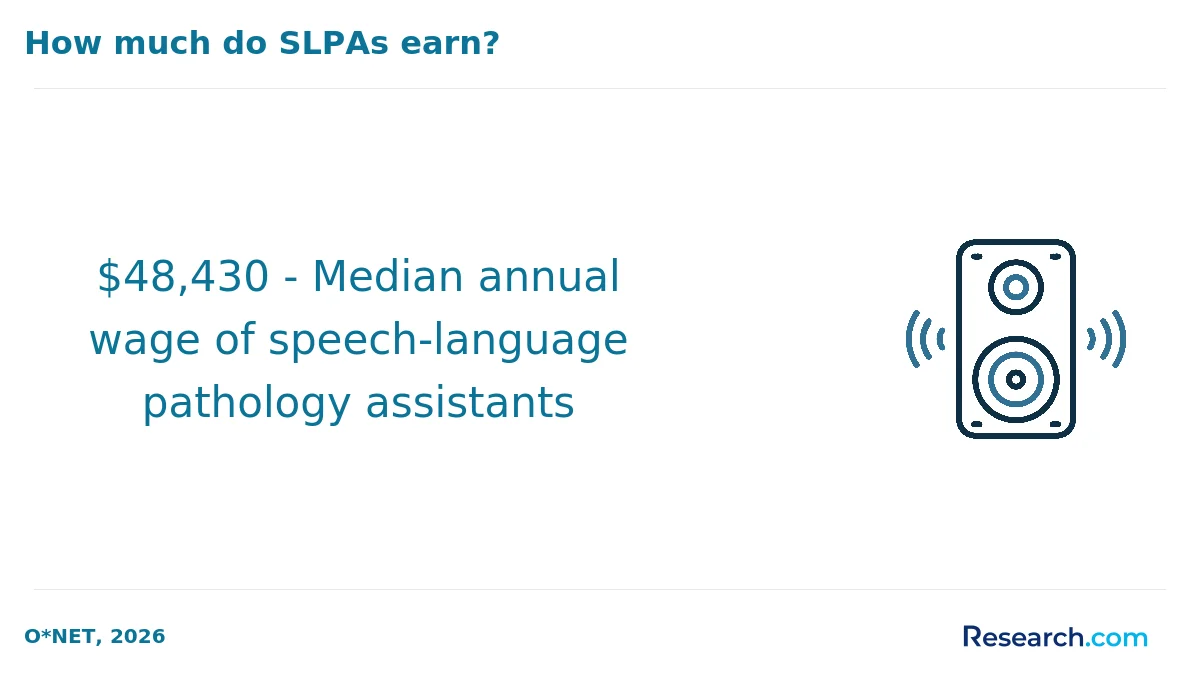
| Speech-Language Pathology Assistant | Schools, clinics, rehabilitation centers, and healthcare providers | $35,000 to $45,000 | Provides supervised experience carrying out therapy plans and documenting client progress; often a strong bridge toward becoming a licensed speech-language pathologist. |
| Rehabilitation Technician | Hospitals, outpatient clinics, long-term care facilities, and rehabilitation programs | $30,000 to $40,000 | Builds broad exposure to therapy teams, patient support, and rehabilitation workflows. |
| Communication Specialist (Entry-Level) | Corporate, nonprofit, educational, and accessibility-focused organizations | $40,000 to $50,000 | Can lead toward communication accessibility, advocacy, training, or assistive technology roles. |
| Assistive Technology Aide | Special education programs, rehabilitation settings, and disability services | Around $32,000 | Offers hands-on experience with communication devices and technology-supported intervention. |
| Early Intervention Specialist | Public health agencies, nonprofits, and early childhood programs | $38,000 to $48,000 | Develops pediatric experience with infants and toddlers who have communication or developmental delays. |
Graduates should search by specific job titles rather than broad phrases such as “communication disorders jobs.” Applicant tracking systems often match exact wording, so resumes should use the same language found in the posting when it accurately reflects the candidate’s experience. Strong application materials should highlight observation hours, supervised client contact, documentation, family communication, AAC exposure, bilingual skills when applicable, and familiarity with IEP or care-team processes.
Before accepting an entry-level role, ask what supervision is provided, whether the role counts toward future requirements, and whether the employer supports continuing education. Graduates considering long-term leadership or research in adjacent health fields may also compare advanced options such as a nursing PhD.
What Salary Trajectory Can Communication Disorders Degree Holders Expect in the Top Five Fastest-Growing Career Paths?
Salary growth in communication disorders depends heavily on credentials, setting, state, specialization, and whether the role is clinical, educational, technical, or counseling-focused. Clinical careers generally start higher and have stronger salary ceilings, while education and counseling roles may offer steadier benefits, predictable schedules, and mission-driven work.
| Career path | Entry-level salary cited | Mid-career salary cited | Senior or specialized salary cited | Main drivers of salary growth |
| Speech-Language Pathologist | Near $60,000 annually | About $80,000-$90,000 | May exceed $100,000 | Licensure, specialty certifications, supervisory roles, pediatric or geriatric focus, and employer setting. |
| Occupational Therapist (Communication Focus) | $65,000 to $70,000 | $85,000-$95,000 | Can surpass $100,000 | State licensure, advanced clinical roles, leadership duties, and ongoing education. |
| Audiologist | Around $60,000 | $80,000-$90,000 | $95,000 to $110,000 | Doctoral preparation, technical expertise, research, management, and specialized hearing services. |
| Special Education Teacher (Speech and Language Focus) | $45,000 to $55,000 | $60,000-$70,000 | $75,000 or more | Tenure, certification, district funding, high-need assignments, and advanced education. |
| Rehabilitation Counselor (Communication Specialization) | $40,000 to $50,000 | $55,000-$65,000 | Over $70,000 | Managerial duties, specialized populations, public agency experience, and program leadership. |
The fastest income growth usually comes from moving from assistant or generalist roles into licensed practice, then into specialization, supervision, private practice, leadership, or technology-related positions. Location can change the picture significantly: a higher salary in a high-cost city may not produce more disposable income than a lower salary in a lower-cost region.
A communication disorders graduate who began in education described the salary path as gradual but manageable. Early compensation felt modest, but certifications, experience, and professional networking improved both income and job satisfaction. That pattern is common in the field: the first role may be a stepping stone, while the strongest compensation often follows credentialing and specialization.
How Does Geographic Location Affect Career Growth Rates and Earning Potential for Communication Disorders Degree Graduates?
Geographic location affects communication disorders careers in three major ways: the number of openings, the salary range, and the type of employer available. A graduate seeking school-based work may evaluate districts and state education funding, while a future audiologist or speech-language pathologist may focus on hospitals, outpatient clinics, research centers, or telepractice regulations.
- Northeast: Growth is moderate, but wages are among the highest because of universities, academic hospitals, and medical research centers. Boston and New York offer strong healthcare and education networks, though competition and cost of living can be significant.
- Southeast: Florida and Georgia show some of the fastest job growth, supported by aging populations and expanded healthcare access. Median wages are often lower than in the Northeast, but schools, rehabilitation centers, and telehealth services create many entry and mid-level opportunities.
- Midwest: Growth is steady but slower, and wages often fall below the national average. Chicago and other urban centers maintain demand through large healthcare systems, while rural communities may have fewer services but stronger unmet need.
- Southwest: Texas and Arizona benefit from population growth, expanding university programs, and state incentives. This creates moderate-to-strong demand for communication disorders professionals in healthcare, schools, and community services.
- West: The West combines high wages with uneven growth. California’s research institutions, diverse economy, and healthcare systems support demand, while less populated areas may have fewer openings. Technology and telehealth adoption can expand opportunities in this region.
Remote and hybrid work reduce some geographic limits, especially for telepractice clinicians, remote diagnostic support, digital therapy roles, and assistive technology training. However, many roles still require physical presence. School-based therapy, hospital rehabilitation, pediatric early intervention, and device fitting often depend on proximity to clients and employers.
Graduates should compare salary with cost of living, licensure portability, caseload expectations, reimbursement rules, and employer density. A high-wage metro area may be attractive for research and specialization, while a faster-growing region may offer easier entry into the field. Rural or underserved areas can sometimes provide broader responsibility earlier in a career, but may also require more travel and fewer mentorship options.
Which Industries Are Hiring Communication Disorders Degree Graduates at the Highest Rates in the Current Job Market?
The highest hiring demand for communication disorders graduates is concentrated in healthcare, education, early intervention, rehabilitation, and technology. Each industry offers a different mix of salary potential, schedule, advancement, credential requirements, and day-to-day work.
| Industry | Common roles | Why employers hire | Career trade-off |
| Healthcare | Speech-language pathologists, audiologists, rehabilitation specialists, clinical assistants | Aging populations, recovery from stroke and injury, swallowing disorders, hearing care, and outpatient rehabilitation needs. | Often strong compensation and clinical growth, but may involve productivity expectations, documentation demands, and variable schedules. |
| Public and private schools | School-based speech-language pathologists, speech therapy aides, literacy specialists, special education support roles | IEPs, inclusion initiatives, and ongoing demand for child language, articulation, fluency, and communication support. | Predictable school calendars and mission-driven work, but pay may start below healthcare settings and caseloads can be heavy. |
| Early intervention | Developmental therapists, early intervention specialists, coordinators, clinical supervisors | Federal and state funding supports services for infants and toddlers with developmental delays. | High impact and family-centered work, but compensation may be lower than in hospital or private clinical settings. |
| Assistive technology and health technology | Clinical consultants, product trainers, AAC specialists, user experience analysts | Growth in communication apps, speech recognition tools, AAC devices, and digital therapy platforms. | May offer faster advancement and above-average pay, but often requires technology, business, or product skills. |
Healthcare is often the strongest fit for graduates who want clinical specialization and higher salary ceilings. Schools are a strong fit for those who prefer child-focused services, collaboration with educators, and structured academic calendars. Early intervention is ideal for professionals who want to influence developmental outcomes at the earliest stages. Technology roles are best for graduates who enjoy translating clinical knowledge into tools, training, and product design.
The safest long-term strategy is to build portable skills: assessment support, documentation, interdisciplinary collaboration, family education, data-informed decision-making, and comfort with digital platforms. These competencies transfer across sectors and help graduates adapt if funding, reimbursement, or hiring patterns shift.
What Advanced Certifications or Graduate Credentials Accelerate Career Growth for Communication Disorders Degree Holders?
Advanced credentials are often the turning point between entry-level support roles and higher-growth clinical careers. For many communication disorders graduates, the key question is not whether credentials matter, but which credential is required for the role they want and whether the investment fits their timeline, finances, and preferred setting.
- Certificate of Clinical Competence in Speech-Language Pathology (CCC-SLP): Offered by the American Speech-Language-Hearing Association (ASHA), the CCC-SLP is widely recognized in speech-language pathology. Many schools, healthcare employers, and private practices prefer or require it because it signals professional competence and supports mobility across settings.
- Clinical Fellowship Year (CFY): The CFY is supervised professional experience completed after graduate study. It is commonly required before independent practice and is a key step toward ASHA certification and many state licensure pathways.
- State Licensure: Licensure requirements vary by state, but most clinical roles require it. Graduates should check state boards directly because rules for education, supervised hours, exams, continuing education, telepractice, and title use can differ.
- Board Certification in Specializations: Credentials such as Board Certified Specialist in Child Language or Fluency can help professionals stand out in specialized practice areas. These credentials are most valuable when they match employer demand and client population needs.
- Doctoral Degrees (PhD or AuD): Doctoral education can lead to research, academia, leadership, and advanced clinical roles. The AuD is central to audiology practice, while a PhD is more often aligned with research and university teaching.
- Assistive Technology and AAC Certifications: AAC and assistive technology training are increasingly useful in schools, rehabilitation, disability services, and technology companies. These credentials can distinguish candidates who want to work with complex communication needs and device-supported intervention.
Students planning a licensed speech-language pathology pathway should compare admission requirements, clinical placement support, accreditation status, total cost, and state licensure alignment before enrolling. A focused review of online masters in speech language pathology programs can help prospective students evaluate affordable graduate options that may support this goal.
The best credential is the one that unlocks a specific next step: eligibility for licensure, access to a higher-paying setting, qualification for a specialist role, or advancement into supervision. Graduates should review job postings in their target state and setting before committing to a program. For readers comparing graduate study in adjacent health fields, dietitian graduate programs offer another example of how professional preparation, supervised experience, and credentialing shape career outcomes.
How Do Remote and Hybrid Work Trends Expand the Career Landscape for Communication Disorders Degree Graduates?
Remote and hybrid work have expanded communication disorders careers most clearly through telepractice, virtual consultation, digital assessment support, caregiver coaching, and assistive technology training. These models can help employers reach clients in underserved areas and allow professionals to consider jobs beyond their immediate commute.
Recent workforce surveys, including the 2023 Buffer State of Remote Work report, indicate that over 40% of healthcare-related remote workers hold therapy and counseling roles, a category closely connected to communication disorders professions. The Society for Human Resource Management's 2023 Workplace Forecast also reported that 58% of healthcare employers plan to expand their remote workforce presence in the next two years.
- Remote Eligibility: Speech-language pathologists who provide telepractice are among the most remote-friendly professionals in the field because many therapy sessions, consultations, and follow-ups can be delivered through secure video platforms when clinically appropriate.
- Employer Rationale: Employers use remote work to address talent shortages, expand service coverage, and hire qualified clinicians outside the local labor market. Mature digital workflows also make scheduling, documentation, and care coordination easier to manage across locations.
- Financial Advantage: Remote work can improve net compensation when a professional earns a salary benchmarked to a higher-cost labor market while living in a lower-cost region.
For example, a telepractice speech-language pathologist earning $80,000 annually in New York City might take home 40-50% less after taxes and living expenses compared to the same salary earned remotely from a Midwest location where the cost of living is lower, which could increase disposable income by $20,000 or more per year.
Graduates seeking remote work opportunities should use targeted terms such as “remote,” “telepractice,” “virtual,” and “hybrid” in job searches. Applications should emphasize self-management, teletherapy platforms, digital documentation, virtual rapport-building, privacy awareness, and the ability to collaborate with distributed teams.
Remote work is not suitable for every client, employer, or state regulatory environment. Graduates should verify licensure rules, telepractice permissions, supervision requirements, and employer expectations before accepting a virtual role. Professionals exploring flexible academic advancement in related healthcare areas may also compare options such as the shortest online nurse practitioner program.
What Role Does Specialization Play in Maximizing Career Growth Potential for Communication Disorders Graduates?
Specialization can significantly improve career growth because it turns a broad communication disorders background into a more targeted professional identity. Employers often hire for specific needs: pediatric language, dysphagia, fluency, AAC, hearing diagnostics, early intervention, school-based services, or telepractice. A graduate who can demonstrate focused experience is easier to match to those openings.
- Speech-Language Pathology: Projected to grow 17% through 2035, this path typically requires graduate-level study, supervised clinical experience, and certification or licensure. It offers strong job stability across schools, healthcare, private practice, and telepractice.
- Audiology: Audiology requires a Doctor of Audiology (AuD) degree. It suits graduates interested in hearing disorders, diagnostics, hearing aids, balance-related services, and clinical technology.
- Early Intervention Specialist: This specialization focuses on infants and toddlers with communication or developmental delays. Pediatric training, family-centered practice, and knowledge of developmental milestones are especially important.
- Augmentative and Alternative Communication (AAC): AAC specialists support people with severe speech impairments through communication devices, symbol systems, access methods, and interdisciplinary planning.
- Telepractice Specialist: Telepractice specialists combine clinical service delivery with remote assessment, digital engagement, and virtual care coordination.
The advantage of specialization is stronger marketability, clearer professional development, and often better compensation. The trade-off is reduced flexibility: a narrow focus can limit opportunities if local demand is weak or if the graduate later wants to change populations or settings.
A practical approach is to specialize without becoming too narrow too early. Students can use internships, observation hours, assistant roles, research projects, and graduate clinical placements to test areas of interest. As of 2023, speech-language pathology employment alone is expected to increase 21%-far exceeding average occupational growth-highlighting the value of choosing a high-demand specialty within the field.
How Do Public Sector Versus Private Sector Career Paths Compare in Terms of Growth and Advancement for Communication Disorders Graduates?
Public and private sector communication disorders careers can both offer strong long-term opportunities, but they reward different priorities. Public sector roles are often associated with stability, benefits, defined procedures, and mission-driven service. Private sector roles may offer higher salary ceilings, faster advancement, and more innovation, but can also bring productivity pressure and greater exposure to market changes.
| Factor | Public sector | Private sector |
| Common settings | Public schools, state agencies, federal programs, public hospitals, community services | Private clinics, healthcare companies, hospitals, consulting firms, technology companies, private practice |
| Compensation | Steady base pay, strong benefits, pensions in some systems, less fluctuation | Higher salary ceilings, possible bonuses, profit-sharing, or faster pay growth |
| Wage comparison cited | Public institution salaries are generally lower in the cited comparison | According to BLS Quarterly Census data, median wages for speech-language pathologists and audiologists in private companies exceed public institution salaries by 10-20% |
| Advancement | Often formal, tenure-based, and tied to credentials or time-in-grade | Often performance-based, faster for employees who demonstrate measurable results |
| Job security | Generally stronger, especially in mandated education and public service roles | Can vary with reimbursement, contracts, demand, and business performance |
| Best fit | Graduates who value stability, benefits, predictable systems, and public service | Graduates who value income growth, innovation, flexibility, and entrepreneurial options |
Hybrid pathways are also growing. Public-private partnerships, federal STEM hiring initiatives, school contracts, telepractice vendors, and healthcare technology collaborations can combine public service demand with private sector delivery models. These roles may appeal to graduates who want stability in client need but more flexibility in how services are provided.
The best choice depends on personal priorities. A graduate supporting a family may value benefits and job security more than rapid salary growth. Another graduate may prefer private practice, technology consulting, or clinical leadership because those paths can expand faster. Before choosing, compare total compensation, not just salary: benefits, retirement, paid time off, caseload, supervision, advancement policies, and work-life balance all affect the real value of a job.
What Graduates Say About the Fastest-Growing Careers for Communication Disorders Degree Graduates
- : "Choosing a degree in communication disorders opened doors to careers with impressive advancement potential and compensation growth that often surpasses expectations within healthcare professions. I appreciate that many roles are accessible across diverse geographic regions, making relocation or remote work viable options. What truly gives graduates an edge is the blend of specialized clinical skills and certifications, which employers highly value in this growing field. — Mordechai"
- : "Reflecting on my journey with a communication disorders degree, I've noticed that the demand in this sector keeps expanding, especially in underserved areas, which makes geographic accessibility a real advantage. The competitive edge comes from acquiring advanced credentials and hands-on experience early in your career-these skills set you apart and accelerate your career trajectory. Plus, the earning potential grows steadily as you gain expertise and take on leadership roles, making this field both personally rewarding and financially promising. — Casen"
- : "From a professional standpoint, the communication disorders field offers exciting roles with clear pathways to leadership and specialization, which significantly impact compensation possibilities. One standout insight is how many opportunities exist nationwide-this geographic flexibility really broadens your options. Success in this field depends on cultivating a strong foundation of clinical skills paired with ongoing certifications that elevate your profile in a competitive and evolving job market. — Walker"
Other Things You Should Know About Communication Disorders Degrees
In 2027, careers such as speech-language pathologists, audiologists, and telepractice specialists are among the fastest-growing for communication disorders graduates. Advances in technology and emphasis on early intervention drive this growth, creating opportunities in diverse settings like schools, healthcare facilities, and private practices.
Internships provide hands-on exposure to clinical and educational settings-helping graduates build practical skills and professional networks. Early career experiences often allow for specialization in areas like pediatric speech therapy or assistive technology, which are seeing rapid demand growth. Graduates should seek placements that offer supervised practice and opportunities to work with diverse populations to increase their marketability.
Joining professional bodies such as the American Speech-Language-Hearing Association (ASHA) can connect graduates with mentors, continuing education, and job opportunities. Active participation in conferences and local chapters fosters relationships that lead to referrals and collaborations. Utilizing online platforms dedicated to healthcare professionals also helps keep pace with industry trends and emerging roles.
References
- U.S. Bureau of Labor Statistics - Speech-Language Pathologists https://www.bls.gov/ooh/healthcare/speech-language-pathologists.htm
- ASHA EdFind - Accredited Speech-Language Pathology Programs https://find.asha.org/ed/
- O*NET OnLine - Speech-Language Pathologists https://www.onetonline.org/link/summary/29-1127.00
- University of North Carolina at Greensboro - Speech-Language Pathology, M.A. (Online) https://csd.uncg.edu/graduate/masters-of-arts-online/
- University of Scranton - Master of Science (M.S.) in Speech-Language Pathology https://www.scranton.edu/academics/pcps/health-and-human-performance/programs/speech-language-pathology/index.shtml
- Delaware Valley University - Master of Science in Speech-Language Pathology (M.S.) https://delval.edu/programs/graduate-programs/speech-language-pathology
- New England Institute of Technology - Master of Science in Speech Language Pathology https://www.neit.edu/academics/graduate-degrees/speech-language-pathology-ms
- West Virginia University - Speech-Language Pathology, M.S. - Online https://medicine.hsc.wvu.edu/communications-sciences-and-disorders/speech-language-pathology-ms/future-students/curriculum/online-slp-program/