2027 Communication Disorders Degree Salary by Experience Level: Entry-Level, Mid-Career, and Senior Roles

Co-Founder and Chief Data Scientist

Reviewed by Rhea Paul, PhD
SLP Education & Research Expert
A communication disorders degree can lead to meaningful work in speech, language, hearing, swallowing, and related support services, but salary outcomes vary widely by role, credential, employer, and location. The pay path also changes over time: many graduates begin in supervised or support positions, then increase their earnings as they gain licensure, clinical independence, specialized skills, and leadership responsibilities.
This guide explains how communication disorders degree salaries typically progress from entry-level to senior roles. It also breaks down starting pay, mid-career earnings, senior salary ranges, higher-paying industries, location effects, certifications, and practical steps graduates can take to improve long-term earning potential.
Key Things to Know About Communication Disorders Degree Salary By Experience Level
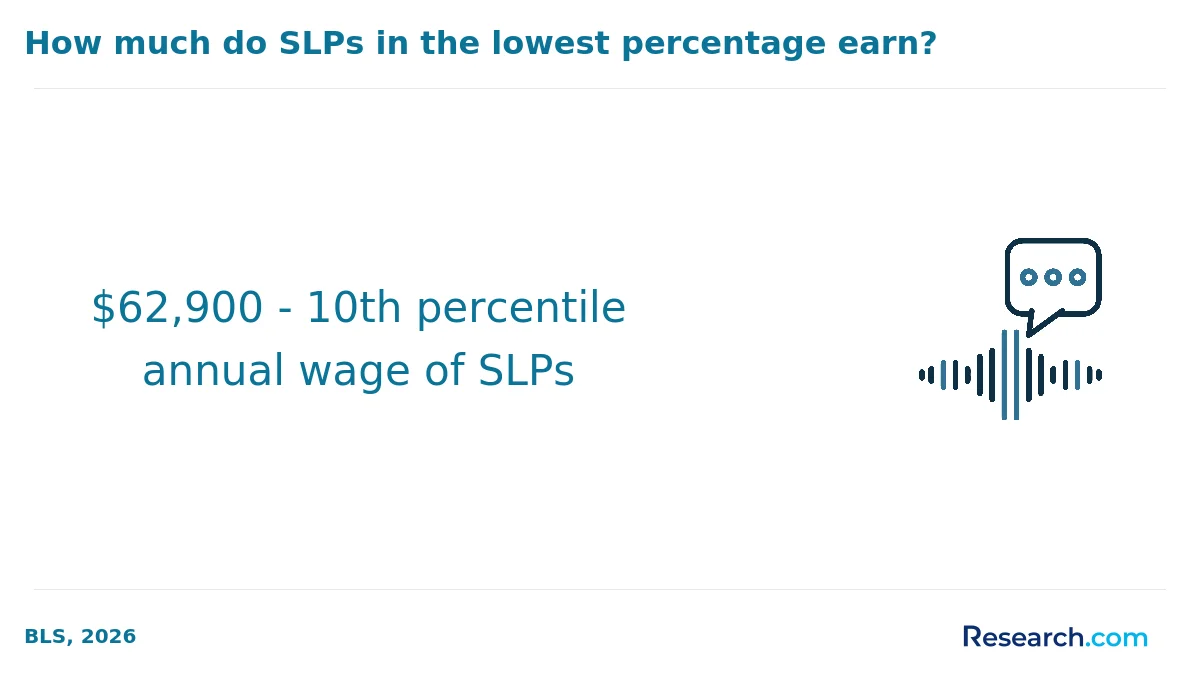
- Entry-level salaries for communication disorders graduates typically range from $62,900 to $134,160, influenced by location, clinical internships, and certifications such as CCC-SLP.
- Mid-career earnings grow with 5-10 years' experience, specialization (e.g., pediatric or geriatric care), and roles like lead therapist, often reaching $65,000 to $85,000.
- Senior professionals can earn $90,000+, driven by management responsibilities, advanced expertise, niche skills, and high-demand industries such as hospitals and private practice.
What is the average communication disorders degree salary by experience level?
The average communication disorders degree salary by experience level generally rises as professionals move from supervised or assistant-level work into independent practice, specialization, and program leadership. Across the field, wage growth from entry-level to senior roles can range between 25% and 40%, although actual earnings depend heavily on licensure status, graduate education, work setting, and local demand.
Experience matters because employers pay more for professionals who can manage complex cases, document outcomes, supervise others, and work with specialized populations. In many roles, higher pay is also tied to additional credentials, state requirements, or a graduate degree.
- Entry-Level Roles: Starting salaries usually fall between $45,000 and $60,000 annually. These roles often involve supervised clinical work, support with assessments, speech and hearing screenings, therapy preparation, or case documentation.
- Early Career: With two to five years of experience, salaries rise to roughly $55,000 to $70,000. Professionals at this stage may begin working more independently in schools, clinics, hospitals, or rehabilitation settings while strengthening treatment planning and caseload management skills.
- Mid-Career: At five to ten years in the field, earnings typically reach $70,000 to $90,000. Mid-career professionals often develop specializations, supervise assistants or junior clinicians, manage more complex evaluations, or move into private practice, hospital, or specialized education settings.
- Senior-Level Roles: After more than ten years, salaries can surpass $90,000 and sometimes climb to $110,000 or above. Senior practitioners may lead departments, oversee programs, serve as consultants, conduct advanced clinical assessments, or contribute to research and training.
For readers comparing broader healthcare education options, online PharmD programs may be worth reviewing, although pharmacy is a separate professional pathway with different licensing and salary structures.
What is the starting salary for entry-level communication disorders graduates?
The starting salary for entry-level communication disorders graduates often ranges between $30,000 and $70,000, depending on the position, education level, state requirements, employer type, and whether the role is clinical, assistant-level, school-based, or administrative. According to the U.S. Bureau of Labor Statistics, speech-language pathologists have a median annual wage of about $97,870, but new graduates should not assume they will immediately earn the median, especially if they still need supervised experience or additional credentials.
Entry-level pay is easiest to understand by separating licensed professional roles from support and assistant roles. A bachelor’s degree may qualify graduates for some aide, assistant, early intervention, or rehabilitation support positions, while full clinical roles often require additional graduate education and licensure.
- Speech-Language Pathologist: Entry-level salaries typically range from $62,900 to $134,160. Speech-language pathologists assess and treat speech, language, voice, fluency, swallowing, and communication disorders in settings such as schools, hospitals, outpatient clinics, and rehabilitation facilities.
- Audiologist Assistant: Starting pay is generally between $40,000 and $50,000. Audiologist assistants support licensed audiologists by helping with hearing tests, patient preparation, records, and equipment-related tasks, depending on state rules and employer policies.
- Rehabilitation Specialist: Entry salaries usually fall between $45,000 and $60,000. These professionals may support people recovering communication or cognitive-communication skills after injury, illness, or disability.
- Early Intervention Specialist: Salaries are roughly from $40,000 to $55,000. These roles focus on young children with developmental delays and often require strong knowledge of early language development, family-centered services, and interdisciplinary care.
- Speech Therapy Aide: Aides often start at $30,000 to $40,000. They may prepare materials, schedule sessions, assist with documentation, and support therapy activities under appropriate supervision.
New graduates can improve their starting offer by completing relevant internships, building experience with high-need populations, understanding state credential rules, and applying to settings with stronger demand. Those who want to move toward clinic management or operations may also compare options such as a healthcare administration degree online, which can support nonclinical leadership paths.
How much do mid-career communication disorders professionals earn after 3-5 years?
Mid-career communication disorders professionals with 3 to 5 years of experience typically earn between $60,000 and $80,000 annually. That represents a 15% to 25% increase from entry-level salaries, which usually range from $45,000 to $60,000. The increase reflects stronger clinical judgment, more efficient caseload management, and the ability to work with less direct supervision.
At this stage, salary growth is rarely automatic. Professionals who see the strongest pay movement usually do at least one of the following: specialize in a high-need area, move into a higher-paying employer setting, document measurable outcomes, or take on responsibilities that make them harder to replace.
- Specialization: Areas such as pediatric speech therapy, swallowing disorders, cognitive rehabilitation, and complex communication needs can strengthen compensation prospects when demand is high.
- Work setting: Hospitals, specialized clinics, and some private practices may offer stronger pay than roles with limited funding flexibility.
- Performance evidence: Employers may respond better to requests for raises when professionals can show improved outcomes, productivity, retention, or program contributions.
- Market timing: Job changes, contract renewals, and staffing shortages can create better negotiation opportunities than annual review cycles alone.
Additionally, steady wage growth of about 3% annually, as reported by the U.S. Bureau of Labor Statistics for related professions, underscores the value of continued skill development and career planning during this period.
One professional with a communication disorders degree described the 3-to-5-year stage this way: “During my third year, I noticed a clear jump in salary once I specialized in swallowing disorders, which opened doors to new job opportunities. It was not just about years on the job but proving my effectiveness and building a strong client base that contributed to raises. Balancing clinical duties with ongoing learning was challenging, but it ultimately helped me reach a mid-career salary that matched my growing expertise.”
What is the salary range for senior communication disorders professionals with 10+ years of experience?
The senior communication disorders salary range often falls between $62,900 and $134,160 annually for professionals with more than 10 years of experience. Some exceed $120,000 in specialized or leadership roles, particularly when they combine advanced clinical expertise with supervision, administration, consulting, or program development responsibilities.
Senior-level pay is not based only on tenure. Employers usually reserve the highest compensation for professionals who solve complex service delivery problems, supervise teams, manage compliance, improve outcomes, bring in clients or contracts, or hold expertise that is difficult to find in the local market.
- Clinical Supervisor: Typically earns between $85,000 and $115,000. Clinical supervisors oversee speech-language pathologists, audiologists, assistants, or interdisciplinary care teams in healthcare, rehabilitation, school, or clinic settings.
- Specialized Diagnostician: Salaries often range from $90,000 to $120,000. These professionals focus on complex assessments and may hold advanced certifications or deep experience with rare or high-acuity conditions.
- Academic Professor: Compensation varies widely, usually from $80,000 to $110,000. Professors may teach, conduct research, publish, supervise clinical education, and pursue grants, with tenure and research productivity affecting pay.
- Consultant or Administrator: These roles typically command salaries above $100,000. Consultants and administrators may manage programs, advise institutions, oversee service lines, or lead compliance and quality improvement efforts.
Professionals planning for senior-level advancement should choose education and career moves carefully. For some students, comparing options such as a university with free application fee may reduce barriers when applying to programs that support long-term advancement.
How does communication disorders salary progress over time from entry-level to senior roles?
Communication disorders salary progression is usually steady rather than instant. Many graduates begin in supervised or support roles, move into independent practice after meeting education and credential requirements, and later increase earnings through specialization, leadership, private practice, or higher-demand settings. In some cases, professionals more than double their earnings from entry-level to senior positions.
On average, wage increases of 10% to 20% occur between early and mid-career stages, but the strongest salary growth usually comes from strategic decisions rather than time alone.
- Entry-Level: Starting salaries usually fall between $45,000 and $60,000 annually. Work is often supervised and focused on building core clinical, documentation, and patient or student support skills.
- Early Career: Salaries tend to rise to $60,000-$75,000 as professionals gain autonomy, manage larger caseloads, and demonstrate consistent treatment or support outcomes.
- Mid-Career: Earnings often reach $75,000 and $90,000. Advanced certifications, high-demand specialties, stronger clinical judgment, and employer changes can accelerate growth.
- Senior-Level: Seasoned experts often command $90,000 to over $110,000 annually. Leadership, advanced assessment work, consulting, specialized clinical practice, or program administration commonly drive top-tier pay.
A communication disorders degree graduate said their early salary started near the lower end of the spectrum, around $47,000, and described the first stage as “a learning curve with plenty of supervised work.” Over a decade, they pursued certifications and took on supervisory duties, pushing their salary toward $85,000.
Later, moving into management and specializing in pediatric cases helped their earnings pass $100,000. Their main takeaway was that “consistent effort in gaining expertise and leadership roles made the most significant difference in pay growth.”
Which factors have the biggest impact on communication disorders salary growth?
The biggest drivers of communication disorders salary growth are experience, credentials, specialization, employer setting, location, and leadership responsibility. Communication disorders specialists with over a decade of experience can earn up to 30% more than entry-level counterparts, but the gap depends on whether that experience translates into higher-value work.
- Experience Accumulation: More years in the field can raise pay when professionals build stronger clinical judgment, handle complex cases, and show reliability. However, experience alone may not produce major gains without new responsibilities or skills.
- Skill Enhancement: Specialized skills, including contemporary therapeutic techniques and expertise in niche populations, can make a professional more competitive for higher-paying roles.
- Industry Setting: Healthcare facilities and private practices generally offer more lucrative pay scales than some education or nonprofit settings, although benefits, schedule, loan forgiveness eligibility, and job stability may differ.
- Geographic Influence: Urban centers, high-cost regions, and states with stronger demand may offer higher wages, but higher pay should be weighed against housing, commuting, taxes, and overall cost of living.
- Leadership Roles: Supervisory, administrative, and program management responsibilities can significantly increase income because they expand a professional’s impact beyond individual caseloads.
The common mistake is focusing only on annual salary. A stronger comparison includes total compensation, benefits, retirement contributions, paid time off, continuing education support, caseload expectations, supervision quality, and long-term promotion potential.
How does location affect communication disorders salaries across different regions?
Location can materially affect communication disorders salaries because wages respond to local demand, employer funding, labor supply, and cost of living. Wage data indicates that salaries in metropolitan hubs can be 20-30% higher than in smaller cities or rural areas, but higher nominal pay does not always mean greater purchasing power.
When comparing regions, professionals should look beyond the posted salary. A lower-paying job in a lower-cost area may provide better financial stability than a higher salary in an expensive metro area. Conversely, a high-cost city may be worth it if it offers stronger career growth, specialized experience, or access to advanced clinical teams.
- Urban Centers: Large cities often pay more because they have higher living costs, larger healthcare systems, more schools, and greater demand for specialized services.
- Rural Areas: Salaries may be lower in rural regions, but some employers may offer incentives, broader responsibilities, or faster access to leadership because qualified professionals are harder to recruit.
- High-Demand States: States with larger concentrations of children and elderly individuals, aging populations, or expanding school systems may offer increased salaries because they need more speech-language pathology and audiology services.
- Regions with Strong Industry Presence: Areas with many hospitals, research institutions, specialty clinics, or rehabilitation centers may offer better compensation because employers compete for qualified talent.
- Cost of Living Variations: Housing, transportation, childcare, and taxes can change the real value of a salary. Professionals should compare take-home pay and expenses before relocating for a higher offer.
Which industries pay the highest salaries for communication disorders graduates?
Industry choice is one of the clearest ways communication disorders graduates can influence earning potential. Recent data shows that professionals in healthcare roles can surpass $90,000 annually, including bonuses, because hospitals and specialized care settings often need advanced skills for complex patient needs.
The highest-paying industries are not always the easiest to enter. They may require graduate education, licensure, specialized clinical experience, comfort with high-acuity cases, or the ability to manage productivity expectations.
- Healthcare and Hospital Systems: Hospitals, rehabilitation facilities, and acute care environments often pay more for professionals who can diagnose and treat complex communication, swallowing, cognitive, or hearing-related needs. These roles may involve higher clinical intensity and documentation demands.
- Educational Services and Specialized Schools: Public schools may offer strong benefits and stable schedules, while private special education settings and leadership roles such as program director or senior clinician can command higher pay when advanced assessment and intervention skills are required.
- Corporate Wellness and Tech Industries: Emerging roles such as communication consultants, assistive technology specialists, accessibility-focused professionals, and corporate speech coaches can pay well when graduates combine communication science knowledge with business, technology, or compliance expertise.
Aspiring professionals who want to move into health system leadership may compare the best MHA online programs to understand how management training can support broader administrative opportunities. Evaluating communication disorders salary by industry US can help graduates target employers that match both their income goals and preferred work environment.
Do specialized skills or certifications increase communication disorders salary potential?
Yes. Specialized skills and industry-recognized certifications can increase communication disorders salary potential, especially when they align with employer demand. Industry data show that certification holders often earn up to 15% more over their careers, but the return depends on the credential’s relevance, cost, time requirement, and recognition in the target setting.
Advanced training is most valuable when it helps a professional qualify for higher-responsibility work, serve a population with limited provider availability, or move into settings that pay a premium for specialized expertise.
- Clinical Specializations: Certifications in pediatric speech pathology, neurogenic communication disorders, or swallowing disorders can distinguish professionals who work with complex cases and high-need populations.
- Technology Integration: Skills with augmentative and alternative communication (AAC) devices and telepractice methodologies are valuable as employers expand service delivery models and accessibility options.
- Advanced Assessment Techniques: Mastery of evidence-based diagnostic tools and outcome measurement can strengthen treatment planning and improve competitiveness for private practice, hospital, and research roles.
- Leadership and Management Training: Certifications or coursework in healthcare administration, supervision, or clinical leadership can support movement into roles with higher pay and broader responsibility.
- Research and Grant Writing: Skills in clinical trial coordination, data collection, and securing funding through grant writing can create opportunities in academic, pharmaceutical, and research-oriented settings.
The industry a professional chooses also affects the payoff from certifications. Communication disorders professionals in the private healthcare sector usually receive about 20% higher salaries than those in public education or government roles. Higher-paying options may include healthcare and hospitals, private practice and corporate wellness, research and pharmaceutical companies, and private educational institutions.
Students who need graduate preparation for speech-language pathology roles may also compare speech pathology masters online options while checking accreditation, clinical placement requirements, and state licensure rules. For readers considering broader health education pathways, a BSN to MSN program may be relevant to nursing advancement, though it leads to a different professional track.
How can you maximize your communication disorders salary at each career stage?
Maximizing a communication disorders salary requires different moves at different career stages. Studies indicate that internal promotions typically yield a 12% salary increase, outperforming external job changes, but the best strategy depends on the employer, job market, and whether the new role expands responsibility.
- Early Career: Build strong clinical foundations, seek quality supervision, track outcomes, and choose placements that expose you to high-demand populations. Skill diversification can improve first offers and make later specialization easier.
- Years 3-5: Begin targeting a specialty, document measurable contributions, and compare your compensation against similar roles in your region. This is a good time to negotiate based on productivity, outcomes, caseload complexity, or added responsibilities.
- Mid-Career: Pursue professional certification when it clearly supports your target role. Credentials such as the Certificate of Clinical Competence can strengthen credibility and negotiating power when paired with strong experience.
- Senior Career: Move deliberately toward supervision, administration, consulting, private practice, teaching, or specialized diagnostics if those paths match your strengths. Leadership transition often creates the largest salary step because it broadens your value to the organization.
- Across All Stages: Build a professional network, monitor salaries in high-demand regions, keep records of achievements, and consider total compensation instead of base pay alone.
The strongest salary strategy is not simply “get more experience.” It is to convert experience into scarce skills, recognized credentials, leadership responsibility, and evidence that your work improves outcomes for clients, patients, students, or programs.
What Graduates Say About Communication Disorders Degree Salary By Experience Level
- : "As someone just starting my career in communication disorders, I have been encouraged to learn that salaries tend to rise steadily with experience. It is clear that the first few years are crucial for gaining specialized skills that significantly boost earning potential. For anyone entering this field, focusing on certifications and clinical experience early on really makes a difference. — Mordechai"
- : "Reflecting on my years in communication disorders, I have noticed that salary growth is not just about time spent in the field but also about where you work. Industries like healthcare and educational services tend to offer the highest compensation, especially for those who advance into supervisory roles. This insight has helped me strategically plan my career transitions to maximize my financial growth. — Casen"
- : "From a professional standpoint, communication disorders graduates see a meaningful salary increase as they build expertise and expand their professional networks. I have realized that pursuing advanced certifications and moving into private practice or hospital settings often correlates with top-tier salaries. Understanding these factors early helped me set realistic goals for my career trajectory. — Walker"
Other Things You Should Know About Communication Disorders Degrees
Experience strengthens bargaining power during salary negotiations. Employers tend to offer higher salaries to candidates who demonstrate proven skills and successful outcomes in communication disorders roles. Professionals with more years of experience often secure better compensation packages compared to entry-level hires.
In 2027, obtaining an advanced degree can significantly impact salary prospects for communication disorders professionals. Advanced degrees such as a master's or doctorate can lead to more specialized roles, higher earning potential, and increased opportunities for career advancement, reflecting a competitive edge in the job market.
Salary growth tends to stabilize after reaching mid-career levels. While early years show sharper increases, later stages may depend more on additional qualifications, leadership roles, or employer changes rather than time alone.
References
- U.S. Bureau of Labor Statistics - Speech-Language Pathologists https://www.bls.gov/ooh/healthcare/speech-language-pathologists.htm
- ASHA EdFind - Accredited Speech-Language Pathology Programs https://find.asha.org/ed/
- O*NET OnLine - Speech-Language Pathologists https://www.onetonline.org/link/summary/29-1127.00
- Emerson College - Master of Science (M.S.) in Communication Disorders (Speech@Emerson, online) https://speech.emerson.edu/
- University of Nebraska at Kearney - Speech-Language Pathology, Master of Science in Education (Online Track) https://www.unk.edu/online/degrees-programs/speech-language-pathology-online.php
- Ithaca College - Online Master of Science in Speech-Language Pathology https://slponline.ithaca.edu/programs/masters-speech-language-pathology-online
- University of Wisconsin-Eau Claire - Master of Science in Speech-Language Pathology (Online) https://www.uwec.edu/speech-language-and-hearing-sciences-department/graduate-program/speech-language-pathology-online
- Pennsylvania Western University - Master of Science in Speech-Language Pathology https://online.pennwest.edu/programs/speech-language-pathology-grad/index.php