2027 Best Legal Studies Degrees for Healthcare and Financial Compliance Careers

Co-Founder and Chief Data Scientist
Compliance officers in healthcare and financial sectors must navigate a landscape where regulatory errors can trigger multi-million-dollar penalties and irreparable reputational loss. This pressure intensifies amid persistent workforce shortages and rapidly evolving legislation.
Recent data from the U.S. Bureau of Labor Statistics reveals a 12% employment growth projection for compliance-related roles through 2030, reflecting expanding demand but also fierce competition. Meanwhile, the National Center for Education Statistics reports a 19% surge in adult learners enrolling in online legal-related programs since 2022, signaling a shift toward flexible education that suits career transitions.
This article identifies and evaluates top legal studies degrees tailored for healthcare and financial compliance careers, aiming to guide prospective students through practical choices that balance accessibility, employer expectations, and career advancement opportunities.
Key Things You Should Know
- Healthcare and financial compliance roles demand integrated legal and domain-specific expertise; programs lacking sector-specific case studies reduce employability, as 68% of recruiters prioritize specialized knowledge per 2024 SHRM data.
- Employers increasingly require certification-aligned curricula; absence delays workforce entry, with the US Bureau of Labor Statistics showing 12% wage premiums for candidates holding compliance-relevant legal credentials.
- Extensive joint-degree tracks stretch completion times by 25% on average, inflating debt burdens—limiting accessibility for mid-career professionals balancing upskilling and income stability, per the NCES 2024 survey.
What is a legal studies degree focused on healthcare and financial compliance?
A legal studies degree focusing on healthcare and financial compliance equips students to address the operational and regulatory demands of two highly scrutinized sectors. Professionals are trained to navigate statutes like HIPAA for patient data protection and Sarbanes-Oxley for financial accountability, critical for mitigating legal and reputational risks.
For instance, a compliance analyst may uncover financial disclosure inconsistencies that could trigger SEC penalties, underscoring how precision in interpreting complex regulations impacts organizational stability.
This degree's relevance extends into roles that require balancing legal acumen with practical skills such as risk assessment, policy drafting, and auditing tailored to healthcare and financial institutions. Employers consistently seek candidates proficient in regulatory frameworks who can implement robust internal controls and compliance protocols.
Projected workforce growth aligns with these demands, as the U.S. Bureau of Labor Statistics expects legal and compliance-related jobs to rise by about 73,000 over the decade. However, advancing beyond entry-level roles often necessitates additional certifications or law degrees.
Candidates pursuing online legal studies programs for healthcare and financial regulations should weigh the curriculum's challenge to maintain a rigorous focus on both legal theory and applied compliance.
Students evaluating educational options should also consider how this pathway compares with types of paralegals and other legal support roles, particularly in terms of specialization and career trajectory.
Which legal studies degrees best prepare you for compliance careers?
Degrees focused on legal studies for healthcare compliance careers offer direct alignment with regulatory demands, particularly in institutions where HIPAA and Medicare compliance dominate operational risk. Healthcare compliance roles demand proficiency interpreting complex privacy legislation while collaborating with medical personnel to ensure lawful patient data management.
Employment growth projections in this sector reflect the need for graduates comfortable with both legal and clinical workflows, making specialized health law degrees an efficient route to market-ready skills.
By contrast, legal studies degrees preparing for financial compliance roles emphasize frameworks like Sarbanes-Oxley, Dodd-Frank, and SEC enforcement. These programs often integrate accounting and financial crime prevention, addressing employer expectations for candidates who carry technical competence alongside legal expertise. This dual focus is critical for positions involving transaction monitoring and fraud investigation within banking and finance.
General legal studies degrees lacking targeted compliance coursework usually require additional certifications or on-the-job training, potentially delaying career timelines. Working professionals often navigate this gap through part-time or online programs tuned to their sector's compliance nuances, balancing work and study effectively.
Degrees embedding internships or practicums in their curriculum provide measurable advantages, demonstrating applicant readiness for immediate impact. Healthcare compliance professionals typically engage operational staff for audits, whereas financial compliance officers focus on internal controls and regulatory reporting.
For those evaluating cost considerations of legal studies degrees, resources detailing criminal justice degree price frameworks can offer comparative insight to inform investment decisions.
How do healthcare and financial compliance career paths differ for legal studies majors?
Healthcare compliance career paths for legal studies majors often require deep expertise in federal healthcare laws like HIPAA and the Affordable Care Act but also demand practical knowledge of clinical operations and patient privacy. Roles such as compliance officers or medical and health services managers, with a 2024 median pay of $117,960, according to the U.S. Bureau of Labor Statistics, involve managing dynamic regulatory changes alongside complex clinical workflows.
Employers typically seek candidates who combine healthcare-specific compliance credentials with hands-on experience in medical billing, coding, and policy enforcement.
By contrast, financial compliance roles in legal studies emphasize securities law, anti-money laundering regulations, and corporate governance. Professionals in this area must demonstrate proficiency in auditing standards, risk assessment, and financial reporting requirements, frequently collaborating with regulatory agencies like the SEC. Certifications such as CAMS or CFE are often prerequisites, reflecting a skill set significantly different from healthcare compliance.
Students choosing between these paths should consider practical tradeoffs:
- Healthcare compliance offers higher median earnings and managerial prospects but requires thorough understanding of health systems and ongoing education.
- Financial compliance provides broader corporate relevance but entails mastery of specialized financial laws and certifications.
Those pursuing legal studies degrees and interested in compliance might explore options through a criminal justice online degree to tailor their credentials toward these demanding, distinct fields.
What accreditation should legal studies programs have for compliance-focused roles?
Accreditation fundamentally shapes the real-world viability of legal studies programs for healthcare compliance roles. Programs lacking recognition by regional accrediting bodies sanctioned by the U.S. Department of Education or the Council for Higher Education Accreditation (CHEA) often produce graduates facing skepticism from employers and difficulty qualifying for certifications. This is non-negotiable when comparing accredited legal studies programs for healthcare compliance, given the sector's complex regulatory environment.
Beyond foundational accreditation, alignment with industry groups like the American Health Lawyers Association (AHLA) or Health Care Compliance Association (HCCA) signals curriculum relevance to statutes such as HIPAA, Stark Law, and the False Claims Act, directly impacting practical preparedness.
Financial compliance specializations require additional scrutiny. Programs claiming top legal studies degrees with financial compliance accreditation should ideally partner with organizations governed by securities regulations or FINRA endorsement to ensure training bridges theoretical frameworks and employer expectations.
Cost-benefit analysis critically influences student decisions. For example, Albany Law School offers an online Master of Science in Health Law and Healthcare Compliance priced at $1,738 per credit for 2026-27, with automatic per-credit discounts up to $360, totaling over $10,000 in savings. Such discounts materially affect return on investment for working professionals weighing tuition against potential salary gains.
Prospective students must also verify accreditation status independently and assess curricula's direct applicability to compliance roles, mindful that investing in programs lacking rigor or market recognition risks career advancement setbacks.
For professionals evaluating cross-disciplinary pivots, comparing compliance education pathways to roles such as a sport analyst may reveal different demands on accreditation and outcomes.
How do online legal studies programs compare to campus options for compliance training?
Choosing between online and campus legal studies programs requires careful assessment of how each aligns with career demands and learning environments. Online programs suit professionals balancing full-time compliance positions or those in remote locations by offering schedule flexibility and eliminating relocation costs.
However, they often lack the immersive, hands-on internships and live networking essential for regulatory roles in healthcare or financial compliance, where real-time peer interaction and faculty mentorship sharpen critical judgment.
Tuition for online healthcare law degrees ranges sharply—from around $14,900 to $41,800 annually—with many clustered near $30,700, but campus programs may impose extra expenses like commuting or lost income that inflate total cost. Students must weigh these hidden costs alongside technology needs and often more limited career placement support found online.
Employer preferences vary: many compliance-focused organizations favor degrees from regionally accredited campus programs, valuing demonstrated practical skills and real-world training contexts over remote instruction. For example, hospital compliance officers often gain more from campus programs offering live case simulations or healthcare client internships than from online curricula alone.
Key considerations include the following:
- Immediate workforce immersion versus flexible pacing
- Networking and mentorship opportunities
- Overall financial investment beyond listed tuition
- Accreditation's impact on employer recognition
These factors directly influence a student's ability to navigate complex regulatory environments and meet employer expectations in healthcare and financial compliance sectors.
What core courses do legal studies programs include for healthcare and financial compliance?
Legal studies programs tailored for healthcare and financial compliance must equip students with specialized regulatory knowledge that directly aligns with industry enforcement realities. Coursework in healthcare law covers critical statutes such as HIPAA and the Affordable Care Act, essential for managing patient privacy within complex institutional frameworks.
Financial compliance classes focus on navigating federal securities laws, anti-money laundering requirements, and Sarbanes-Oxley Act mandates, preparing students for roles demanding precise oversight to prevent fraud.
Understanding regulatory affairs and administrative law is foundational for roles that require engaging with government agency rule-making and enforcement. Programs incorporating case studies on corporate compliance failures and the design of internal auditing protocols offer necessary practical insights. Students learn not only to identify risk but also to develop mitigation strategies applicable across healthcare and finance sectors.
These programs demand proficiency in legal research and statistical data analysis to interpret shifting regulations and assess financial risk accurately. Ethical decision-making instruction is indispensable, as fostering a culture of compliance directly impacts an organization's ability to avoid costly regulatory penalties.
For example, a compliance officer overseeing hospital billing must simultaneously apply thorough healthcare regulations and financial controls, blending regulatory precision with business acumen to mitigate costly reimbursement disputes. Considering U.S. healthcare spending projections reaching $8.6 trillion by 2033, graduates who can integrate these skill sets are better positioned for sustainable workforce roles.
What are typical admission requirements for compliance-oriented legal studies degrees?
Admission to compliance-oriented legal studies programs involves balancing academic credentials with relevant professional experience, a dual focus often overlooked by applicants fixated solely on GPA or test scores. While a bachelor's degree in any discipline is generally sufficient, candidates with backgrounds in business, healthcare, or finance tend to have an operational advantage due to sector-specific regulatory demands.
Employers in compliance sectors such as healthcare or banking prioritize applicants who combine theoretical understanding with practical experience in policy enforcement, risk management, or audit functions.
For instance, a candidate with prior roles in healthcare compliance who can demonstrate familiarity with regulatory frameworks and ethical decision-making usually navigates admissions committees more effectively. Programs commonly require official transcripts with a minimum undergraduate GPA of 3.0 and a personal statement articulating clear career objectives.
Quantitative skills—such as statistics or data analysis—have become critical as compliance increasingly involves fraud detection and complex regulatory interpretation. Although GRE requirements vary, significant work experience often leads to score waivers. Letters of recommendation that highlight ethical judgment and detailed knowledge of regulatory environments add practical value beyond academic metrics.
Graduates typically transition into diverse sectors, including government and higher education, necessitating programs to assess adaptability alongside technical competence. This breadth means students aiming for a strategic career pivot should align prior experience with the targeted industry's regulatory landscape to enhance employability and mitigate friction during career transitions.
How long do legal studies degrees take, and what do they cost for compliance students?
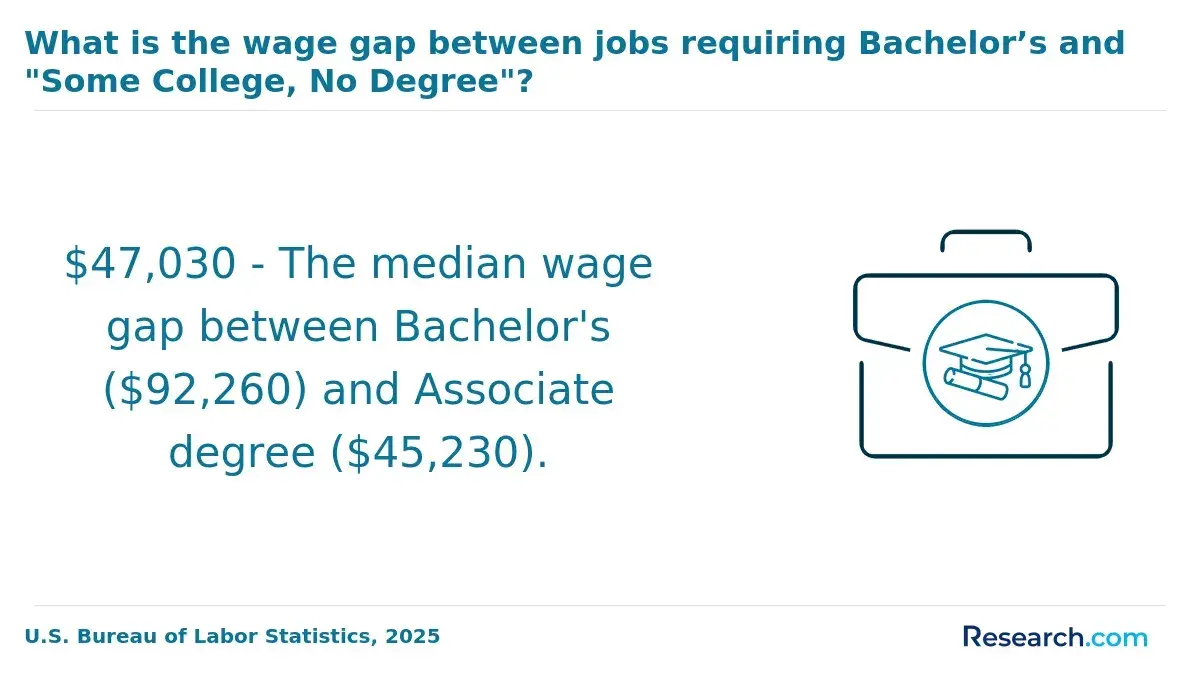
Choosing between associate and bachelor's degrees in legal studies for compliance roles involves balancing time, cost, and career objectives with employer expectations. Associate degrees, requiring about two years, are often preferred for entry-level compliance jobs such as paralegals or compliance assistants due to their shorter duration and lower tuition range.
For instance, community colleges charge roughly $3,500 to $9,000 annually for these programs, enabling a faster transition into the workforce.
In contrast, bachelor's degrees take approximately four years and typically cost between $9,000 and $50,000 per year depending on whether the institution is public or private. Employers increasingly favor bachelor's credentials for positions involving risk management or policy development, where comprehensive legal knowledge and analytical skills matter more.
Given that paralegals and legal assistants earn a median wage near $61,010, the associate degree pathway can be a cost-effective investment for those seeking rapid employment in compliance. However, professionals targeting higher-level compliance or regulatory roles should weigh the longer, costlier bachelor's route, which aligns better with advancement potential and complex job functions.
Prospective students with non-legal backgrounds might start with an associate degree for faster reentry, while those aiming at corporate compliance management often benefit from bachelor's programs for sustained career growth.
What salaries and job outlook can compliance-focused legal studies graduates expect?
Legal studies graduates targeting compliance roles encounter a salary range that heavily depends on experience, industry, and location. Entry to mid-level regulatory positions typically offer median salaries between $60,000 and $80,000, whereas specialized roles like administrative law judges or adjudicators can command median wages above $115,000 annually. These senior roles are concentrated in sectors with rigorous regulatory demands, such as healthcare and finance.
Advancement beyond initial positions requires more than academic credentials; practical experience and often licensing are essential. For example, securing adjudicatory roles involves navigating multifaceted credentialing processes and accumulating years of regulatory or legal work. This experiential threshold correlates closely with salary progression.
Employment opportunities and compensation often mirror geographic market density. Major financial and healthcare hubs like New York City, Washington D.C., and Chicago offer higher salaries but increased competition, whereas smaller markets may provide faster promotion paths at comparatively lower pay.
Employers increasingly prioritize candidates skilled in compliance technology and data analytics to manage evolving regulatory requirements effectively.
Key workforce considerations include:
- Specialization in niche regulatory areas improves job security and earning potential.
- Focused internships or fellowships accelerate experience acquisition necessary for credentialing.
- Understanding regional market variances helps tailor job search strategies.
Are certifications or licenses needed for healthcare and financial compliance roles?
Certification markedly influences employability and salary potential in healthcare and financial compliance, far outweighing the value of an MLS or comparable legal studies degree alone.
For healthcare compliance roles, certifications such as Certified in Healthcare Compliance (CHC) or Registered Health Information Administrator (RHIA) often serve as gatekeepers for managerial positions that command $80,000 to $120,000 or more. Without these credentials, candidates frequently remain confined to lower-tier roles despite having relevant academic qualifications.
Similarly, financial compliance professionals require certifications like Certified Regulatory Compliance Manager (CRCM) or Certified Compliance and Ethics Professional (CCEP) to validate expertise in regulation and risk management. Employers expect these credentials to ensure candidates possess applied knowledge beyond foundational legal studies, often mandating continued professional education to keep pace with evolving standards.
The absence of certification typically restricts healthcare compliance managers and financial auditors to entry-level roles, with limited upward mobility. Those planning educational pathways should integrate certification timelines immediately after degree completion to minimize employment delays and optimize career traction.
The real-world cost of foregoing certification can be a $20,000 to $30,000 salary deficit compared to credentialed peers.
Other Things You Should Know About Legal Studies
A strong program should include HIPAA, the Affordable Care Act, AML/BSA rules, SEC and FINRA compliance, and internal controls. Look for at least 120 credit hours with coursework in regulatory analysis, risk management, and ethics, plus practical training in case analysis and policy drafting.
Yes. Programs with structured internship placements or strong industry partnerships significantly improve job placement odds and provide practical exposure to real compliance challenges. Legal studies degrees without these connections can leave graduates less competitive, as compliance roles rely heavily on demonstrated experience with specific regulatory environments. Prioritize programs that integrate hands-on compliance work or mentorship from professionals active in healthcare or financial sectors.
Transitioning directly is possible but limited to entry-level compliance positions. Employers typically prefer candidates with relevant experience due to the nuanced nature of healthcare and financial regulatory compliance. Graduates without work history should seek internships, volunteer roles, or certifications post-degree to build practical skills. Without these, the initial job search will be more difficult, and career progress slower.
References
- Legal Courses for International Students | Online Courses https://www.collegalpractice.com/for-students/international-students
- Legal degrees 101: What you need to know about studying law in 2023 https://www.groupadvtech.com/legal-degrees-101-what-you-need-to-know-about-studying-law-in-2023
- Online Graduate Certificate Programs in Health Law, Policy & Compliance https://www.mhaonline.com/programs/graduate-certificate-in-health-law
- How to Become a Compliance Officer: Guide for 2025-26 https://onlinemasteroflegalstudies.com/career-guides/how-to-become-a-compliance-officer/
- Top 20 Online Healthcare Law Degree Programs - Healthcare Management Degree Guide https://www.healthcare-management-degree.net/best/top-online-healthcare-law-degree-programs/
- Law School Blog | Articles on Lawyers, Degree Programs & Careers https://www.collegesoflaw.edu/blog/
- Master of Legal Studies in Healthcare Compliance | Western State https://www.wsulaw.edu/academics/master-of-legal-studies/
- Master of Legal Studies in Compliance, Business Law & Risk https://law.stmarytx.edu/academics/programs/master-of-legal-studies/compliance-law/
- Master of Science in Compliance Law https://www.nationalparalegal.edu/Compliance.aspx
- Become Certified | HCCA Official Site https://www.hcca-info.org/certification/become-certified