2027 Best Online Legal Studies Degrees for Career Changers

Co-Founder and Chief Data Scientist
Professionals seeking to switch into legal studies often confront the challenge of balancing rigorous coursework with existing career or family commitments. The sudden need to adapt to credential requirements and evolving employer expectations can stall progress or force career stagnation.
According to the National Center for Education Statistics, enrollment among adult learners in online higher education rose by over 14% in 2024, revealing a shift toward more flexible, accessible program structures. This matters because it reflects growing opportunities—but also heightened competition—for career changers who must carefully evaluate program flexibility, accreditation, and practical skills.
This article identifies and analyzes the best online legal studies degrees designed specifically to help career changers navigate these constraints effectively and make informed decisions that optimize career outcomes.
Key Things You Should Know
- Law-adjacent roles in compliance and paralegal sectors grew 12% from 2022 to 2024, outpacing traditional legal jobs and pressuring career changers to acquire specialized certifications beyond a bachelor's in legal studies to remain competitive.
- Major employers increasingly prioritize candidates with hybrid credentials combining legal studies and data privacy skills; absence limits opportunities, as 54% of hiring managers report such cross-disciplinary expertise as critical for entry-level roles.
- Average program costs rose 7% nationwide since 2023, disproportionately impacting mid-career pivoters who face wage stagnation during study; accelerated 18-month degrees show a better return on investment when measured against delayed workforce reentry penalties.
What are the best online legal studies degrees for career changers?
Efficient career transition into legal support roles hinges on selection of online legal studies programs that combine hands-on skill development with flexible delivery. For instance, a healthcare project manager moving into legal studies benefits most from coursework in healthcare law or compliance, leveraging existing domain expertise rather than purely theoretical curricula.
Such programs offering internships or practicums, even virtual ones, significantly strengthen employment prospects compared to those lacking experiential components.
Employers favor candidates holding certificates or bachelor's degrees accredited by the American Bar Association or regionally accredited institutions, valuing foundational knowledge in legal research, ethics, and litigation support. Certificates and associate degrees in paralegal studies provide quicker pathways to employment, though bachelor's degrees register higher for sustained career growth and eligibility for supervisory positions.
Among top accredited online legal studies programs for career transitions, decision-makers must weigh tuition, program length, and job market returns pragmatically. Legal occupations have a median wage over twice the national average, underscoring earnings potential if employment follows completion. Flexible scheduling like evening or asynchronous classes supports working adults but should not replace the value of externships for real-world experience.
Additional factors include state-specific licensing requirements and interdisciplinary options integrating legal studies with business or technology fields, which can enhance adaptability to shifting legal job demands. Analysis of online interdisciplinary studies tuition costs also informs balancing educational investment against realistic employment outcomes.
Are online legal studies degrees accredited and respected?
Employers in legal and paralegal roles frequently filter candidates by accreditation status, prioritizing degrees with recognized program approvals over unaccredited options. The respect and recognition of online legal studies programs hinge on whether those programs are accredited by agencies acknowledged by the U.S. Department of Education or the Council for Higher Education Accreditation. Without this validation, graduates face challenges in credit transferability, certification eligibility, and employer acceptance.
Accreditation not only affirms academic rigor but also shapes workforce outcomes. For instance, paralegal hiring managers often prefer candidates with ABA-approved or similarly accredited credentials, as these establish verified competency and relevant curriculum content.
Prospective students should weigh such distinctions carefully, especially when switching careers, since an online legal studies degree accreditation in the US affects both immediate job prospects and long-term career mobility.
Cost remains a major factor: public four-year colleges average $11,560 in-state tuition versus $29,150 at private nonprofits, reflecting a gap that online delivery can help bridge by lowering overhead. Yet program length, asynchronous versus synchronous formats, and practicum requirements vary widely and influence how quickly students gain applicable skills.
Career changers aiming for stable outcomes may also consider how specific fields translate to earnings; for example, examining the forensic science degree salary can provide insight into relevant salary benchmarks. This practical lens encourages evaluation beyond institutional branding toward measurable workforce relevance.
How do online and campus legal studies programs compare?
Choosing between online and campus legal studies programs requires assessing how each format aligns with employment realities and individual circumstances. The advantages of online versus campus legal studies programs hinge largely on lifestyle flexibility versus direct experiential learning. For instance, campus programs provide richer in-person interaction and mentorship opportunities valued in compliance roles where interpersonal skills influence employer decisions.
In contrast, online legal studies offer asynchronous learning that suits working adults balancing jobs and family, particularly those pivoting from sectors like retail or healthcare.
A notable tradeoff is the need for self-driven internship arrangements in online programs since they often lack embedded practicum components common in traditional education.
An online student aiming to enter corporate legal departments must independently secure remote or local internships to remain competitive alongside campus peers. Cost efficiency also factors in, with online degrees frequently priced 20-30% lower and offering accelerated enrollment timing.
Understanding the differences between online and traditional legal studies education is critical when considering job market expectations. Some regional legal employers prefer candidates with conventional education pedigrees, making program choice an operational decision influenced by local hiring patterns. Successfully transitioning careers demands not only coursework completion but also targeted internships and proactive networking.
For those interested in affordable and adaptable options, there is useful data on master's in forensic psychology online programs that share similar flexibility considerations.
What courses are included in an online legal studies degree?
Legal studies degrees aimed at mid-career changers must go beyond foundational knowledge to equip students with skills that directly meet employer demands. Core subjects in online legal studies degrees for career changers typically cover criminal law, constitutional law, contracts, torts, and civil procedure.
However, critical differentiators include legal research and writing courses that emphasize drafting precise documents and interpreting statutes—skills necessary for workflows involving case briefs or regulatory filings.
The practical application of specialized electives—such as family law, business law, intellectual property, and ethics—often determines a graduate's fit for sectors like corporate compliance or healthcare law. Analytical courses in legal reasoning and evidence train students to critically evaluate case details, aligning with employer expectations for precision in negotiations and case preparation.
For example, professionals transitioning from unrelated fields must often balance legal theory with pragmatic skills, especially as employers increasingly rely on legal databases and e-discovery software proficiency.
Meeting the needs of nontraditional students is essential given 46.7% of U.S. undergraduates were age 25 or older in 2024. Programs that support part-time enrollment, asynchronous coursework, and accelerated tracks reduce barriers for those managing work and family commitments alongside education.
These flexible formats reflect a realistic tradeoff: accelerated pathways demand intense focus but better align education duration with faster entry into legal roles.
When evaluating this pathway, consider workforce implications such as how gaining legal tech skills can impact roles and pay. For context on related job market trends, reviewing data like the sports analytics salary benchmarks can illuminate cross-domain demand for analytical expertise applicable beyond strictly legal roles.
What admissions requirements do online legal studies programs have?
Admission standards for online legal studies programs reveal the tension between accessibility and readiness for a profession grounded in precision and ethical responsibility.
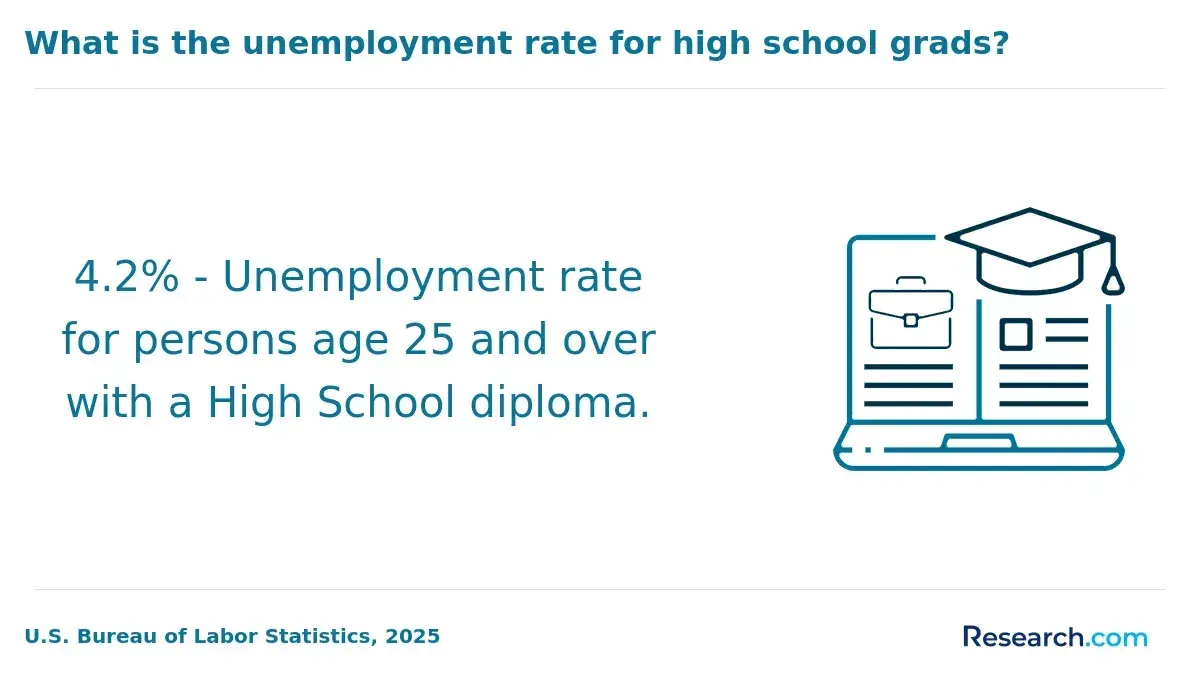
While a high school diploma or equivalent is universally required, degree tracks aimed at career changers often waive standardized tests such as the SAT or ACT, unlike traditional programs at selective public universities. This matters because programs that do require these tests tend to emphasize academic rigor, reflecting employer expectations in legal environments.
Applicants should expect to submit a personal statement articulating a clear career pivot rationale, which serves as a practical screening tool for programs focused on committed candidates. Letters of recommendation are less common for fully online, career-oriented paths, shifting the emphasis to documented work experience and skills.
Transfer credit policies are a critical factor for working professionals balancing time and expense. Many institutions evaluate prior collegiate coursework, sometimes including law-related classes, enabling accelerated degree completion and reducing overall cost—particularly relevant given the average tuition of around $11,617 per annum at public universities offering online bachelor's programs. For example, paralegals earning a median wage near $60,040 can see return on investment within a few years if transfer credits shorten their program length.
Applicants with legal sector experience should prepare detailed resumes, as some programs require technology proficiency assessments or background checks, especially when internships are involved. These steps align admissions with the realities of digital learning and practical employability in legal professions.
How long does an online legal studies degree take to complete?
Completion times for an online legal studies degree vary significantly, shaped by real-world constraints like work commitments and prior academic credits. Full-time bachelor's candidates often finish in about four years, but accelerated tracks and transfer options can reduce this to two or three years, benefiting mid-career professionals seeking quicker transitions.
Conversely, part-time enrollment—common among working adults—may extend completion up to five or six years, reflecting the balancing act between income continuity and academic progress.
For compliance officers moving from unrelated sectors, part-time or hybrid delivery models offer the flexibility needed to retain employment while acquiring foundational legal knowledge. This pragmatic pacing supports a steady accumulation of both theoretical understanding and practical skills employers expect, though it demands disciplined time management and persistence to meet course requirements.
Programs integrating internships or capstone projects lengthen timelines but enhance employability through real-world application, a key consideration given the U.S. Bureau of Labor Statistics projects steady demand for compliance officers with legal training—roughly 24,000 openings annually and 4% growth through 2032.
Prospective students should critically assess their personal schedules, credit transfer eligibility, and employer expectations to select program timelines aligning speed with depth. Efficient degree completion may expedite labor market entry, but measured progression with experiential learning often yields stronger career trajectories.
How much do online legal studies degrees cost?
Cost considerations for online legal studies degrees hinge not only on tuition rates but also on time-to-completion tradeoffs that affect total expenses and opportunity costs. Public universities offer lower per-credit fees—typically $300 to $700 for in-state students—while private institutions can charge above $1,200 per credit, significantly increasing upfront costs.
Accelerated programs, such as American University's 12-month online Master of Legal Studies, reduce income loss by shortening study duration but require intensive weekly time commitments that may challenge working adults balancing multiple responsibilities.
Students evaluating these options need to factor in indirect expenses, including technology fees, textbooks, and examination costs, all of which contribute to out-of-pocket spending beyond tuition. Long program lengths also inflate hidden costs like childcare, commuting for hybrid models, and missed work hours.
Employers increasingly prioritize candidates from accredited programs that demonstrate practical legal competencies over mere cost-efficiency, reflecting labor market demands for relevant expertise and applied skills.
Key financial and strategic factors prospective students should assess include the following:
- Total tuition based on credit requirements and per-credit pricing
- Ancillary costs related to course materials and technology access
- Opportunity costs tied to program length and schedule flexibility
- Availability of employer tuition assistance or loan forgiveness options
The interplay of these variables shapes the real-world value of an online legal studies degree as a tool for workforce repositioning and credential advancement within competitive legal and regulatory sectors.
What jobs can you get with a legal studies degree?
Choosing a master's in legal studies (MLS) versus a juris doctor (JD) program hinges on balancing credential speed against career breadth. The MLS's 30-credit curriculum, usually completed within 12-24 months, equips professionals for roles such as paralegals, compliance officers, contract analysts, or legal research associates without the extensive time or financial investment required by a JD program, which demands 85-90 credits over three years.
This is particularly advantageous for those targeting compliance roles in sectors like finance or healthcare, where interpreting regulations efficiently is paramount.
Legal studies graduates can also pivot into legal technology support or policy analysis, applying their knowledge to operational decisions without bar exam constraints. Employers favor MLS holders for their ability to manage litigation documents, assist with contract negotiations, and support regulatory adherence in corporate or government environments.
However, MLS holders face limitations in eligibility for licensed attorney positions, which require a JD and bar admission. Job seekers must weigh the MLS's faster entry against the JD's more comprehensive scope and associated licensure.
Practical workforce outcomes often prioritize the MLS for regulated industry roles that demand rapid credentialing and specific expertise rather than broad legal practice.
What is the salary outlook for legal studies graduates?
Legal studies graduates face a labor market characterized by steady but modest growth, with a 4% expansion in job openings through 2032. This means roughly 48,800 new positions annually, primarily for roles like paralegals, legal assistants, and compliance officers who do not require a law degree.
Entry-level salaries typically fall between $45,000 and $55,000, but urban corporate compliance roles can push starting pay closer to $60,000 due to complex regulatory environments in sectors such as finance and healthcare.
Advancement relies heavily on accruing relevant credentials such as Certified Paralegal (CP) or Certified Compliance and Ethics Professional (CCEP), which can boost salaries by 10-20% within five years. The government and nonprofit sectors generally offer lower initial compensation but compensate with greater job stability and benefits.
Practical technical skills—like document management and e-discovery software proficiency—are increasingly prioritized over academic knowledge alone.
Career changers must weigh the time and financial investment required for certifications against the moderate income growth potential inherent in legal studies roles. Success often comes through strategic internships and professional networking targeting specific job openings.
Employers value demonstrated ability to manage regulatory research and compliance tasks, making continuous skill development essential for competitiveness in a labor market that grows slower than average.
Which certifications or licenses may legal studies graduates need?
Legal studies graduates pivoting careers must align credential choices with their target roles to avoid underemployment or stagnant wages. Most legal support and compliance positions do not require bar admission but do demand certifications like Certified Paralegal (CP) or Professional Legal Secretary (PLS), which validate specialized skills and enhance employability within law firms or corporate legal teams.
For those aiming at courtroom roles or attorney status, the state bar exam remains essential, involving rigorous law school completion and meeting jurisdiction-specific character and fitness standards. For example, a career changer moving from online legal studies into corporate compliance should seek certifications such as Certified Compliance & Ethics Professional (CCEP) that prioritize regulatory expertise rather than courtroom qualifications.
Alternative credentials in mediation or dispute resolution provide additional paths focused on negotiation without requiring law licenses. However, bypassing recognized certifications risks competitiveness, particularly as nearly 60% of U.S. employers now accept online legal studies degrees at parity with traditional ones—yet demand clear proof of competence through relevant licenses or certifications.
Graduates must weigh time, cost, and jurisdictional barriers, balancing the foundational value of online legal studies against the necessity of external professional credentials to remain viable and competitive in regulated sectors.
Other Things You Should Know About Legal Studies
Online legal studies programs vary widely in how much practical skills training they include. Those that integrate internships, simulated casework, or interactive assignments better equip students for real workplace challenges. Programs emphasizing only theoretical content may leave graduates less prepared for employer expectations around critical thinking and procedural tasks, which limits immediate job readiness.
Career changers should verify whether the program is ABA-approved, because the ABA accredits law schools and sets bar eligibility in most states. They should also check their state’s Board of Bar Examiners, since some states require additional course or residency rules before bar admission.
Specialized legal studies degrees aligned with in-demand areas like compliance, paralegal work, or dispute resolution often create clearer career pathways. Broad degrees provide foundational knowledge but may require further certifications or training to stand out. Career changers targeting a specific legal niche should prioritize programs with relevant specializations, improving employer recognition and immediate applicability of skills.
References
- BA in Legal Studies https://www.umassglobal.edu/academic-programs/ba-legal-studies
- Best Online Law Programs for Practical Learning - https://lexmatter.org/blog/
- Online Bachelor in Legal Studies (BSLS) Degree https://www.southuniversity.edu/online/degrees-programs/criminal-justice-and-legal-studies/legal-studies-bs
- Related Law and Legal Degrees https://onlinemasteroflegalstudies.com/law-degrees/
- Job Outlook for Lawyers in the Current Market https://nbi-sems.com/blogs/news/job-outlook-for-lawyers
- Online Bachelor's Degree: Legal Studies https://www.umgc.edu/online-degrees/bachelors/legal-studies
- How Long Does It Take to Get a Law Degree Online? - St Francis School of Law https://stfrancislaw.com/blog/how-long-does-it-take-to-get-a-law-degree-online/
- Career Alternatives for Lawyers https://nationalmagazine.ca/fr-ca/articles/the-practice/young-lawyers-b01558758c6eace43ea01f1b1bcf6e36/career-alternatives-for-lawyers
- Best Online Master of Studies in Law Programs for 2025 https://www.princetonreview.com/law-school-rankings/best-online-master-studies-in-law-programs