2027 Online Legal Studies Degrees for Students Who Want Legal Operations Roles

Co-Founder and Chief Data Scientist
Facing a shifting legal workplace, many aspiring professionals aiming for legal operations roles encounter a stark challenge: finding flexible, credible degree programs that align with unpredictable work schedules and rapidly evolving employer expectations. The National Center for Education Statistics reports that over 40% of undergraduate enrollees participate in some form of online learning, reflecting a decisive shift toward remote education that directly benefits working adults and career changers.
Yet not all online legal studies programs offer the specialized operational training or employer recognition needed to navigate complex compliance and process management tasks. This article evaluates online legal studies degrees tailored to legal operations careers, providing actionable guidance on program selection, practical skills acquisition, and career alignment.
Key Things You Should Know
- Undergraduate legal studies degrees average a 22% lower immediate postgraduation salary than paralegal certifications but provide broader long-term career flexibility, impacting strategic cost-benefit calculations for career changers, per 2024 NACE data.
- Employers increasingly prioritize hands-on e-discovery and contract management experience over purely academic credentials, with 63% of legal operations roles requiring documented practical internships per ILTA's 2024 workforce survey.
- Online legal studies programs with ABA-aligned curricula offer a 30%-40% tuition premium but reduce time-to-employment delays by integrating real-time client projects, significantly affecting workforce entry timing, as found in Clio's 2024 Legal Trends Report.
What is an online legal studies degree and how does it support legal operations careers?
An online legal studies degree programs for legal operations target the intersection of law and business process efficiency, focusing on skills critical to modern legal teams, such as contract management, compliance monitoring, and legal project management. The notable 320% increase in legal operations job postings in 2025 signals growth tied to corporate and legal departments seeking operational proficiency rather than traditional law practice expertise.
Practical competencies like vendor management, e-discovery, and technology integration learned through these programs position graduates for roles where legal acumen must merge with data analytics and workflow automation to reduce operational costs and accelerate contract cycles. Such skills reflect employer expectations that go beyond foundational law knowledge toward proven command of legal software platforms and reporting methods.
Students evaluating online legal studies degree programs for legal operations should prioritize curriculum relevance, emphasizing courses in legal technology tools, business law, and compliance regulations. The pathway typically suits entry to mid-level roles and demands supplementation with internships or direct experience to remain competitive, especially since advanced degrees or certifications are increasingly valued for upward mobility.
Given the diverse industry applications in finance, healthcare, and technology, prospective students can also consider paralegal online programs to complement or accelerate their career entry, depending on their professional goals and prior education.
What types of online legal studies degrees prepare students for legal operations roles?
Effective online legal studies degrees for legal operations careers address a specific market mismatch: candidates must blend legal knowledge with operational competencies such as process improvement and data analytics to meet employer requirements. Hiring data reveals the top skills requested in legal operations roles: process improvement (2,840 postings), data analytics (2,650), vendor management (2,380), project management (2,290), and legal technology (2,150).
Programs labeled as the best online legal studies programs preparing for legal operations roles integrate business analytics and technology modules, ensuring graduates can handle vendor relationships and optimize workflows. Practical, hands-on experience with legal tech tools and project management software correlates strongly with job readiness. Conversely, traditional degrees focused narrowly on law often leave gaps that require additional employer training.
A relevant example: a legal operations role in a technology firm demands simultaneous expertise in legal compliance and software lifecycle management. Candidates with combined legal and operational skills reduce onboarding time and contribute directly to process efficiency, a preference among employers. Prospective students should scrutinize programs' curriculum alignment with legal operations job descriptions to avoid unnecessary skill deficits.
For those weighing educational investment, understanding the criminal justice degree price provides insight into costs that indirectly relate to legal studies program pricing models, assisting in comparing total educational expenses realistically.
How do online legal studies programs compare to campus-based options for legal operations?
Choosing between online legal studies versus campus programs for legal operations involves critical tradeoffs centered on experiential learning and networking. Campus-based options typically offer embedded internships and direct connections to local legal departments, benefiting candidates pivoting from fields like healthcare compliance into legal operations by integrating hands-on project experience vital for employer-ready skills.
In contrast, the benefits of online legal studies degrees for legal operations careers lie chiefly in schedule flexibility, which suits professionals balancing work and study. However, these programs require proactive pursuit of virtual internships and remote networking to compensate for limited in-person interaction that is essential for relationship-building and mentorships valued in mid- to senior-level legal operations roles.
Salary ranges reported by the 2026 Robert Half Legal Salary Guide indicate legal operations specialists earn between $74,750 and $99,500, while contract managers make $69,000 to $106,250 annually. These figures emphasize that measurable skills and real-world experience outweigh the mode of degree delivery for market competitiveness. For instance, an online student who supplements coursework with relevant certifications and practical experience can offset the absence of campus-based immersion.
Key considerations include:
- Campus programs better support employer connections and mentorships relevant to legal operations.
- Online programs offer schedule flexibility but require deliberate effort to acquire practical skills and network remotely.
- Program choice should align with the candidate's current job status, learning style, and access to industry immersion.
For related career insights, learn more about related sources, such as 'How much do forensic psychologists make?'
What accreditation should online legal studies programs have for legal operations careers?
Accredited online legal studies programs for legal operations candidates must meet rigorous regional accreditation standards recognized by the U.S. Department of Education or CHEA, as this directly affects credit transferability, employer acceptance, and eligibility for federal aid. Unlike JD programs, purely legal studies degrees rarely hold American Bar Association (ABA) accreditation, but the best accreditation standards for legal operations degrees online emphasize practical competencies over theoretical focus.
Employers typically look for training that aligns with contract lifecycle management, compliance tracking, and operational efficiency within corporate legal teams, especially in finance and technology sectors. Workers pursuing online legal studies should prioritize programs integrating technology tools and analytics with strong industry alignment, as these provide clearer pathways for advancement compared to credentialing from non-accredited or for-profit schools, which can hinder career progression.
For example, a professional moving into a corporate legal operations role may face challenges if their education lacks recognized accreditation, slowing the validation of their skills by employers. From a cost perspective, legal operations students benefit from programs with tuition comparable to other U.S. graduate offerings rather than JD programs, which carry substantially higher expenses.
Students can explore detailed cost comparisons, including how accredited programs impact ROI, through resources like animal science degree online tuition guides, which outline typical fees for accredited online degrees. Verifying accreditation on official oversight websites and assessing alignment with current legal operations demands ensures that online legal studies degrees deliver relevant skills and increase employability in competitive markets.
What courses and skills do online legal studies majors cover for legal operations work?
Majors focused on legal operations combine legal knowledge, technology skills, and business management to meet employer demand for hybrid expertise. Such programs emphasize courses in legal research, contract law, and compliance frameworks, essential for managing complex regulatory environments. Proficiency with legal technology-like e-discovery platforms and legal analytics-is crucial for improving efficiency within law firms or corporate legal departments.
Operational coursework in project management and process optimization aligns legal service delivery with budget controls and vendor oversight. Risk management and ethics training develop the judgment necessary to navigate increasingly intricate compliance challenges. Quantitative skills, including financial literacy and data analysis, are integrated to support measurable performance outcomes in legal operations roles.
Real-world scenarios distinguish effective programs by simulating tasks such as contract lifecycle management or legal spend forecasting. For instance, legal operations professionals in healthcare must handle HIPAA compliance and insurance claims, while those in technology sectors often focus on intellectual property management and software licensing.
The Bureau of Labor Statistics forecasts approximately 83,800 openings annually in legal fields through 2034, with a median wage near $100,000. These figures reflect strong market demand for professionals who can bridge legal expertise with operational acumen-highlighting the importance of selecting curricula that balance these dimensions effectively.
What are typical admission requirements for online legal studies degrees?
Admission into online legal studies programs often balances minimal barriers with a focus on practical preparedness, reflecting workforce realities where formal credentials are only part of the value proposition. High school completion remains the baseline, but many programs emphasize professional experience, especially in administrative or paralegal roles, as an alternative to traditional prerequisites.
This accommodates career pivoters and non-traditional students attempting to leverage existing skill sets rather than starting from scratch. Standardized testing requirements like the SAT or ACT are largely waived, easing entry for working adults. However, applicants usually must provide a personal statement addressing their career intentions, which serves to evaluate motivation beyond academic metrics.
Because 29% of legal operations directors have no formal legal education, such assessments help identify candidates with relevant real-world insight. Some programs require proof of English proficiency for international students and may impose background checks tied to internships or experiential components in sensitive legal settings. Demonstrating technological readiness for rigorous online coursework is another frequent condition, ensuring candidates can handle digital learning demands.
- Proof of secondary education or equivalent
- Relevant work experience as a substitute for formal prerequisites
- Clear career intent outlined through essays
- English proficiency for non-native speakers (when applicable)
- Background checks for programs with experiential requirements
In practice, admissions criteria in legal studies programs reflect a tradeoff between formal academic certification and practical competence, prioritizing applicants who demonstrate both career alignment and the capacity to manage online study demands.
How long do online legal studies programs take and what do they cost?
Programs tailored for legal operations roles typically demand 12 to 24 months, influenced by part-time or full-time enrollment. Certificate paths generally align with the shorter timeframe, appealing to professionals seeking focused skill acquisition without extensive time investment. Degree routes, such as associate or bachelor's, require closer to two years due to credit requirements, which impacts those balancing ongoing employment.
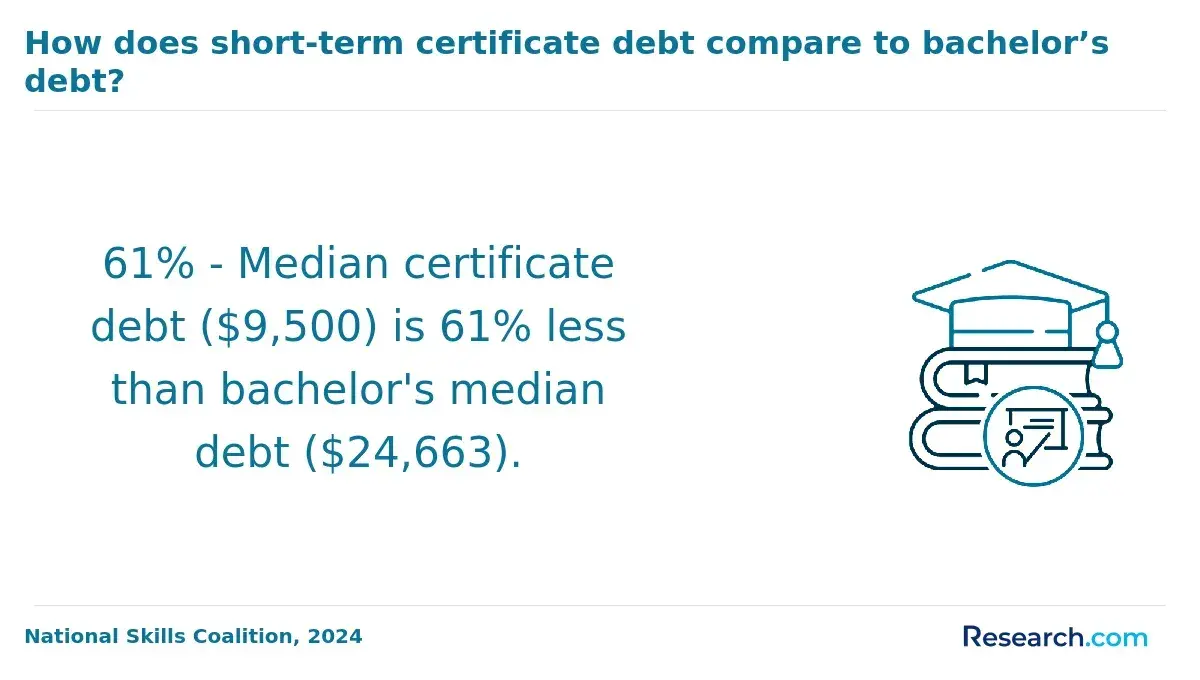
Cost considerations differ significantly by program type and delivery, with certificates ranging from $5,000 to $15,000 and full degrees between $10,000 and $40,000. While bootcamps offer lower upfront investment, they often lack the comprehensive training preferred by employers facing the legal sector's increasing technology integration.
Employers prioritize candidates proficient in legal technology and operational workflows. Gartner forecasts legal tech expenses will consume about 12% of in-house budgets by 2025, and up to 20% of generalist lawyer roles will shift to operational staff by 2024. For example, corporate legal teams expanding their operations seek individuals with practical exposure to contract lifecycle and compliance software within at least a one-year program.
Prospective students must consider the tradeoff between program length and weekly time demands, especially if enrolled in accelerated tracks, which may conflict with full-time jobs. Financial aid and employer tuition support can alleviate costs but require thorough eligibility verification and alignment with industry recognition.
What legal operations jobs can you get with an online legal studies degree?
Occupations accessible with an online legal studies degree often demand a blend of legal knowledge and operational competence rather than full law licensure. Roles such as compliance analyst or contract administrator typically focus on regulatory adherence and transactional proficiency rather than courtroom advocacy, leading to specialized job functions in healthcare, finance, and technology sectors.
For example, compliance managers, who enforce regulatory frameworks alongside corporate policies, command average salaries near $101,000 annually according to DePaul University's 2024 labor market analysis. Contract administrators support procurement and sales departments by ensuring contract compliance, a function requiring detailed legal literacy but not the comprehensive analysis expected of attorneys.
Similarly, human resources managers use legal studies expertise to navigate employment law complexities, potentially earning around $139,000 per year. This intersection of HR and legal frameworks illustrates how the degree enables mid-career professionals to pivot toward roles emphasizing legal compliance and operational management.
Employers prioritize candidates who can combine continuous regulatory learning with practical skills like data management and project coordination. The marketplace offers moderately competitive salaries averaging $93,607 for top legal studies master's aligned positions, but the field's evolving nature demands ongoing upskilling to remain relevant and advance. Candidates should weigh these practical workforce expectations against the degree's focus on transactional and administrative legal functions.
What salary ranges and job outlook can legal operations graduates expect?
Legal studies graduates aiming for roles in legal operations face starting salaries between $65,000 and $90,000, with mid-career earnings commonly spanning $100,000 to $140,000 depending on industry and expertise. This variation is not only influenced by legal knowledge but also by proficiency in legal technologies and project management-skills increasingly prioritized by employers.
Industries beyond traditional law firms, including finance, insurance, healthcare, manufacturing, retail, public administration, and real estate, actively recruit candidates with versatile legal and operational skills. For instance, a legal operations specialist in healthcare focusing on compliance and contract oversight may earn $85,000 to $110,000, driven by regulatory demands, while a legal project manager in professional services might surpass $120,000 by streamlining vendor relationships and service delivery.
Job growth for roles related to legal operations is projected above 7% over the next five years, outpacing broader legal occupations. This reflects business investments in cost-effective legal service models that blend legal expertise with operational efficiency. Graduates should anticipate challenges such as mastering compliance software, navigating specialized regulations, and communicating effectively across legal and business functions.
Certifications in legal project or contract management can enhance stability and salary potential. A strategic approach to acquiring interdisciplinary skills aligns best with employer expectations and nontraditional career pivots into sectors like manufacturing or retail, where legal counsel is often limited but contract scrutiny remains critical.
How can students choose a reputable online legal studies program for legal operations?
Jobs in legal operations increasingly demand skills beyond traditional legal knowledge, emphasizing project management, technology use, and data analytics. As LawCrossing's 2025 index reveals, startup legal operations job postings have nearly quadrupled since 2019, reflecting rapid growth in tech-driven legal roles. This means program choice must be strategic, focusing on alignment with these evolving employer expectations rather than generic legal studies credentials.
For prospective students or professionals aiming to pivot, the practical value lies in programs that offer more than theory. Examples include training in contract lifecycle management and cross-functional coordination, essential for corporate legal operations roles where operational efficiency is critical. Conversely, startup-oriented candidates benefit more from education centered on agile project methodologies and technological adaptability.
When evaluating programs, consider these factors:
- Accreditation by recognized bodies ensures rigorous academic standards and broader employer recognition.
- Transparency in graduate job placement rates and employer partnerships signals reliable career pathways.
- Integration of experiential learning, such as practicums, bridges classroom knowledge with real-world legal operations challenges.
- Faculty expertise with direct legal operations or relevant industry experience is crucial to translate concepts into actionable skills.
- Flexibility and technological accessibility support working professionals balancing current roles with study demands.
Ignoring these nuances risks misalignment with actual labor market demands, diminishing return on time and financial investment in an online legal studies credential.
Other Things You Should Know About Legal Studies
Employers prioritize practical skills and demonstrated experience over the mode of study, but some still regard online degrees with cautious scrutiny, depending on the institution's reputation and accreditation. Graduates from well-established, accredited online programs are competitive, but those from less recognized schools may face additional hurdles in demonstrating their capabilities. Candidates should supplement their degree with internships, certifications, or relevant work experience to offset employer skepticism and highlight job readiness.
Part-time online legal studies programs offer flexibility, allowing students to balance work, personal commitments, and education. While this format might extend the completion time, it enables real-life application of skills and networking opportunities crucial for success in legal operations roles.
Students should build proficiency in e-billing, contract lifecycle management, and matter management systems. Employers often expect familiarity with Excel, document automation, and e-discovery platforms, because legal operations teams use these tools to track vendors, budgets, workflows, and compliance data.
Yes. Legal operations employers increasingly expect candidates to have certifications like Certified Legal Manager (CLM) or project management credentials that complement legal studies knowledge. These certifications validate practical skills and can compensate for gaps in an online curriculum's applied training. Prioritizing certifications relevant to targeted job functions enhances employability and signals a commitment to continuous professional development.
References
- Legal Operations Jobs for Your Team https://brightflag.com/resources/legal-operations-jobs/
- The 5 best legal operations certifications in 2025 https://juro.com/learn/legal-operations-certifications
- Pros and Cons of Getting a Legal Degree Online https://onlinemasteroflegalstudies.com/mls-degrees/pros-and-cons-of-online-legal-degrees/
- Top Online Pre-Law and Legal Studies Degrees and Certificates https://www.lawyeredu.org/online-degrees/
- Legal Studies Program https://cod.edu/academics/areas/legal-studies/index.html
- How to build a career in legal operations https://www.taylorroot.com/career-advice/how-to-build-a-career-in-legal-operations/
- Careers in Law - OJEN https://ojen.ca/en/youth-corner/careers-in-law/
- Career Portal https://careers.lodlaw.com/
- How to Become a Legal Operations Manager: Step-by-Step Guide https://www.sirion.ai/library/contracts/legal-operations-manager/
- Home https://www.legalstudies.com/