2027 Online Legal Studies Degrees That Help Build Governance Knowledge

Co-Founder and Chief Data Scientist
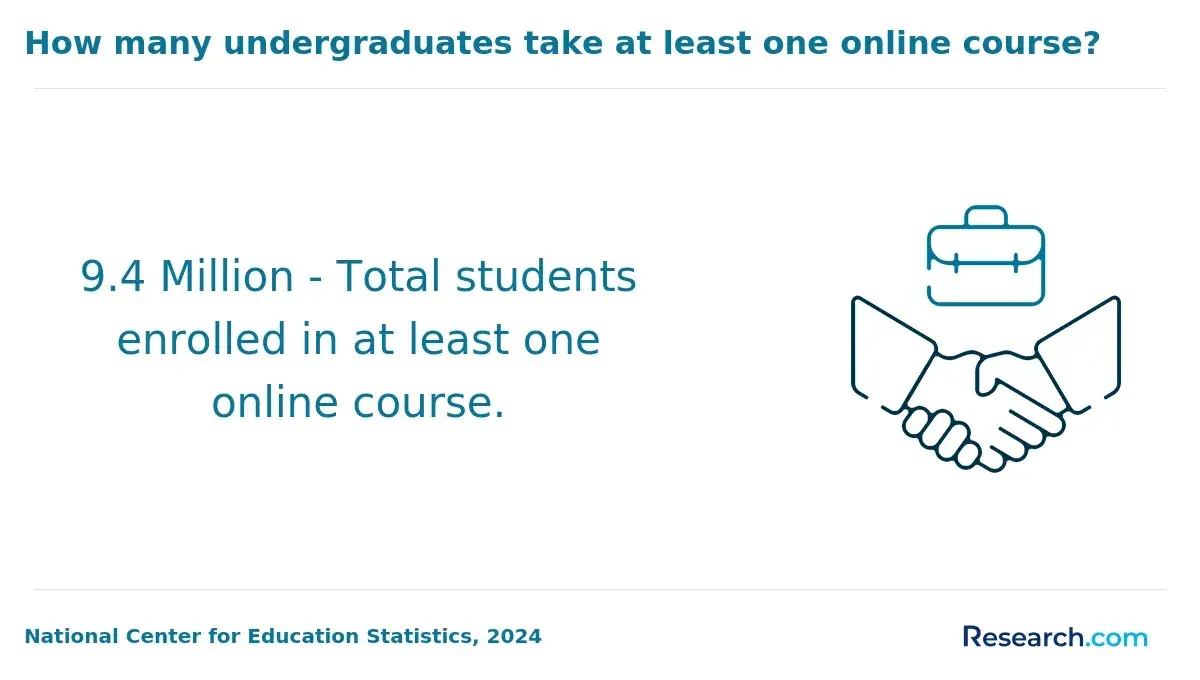
Professionals seeking to pivot into governance roles increasingly face a complex obstacle: acquiring specialized legal knowledge without disrupting current careers or personal commitments. With online higher education enrollment rising steadily-experiencing a 15% growth since 2023 according to the National Center for Education Statistics-flexibility in program delivery has become paramount for adult learners balancing multifaceted responsibilities.
This trend signals a shift toward prioritizing accessible, rigorous online legal studies that directly support practical governance expertise. Understanding which degree programs align with evolving workforce demands, accreditation, and skill applicability is critical for informed decisions. This article evaluates online legal studies degrees designed to enhance governance knowledge, aiding readers in selecting programs that optimize career mobility and practical impact.
Key Things You Should Know
- Online legal studies degrees incur a median tuition of $14,600 per year, exceeding comparable social science programs by 12%, pressuring students balancing opportunity costs against accelerated governance specialization timelines, according to NCES 2024 data.
- Employers prioritize candidates with compliance and regulatory coursework, as 62% of governance roles now require demonstrated knowledge in evolving federal frameworks, per recent SHRM workforce surveys, challenging learners without sector-specific legal credentials.
- Completion rates for these online programs average 48%, reflecting significant attrition linked to self-discipline demands and lack of synchronous mentorship, thereby increasing total time-to-employment and potentially diluting return on investment, per EDUCAUSE 2024 analysis.
What is an online legal studies degree and how does it support governance careers?
Online legal studies degrees position students to interpret complex regulatory frameworks essential for governance roles across sectors such as corporate compliance and public administration. A compliance officer in healthcare, for instance, must grasp federal regulations alongside company policies to manage risks effectively. These programs prepare students for governance roles by merging updated legal concepts with digital tools that foster technological adaptability, a skill increasingly demanded by employers.
Enrollment trends from the National Center for Education Statistics reveal that 78% of U.S. law-related students enrolled partially or fully online by 2024, reflecting institutional acceptance of distance learning for legal studies. Candidates pursuing these pathways balance the autonomy of online study with the need for programs that integrate practical exercises like case studies or regulatory simulations, which employers value for producing job-ready graduates.
Career pathways typically include policy analysis, contract administration, and regulatory affairs, where legal knowledge directly impacts governance oversight. However, advancing into senior governance roles often requires supplemental certifications or graduate education. The online format presents a cost-efficient, accessible entry point but demands self-discipline and critical selection of programs emphasizing real-world applications.
Prospective students may also explore related credentials such as the cheapest paralegal certificate online ABA approved to diversify qualifications. Such options can complement a legal studies degree and broaden governance career prospects.
How do online legal studies programs compare with on-campus options for quality and outcomes?
The quality of an online legal studies program hinges less on delivery mode and more on curriculum rigor and alignment with accreditation standards. With employer demand for corporate governance expertise rising 48% globally from 2018 to 2023, especially in legal, compliance, and financial sectors, program content determines graduate outcomes more than whether a degree was earned online or on-campus.
Programs that integrate real-world case studies, governance frameworks, and regulatory updates yield measurable employability benefits. For instance, a compliance officer in financial services gains essential skills through governance risk management courses available in both settings. However, students pursuing an online legal studies program quality comparison must carefully consider networking limitations, as virtual environments offer fewer immersive experiences than on-campus internships or face-to-face mentoring.
Employers prioritize demonstrated skills over educational format. Online students should actively seek virtual internships, legal clinics, and professional associations to offset reduced physical networking opportunities. Selecting programs offering synchronous sessions and interactive simulations improves practical readiness for governance-related roles.
Financial and time efficiencies make online pathways attractive for working professionals, but students must ensure access to support services like career counseling and industry connections to sustain long-term career growth. Those navigating this path can benefit from understanding how to become a profiler as an example of a specialized role merging legal knowledge and investigative skills.
What accreditation and institutional approvals should online legal studies degrees have?
Regional institutional approvals for legal studies programs online directly influence employability and credential portability in legal fields where regulatory oversight is stringent. Many states require that online legal studies degrees originate from institutions with proper state authorization to meet licensure qualifications for roles in governance, court administration, or compliance. Without accreditation from bodies recognized by the U.S. Department of Education, graduates risk delayed entry or outright exclusion from these roles, as employer screening heavily relies on verified academic quality.
Programmatic accreditation, such as from the American Bar Association for paralegal studies, is particularly relevant when candidates pursue certifications tied to specific legal jurisdictions or industry standards. Choosing a program lacking such approval narrows career options, especially in specialized sectors like healthcare legal governance or financial compliance, where credential recognition is non-negotiable.
Employment in U.S. legal occupations grew by 10% between 2020 and 2024, with roughly 71,500 openings projected annually through 2032. This demand corresponds with heightened employer scrutiny of academic credentials, emphasizing the need to assess accreditation standards for online legal studies degrees in the US with an analytical lens-not merely institutional prestige.
Among tradeoffs, cost-conscious students should explore online colleges for forensic science as a related pathway with distinct accreditation frameworks and employment outcomes.
What types of online legal studies degrees are available, from certificates to master's?
Choosing between online legal studies degree programs from certificates to master's requires weighing specific workforce demands against your available time and desired career outcomes. Certificate programs, lasting 6 to 12 months, target foundational skills like legal research and regulatory compliance, suitable for professionals seeking rapid specialization to enter governance roles such as compliance officer-a position that grew 16% between 2020 and 2024 with median earnings near $76,000. However, these certificates typically lack the depth necessary for advancing beyond entry-level jobs.
Associate degrees widen focus toward legal frameworks and administrative tasks, catering to career changers aiming for paralegal or legal assistant roles, though they impose ceiling limits on salary and specialization. Four-year bachelor's degrees combine theory with applied governance subjects, preparing students for mid-tier roles like compliance analyst or policy advisor but often require further credentials to access leadership.
Master's programs in legal studies or regulatory affairs are designed for managing complex regulatory environments and strategic governance, attracting mid-career professionals transitioning into supervisory compliance roles. The tradeoff includes higher tuition and time investment but yields median salaries exceeding $90,000 in specialized governance careers. Deciding on the right program involves realistic appraisal of job market alignment, time cost, and how governance specialization fits long-term goals.
For those exploring credential options including fields beyond legal studies, programs such as a Spanish online degree illustrate how selecting targeted online degrees with practical outcomes can optimize workforce entry.
What core courses and specializations in legal studies best build governance knowledge?
Core governance knowledge in online legal studies degrees hinges on courses like constitutional law, administrative law, corporate governance, and legal ethics. These subjects ground students in the legal frameworks that shape organizational accountability and public policy execution. Specializations in compliance, regulatory affairs, and public policy sharpen analytical skills needed to navigate complex regulatory environments, an essential competence for governance roles in both private enterprises and government agencies.
Consider regulatory compliance in financial services, where mastery of administrative law and corporate governance directly impacts risk management and adherence to shifting regulations. Conversely, nonprofit governance demands proficiency in ethics and public policy to ensure transparency and alignment with diverse stakeholder demands. Employers in government and corporate legal departments commonly prioritize candidates who bring this layered understanding, which affects placement and career trajectory.
Cost considerations affect program choice notably since in-state tuition for online bachelor's legal studies spans $250 to $296 per credit, while out-of-state rates jump substantially to $554-$600 per credit. This considerable variance demands a careful cost-benefit analysis relative to expected outcomes and sector-specific job markets.
To maximize employability and real-world readiness, programs emphasizing experiential learning-such as governance-focused case studies or internships-offer distinct advantages. They translate academic theory into applied skills critical for roles in compliance, policy development, and organizational leadership.
What are typical admission requirements for online legal studies programs?
Admission prerequisites for online legal studies programs reveal more than academic gatekeeping; they reflect an alignment with workforce readiness and program rigor. Bachelor's degree applicants typically must present official secondary education transcripts and meet GPA requirements around 2.5 to 3.0, setting a baseline for analytical and communication skills. Associate and certificate options usually accept a high school diploma but may require foundational coursework in English or social sciences to build legal reasoning capacities.
Standardized tests such as the SAT or ACT are becoming optional in many admissions processes, yet competitive programs may still mandate them to gauge applicant preparedness objectively. Personal statements that clarify motivation and understanding of governance issues tend to be decisive in distinguishing candidates capable of navigating regulatory complexities. Letters of recommendation remain uncommon but are occasionally requested for advanced pathways emphasizing compliance or governance roles.
Notably, many programs prioritize relevant professional experience in fields like criminal justice or public administration. This real-world background can accelerate admission or confer credit, acknowledging the practical skills legal-governance employers require. With median salaries for lawyers near $145,760 and legal assistants at $60,970, early demonstration of competency aligns directly with employability outcomes and justifies rigorous admission filters.
Applicants should also prepare for identity verification, residency documentation, potential background checks, and proof of English proficiency when applicable. These steps ensure eligibility for certifications involving sensitive information and confirm technical readiness for online study environments.
How long do online legal studies degrees take and what do they typically cost?
Choosing between an associate degree and a bachelor's in legal studies significantly shapes career opportunities and timing, especially for compliance officers targeting public-sector roles where a bachelor's degree often serves as a baseline. An associate degree, typically two years full-time, can accelerate entry into the workforce, especially when paired with certifications or relevant experience. However, it may limit eligibility for advanced positions demanding broader regulatory understanding.
Bachelor's programs extend to four years but can be reduced with prior credits or accelerated formats. These longer programs offer comprehensive governance and regulatory frameworks favored by employers managing complex compliance landscapes, reflecting labor market growth reported by the U.S. Bureau of Labor Statistics.
Cost is a critical factor: public universities generally range from $4,500 to $7,500 annually for in-state online legal studies, totaling about $18,000 to $30,000 for a bachelor's. Private institutions exceed $20,000 per year, often surpassing $60,000 overall. Accelerated or competency-based models may save time but typically require upfront payment.
Online learners should also weigh challenges like self-discipline and securing internships or practicums, which are essential for applied experience in governance-focused curricula. Practical application remains a priority for employers over theoretical knowledge alone, influencing hiring decisions and long-term career viability.
What careers can an online legal studies degree lead to in law, policy, and governance?
Employers increasingly prioritize graduates who can navigate complex regulatory environments, especially as job postings tied to ESG and corporate governance more than doubled from 2019 to 2024. This shift impacts hiring mostly in Europe and North America, with a growing demand for legal studies graduates able to apply governance knowledge in practical contexts.
Graduates often join corporate compliance teams where they develop and enforce policies that align with evolving regulations and ESG standards. For instance, a graduate working in a financial regulatory agency directly interprets securities laws and governance codes to ensure market integrity-a responsibility that extends well beyond traditional paralegal duties.
Candidates lacking hands-on legal research or policy drafting experience may face barriers unless they supplement their education with internships or certifications. Professionals balancing work and study should seek programs offering integrative practicum opportunities or partnerships with regulatory entities to enhance employability.
Key career pathways include:
- Corporate compliance officer roles focusing on ESG reporting and regulatory adherence
- Governance analyst positions in public and private sectors interpreting policy impact
- Policy advisor jobs within governmental or non-governmental organizations shaping legal frameworks
- Regulatory affairs specialist roles in industries like healthcare, financial services, or energy
What salary ranges and job outlook can legal studies graduates expect in governance roles?
Governance roles for legal studies graduates often entail navigating varied salary landscapes shaped by sector and experience, with entry-level positions starting between $55,000 and $75,000 annually and mid-career salaries reaching $110,000 in high-demand areas such as financial services compliance. Local government jobs may offer less, reflecting different organizational priorities. Forecasted job growth of roughly 6% indicates steady demand influenced by increasing regulatory complexity and accountability expectations.
Practical trade-offs include the need to acquire credentials like Certified Compliance & Ethics Professional (CCEP) or risk management certifications to advance beyond initial roles. Candidates who leverage legal studies alongside governance knowledge-especially those shifting from legal support to management-position themselves competitively but must weigh credentialing costs and time commitments.
Accessibility is a critical factor for working professionals, with some online programs offering flexible, cost-conscious tuition-such as Liberty University's $395 per credit doctoral law-and-policy courses aimed at military students-facilitating career pivots without income disruption. However, program affordability and format should be scrutinized carefully to avoid financial strain.
Employers expect proficiency not only in regulatory frameworks but also in data privacy, emphasizing the value of internships and targeted experience. Graduates combining legal studies and governance expertise are often tasked with compliance audits, policy development, and risk mitigation, underscoring the importance of practical skills for negotiating salary and selecting educational paths aligned with realistic job market conditions.
How can students evaluate and choose a reputable online legal studies program?
Program accreditation and workforce alignment are decisive factors when selecting an online legal studies degree aimed at governance expertise. Regional accreditation is fundamental to employer recognition and qualifying for federal aid, while specialized accreditation from entities like the American Bar Association signals a curriculum geared toward governance applications. Graduates should scrutinize employment outcomes, particularly in compliance, regulatory affairs, or public administration roles, where applied governance knowledge is essential. For instance, professionals transitioning from healthcare administration into compliance officer roles need programs emphasizing regulatory frameworks and risk management over abstract legal theory.
Curriculum transparency matters: verify the proportion of experiential governance training through case analysis, internships, or simulations. Programs offering more than 30% practical exercises tend to produce better job-ready skills. Tuition exceeding $20,000 demands clear career ROI, such as partnerships with employers or eligibility for relevant certifications. Flexible scheduling-part-time options or cohort-based synchronous sessions-also influences networking and readiness for governance roles.
Program scale and diversity reflect an institution's capacity to incorporate emerging governance challenges in law, like environmental compliance or cybersecurity regulations updated to 2024 standards and beyond. By 2025, there were at least 11 dedicated online governance degrees worldwide, demonstrating growing specialization. Authentic alumni engagement and high graduate employment in governance roles within 12 months serve as confirmatory indicators of program relevance.
Other Things You Should Know About Legal Studies
Many online legal studies programs require a capstone, legal clinic, or externship instead of a thesis. Typical requirements are 120 to 180 practicum hours, completed with a public agency, court, nonprofit, or compliance office, and approved by the program director before enrollment.
Online legal studies programs demand consistent self-discipline, as coursework often involves reading dense materials, writing detailed analyses, and engaging in time-sensitive assignments. Working professionals must carefully assess their time management skills and consider programs with flexible deadlines or part-time options. Balancing work, study, and personal life can significantly affect completion rates and overall success in governance-focused legal education.
Programs with governance-specific concentrations deliver targeted knowledge on regulatory frameworks, policy development, and organizational compliance, which directly benefit careers in public administration and compliance roles. For professionals aiming to influence or manage governance structures, these programs reduce the need for additional training post-graduation. When career focus is governance, prioritizing specialized curricula over broad legal studies provides clearer pathways to advancement.
References
- What Are the Requirements to Get Into Law School? https://www.purduegloballawschool.edu/blog/news/law-school-requirements
- Homepage https://onlinemasteroflegalstudies.com/
- Online Law School: Accreditation, Learning Design, And Outcomes https://professioneleidentiteit.nl/online-law-school-accreditation-learning-design-and-outcomes
- 10 Types of Law Degrees in India | Know the Different Types of Law Courses https://hindustanuniv.ac.in/blogs/types-of-law-degrees/
- Is Your Online Degree Legitimate? How to Verify Private University Approval https://matchtocollege.com/blog/verify-private-university-online-degree-approval
- ABA Approved!! https://paralegal.edu/blog/aba-approved/
- Bachelor of Science in Legal Studies - Colorado State University Global https://csuglobal.edu/academic-programs/undergraduate-degrees/bachelors-degree-legal-studies
- What Can You Do with a Bachelor’s in Legal Studies? | UMGC https://www.umgc.edu/blog/what-can-you-do-bachelors-legal-studies
- Law Degree Careers and Salary in Europe - StudyinEurope.eu https://www.studyineurope.eu/legal-sciences/law-degree-careers-salary-europe/
- Online Legal Studies Degrees https://www.affordablecollegesonline.org/degrees/best-online-bachelors-in-legal-studies-programs/