
2027 Which Communication Disorders Degree Careers Have the Lowest Unemployment Risk?

Co-Founder and Chief Data Scientist

Reviewed by Rhea Paul, PhD
SLP Education & Research Expert
A communication disorders degree can lead to stable work, but not every path carries the same unemployment risk. The strongest outcomes usually come from roles that combine persistent demand, required credentials, employer diversity, and services that cannot be easily automated or delayed. For many graduates, that points toward speech-language pathology, audiology, school-based services, healthcare settings, and specialized clinical areas such as dysphagia, pediatrics, neurogenic communication disorders, and augmentative and alternative communication.
This guide is for students choosing a concentration, bachelor’s graduates deciding whether to pursue graduate school, and early-career professionals comparing jobs by long-term stability rather than salary alone. It explains which communication disorders careers have historically shown lower unemployment risk, how public-sector and healthcare roles compare, why licensure matters, how geography changes opportunity, and where technology may reshape the field. The goal is practical: help you choose a path that is not only meaningful, but also resilient across economic cycles.
Key Things to Know About the Communication Disorders Degree Careers With the Lowest Unemployment Risk
- Historical unemployment rates for speech-language pathologists consistently remain below 4%-the combination of strong licensure requirements and nationwide demand underpins career stability.
- Ten-year demand projections exceed 25% growth-low automation vulnerability and recession resilience boost job security across varied geographic markets.
- Advanced graduate education and professional certification significantly reduce unemployment exposure-specialists in clinical audiology and speech therapy find enhanced opportunities in urban and underserved regions.
What Makes Communication Disorders Degree Jobs More or Less Resistant to Unemployment?
Communication disorders jobs tend to be more resistant to unemployment when they are tied to legally required services, licensed clinical practice, medical necessity, or school-based support obligations. They become more vulnerable when the work is optional, narrowly funded, geographically limited, or concentrated in tasks that technology can automate.
It is also important to separate different types of unemployment risk. Structural unemployment comes from long-term changes in how an industry operates, such as shifts in service delivery or technology. Frictional unemployment is the short gap between jobs, often caused by relocation, credential processing, or contract cycles. Cyclical unemployment happens when recessions or budget cuts reduce hiring. A career can have low overall unemployment while still exposing workers to short job-search periods or underemployment.
Key factors that lower unemployment risk
- Occupational licensing: State licensure and professional credentialing limit who can legally provide many services. This protects patients and students, but it also creates a labor-market barrier that reduces easy replacement.
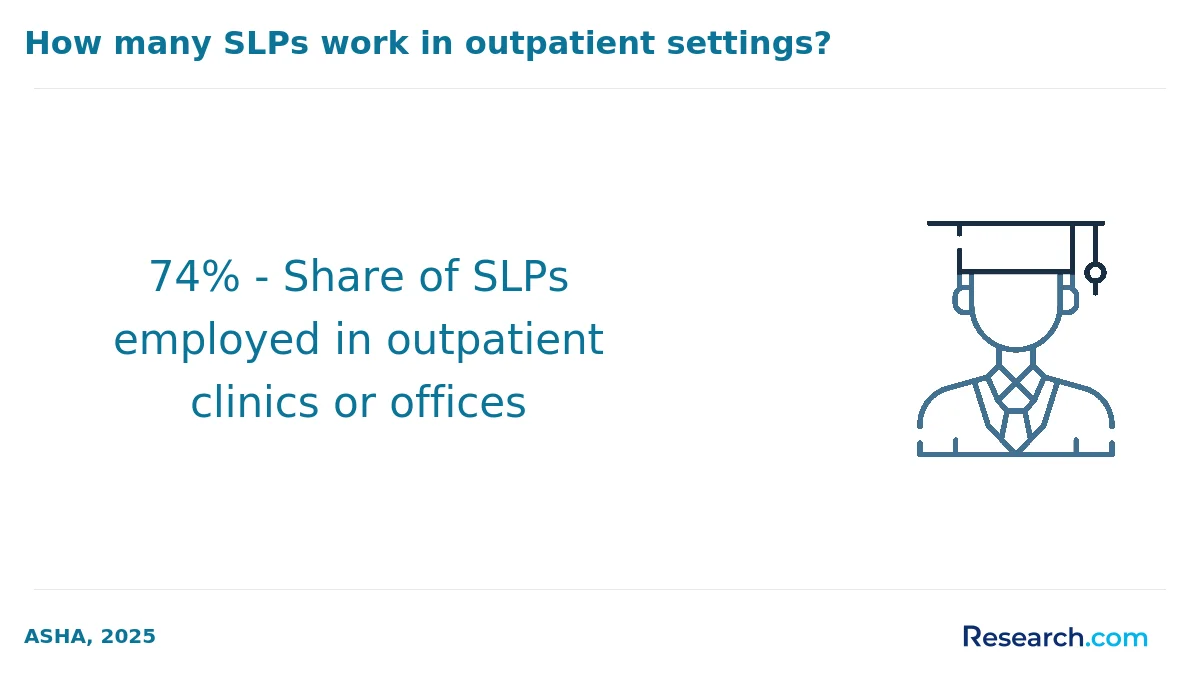
- Stable healthcare and education demand: Many communication disorders professionals work in hospitals, rehabilitation centers, schools, early intervention programs, and outpatient clinics. These services are often driven by aging populations, disability law, pediatric developmental needs, and medical recovery rather than discretionary consumer spending.
- Broad employer base: Careers are stronger when graduates can work across schools, hospitals, private clinics, government agencies, telepractice providers, and research settings instead of depending on one employer type.
- Low replaceability: Jobs that require in-person assessment, clinical judgment, individualized therapy planning, ethical decision-making, and family or team collaboration are harder to automate or outsource.
- Advanced specialization: Specializations such as audiology, pediatric speech-language pathology, dysphagia, AAC, and neurogenic communication disorders can shorten job searches because they match persistent employer needs.
- Geographic flexibility: Graduates willing to work in high-demand metro areas, underserved communities, or remote-capable roles usually have more options than those tied to a single local labor market.
The strongest career decisions use several indicators together: historical unemployment patterns, ten-year demand projections, licensure requirements, automation exposure, employer concentration, and regional job availability. Personal interest still matters, but it should be weighed against whether the role has durable demand and a realistic credential pathway.
Students comparing communication disorders with other regulated health fields may also find it useful to look at how admission barriers and workforce pipelines differ, including examples such as nursing schools with high acceptance rates.
Which Communication Disorders Career Paths Have the Lowest Historical Unemployment Rates?
The communication disorders careers with the lowest historical unemployment risk are generally those connected to licensed practice, essential healthcare or education services, and long-running shortages. Speech-language pathologists and audiologists are usually the most stable because employers cannot easily substitute uncredentialed workers for legally and clinically complex services.
Career paths with stronger historical employment stability
- Speech-Language Pathologists: Speech-language pathology has the strongest stability profile among common communication disorders careers. Demand is supported by school service requirements, rehabilitation needs, neurological conditions, pediatric developmental concerns, and the aging population. State licensure also limits oversupply.
- Audiologists: Audiologists benefit from specialized doctoral-level preparation, aging-related hearing loss demand, diagnostic complexity, and ongoing needs in clinical and educational settings. Limited program capacity and clinical placement availability help prevent rapid workforce expansion.
- Speech-Language Pathology Assistants: SLPAs can be stable where state rules allow their use and where schools or clinics need cost-effective support for large caseloads. Their risk is higher than that of fully licensed clinicians because scope of practice depends on supervision rules and local regulation.
- Clinical Audiology Technicians: These roles are supported by hearing screenings, device support, newborn screening programs, and occupational hearing services. Stability is strongest when technicians work under established audiology or medical programs and hold relevant training or certification.
- Assistive Technology Specialists (Communication Focus): AAC and communication technology roles are growing as schools, rehabilitation teams, and disability services expand access to communication tools. Job security is strongest for professionals who combine technology knowledge with clinical or educational expertise.
- Voice Therapists in Clinical Settings: Voice-focused clinicians can find steady work in hospitals, outpatient clinics, and specialty practices, especially when they are licensed speech-language pathologists with additional experience in medical voice disorders.
These career paths remained comparatively resilient through disruptions such as the 2008-2009 recession, the 2020 COVID-19 disruption, and the 2022-2024 labor market normalization. Their stability comes less from being recession-proof and more from being embedded in essential systems: healthcare delivery, special education, rehabilitation, and disability access.
Historical unemployment rates are useful, but they should not be the only deciding factor. A student should also examine projected growth, local demand, required credentials, practicum availability, and whether a role is vulnerable to funding changes. For comparison with another healthcare-oriented education path, readers may review nursing online programs to see how regulated fields can produce different forms of employment stability.
The safest approach is to choose a specialization that fits both labor-market evidence and your ability to complete the required credential pathway. A role with excellent employment prospects may still be a poor choice if the graduate degree, supervised hours, licensing process, or work setting does not match your goals and constraints.
How Does the Communication Disorders Job Market Compare to the National Unemployment Average?
Communication disorders degree holders generally face a lower unemployment rate than the national average for college graduates: about 1.3% compared to 2.5%. That difference matters because it can mean shorter job searches, fewer long employment gaps, and more predictable income over time.
The gap is driven by several structural advantages. Communication disorders services are often required in schools, medically necessary in healthcare, and protected by licensing rules. Employers also need trained professionals who can evaluate clients, document progress, communicate with families, and coordinate with teachers, physicians, and care teams.
- Employment stability: Demand is supported by aging-related conditions, pediatric speech and language needs, hearing loss, neurological injuries, and growing recognition of communication access.
- Underemployment risk: Low unemployment does not guarantee every graduate is in an ideal job. Some may start in assistant, technician, contract, or support roles that do not fully use their training.
- Small-field volatility: Because some communication disorders occupations are relatively specialized, annual unemployment figures can move noticeably from year to year. Multi-year patterns are more reliable than a single data point.
- Credential protection: Licensure and certification requirements make it harder for employers to replace qualified practitioners with lower-cost generalists.
- Graduate-level advantage: Advanced credentials often improve access to clinical, supervisory, and specialized roles that are less exposed to unemployment than bachelor’s-level positions.
One common pattern is that graduates may experience uncertainty early in the job search, especially when school hiring calendars, clinical fellowship timelines, or state licensing paperwork do not align neatly. Even so, many find that the field offers more employment continuity than less regulated majors. The practical takeaway is to plan for timing friction, not assume weak demand.
What Communication Disorders Specializations Are Most In-Demand Among Employers Right Now?
The most in-demand communication disorders specializations are those tied to persistent clinical need, school service requirements, aging-related care, and assistive technology. Speech-language pathology remains the central employment driver, but the strongest candidates often add focused experience in pediatric, medical, neurogenic, swallowing, voice, or AAC services.
Specializations with strong employer demand
- Speech-Language Pathology: Demand is broad because SLPs work across schools, hospitals, rehabilitation centers, outpatient clinics, skilled nursing settings, early intervention programs, and telepractice. Pediatric and geriatric experience can be especially useful.
- Augmentative and Alternative Communication (AAC): AAC specialists help individuals use communication devices, software, symbols, and access methods. Demand is supported by disability access expectations, special education needs, and advances in assistive technology.
- Swallowing and Dysphagia Therapy: Hospitals, rehabilitation centers, and long-term care settings value clinicians who can assess swallowing risk and support treatment plans for medically complex patients.
- Voice Therapy and Disorders: Demand comes from healthcare, professional voice users, and specialized clinics. This area rewards clinicians who understand vocal anatomy, rehabilitation, counseling, and interdisciplinary referral patterns.
- Early Intervention and Pediatric Communication Disorders: Universal screening, developmental monitoring, and school readiness concerns sustain the need for clinicians who can work with young children and families.
- Neurogenic Communication Disorders: Stroke, brain injury, dementia, and neurological disease create ongoing need for cognitive-communication and language rehabilitation in acute, post-acute, and outpatient care.
Demand is not uniform across the country. A specialization that is highly marketable in one region may be less valuable where employer networks, reimbursement patterns, school funding, or medical systems differ. Before committing to coursework or a clinical track, compare job postings in your target region, speak with supervisors during practicum placements, and review professional association salary and workforce reports.
For students weighing speed, cost, and workforce entry, it may also help to compare communication disorders pathways with broader education models such as accelerated career programs. The key question is not only which specialization is popular now, but which one gives you durable clinical value over time.
Which Industries Employing Communication Disorders Graduates Offer the Greatest Job Security?
The industries offering the greatest job security for communication disorders graduates are healthcare, educational services, government and public health, established private clinics, and research or academia. Each provides stability for different reasons, so the best option depends on whether you value predictable schedules, clinical variety, benefits, salary upside, or advancement.
Healthcare
Healthcare is one of the strongest sectors for long-term stability because communication disorders services are tied to diagnosis, rehabilitation, recovery, and ongoing patient care. Graduates may work as speech-language pathologists, audiologists, voice clinicians, dysphagia specialists, or rehabilitation team members in hospitals, outpatient centers, skilled nursing settings, and specialty clinics. The work requires evidence-based practice, careful documentation, collaboration with physicians and therapists, and state licensure.
Educational services
Schools and early intervention programs provide stable demand because speech and language services are often part of legally required student support. Professionals may evaluate students, deliver therapy, participate in Individualized Education Programs (IEPs), consult with teachers, and communicate with families. Job security can be strong, though workloads, caseload size, and funding conditions vary by district.
Government and public health
Federal, state, and local agencies employ communication disorders graduates in clinical, screening, program management, research, compliance, and community health roles. These jobs may offer strong benefits, formal job protections, and mission-driven work. Hiring can be slower, and advancement may follow structured civil service systems.
Private healthcare practices and clinics
Private clinics can offer autonomy, specialization, and faster movement into leadership or practice management. Job security depends on referral networks, insurance coverage, client volume, and business operations. Clinicians who combine strong clinical skills with documentation, billing awareness, and patient retention skills are better positioned.
Research and academia
Universities and research institutes can provide stable careers for graduates with advanced research training, particularly at the doctoral level. Roles may involve teaching, study design, grant writing, data analysis, and intervention development. Tenure systems can support long-term stability, while grant-funded roles may carry more uncertainty.
A common mistake is choosing an industry based only on the first available job. Cross-sector skills can reduce unemployment risk. For example, a school-based clinician who later gains healthcare documentation experience may have more options during district funding changes. A hospital clinician who understands pediatric service systems may be better prepared to move into outpatient or early intervention work.
How Do Government and Public-Sector Communication Disorders Roles Compare in Unemployment Risk?
Government and public-sector communication disorders roles generally have lower unemployment risk than many private-sector roles because they are supported by civil service rules, union agreements, public service mandates, formal budgets, and stable community need. The trade-off is that hiring can be slower, salary growth may be more structured, and role flexibility may be limited.
- Unemployment rate: Public-sector communication disorders professionals typically face less frequent job loss because many roles are tied to schools, public health agencies, veterans’ services, and community programs.
- Layoff frequency: Layoffs can happen during severe budget pressure, but they are often less sudden than in private-sector settings that respond quickly to revenue declines.
- Career tenure: Public roles often support longer tenure through pension plans, paid leave, formal grievance procedures, union contracts, and eligibility for public loan forgiveness.
- Federal roles: Federal agencies may employ clinicians, researchers, administrators, and program specialists. These jobs can offer strong protections and stable funding, but the hiring process may be competitive and slow.
- State and local roles: These positions often include school-based speech-language pathology, public health screening, early intervention, and community services. Stability is strongest where services are mandated and consistently funded.
- Public universities and research institutions: These roles can be stable, especially for permanent faculty or staff, but grant-dependent positions may vary with funding cycles.
- Quasi-governmental organizations: These employers may offer moderate job security and public-service missions, though benefits and protections may be less comprehensive than in fully governmental roles.
- Compensation trade-off: Private practice may offer higher immediate earning potential in some cases, while public-sector roles may provide stronger total long-term security through benefits, leave, pensions, and loan forgiveness opportunities.
The best choice depends on risk tolerance. Graduates who prioritize predictable employment, benefits, and defined responsibilities may prefer public roles. Those who want faster income growth, specialization, entrepreneurship, or flexible service models may prefer private settings, while accepting more exposure to market fluctuations.
What Role Does Licensure or Certification Play in Protecting Communication Disorders Degree Holders From Unemployment?
Licensure is one of the strongest protections against unemployment in communication disorders because it controls legal entry into practice. For roles such as speech-language pathologist and audiologist, employers generally need professionals who meet state education, supervised practice, examination, and licensing requirements. That makes licensed practitioners harder to replace during downturns.
Certification can also reduce unemployment risk, even when it is not legally required. Credentials such as the Certificate of Clinical Competence (CCC) from the American Speech-Language-Hearing Association (ASHA) often function as hiring filters. Employers may prefer or expect them because they signal clinical preparation, supervised experience, and professional standards.
How credentials protect employment
- Mandatory licensure: Required licenses restrict practice to qualified professionals, limiting competition and supporting service quality.
- Controlled labor supply: Because licensure requires education, supervised training, and exams, the workforce cannot expand instantly when demand rises.
- Employer compliance: Schools, clinics, hospitals, and agencies must meet legal, reimbursement, and quality standards, which helps sustain demand for properly credentialed staff.
- Non-mandatory certifications: Credentials such as ASHA’s CCC may improve competitiveness, especially for applicants seeking clinical, supervisory, or specialized roles.
- Credential sequencing: Graduates should prioritize the license required for legal practice first, then add certifications that employers in their target setting actually value.
The Bureau of Labor Statistics estimates a 17% growth for speech-language pathologists from 2025 to 2035, which reinforces the value of completing the credential path for those pursuing SLP roles. Students considering online graduate routes should verify accreditation, clinical placement support, state authorization, and licensure alignment before comparing slp online programs.
Licensure is not a guarantee of immediate employment, and it does not eliminate regional shortages or hiring delays. Still, it creates a durable advantage: employers with regulated service needs cannot simply substitute unlicensed workers for licensed professionals.
How Does Geographic Location Affect Unemployment Risk for Communication Disorders Degree Graduates?
Geographic location can significantly change unemployment risk for communication disorders graduates. The strongest markets usually have dense healthcare systems, large school districts, public agencies, universities, rehabilitation networks, and specialty clinics. Markets with fewer employers can still have need, but a single hiring freeze or clinic closure may affect job seekers more sharply.
Metropolitan healthcare corridors such as Boston, Minneapolis, and Seattle often provide more stable and abundant opportunities because they include hospitals, research institutions, outpatient networks, and specialty programs. Regions with major government or university employers, including Washington, D.C., and parts of California, may also offer lower unemployment risk through institutional hiring and public funding.
Rural and economically volatile regions present a more mixed picture. Some underserved areas have strong need and less competition, which can benefit licensed clinicians willing to relocate. However, fewer employers, smaller departments, limited supervision options, and tighter public budgets can lengthen job searches for new graduates or specialists.
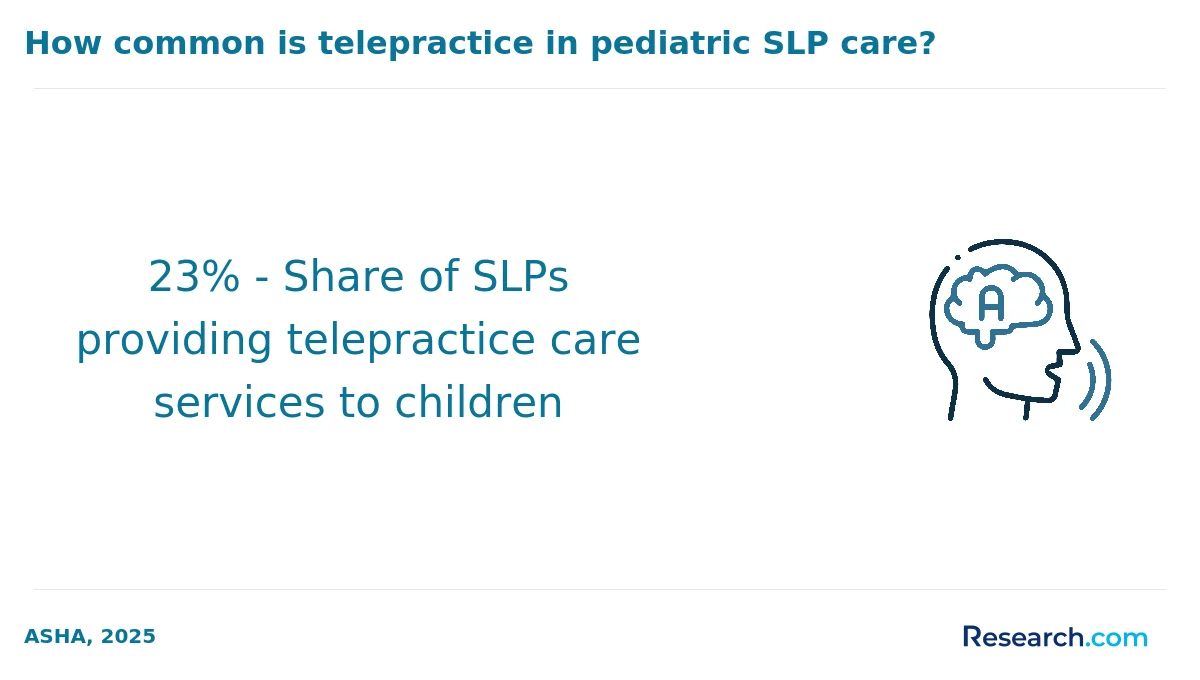
Remote work has changed the geography of the field, especially through telepractice speech therapy and remote audiology support. Remote-compatible roles can reduce dependence on the local job market, but they still require attention to state licensure, service rules, supervision standards, employer policies, and client suitability. Roles that require physical presence, such as hospital-based dysphagia work or many school-based services, remain tied to local demand.
Before choosing where to live or apply, graduates should compare regional BLS employment data, local job postings, school district openings, healthcare system size, wage benchmarks, and licensure reciprocity requirements. Telepractice roles grew over 17% nationally between 2025 and 2035, but remote availability should be treated as an opportunity to investigate, not an assumption.
- Lower-risk locations: Dense healthcare, education, government, and university markets usually offer more employer options.
- Higher-risk locations: Areas with few clinics, small school systems, or unstable public funding may create longer job searches.
- Underserved regions: Rural communities may offer strong need, but job quality depends on supervision, caseload, compensation, and support.
- Remote work: Telepractice can broaden access to jobs, but licensure and service regulations still matter.
- Planning tools: Use BLS data, job posting filters, regional wage benchmarks, and employer interviews before committing to a location.
Students interested in adjacent healthcare fields with different remote-work dynamics may also compare options such as health information management programs online.
Which Communication Disorders Careers Are Most Vulnerable to Automation and Technological Disruption?
The communication disorders careers most vulnerable to automation are not usually full clinical roles; they are roles or tasks built around routine administration, standardized data collection, device setup, scheduling, billing, and repetitive reporting. Technology is more likely to change workflows than eliminate the need for highly trained clinicians who make complex judgments and build therapeutic relationships.
Roles and tasks with higher automation exposure
- Assistive Technology Coordination: Positions focused mainly on configuring, updating, and troubleshooting communication devices or software may face moderate automation risk as platforms add self-guided setup, automated diagnostics, and remote monitoring.
- Speech-Language Pathology Support Roles: Jobs centered on routine data entry, progress tracking, templated documentation, or standardized reporting may be affected by software that automates repetitive recordkeeping.
- Administrative Roles within Communication Disorders Clinics: Scheduling, billing, insurance verification, reminders, and initial intake workflows are common targets for automation through practice management software and AI-supported tools.
- Standardized Testing Administration: Roles limited to administering fixed assessments may be disrupted as digital testing platforms become more adaptive, self-guided, and integrated with scoring systems.
Lower-risk roles require clinical reasoning, ethical judgment, rapport-building, individualized treatment planning, interdisciplinary collaboration, and the ability to adapt therapy in real time. Advanced speech-language pathologists, audiologists handling complex diagnostics, dysphagia clinicians, pediatric specialists, and providers managing medically or educationally complex cases are less exposed because their value is not limited to routine task completion.
The best response to automation is not to avoid technology. It is to become the professional who can use it responsibly. Graduates should build skills in interpreting automated outputs, protecting client privacy, validating digital tools, explaining results to families and teams, and making clinical decisions that software cannot make alone.
Automation risk is probabilistic. It depends on employer investment, regulation, reimbursement, technology maturity, service setting, and client population. A job is rarely “safe” or “doomed” in absolute terms. The more your role depends on human judgment and legally recognized clinical authority, the lower your unemployment risk is likely to be.
For broader context on how specialized healthcare labor markets differ by role and state, readers may compare related workforce data such as psychiatric nurse practitioner salary research, while recognizing that communication disorders requires its own occupation-specific analysis.
How Does a Graduate Degree Reduce Unemployment Risk for Communication Disorders Degree Holders?
A graduate degree reduces unemployment risk in communication disorders mainly by opening the door to licensed, specialized, and higher-responsibility roles. Many of the field’s most stable jobs, especially speech-language pathology and audiology positions, require graduate-level preparation and supervised clinical training.
Research from the Georgetown University Center on Education and the Workforce and BLS data indicate that holders of master’s or doctoral degrees in communication disorders experience unemployment rates roughly 1.5 to 2 percentage points lower than bachelor’s degree holders. Advanced credentials are also associated with wage premiums often ranging from 20% to 40%.
Graduate pathways and their employment value
- Professional master’s programs: These are often the direct route into licensure-eligible clinical practice. Their value is highest when the program aligns with state licensure, offers strong clinical placements, and has clear outcomes for graduates.
- Research-oriented graduate degrees: Master’s and doctoral programs focused on research can lead to academic, clinical research, policy, product development, or advanced specialist roles. Stability depends partly on grants, institutional funding, and publication expectations.
- MBA programs: Business training can help communication disorders professionals move into clinic management, healthcare administration, operations, private practice leadership, or program development. It is most useful when paired with clinical credibility or sector experience.
Costs and trade-offs
- Cost: Total program expenses range from $20,000 to over $70,000, depending on institution, residency status, delivery format, and specialization.
- Duration: Programs generally last 1.5 to 4 years, which can delay full-time earnings.
- Opportunity cost: Time spent in graduate school may postpone income, retirement contributions, and work experience, but the trade-off can be worthwhile if the degree leads to licensure and durable demand.
Graduate school is not automatically the right choice for every communication disorders graduate. Before enrolling, compare the expected employment benefit with alternatives such as certification, relocation, supervised assistant roles, employer-funded training, or specialization in a high-demand setting. The strongest case for graduate school exists when the degree is required for the job you actually want and when the program has credible clinical placement and licensure outcomes.
What Entry-Level Communication Disorders Career Paths Offer the Fastest Route to Long-Term Job Stability?
The entry-level communication disorders roles that lead most quickly to long-term stability are those that provide supervised experience, exposure to high-demand settings, employer support for credentials, and a realistic bridge to licensed or specialized practice. Early salary matters, but the better question is whether the role builds career capital.
- Speech-Language Pathology Assistants: SLPA roles can be a strong entry point in states and settings where assistants are widely used. A typical 1-3 year tenure can help graduates build practical therapy experience, learn documentation systems, and confirm whether graduate study is the right next step.
- Early Intervention Specialists: These roles often sit within government, nonprofit, or community-based systems. They can provide stable experience with children, families, developmental assessment, and service coordination, all of which are valuable for pediatric communication careers.
- Speech Therapy Technicians in Healthcare: Technician roles in hospitals, rehabilitation centers, and clinics can expose graduates to medical terminology, interdisciplinary care, patient documentation, and clinical workflows. Some workers may remain in these roles for 2-4 years before advancing through graduate education or specialization.
- Audiology Aides with Certification: Audiology aide roles can be stable when attached to established clinics, hearing centers, or medical practices. Certification and device-related skills may improve retention and advancement opportunities, especially in regions with aging populations.
When comparing entry-level offers, look beyond the job title. Ask whether the employer provides supervision, training, predictable hours, exposure to licensed professionals, support for graduate applications, and opportunities to observe assessment or treatment planning. A lower-paying role with strong mentorship can be more valuable than a higher-paying role with no advancement pathway.
The fastest route to stability is usually not the shortest route to a paycheck. It is the route that helps you move from general support work into a credentialed, specialized, or hard-to-replace role over a ten-to-twenty-year career horizon.
What Graduates Say About the Communication Disorders Degree Careers With the Lowest Unemployment Risk
-
: "Choosing to specialize in pediatric speech-language pathology has been the best career move I made within my communication disorders degree. I quickly learned that working in hospital settings, especially in urban areas, reduces unemployment risks due to high demand for early intervention services. Obtaining my state licensure early on gave me a competitive edge across all professional stages.
—Mordechai"
-
: "Reflecting on my journey, I realized that focusing on augmentative and alternative communication technologies opened doors I had not anticipated. The education sector, particularly in regions with aging populations, proved to be the most stable market for mid-career professionals like me. Earning a certificate of clinical competence dramatically lowered my unemployment risk and positioned me for leadership roles.
—Casen"
-
: "From a professional standpoint, securing credentials in both speech-language pathology and audiology allowed me to adapt across various industries, ranging from healthcare to private practice. Midwestern states offered consistent job opportunities thanks to underserved rural communities. Pursuing advanced certifications at the senior practitioner level truly safeguards against unemployment fluctuations.
—Walker"
Other Things You Should Know About Communication Disorders Degrees
The 10-year employment outlook for the safest communication disorders careers remains notably strong, driven by an aging population and increased awareness of developmental disorders. Speech-language pathologists and audiologists, in particular, are projected to see above-average job growth-typically around 20% or more-according to labor market data. This steady demand reflects ongoing needs in healthcare, education, and rehabilitation settings that are unlikely to diminish soon.
Careers focusing on clinical speech-language pathology and audiology tend to offer the most in-demand mid-career opportunities. Specializations in pediatric therapy, geriatric communication disorders, and neurological rehabilitation are highly sought after as professionals with advanced certifications often fill leadership and specialized clinical roles. Mid-career practitioners equipped with state licensure and certifications typically experience lower unemployment risks due to their expertise.
In 2027, freelancing or self-employment can reduce unemployment risk for communication disorders graduates by offering flexibility and diverse opportunities. Graduates can leverage online platforms to provide services like speech therapy or consulting, allowing them to maintain income streams even when traditional jobs face cutbacks.
Economic recessions tend to have a moderate but less severe impact on unemployment rates in communication disorders fields compared to broader healthcare sectors. Demand for speech therapy and audiology services remains relatively stable as many treatments are considered essential health services. Nevertheless, reductions in school funding and elective healthcare services during downturns can temporarily reduce job openings.
References
- U.S. Bureau of Labor Statistics - Speech-Language Pathologists https://www.bls.gov/ooh/healthcare/speech-language-pathologists.htm
- ASHA EdFind - Accredited Speech-Language Pathology Programs https://find.asha.org/ed/
- O*NET OnLine - Speech-Language Pathologists https://www.onetonline.org/link/summary/29-1127.00
- West Virginia University - Speech-Language Pathology, M.S. - Online https://medicine.hsc.wvu.edu/communications-sciences-and-disorders/speech-language-pathology-ms/future-students/curriculum/online-slp-program/
- James Madison University - Master of Science (M.S.) in Speech-Language Pathology (Distance Education / Online) https://www.jmu.edu/chbs/csd/online_ms/index.shtml
- University of Wisconsin-Eau Claire - Master of Science in Speech-Language Pathology (Online) https://www.uwec.edu/speech-language-and-hearing-sciences-department/graduate-program/speech-language-pathology-online
- Idaho State University - Master of Science in Speech-Language Pathology (Online/Distance Education) https://www.isu.edu/slp/programs-offered/slp-graduate-program/
- Nova Southeastern University - SLP Program - Master of Science in Speech-Language Pathology https://osteopathic.nova.edu/degrees/masters/speech-language-pathology/index.html


