2027 Best Online Bachelor's in Homeland Security for Community College Graduates

Co-Founder and Chief Data Scientist
Facing tightened hiring standards and a workforce increasingly expected to adapt to emerging threats, many community college graduates find their current credentials insufficient for advanced roles in homeland security. Traditional degree programs often lack the scheduling flexibility to accommodate working adults balancing unpredictable shifts and family obligations.
Recent data from the National Center for Education Statistics reveal that online bachelor's enrollments among adult learners surged over 12% in the past year alone, signaling a clear shift toward accessible, career-focused education models.
This article identifies the best online bachelor's programs designed specifically for community college graduates seeking to upgrade their qualifications efficiently and strategically in this evolving landscape.
Key Things You Should Know
- More than 60% of homeland security graduates with associate degrees face heightened skill gaps in critical cybersecurity and intelligence analysis areas, demanding targeted upper-division coursework, which can extend degree timelines by 12-18 months per National Center for Education Statistics data.
- Employers increasingly prioritize candidates with interagency operational experience and NSA-endorsed certifications, disadvantaging purely academic paths and pressuring community college transfers to seek concurrent credentialing to boost employment competitiveness according to 2024 DHS Workforce Reports.
- Community college graduates often encounter financial strain due to cumulative credit transfer caps averaging 75%, forcing repeat foundational courses and inflating total degrees costs up to 25%, complicating time-to-degree tradeoffs reported by the American Council on Education.
What is an online bachelor's in homeland security and who are these programs designed for?
Choosing an online bachelor's degree in homeland security for community college transfers demands evaluating how well programs address the complex realities of emergency management careers. Graduates often juggle full-time jobs, making the flexibility of online formats essential for balancing coursework with professional responsibilities.
For instance, an emergency services coordinator working nights can complete strategic policy modules remotely, positioning themselves for roles with expanded budgeting and leadership duties.
Programs tailored for associate degree holders integrate both theory and applied skills, emphasizing cyber security, counterterrorism, and infrastructure protection. These areas directly align with employer expectations for operational logistics and regulatory compliance. Notably, the U.S. Bureau of Labor Statistics projects a 4.3% growth in emergency management director roles by 2033, underscoring targeted demand for expertise in this field.
Students should consider accreditation carefully-those without experience benefit from internships or practical simulations embedded in curricula. Candidates already employed must assess if programs emphasize cybersecurity or traditional emergency management pathways, reflecting divergent workforce niches.
Transfers with prior credentials may find value in pursuing an accredited online criminal justice associate degree first, to establish foundational knowledge supporting advanced homeland security studies.
Balancing these tradeoffs informs whether online bachelor's options are a strategic move versus direct workforce entry or certifications, particularly for those navigating public sector versus private sector disaster response roles.
What are the best online homeland security bachelor's completion programs for community college graduates?
Employers in homeland security prioritize candidates who demonstrate applied skills in risk analysis, crisis communication, and interagency coordination over purely academic credentials. Graduates of the best online homeland security bachelor's completion programs for community college graduates benefit from flexible credit transfer policies and career-focused curricula that reduce redundant coursework and shorten time to degree.
For example, someone working in municipal emergency services gains more immediate value from programs emphasizing local intergovernmental planning than from generic public administration degrees.
The median annual wage for emergency management directors was $83,960 as of May 2024, confirming the economic relevance of completing a relevant bachelor's degree. Choosing programs with practical internship or practicum components that connect students to federal, state, or local homeland security agencies is essential for accessing mid- to upper-level roles.
Community college transfer students should seek top accredited online homeland security degree completion programs that offer asynchronous online courses and dedicated advisors versed in aligning education with workforce needs. Accreditation from bodies like the Higher Learning Commission or ABET's Program Accreditation Commission ensures rigor and employer recognition.
Key tradeoffs include evaluating program length, cost, and the acceptance of transfer credits while ensuring curricula reflect federal emergency preparedness standards. Balancing these factors helps degrees serve as career accelerators rather than just credentials. For veterans exploring related fields, this pathway parallels options such as the online cybersecurity bachelor degree for veterans.
How do online homeland security degrees compare to campus-based programs for transfer students?
For transfer students weighing campus versus online homeland security programs for community college transfers, the choice critically hinges on balancing practical skill acquisition with flexibility.
Online homeland security degree transfer advantages are most pronounced for working professionals who require asynchronous course structures to maintain employment while pursuing academic progress. These programs also reduce tuition costs, such as at Thomas Edison State University where the in-state tuition is approximately $7,044 annually, easing debt burden concerns typical of early-career homeland security roles earning between $50,000 and $70,000.
However, campus-based formats retain advantages in direct access to labs, simulations, and in-person engagements that strengthen tactical proficiency verification-an important consideration when targeting federal or state agencies with rigorous vetting standards. Online courses compensate by leveraging virtual simulations and scenario-based training aligned with real-world demands in cyber defense and disaster response.
Employer hiring processes emphasize demonstrated competencies, security clearance preparedness, and certifications over modality. Transfer students must verify that online credits and practicum experiences meet these credentialing benchmarks to avoid redundant coursework delays. Securing articulation agreements is advisable for efficient degree completion.
Students should also consider how their educational choices align with broader credential landscapes, much like those exploring online paralegal programs, where accelerated pathways balance academic rigor with workforce demands.
What accreditation and quality standards should online homeland security programs meet?
For community college graduates evaluating accredited online homeland security degree programs, programmatic and regional accreditation serve as essential filters for academic and professional value. Regional credentials recognized by the U.S. Department of Education, such as those from the Higher Learning Commission or Middle States Commission, ensure credits will transfer effectively when advancing to a bachelor's degree.
This credit transferability is a practical necessity too often underappreciated during workforce transitions.
Quality standards for online homeland security bachelor's programs in the United States extend beyond generic accreditation when specialized agencies like the Center for Homeland Defense and Security validate curriculum relevance. Such recognition ties programs directly to evolving federal priorities including cyber defense, emergency management, and threat analysis.
Candidates must also scrutinize whether internships or capstone projects involve real federal or state agencies, since hands-on experience profoundly impacts job market viability in law enforcement and federal security roles.
Employers typically prefer graduates from programs integrating practical exercises-ranging from cybersecurity drills to critical incident simulations-over those with solely theoretical coursework. The tuition investment, exemplified by benchmarks near Trident University's $49,800, should be weighed against realistic early-career federal salary ranges starting around $50,000.
Prospective students may also explore related fields, such as an online master's degree in forensic psychology, which can complement homeland security competencies or offer alternative career pathways within federal agencies.
What prerequisites and transfer credit policies apply to community college graduates?
Transfer credit policies materially affect the time and cost for community college graduates pursuing online bachelor's in homeland security degrees. Most programs require about 60 transferable credits or an associate degree, focusing on foundational coursework aligned with a 120-credit bachelor's structure, like Thomas Edison State University's model which minimizes credit loss.
The practical impact: students with related associate degrees in criminal justice or emergency management often transfer more credits, reducing redundant courses. Conversely, military experience and certifications typically contribute only as electives, limiting their direct credit value despite being relevant to careers.
Employers in homeland security prioritize rapid degree completion and applicable skills, with roughly 45% placing these ahead of credentials alone. This elevates the importance of selecting programs with clear transfer articulation agreements and minimum grade thresholds-usually a C or better. Transfer evaluations may exclude older coursework owing to evolving technologies and policies, requiring some students to take additional bridge courses, increasing program length and expense.
Key prerequisite topics often include criminal justice systems, homeland security fundamentals, and risk analysis. Graduates must weigh the tradeoff between maximizing credit acceptance and maintaining program rigor that preserves marketability. Effective advisors and transparent credit policies help navigate these variables to minimize delays and credential redundancies in a competitive job market.
What core courses and specializations are offered in online homeland security bachelor's programs?
Bachelor's programs in online homeland security must reconcile broad foundational knowledge with employer demand for specialized skills, often forcing students to prioritize one focus area over generalist versatility. Risk assessment, emergency management, and terrorism studies provide critical context but are now frequently supplemented-or even eclipsed-by cybersecurity competencies due to market pressures.
This shift has tangible workforce implications: the Bureau of Labor Statistics anticipates 14.8% growth in information security analyst roles through 2033, signaling a premium on digital defense expertise within homeland security positions. Graduates emphasizing network security protocols, ethical hacking, and cyber threat intelligence are better positioned for roles that protect both government and private sector digital infrastructure.
Other specializations, like legal and policy frameworks, prepare candidates for navigating complex privacy regulations and compliance challenges-capabilities increasingly valued in a tightly regulated security environment. Emergency management training translates directly into disaster response effectiveness, a core operational requirement for agencies facing natural and man-made crises.
Programs often include capstone projects or simulations to connect academic theory with real-world scenarios, sharpening rapid decision-making and multi-agency coordination skills. Counterterrorism tracks equip students with behavioral analysis tactics that support intelligence operations and law enforcement intervention strategies.
Prospective students should weigh whether a cybersecurity-heavy curriculum aligns with their career trajectory or if broader strategic and operational knowledge suits their goals better, given resource constraints and job market realities.
How long do online homeland security completion programs take and what do they cost?
Completion timelines for online homeland security degree programs critically influence both costs and employability. Students entering with approximately 60 transfer credits often face a choice: accelerate through maximum course loads and summer sessions to finish in about 12 months, or extend studies beyond two years if balancing work commitments.
This decision can significantly impact the degree's relevance and financial return, as federal or infrastructure security roles often require bachelor's credentials within two years.
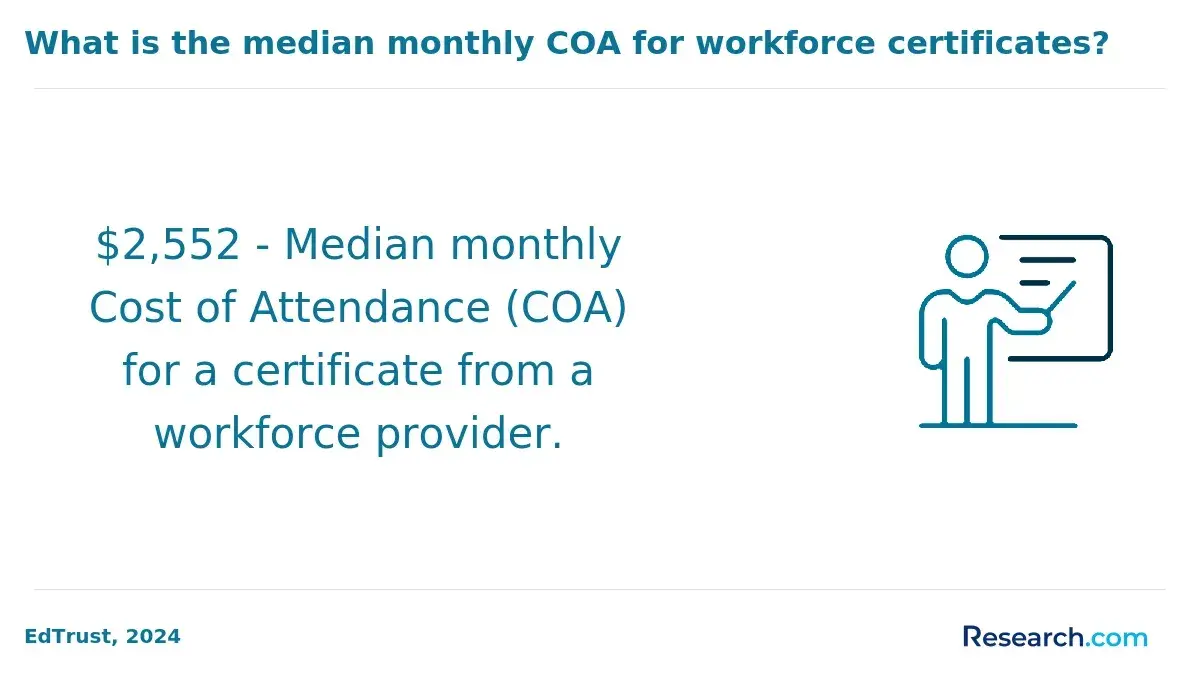
Tuition rates for remaining credits typically range between $300 and $600 per credit hour, resulting in total instructional expenses of $18,000 to $36,000. Additional costs, such as technology fees, books, and exam proctoring, may add $1,500 to $3,000. These figures highlight the necessity of budgeting for the full financial impact and the implications of borrowing against expected salary gains.
Median wages for compliance officers, common career outcomes for homeland security graduates in government risk and regulatory roles, stood at $78,420 annually as of May 2024. Incremental delays in graduation can erode this financial advantage due to opportunity costs and outdated coursework relative to evolving policy demands.
- Choosing programs with generous credit transfer policies reduces time-to-degree and preserves workforce currency.
- Employers favor candidates with recent, relevant training reflecting current security standards.
- Part-time enrollment may extend program duration, increasing costs and risk of skill obsolescence.
Strategic course planning aligned with workforce requirements improves employment prospects and return on investment in homeland security education.
What homeland security careers can graduates pursue with an online bachelor's degree?
Choosing an online bachelor's degree in homeland security demands a clear understanding of its varied career trajectories and operational realities. Roles like emergency management director, with a median wage of $83,960 per year, require not just theoretical knowledge but hands-on expertise in coordinating responses to disasters across multiple government levels.
Graduates must often navigate complex interagency protocols, which underscores the value of programs emphasizing emergency preparedness training.
Specialized disciplines within the field, such as intelligence analysis and cybersecurity, involve distinct skill sets. Intelligence analysts prioritize data synthesis and threat evaluation for federal or private security entities, while cybersecurity specialists protect critical infrastructure amidst rising cyberattacks. However, without foundational computer science credentials or certifications, homeland security graduates may face stiff competition entering cybersecurity roles.
Physical and enforcement-oriented careers, including customs and border protection, rely heavily on prior law enforcement or military experience, adding another layer of challenge for new degree holders. Disaster response coordinators operate under intense logistical and communication constraints during crises, demanding real-world problem-solving abilities beyond classroom learning.
Employers in this sector explicitly favor candidates with operational experience, making internships or agency partnerships vital components of educational programs. Federal or state certifications post-graduation materially improve employability and compensation, particularly where security clearances or credentialing are prerequisites.
What salary ranges and job outlook can homeland security bachelor's graduates expect?
Entry-level salaries for bachelor's graduates in homeland security typically range from $50,000 to $75,000, but actual compensation varies significantly by employer and location.
For example, federal positions, such as those at the Department of Homeland Security, start near $53,000, while specialized roles in cyber defense or emergency management can exceed $85,000 within five years. State and local government roles often max out between $60,000 and $90,000. Private sector jobs in critical infrastructure and risk assessment exhibit wider salary variability, influenced by contract work or consulting opportunities.
Employment growth in homeland security-related protective services is projected at 9% through 2034, driven largely by heightened cybersecurity and counterterrorism priorities. However, employers prioritize candidates with practical experience, security clearances, and certifications beyond the degree. These requirements create barriers for new graduates, especially those from community colleges, who must actively pursue internships and clearance eligibility to remain competitive.
Considering tuition costs is vital: for instance, the University of Maryland Global Campus charges $250 per credit for its online degree, a cost-effective model compared to more expensive private programs. Yet, lower tuition does not offset the necessity of supplemental technical training such as Certified Protection Professional (CPP) or Certified Information Systems Security Professional (CISSP) certifications, which are often prerequisites for sustainable career progression in this sector.
Are certifications or security clearances required for homeland security roles, and how do degrees help?
Obtaining security clearances is an essential but often time-consuming hurdle for federal homeland security roles, directly impacting employability and job readiness.
Degrees serve as a practical bridge by preparing candidates with foundational knowledge in security protocols and risk assessment, which facilitates smoother clearance adjudication. For example, candidates possessing a bachelor's degree typically comply with minimum education requirements necessary for background investigations, giving them a competitive edge over those relying solely on certifications.
In private sector roles related to homeland security, employers frequently expect a combination of industry certifications like Certified Protection Professional (CPP) or Certified Information Systems Security Professional (CISSP) alongside degrees, especially for mid-to-senior positions.
While certifications validate niche skills, degrees cultivate broader competencies that reduce onboarding duration and enhance clearance eligibility. Community college graduates aiming for this field benefit from pursuing bachelor's degrees to meet clearance prerequisites and gain wider organizational competencies.
Flexible degree programs that offer year-round courses, such as UMGC's online homeland security bachelor's degree, allow working professionals to balance education with lengthy clearance processes that sometimes exceed six months.
Graduates equipped with both academic frameworks and practical operational understanding often experience accelerated clearance processes and better positioning for roles demanding verified expertise. This interplay between education, certification, and clearance timelines shapes realistic pathways into homeland security employment.
Other Things You Should Know About Homeland Security
Online bachelor's programs in homeland security often mirror the curriculum rigor of traditional campuses but require greater self-discipline and time management. Employers expect online graduates to demonstrate the same competencies, so students should prioritize programs with active faculty engagement and practical exercises.
Transfer students especially benefit from programs that integrate hands-on projects or simulations to avoid gaps in applied skills often seen in passive online coursework.
Transfer credit policies vary widely, and not all community college courses directly align with homeland security degree requirements, which can extend completion time. Prioritize programs with transparent articulation agreements and dedicated advisors who specialize in transfer evaluations. Overestimating credit acceptance can lead to unexpected prerequisites or repeats, impacting both cost and program length.
While a bachelor's degree meets minimum hiring standards, many homeland security employers prefer candidates with additional certifications or clearance. Graduates should assess the roles they target and consider certifications like Certified Protection Professional (CPP) to improve job competitiveness. Planning early for this combination of education and credentialing is critical to avoid delayed employment post-graduation.
Many programs offer resources such as academic advising, career counseling, and online tutoring. These support systems help community college graduates navigate their courses effectively, ensuring they can balance studies with other commitments and maximize their career prospects in homeland security.
References
- 2025 Most Affordable Homeland Security Degrees Online https://www.onlineu.com/most-affordable-colleges/homeland-security-degrees
- Is a degree in homeland security worth it? | edX https://www.edx.org/resources/is-a-degree-in-homeland-security-worth-it
- Homeland Security Degree Programs https://www.criminaljusticedegreeschools.com/degrees/homeland-security-degree/
- Top Online Master’s Degree Programs in Homeland Security for 2025 https://www.onlinemastersdegrees.org/best-programs/homeland-security/
- Online Bachelor's Degree: Homeland Security https://www.umgc.edu/online-degrees/bachelors/homeland-security
- Bachelor of Science in Homeland Security https://www.trident.edu/bachelors-online/homeland-security-degree/
- Transferring from a community college | University of Phoenix https://www.phoenix.edu/blog/tips-for-transferring-from-community-college-to-university.html
- Homeland Security Requirements (Degrees, Jobs & Salary) https://www.allcriminaljusticeschools.com/federal-law-enforcement/homeland-security/
- Types of Homeland Security Degrees | Compare Schools https://www.criminaljusticeprograms.com/specialty/homeland-security-degrees/
- Homeland Security AS https://www.sunyjefferson.edu/academics/programs/homeland-security-as.php