2027 Online Homeland Security Degrees That Help Build Cross-Agency Communication Skills

Co-Founder and Chief Data Scientist
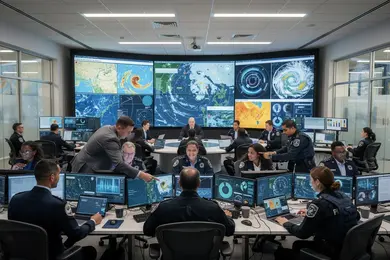
When a multi-jurisdictional incident erupts, professionals often face fragmented communication that stalls critical response efforts across federal, state, and local agencies. Addressing these coordination gaps is no longer optional; the Department of Homeland Security reports a 24% increase in cross-agency task forces since 2022, reflecting intensified interagency reliance.
This trend demands practitioners skilled not only in security protocols but also in collaboration techniques adaptable to complex bureaucracies and shifting operational tempos. Yet working adults' enrollment in flexible, online programs rose 15% in 2024 according to the National Center for Education Statistics, reflecting growing demand for accessible education that aligns with unpredictable work schedules.
This article evaluates online homeland security degrees that specifically enhance cross-agency communication competencies, helping readers identify programs that optimize career mobility and practical interorganizational skills amid evolving field challenges.
Key Things You Should Know
- Interagency communication-focused homeland security degrees must balance technical cybersecurity skills against bureaucratic coordination training, with 42% of agencies citing skill mismatches delaying joint operations per a 2024 DHS workforce report.
- Employers prioritize candidates with practical simulational exercises over theoretical courses; 68% of hiring managers prefer degrees featuring scenario-based cross-agency drills, underscoring integration readiness as a recruitment filter.
- Programs requiring 24+ months full-time study impede midcareer pivots, with federal employee tuition support declining 11% since 2023, amplifying cost-access tensions for working professionals.
What is an online homeland security degree and how does it strengthen cross-agency communication?
Effective cross-agency collaboration in homeland security depends heavily on practitioners' ability to navigate complex communication frameworks and jurisdictional boundaries. Online homeland security degree programs for cross-agency collaboration prioritize practical skills like intelligence fusion and interoperable systems, which enable professionals to synthesize data from federal, state, and local sources rapidly.
Graduates equipped with such expertise are critical in settings like intelligence fusion centers, where timely threat detection influences operational decisions.
The value of interagency communication skills extends beyond theory. For instance, agencies supported by the Cybersecurity and Infrastructure Security Agency-partnering with more than 9,000 entities nationwide-rely on staff who understand both technological interoperability and political realities.
Courses on emergency management communication systems, cyber defense coordination, and legal frameworks create graduates who can overcome common operational barriers such as incompatible platforms or siloed data.
Students must carefully evaluate whether programs focus on applied communication aptitudes rather than solely academic knowledge, as employers increasingly seek professionals capable of functioning within joint task forces and crisis response scenarios aligned with NIMS or ICS frameworks. Practical coordination skills directly influence employability and effectiveness in roles that demand rapid, multi-agency response.
Those considering foundational credentials may also explore a 2 year criminal justice degree online to build core competencies before pursuing specialized homeland security studies.
Which types of online homeland security degrees are offered and at what levels?
Career trajectories in homeland security increasingly hinge on a candidate's ability to navigate multi-agency environments through layered education and practical exposure. Online homeland security degree programs vary by level-from associate to master's and certificate credentials-each calibrated to distinct operational demands.
Associate degrees establish basic collaboration protocols suited for entry-level emergency management or law enforcement roles. However, these often lack robust engagement with real-world interagency dynamics, a gap that typically requires additional field experience.
Bachelor's degrees expand this framework with coursework on multi-agency coordination, addressing the needs of state or municipal emergency planners who must frequently synchronize across departments.
At the master's level, programs emphasize strategic communication, policy analysis, and leadership for federal or multi-jurisdictional roles. These advanced degrees incorporate realistic case studies based on FEMA's documented exercises involving over 1,000 organizations. Graduates refine decision-making skills applicable to cross-sector coordination encompassing federal, state, local, tribal, and nongovernmental participants.
Certificates target professionals focusing on discrete competencies such as interagency crisis communication or intelligence sharing without pursuing a full degree. Employers prioritize candidates with scenario-based learning tied directly to field realities, highlighting the importance of program selection.
When assessing homeland security degree levels and specializations, students should consider how programs integrate practical exercises and whether supplemental learning is needed to meet employer demands. For those contemplating a shift or advancement, balancing degree depth with applied experience is crucial.
For professionals weighing broader cybersecurity expertise alongside homeland security skills, exploring options like a cybersecurity masters might complement specialized knowledge effectively.
How do online homeland security programs compare to campus-based options for communication training?
Choosing between online homeland security communication training programs and campus-based options hinges on the depth of practical engagement required. Campus-based homeland security degrees for cross-agency collaboration excel at immersive, face-to-face exercises like multi-agency tabletop drills that sharpen verbal and non-verbal communication crucial in urgent, real-world crises.
This hands-on environment cultivates rapid, adaptive interaction skills often indispensable for emergency management directors overseeing geographically dispersed teams.
Online programs, while limited in replicating this immediacy, leverage asynchronous discussion boards, video conferencing, and scenario simulations that emphasize written communication and virtual coordination-skills increasingly vital in modern agency workflows, especially under pandemic constraints or remote operational contexts.
Employment growth for emergency management directors is projected at 5% from 2022 to 2032, with about 900 annual openings, underscoring demand for these nuanced communication competencies.
Prospective students must consider their target roles: those requiring frequent, in-person coordination benefit from campus immersion, whereas working professionals balancing jobs or focusing on remote collaboration may find online curricula sufficiently robust.
Decision-making should align training intensity and modality with specific role communication demands and workflows. For information on career intersections with related fields, see what can you do with a masters in forensic psychology.
What core courses in homeland security focus on interagency and cross-jurisdiction communication?
Cross-agency communication training in homeland security prioritizes operational frameworks that enable federal, state, and local agencies to collaborate effectively under urgent conditions. Incident Command System (ICS) protocols form the backbone of this training, ensuring that police, fire, public health, and federal teams can integrate actions seamlessly during crises such as natural disasters or terrorist attacks.
Interagency collaboration courses for homeland security professionals confront real challenges like jurisdictional boundaries, information silos, and technological mismatches. For example, crisis management simulations require synchronizing responses despite varying legal authorities and resource access, cultivating essential negotiation and conflict resolution abilities tailored to complex organizational cultures.
Curricula often include cybersecurity communication to support real-time, secure threat intelligence exchange between public safety entities and critical private infrastructure, an increasingly vital domain as cyberattacks grow in sophistication.
Students may also engage with public policy and intergovernmental affairs, learning legislative and funding structures that influence collaborative homeland security efforts. This practical skill set aligns with workforce realities: emergency management directors earned a median of $82,260 in 2024, with top earners exceeding $137,230, reflecting the premium on professionals who can balance multi-jurisdictional priorities and logistical constraints.
Those weighing advanced degrees should also consider related pathways such as environmental health and safety online degree programs, which sometimes intersect with homeland security in regulatory and operational domains.
What admission requirements and prior experience are needed for online homeland security programs?
Online homeland security programs in 2026 prioritize applicants who demonstrate relevant analytical skills and situational awareness over mere GPA scores. Bachelor's degrees generally require only a high school diploma or equivalent, while advanced degrees and certificates demand professional experience in emergency management, law enforcement, or military service.
This reflects workforce needs for candidates capable of navigating complex crisis environments and cross-agency collaboration.
Admissions committees often waive standardized tests, focusing instead on holistic reviews that include professional résumés and recommendation letters. Communication proficiency and multiagency coordination readiness are assessed through essays or interviews, underscoring the operational nature of homeland security roles.
The 2024 BestColleges review found that all top online homeland security bachelor's programs incorporate courses on emergency management, incident command, or interagency coordination. This curriculum alignment is critical, as professionals without prior exposure to joint agency protocols face steep learning curves and onboarding delays in the field.
For career changers, documented experience with real-world emergency response or military command significantly improves admission prospects and employer confidence. Applicants should anticipate logistical challenges such as obtaining secure communication access and clearances, which frequently impact training timelines and placement outcomes.
How can students verify accreditation and program quality for online homeland security degrees?
Accreditation for online homeland security degrees is a decisive factor impacting credit transfer, employer recognition, and program reliability. Regional accreditation establishes basic academic standards, but specialized accreditation-such as from the Commission on Accreditation for Law Enforcement Agencies-adds crucial validation of practical relevance to homeland security competencies.
Employers increasingly demand graduates who possess hands-on experience with multi-agency coordination and communication frameworks.
Programs incorporating simulation-based training and joint command scenarios better prepare students for operational realities, reflecting workforce practices documented by over 500 exercises reported by the Department of Homeland Security in 2024. However, extensive virtual simulations require significant time commitment, presenting tradeoffs for working professionals balancing flexibility and immersive learning.
Prospective students should verify accreditation through official databases and assess curricula for applied training components, including the depth of cross-agency collaboration exercises. Evaluating faculty expertise and industry connections is equally important to ensure exposure to current policies and technologies.
Employment outcomes and alumni feedback provide practical indicators of a program's value beyond its accreditation status. A rigorous comparison should weigh flexibility, simulation intensity, and faculty credentials to align with career objectives and professional demands in homeland security.
How long do online homeland security degrees take, and what do they typically cost?
Bachelor's homeland security degrees online typically require 18 to 24 months full-time, with master's programs taking 12 to 18 months, though part-time paths can extend this by six to twelve months. This timeline directly impacts practitioners aiming to meet workforce urgency for cross-agency coordination skills, especially as over 60% of state and local job postings demand multi-jurisdictional collaboration immediately after graduation.
Costs span a broad range: bachelor's tuition varies from $15,000 to $40,000, master's from $20,000 to $50,000, with public universities offering lower in-state rates and out-of-state fees approaching private institution levels. Specialized certifications in interoperability frameworks add $2,000 to $5,000, an important investment for those focused on operational effectiveness.
Decision-making hinges on one's target employment sector. Federal agency roles generally require a master's degree, increasing both time and cost but offering stronger salary prospects long term.
Conversely, state or local agency professionals often progress with a bachelor's plus targeted training emphasizing practical problem solving across jurisdictions. Candidates must weigh potential income loss during full-time study against a protracted part-time approach that maintains earnings but delays credential attainment.
What homeland security careers emphasize cross-agency collaboration, and which degrees support them?
Cross-agency coordination in homeland security careers demands more than theoretical knowledge; it requires applying communication skills in complex, multi-jurisdictional environments. Emergency management directors, for example, must orchestrate joint command centers with clear information flow between city, state, federal, and private stakeholders under crisis conditions. Such roles penalize candidates who lack practical experience in stakeholder alignment and interagency protocols.
Degrees in homeland security or related fields increasingly embed virtual simulations to mirror multi-agency incident responses, enhancing real-time collaboration skills often overlooked in traditional coursework. Intelligence analysts rely heavily on navigating secure communication networks while respecting legal constraints governing interdepartmental data sharing.
Intergovernmental affairs specialists engage in policy negotiations that test diplomatic communication and require sophisticated organizational abilities.
Online education has shifted from a secondary resource to a primary mode for cultivating these competencies. According to a 2024 survey by the National Center for Education Statistics, over 40% of students in public-service and security programs complete their studies fully online, reflecting geographic dispersion in the workforce and the growing need for digital proficiency in coordination.
Employers now prioritize candidates who demonstrate experience with scenario-based exercises and technology-enabled collaboration tools. Prospective students should weigh programs offering hands-on projects involving cross-agency management frameworks, as these practical components directly influence employability and readiness for evolving homeland security roles.
What salary ranges and job outlook can graduates expect in homeland security roles?
Entry-level roles within agencies like FEMA and DHS now overwhelmingly favor candidates with master's degrees-over 90% of postings for positions requiring 0-2 years of experience specify this credential. This gatekeeping radically influences initial salary prospects, which generally start between $55,000 and $70,000 but quickly escalate for those holding advanced degrees.
Strategic communication roles, for example, command salaries near or above the $80,000 median and depend heavily on master's-level expertise and cross-agency coordination skills.
The practical tradeoff for students or career changers involves weighing the significant investment in graduate education against restrictive hiring prerequisites and heightened competition. Without a master's, professionals are often limited to operational or support tracks, which typically carry lower pay ceilings and slower promotion cycles.
Projected job growth of 5% to 7% through 2031 aligns with expanded federal funding and increasing demands for interagency crisis communication and incident response capabilities. Candidates prepared through programs that emphasize hands-on collaboration across agencies may find stronger footing. This focus reflects employer expectations for real-world readiness over purely academic credentials.
The pathways and outcomes outlined here represent a realistic appraisal of homeland security education's payoff versus cost while guiding informed decisions about graduate study commitment amidst evolving workforce dynamics.
Are certifications or continuing education needed to advance in homeland security and emergency management?
The demand for certifications like Certified Emergency Manager (CEM) or Certified Information Systems Security Professional (CISSP) in homeland security reflects employer expectations for demonstrable expertise in technical and interagency coordination skills. Without such credentials, professionals often hit a career ceiling beyond entry-level roles due to the multi-jurisdictional complexity of the field.
For example, cybersecurity analysts embedded within federal emergency management agencies must continually upgrade their skills around incident response and cyber threat intelligence to maintain operational effectiveness across fragmented bureaucracies.
Employment projections show a 32% growth for information security analysts from 2022 to 2032, driven by increasingly sophisticated cyber threats and the necessity for seamless collaboration between federal, state, and local entities. This trend highlights how credentialing is less about static knowledge and more about validating up-to-date, actionable capabilities in cross-agency settings.
Ongoing education programs, commonly delivered online by accredited institutions, serve to bridge emerging regulatory demands and evolving operational protocols. Yet pursuing and maintaining certifications entails tradeoffs, including financial costs and the continuous commitment to meet renewal requirements, which candidates must weigh against the risk of falling behind peers in a fast-changing environment.
Organizations prioritize professionals who can navigate both technological complexities and interagency communication challenges, making structured credentialing and lifelong learning vital for those targeting leadership or specialized functional roles within homeland security and emergency management careers.
Other Things You Should Know About Homeland Security
Balancing full-time employment with an online homeland security degree requires careful time management, as programs often demand intensive reading, research, and group collaboration. Employers expect students to bring practical insights but also expect flexibility in scheduling, which some programs may not fully accommodate. Choosing programs with asynchronous course options and clear deadlines helps lessen stress, but students should prioritize programs with proven support for working professionals to avoid burnout and missed learning opportunities.
Programs that emphasize cross-agency communication often build on practical knowledge from emergency management or related fields. Students without prior experience may struggle to fully grasp operational challenges or interagency dynamics, which impacts their ability to engage deeply in scenario-based exercises. Applicants without relevant work history should prioritize programs that provide foundational practice environments or mentorship components to bridge this gap effectively.
Employer recognition depends heavily on the program's accreditation, curriculum relevance, and alignment with federal or state homeland security standards. Students should prioritize degrees that integrate hands-on policy analysis, simulation exercises, and evidence of faculty expertise tied to government agencies. Degrees from programs with established governmental partnerships improve prospects by signaling practical readiness rather than just theoretical knowledge.
References
- What Is a Homeland Security Degree? https://www.trident.edu/articles/what-is-a-homeland-security-degree/
- Homeland Security Degree Online | Find Top Programs & Information https://www.firescience.org/homeland-security-degree-programs-online/
- Accreditation | CAEMHSE https://www.caemhse.education/accreditation
- Online Master of Science in Homeland Security at UMFK https://online.umfk.edu/homeland-security/
- EM Training Requirements | Iowa Department of Homeland Security Statewide Training https://hsemdtraining.iowa.gov/Requirements
- Top Online Master’s Degree Programs in Homeland Security for 2025 https://www.onlinemastersdegrees.org/best-programs/homeland-security/
- Your Guide to Homeland Security Certification - ARES Security https://aressecuritycorp.com/2025/01/30/homeland-security-certification/
- The Case for Interagency-Cooperation: With Rising Security Threats, Agencies Must Overcome Rivalries https://rsdi.ae/en/publications/the-case-for-interagency-cooperation-with-rising-security-threats-agencies-must-overcome-rivalries