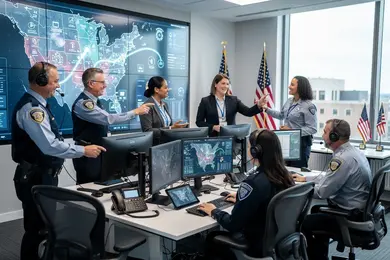
2027 Online Homeland Security Degrees With the Best Support for Prior-Service Students

Co-Founder and Chief Data Scientist
Active-duty personnel transitioning from military service often confront the challenge of earning a credible degree without sacrificing stability or delaying reenlistment options. The pressure intensifies when employers favor credentials paired with relevant experience, yet rigid program structures limit transfer credits or prior-service recognition. According to the National Center for Education Statistics, nearly 40% of adult learners in 2024 prioritized flexible online programs that acknowledge military training, revealing a shift toward education models that integrate practical experience and accessibility.
This article evaluates online homeland security degree programs that best accommodate prior-service students, focusing on transfer policies, support services, and career alignment to streamline advancement decisions.
Key Things You Should Know
- Military credit transfer policies vary widely, with only 43% of institutions fully recognizing all relevant prior-service training, forcing some students into redundant coursework that delays graduation by up to 18 months, per the National Center for Education Statistics.
- Employers in federal agencies prioritize candidates with public sector internships tied to homeland security programs, reducing post-degree job placement times from 8 to 3 months, according to recent DHS workforce analyses.
- Average tuition for top-ranked programs supporting veterans increased 6% in 2025 while GI Bill funding caps remained fixed, creating gaps in coverage that require out-of-pocket payments impacting candidates' timely enrollment.
What is an online homeland security degree and how does it serve prior-service students?
Programs tailored to veterans and prior-service students in online homeland security degree programs for veterans deliver practical value by converting military experience into skills aligned with federal, state, and local security needs. Flexibility-often via asynchronous formats and credit for military training-minimizes redundant coursework and accelerates progress, which is essential for working adults balancing education with other responsibilities.
Employers expect candidates to merge operational knowledge with academic credentials on threats, compliance, and emerging technologies. For example, a military intelligence analyst obtaining such a degree can bridge gaps in cybersecurity frameworks and federal compliance, qualifying for roles in agencies such as FEMA or private sector risk management.
Support services for prior-service students in homeland security degrees vary widely but often include career counseling, certification guidance, and networking opportunities focused on veteran job placement. Prospective students must evaluate programs by how well they balance cost, credential relevance, and practical skill development, since some focus predominantly on theory while others emphasize applied competencies.
Challenges like consistent internet access and self-directed motivation remain significant obstacles in online education, requiring students' proactive management to maintain steady academic progress. The Department of Homeland Security's $176.18 billion budget signals sustained demand for homeland security professionals, reinforcing this degree's employment prospects when paired with relevant experience and credentials.
For those evaluating specialized career tracks, insights into federal careers or related fields-such as roles analyzed in the forensic profiler salary report-can clarify realistic outcomes and salary expectations.
How do online homeland security programs compare to campus-based options for military and veterans?
Online homeland security programs for military and veterans offer vital flexibility by accommodating work, family, and relocation needs - a practical advantage over campus-based options. Prior-service students often face a choice between the adaptability of remote study and the immersive networking typically available in physical environments, where direct connections to security agencies, internships, and veterans' support services may accelerate placement. This choice matters most when navigating hiring realities: job growth in security clearance positions increased by over 300% from 2015 to 2025, favoring candidates who can effectively leverage clearance credentials during study.
Online formats require active engagement with virtual career services and scenario-focused training aligned with federal and state priorities, particularly for roles like cybersecurity within homeland security. For instance, veterans benefit from embedded simulation labs and clearance-relevant curriculum online, a contrast to campus-based programs emphasizing face-to-face teamwork and interpersonal skill development valued in some agencies. This tradeoff-practical flexibility versus immersive networking-should guide program selection.
Additionally, prior-service students must confirm that pathways to federal internships and work-study exist, as these remain predominantly on-campus features; neither format guarantees clearance sponsorship. Balancing veteran status with program quality and employer ties is essential to navigate the workforce.
For those exploring a fast cyber security degree aligned with homeland security imperatives, reviewing program outcomes and employer connections critically supports informed decisions. More details are available through fast cyber security degree resources.
Which online homeland security degrees offer the best support services for prior-service students?
Effective online homeland security degrees for prior-service military students must systematically address the operational challenges of credit transfer, veteran-specific advising, and flexible delivery. Without formal military credit policies, many programs compel veterans to retake content akin to their previous training, delaying completion and inflating costs. Bellevue University exemplifies an approach that translates military experience into academic credit, significantly shortening time-to-degree and lowering expenses.
Programs with dedicated career services that understand veteran transitions into civilian homeland security roles excel by aligning skills from military occupational specialties with employer expectations. For example, Bellevue's alumni achieve a median salary of $73,896, the highest among major online providers reviewed by OnlineU in 2026, signaling strong market relevance. This alignment improves placement in sectors such as federal law enforcement, emergency management, and cybersecurity.
Asynchronous coursework is essential to accommodate those balancing reserve or National Guard duties. Veteran resource centers within these programs coordinate with financial aid offices to optimize benefits like the GI Bill, easing unique financial pressures. Military-focused advising also navigates clearance logistics and federal employment pathways often missed by generalized services.
When evaluating online homeland security degrees with dedicated support for military veterans, practical outcomes hinge on whether programs integrate these elements. Prior-service students gain the most operational value from programs that recognize their time and experience rather than forcing redundant classroom hours.
A nuanced understanding of salary potential and career trajectory is equally important. For instance, students researching related fields like forensic science should consider data on forensic science degree salary as a comparative benchmark for security sector compensation and growth.
What accreditation should online homeland security programs have to be considered credible and respected?
Employers engaged in federal, state, and local government roles demand degrees from institutions vetted by recognized regional accrediting bodies such as the Higher Learning Commission or the Southern Association of Colleges and Schools Commission on Colleges. Beyond general institutional approval, programmatic accreditation from specialized organizations like the Security Accreditation Alliance is equally critical as it certifies alignment with homeland security standards and job qualifications. Veterans and professionals pivoting into cybersecurity roles within homeland security agencies frequently find that holding degrees from accredited programs directly correlates with meeting Department of Homeland Security criteria.
Without adherence to these online homeland security program accreditation standards, graduates face diminished recognition, especially in competitive federal positions or private contracting, which may also hinder eligibility for necessary security clearances or grants. Practical decisions must incorporate verification of both institutional and program-specific accreditation by consulting resources such as the U.S. Department of Education's database or the Council for Higher Education Accreditation. Ignoring these distinctions risks investment in programs lacking substantive workforce relevance.
Affordability remains a tangible concern; among 37 nationally accredited programs reviewed, annual tuition starts as low as $4,170, offering financially viable options for prior-service students. Prospective candidates should weigh cost, accreditation validity, and curriculum rigor to optimize outcomes.
Finally, students should be aware that program duration varies significantly across disciplines. For example, those curious about cross-disciplinary timelines might refer to resources showing "how long does it take to study architecture" to contextualize the pacing and commitments typically demanded by complex fields.
What admission requirements and transfer credit policies apply to prior-service applicants in these programs?
Prior-service applicants to online homeland security programs face a critical balance between leveraging military experience and meeting academic standards that employers expect. Official military transcripts, typically the Joint Services Transcript (JST), must accompany applications to verify honorable discharge or active duty status. This documentation is essential to accessing veteran-specific admissions tracks and maximizing credit transfers.
Transfer credit evaluations often grant substantial reductions-commonly between 30% and 50%-for military training and prior college coursework, which can significantly shorten time-to-degree. However, credits older than a decade usually require additional review to confirm relevance to homeland security curricula. For example, a former military intelligence analyst might receive credit for leadership and security clearance-related courses, allowing concentration on advanced homeland security topics rather than repeating foundational classes.
Applicants without formal college experience still face residency and core course requirements that uphold accreditation and employer confidence. Agencies hiring homeland security graduates prioritize degrees completed within a reasonable timeframe and aligned with current operational knowledge.
Key factors for prospective students include:
- Submission of official military transcripts and proof of discharge status
- Anticipation of partial credit for military and past education, subject to recency and curricular fit
- Completion of mandatory core courses online to satisfy accreditation
- Employer expectations for current, accredited credentials impacting job eligibility
Programs like Southern New Hampshire University Online illustrate this approach by maintaining transfer flexibility while ensuring graduates meet workforce standards, with 895 completions reported in 2026, confirming demand and practical pathways for prior-service candidates.
What core courses and specializations are typically included in online homeland security degrees?
Online homeland security degree programs pivot sharply on how students balance foundational knowledge with specialized skill sets tailored to distinct federal and private sector roles. For example, veterans eyeing cybersecurity careers must navigate intensive tracks involving risk assessment, intelligence analysis, and IT security, often requiring industry-recognized certifications like CISSP. In contrast, those pursuing emergency management may prioritize crisis simulations and logistics, aligning with agencies such as FEMA, which values practical emergency planning skills coupled with credentials like FEMA's professional development series.
Curricula typically include courses such as Threat and Vulnerability Assessment, Counterterrorism Strategies, Disaster Response, and Cybersecurity Policy, emphasizing applied learning through scenario-based exercises rooted in real-world incidents. This pedagogical approach addresses a critical workforce need: translating military or prior-service experience into civilian qualifications recognized by employers. Given that by 2031 an estimated 42% of new U.S. jobs will require bachelor's degrees, holding a degree aligned with credential expectations can materially affect job market competitiveness.
The decision to pursue broader foundational courses versus targeted specialization has tangible consequences. Intelligence analysis tracks often extend program length due to required data analytics and foreign policy content, including language studies, whereas infrastructure protection offers faster entry with focus on physical security compliance and emergency protocols. Understanding these tradeoffs alongside employer certification preferences informs strategic educational choices with long-term career implications.
How long do online homeland security degrees take, and what do they cost for adult learners?
Time and financial investment in online homeland security degrees vary sharply depending on credit transfer and prior-learning recognition policies, critically shaping workforce reentry speed for adult learners. While a traditional bachelor's program requires about four years, those with military training credits or prior experience can shorten this to two to two and a half years, yielding substantial cost savings and faster credential acquisition. Master's programs, typically 18 to 24 months, increasingly offer competency-based options that allow experienced students to accelerate completion.
Costs range widely-bachelor's tuition generally falls between $12,000 and $35,000, while master's programs can cost $15,000 to $40,000 online. Transfer credits and veteran support services frequently reduce tuition by more than 30%, making the pathway financially feasible, particularly for veterans leveraging the GI Bill or tuition assistance programs. This cost reduction is essential to avoid educational downtime and improve return on investment.
Adult learners balancing federal or executive roles benefit from tailored credit policies that recognize applied knowledge and military service, preventing redundant coursework and enabling tightly aligned education-to-employment progression. The practical implications for hiring managers emphasize credentials earned efficiently without compromising relevancy or skill depth.
- Accelerated bachelor's completion through military credit can cut time nearly in half and reduce net cost by one-third
- Competency-based master's options support faster entry into advanced roles for professionals with domain expertise
- Veteran-centric tuition discounts and credit transfers are vital to minimizing debt and educational disruption
What homeland security careers can graduates pursue, and which roles value prior-service experience?
Operational experience significantly differentiates candidates pursuing careers with online homeland security degrees, particularly in leadership roles such as emergency managers and security managers. Positions that involve strategic decision-making under pressure-like managing state disaster response-favor applicants with prior military or federal law enforcement backgrounds because such experience sharpens crisis management, logistical coordination, and threat mitigation skills.
For instance, security managers charged with critical infrastructure protection rely heavily on practical knowledge of access control and threat identification. This real-world expertise accelerates their readiness for senior responsibilities compared to peers lacking service backgrounds. Conversely, roles such as policy analysts or academic researchers prioritize analytical and research abilities over operational experience, which may affect how candidates align their educational focus with long-term goals.
Salary and job growth data reflect these distinctions: research from Arizona State University indicates emergency and security managers earn averages exceeding $90,000, with job growth between 3.0% and 3.8%. This stability underscores consistent demand for graduates who combine academic credentials with practical service-derived skills.
- Military or law enforcement experience enhances employability in operational and command roles
- Field-command and crisis response jobs require demonstrated leadership in uncertainty
- Analytical roles lean more on advanced research and less on service history
What salary ranges and job outlook can homeland security graduates expect in the U.S.?
Salaries for homeland security graduates in the U.S. span a wide range shaped by role specificity, experience, and sector. Entry-level positions such as emergency management specialists or intelligence analysts typically start between $50,000 and $65,000, while mid-career professionals with concentrated skills in cybersecurity, intelligence, or emergency management may command $85,000 to $110,000 annually. This variation reflects both differing employer priorities and geographic cost-of-living factors.
Government agencies remain dominant employers, but private sector opportunities-especially in critical infrastructure protection and cybersecurity consulting-are growing, albeit with distinct hiring demands. For example, federal roles frequently require security clearances and certifications alongside degrees, lengthening hiring cycles and reducing accessibility for some candidates. Those transitioning from military service often have an advantage, provided they pursue programs that support prior experience and focus on emergency management or intelligence.
Job growth rates for homeland security professionals hover between 5% and 7% through 2030, outpacing many fields, yet demand skews towards those with practical, credentialed expertise rather than generalized academic backgrounds. Graduates targeting high-paying federal jobs must balance degree attainment with strategic credentialing to navigate competitive recruitment environments.
Key considerations include:
- Salary ranges closely tied to specialization and experience level.
- Employers favor candidates who combine education with operational skills and clearances.
- Prior-service professionals gain measurable benefits from tailored degree programs.
- Private sector growth supplements traditional public sector roles, but demands different competencies.
- Career progression hinges on continuous certification and real-world experience.
Are certifications, clearances, or licensing needed for homeland security roles, and how do degrees help?
Degrees in homeland security provide foundational knowledge critical for navigating certification, clearance, and licensing requirements that education alone cannot bypass. Federal agencies mandate security clearances-Confidential, Secret, or Top Secret-that involve extensive background investigations, where a relevant degree supports but does not guarantee clearance approval. Practical workforce implications lie in how degree holders integrate academic theory with job demands, positioning them advantageously for roles in intelligence analysis, emergency management, or cybersecurity.
Professional certifications like Certified Protection Professional (CPP) and Certified Homeland Protection Professional (CHPP) enhance career prospects but are not universally required. Degrees that cover risk assessment, policy implementation, and crisis management strategically reduce the financial and temporal costs associated with these certifications while offering a smoother path through continuing education and credential maintenance.
Employers prefer prior-service candidates with degrees because they bring verified competence coupled with field experience, often resulting in faster advancement and higher responsibilities. According to OnlineU's 2026 homeland security rankings, alumni from leading online programs report median earnings 20-30% above the national average for bachelor's degree holders, demonstrating a tangible return on degree investment.
Local and state licensing often ties to education prerequisites that degrees help satisfy, expediting license acquisition in private security or emergency response roles. Degree programs aligned with government standards and clearance protocols thus offer a clear compliance advantage and broaden employment and advancement opportunities in homeland security careers.
Other Things You Should Know About Homeland Security
Prior-service students often encounter significant time-management challenges due to irregular work hours, deployments, or shift work, which can limit synchronous class participation. Programs that offer asynchronous coursework and flexible deadlines provide better accommodation but may lack real-time interaction, affecting networking opportunities. Candidates should prioritize programs with strong asynchronous support and clear faculty availability to align study with work demands without sacrificing educational quality.
Online degrees do not automatically facilitate the security clearance process, which depends on a candidate's background, employment, and government agency requirements rather than academic credentials. While coursework can support clearance qualifications by demonstrating relevant knowledge, students must understand that clearance approvals are governed by separate, stringent protocols. Prospective students expecting the degree alone to ease clearance acquisition should reconsider and plan for additional vetting and documentation.
For prior-service students, prioritizing veteran support services often yields better academic persistence and smoother transitions due to tailored advising, credit evaluation, and peer communities. However, if advancing in a specialized technical or managerial niche within homeland security is the goal, programs with relevant concentrations and applied training modules are more valuable despite fewer support resources. Students must evaluate whether immediate academic support or long-term specialization aligns better with their career objectives.
References
- Transfer Requirements https://www.muw.edu/admissions/transfer/requirements/
- Homeland Security Degree Programs https://www.criminaljusticedegreeschools.com/degrees/homeland-security-degree/
- Bachelor of Science in Homeland Security https://asia.umgc.edu/online-degrees/bachelors/homeland-security
- Homeland Security Degree Online | Find Top Programs & Information https://www.firescience.org/homeland-security-degree-programs-online/
- Point University Catalog https://catalog.point.edu/policy/standinghonors/creditforpriorlearning
- Bachelor of Science in Homeland Security https://www.trident.edu/bachelors-online/homeland-security-degree/
- What Can You Do With A Homeland Security Degree? https://www.criminaljusticeprograms.com/articles/what-can-you-do-with-a-homeland-security-degree/
- Online Homeland Security Degrees: Explore Top Programs https://www.degreesforgood.org/online-degrees/homeland-security-programs/
- Online Bachelor's Degree: Homeland Security https://www.umgc.edu/online-degrees/bachelors/homeland-security
- How to Get College Credit for Military Experience and Training https://www.militarymoney.com/education/transfer-military-education-to-college-credits/