2027 Online Homeland Security Degrees That Help Build Interagency Coordination Skills

Co-Founder and Chief Data Scientist
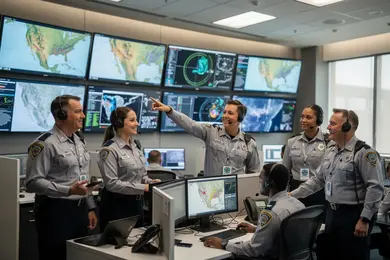
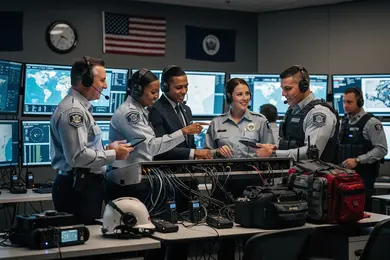
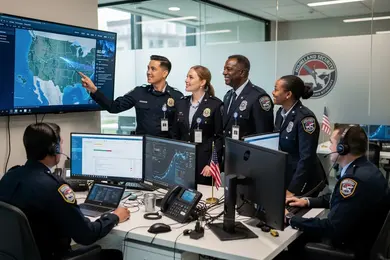
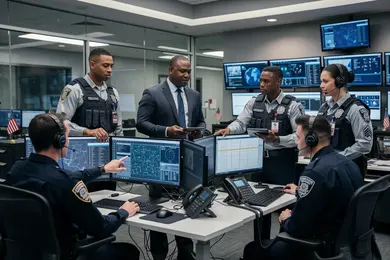
Coordinating multi-agency responses during complex security incidents demands more than procedural knowledge. It requires nuanced understanding of interjurisdictional communication, authority boundaries, and operational interoperability.
Yet, nearly 60% of mid-career professionals entering homeland security fields must navigate education around rigid schedules or on-campus commitments, according to the National Center for Education Statistics data from 2024, restricting timely skill acquisition. This bottleneck impedes agencies seeking personnel adept at synchronizing federal, state, and local efforts under pressure.
Addressing these constraints, online homeland security degrees now prioritize interagency coordination competencies, providing flexible access without sacrificing applied training. This article evaluates these programs to guide prospective students on optimizing education pathways for immediate operational readiness and sustained career growth.
Key Things You Should Know
- Interagency coordination-focused degrees demand mastering complex federal protocols, yet 42% of graduates enter local or private sectors, creating a skills mismatch impacting 15% of DHS interagency hiring needs per 2024 OPM data.
- Employers rank multi-jurisdictional communication and policy navigation skills above technical cybersecurity in 2024 CISA workforce surveys, emphasizing degrees integrating practical exercises over purely theoretical curricula.
- Accelerated online degrees reduce costs by 25% on average but risk diluting immersive crisis simulation training; this tradeoff delays readiness for critical federal coordination roles by 6-12 months, per 2024 GAO evaluations.
What is an online homeland security degree and how does it support interagency coordination?
Online homeland Security degree programs focused on interagency coordination equip students with actionable skills crucial for navigating the overlapping authorities and communication barriers inherent among federal, state, and local agencies. Graduates emerge prepared to mediate jurisdictional disputes and enhance joint operations through strategic frameworks for information sharing and unified command.
For instance, those trained in threat assessment and interagency communication protocols can coordinate complex responses to cyberattacks involving multiple government branches. This ensures rapid decision-making and seamless data exchange in high-pressure environments, highlighting how these degrees specifically enhance interagency collaboration skills.
Programs integrate hands-on coursework emphasizing emergency management, intelligence analysis, and legal frameworks that address recurring challenges such as inconsistent policies and siloed information. This practical focus helps professionals overcome bureaucratic inertia and facilitate cooperation across diverse agencies like law enforcement, the Department of Defense, and public health stakeholders during crises.
The curriculum also aligns with employer demands, particularly the rising importance of security clearances, a requirement growing 300% in job postings between 2015 and 2025, signaling that graduates must be adept at managing classified data and sensitive collaboration.
Prospective students should weigh that online formats demand proactive engagement in virtual simulations and scenario-based learning to develop coordination capabilities effectively. Continuous skill updates remain essential, given shifting mandates and interoperability standards within public and private sectors.
For professionals exploring related career paths, understanding the educational prerequisites for roles like a criminal profiler can clarify whether specialized training complements a homeland Security degree.
How do online homeland security programs compare to campus-based options for collaboration skills?
Online homeland security degree benefits for interagency collaboration depend largely on program design, particularly the integration of interactive, synchronous tools to replicate the immediacy of coordinated response efforts. Virtual simulations and team-based assignments enable students to build situational awareness and interagency communication skills essential for multi-level crisis management roles.
However, these online formats lack the spontaneous networking opportunities inherent in campus programs, which are vital for developing interpersonal trust and deep understanding of organizational cultures.
Campus-based homeland security programs deliver richer face-to-face collaboration experiences, but they struggle to accommodate working professionals who require flexible schedules. Online options address this gap by offering cohort-based projects reflecting real-world incident command systems, allowing immediate application of collaborative skills within current roles.
Demand for online programs is evident. In 2026, Arizona State University Online awarded 134 master's degrees, the largest online cohort nationally in this field, demonstrating employer acceptance of remote credentials when graduates show tangible operational competence.
Workers evaluating collaborative skills development in campus vs online homeland security programs should consider these tradeoffs:
- Online study demands self-motivation and proactive engagement to match campus collaboration quality.
- Campus programs facilitate nuanced interpersonal contact, which may be lacking online despite structured interactions.
- Employers prioritize demonstrated coordination skills and practical outcomes over program format.
Choosing the right pathway requires assessing learning preferences, career constraints, and access to peer networks integral to Homeland Security's interdisciplinary teamwork. For those exploring foundational options in the legal and security sectors, understanding the trajectory from a paralegal studies associate degree may provide broader insight into allied professional roles and credential value.
What types of online homeland security degrees are available and which best fit career goals?
Choosing an online homeland security degree program for interagency coordination hinges on the specific skill sets aligned with the targeted role. Associate degrees typically limit upward mobility in interagency coordination roles, while bachelor's programs build foundational expertise in risk assessment, cybersecurity, and crisis response suited for mid-level operational positions that require cross-jurisdictional collaboration.
Master's degrees focused on applied policy, intelligence analysis, or organizational leadership are often essential for federal career advancement, especially in leadership managing joint task forces or complex interagency networks.
Practical considerations include program accreditation, alignment with federal standards such as FEMA, and integration of real-world simulations. Candidates aiming for federal roles demanding security clearance benefit from curricula connected to intelligence community practices, whereas cybersecurity-focused degrees better support interagency tech operations.
Evaluating whether programs cover multi-jurisdictional incident management and interagency information sharing protocols is critical-programs lacking these components may leave graduates underprepared for collaborative crisis environments.
Graduate outcomes reflect these differences. For instance, Virginia Commonwealth University's online homeland security master's reports a median salary of $99,382, signaling strong employer recognition for strategic coordination skills. Professionals should prioritize programs offering immersive capstones or practicums to bridge theory with daily interagency coordination demands.
For those exploring broader forensic and security-related education pathways, resources outlining options such as a forensic science degree online can provide complementary insights.
How can students verify accreditation and program quality for online homeland security degrees?
Verifying accreditation for online Homeland Security degrees is essential to avoid costly missteps that undermine licensure eligibility or federal employment prospects. Accreditation recognized by the U.S. Department of Education or the Council for Higher Education Accreditation confirms a program meets rigorous standards. Regional accreditors like the Middle States Commission on Higher Education matter for transferability and employer acceptance.
Evaluating program quality and accreditation for online Homeland Security studies requires more than verifying credentials. It demands scrutiny of whether curricula integrate federal, state, and local emergency management frameworks and incorporate practical competencies such as crisis communication and joint operations.
For professionals transitioning from fields such as law enforcement, programs offering interagency exercise simulations, including fire, health, and emergency services, provide operational readiness advantages. Conversely, those pursuing policy roles should prioritize programs emphasizing legislative frameworks and intergovernmental coordination.
Employers place a premium on candidates with demonstrable skills in multi-agency collaboration aligned with workforce demand, where 42% of new U.S. jobs by 2031 will require at least a bachelor's degree, according to University of Maryland Global Campus.
Practical program outcomes, graduation rates, employment statistics, and employer feedback, offer critical insights into effectiveness. Students must also verify state authorization of institutions to ensure eligibility for licensure or government roles, avoiding potentially wasted tuition and time. Understanding how to verify accreditation for online Homeland Security degrees reduces risk in this complex educational pathway.
Students can reference resources like how long does it take to study architecture to gain perspective on pacing and credential completion timeframes relevant to their own scheduling needs.
What courses and learning activities build interagency communication and coordination competencies?
Interagency communication competencies in online homeland security degrees directly influence operational effectiveness, especially when managing complex crises involving multiple jurisdictions. A practical example is an emergency management course requiring students to simulate cross-agency communications to resolve resource conflicts during natural disasters, revealing real-world tensions between federal, state, and local responders.
The curriculum's emphasis on the National Incident Management System (NIMS) and Incident Command System (ICS) protocols reflects employer demand for professionals who navigate layered command structures and maintain interoperable coordination under pressure. This skill set is particularly relevant for roles in government agencies and private contractors where rapid, clear exchange of information can determine mission success.
The standard 30 graduate credit requirement balances thorough competency training with efficiency, avoiding burdensome research demands that do not directly enhance job readiness. This structure supports working professionals seeking immediate applicability rather than purely academic breadth.
Typical learning modalities include scenario-based simulations and virtual collaboration tools that mimic multi-agency task forces, forcing learners to manage real-time stressors such as interjurisdictional disputes and information flow bottlenecks. Such exercises develop negotiation skills and system fluency crucial in situations like counterterrorism responses.
Professionals pursuing these degrees must weigh the tradeoff between specialized communication skills and broader homeland security knowledge to ensure alignment with specific career goals in a rapidly evolving security environment.
What are typical admission requirements for online homeland security programs?
Online master's programs in homeland security prioritize applicants with solid academic backgrounds combined with relevant professional experience to align education with operational demands. Typically, candidates hold a bachelor's degree with a GPA threshold around 2.75 to 3.0, supported by transcripts evidencing coursework in criminal justice, emergency management, or comparable fields.
Practical experience shapes admissions decisions significantly. Programs often prefer or require two to five years engaged in public safety, law enforcement, military, or intelligence sectors to ensure that students can navigate complex interagency dynamics and policy implementation effectively. For instance, a police officer aiming for federal homeland security leadership must substantiate experience in operational strategy or investigative roles to meet expectations.
Standardized tests like the GRE are less commonly mandated, though some competitive programs may still request them for differentiation. Recommendations typically come from supervisors or senior homeland security authorities who can speak to leadership, analytical strengths, and commitment.
Applicants should prepare a professional statement clarifying how their skills and goals interface with interagency collaboration challenges essential to homeland security roles.
Financial investment is notable. St. John's University charges about $1,000 per credit hour, summing to nearly $36,000 for the online master's. Prospective students must weigh this cost against potential earnings and promotion opportunities in sectors where interagency coordination expertise carries significant weight.
How long do online homeland security degrees take, and what do they cost to complete?
Effective online homeland security master's degrees demand a careful balance between program length, cost, and curriculum focus, directly influencing a student's capacity to stay employed and develop relevant multi-domain expertise.
Full-time programs typically run 18 to 24 months, while part-time options extend up to 36 months, impacting flexibility for working professionals. A standard master's requires 36 to 45 credit hours, roughly 10 to 15 courses, which affects both financial and time commitments.
Tuition varies significantly, with public universities charging between $500 and $900 per credit hour and private schools often exceeding $1,000. This pricing dynamic means accelerated programs are costlier but offer time-efficiency advantages. Prospective students should weigh tuition costs against their targeted specialization, such as cybersecurity or emergency management, areas prioritized by employers for cross-agency collaboration roles.
Consider a cybersecurity analyst aiming to pivot into homeland security operations: selecting a program that integrates technical skills with interagency coordination is critical to meet employer expectations for policy fluency and threat assessment. Graduates frequently secure positions in federal agencies, state emergency management, or private firms focused on infrastructure resilience. Doing so requires sustained commitment over multiple years and clear alignment between curriculum and workforce needs.
What homeland security careers rely on strong interagency coordination skills after graduation?
Effective interagency coordination remains a critical competency in homeland security roles, shaping operational success and workforce demand. Professionals such as intelligence analysts, cybersecurity coordinators, and federal emergency management specialists routinely negotiate complex organizational boundaries involving agencies like the Department of Homeland Security, FBI, and state law enforcement.
For instance, intelligence analysts must manage classified data-sharing protocols while navigating competing priorities across federal and local entities to disrupt threats swiftly and accurately.
Cybersecurity coordinators illustrate a notable tradeoff. They must harmonize joint efforts between federal agencies and private sector partners, often contending with distinct communication protocols and confidentiality constraints. Meanwhile, federal emergency management specialists focus on crisis resource allocation and intelligence sharing under pressure, balancing the urgency of rapid response with the necessity of interagency consensus among FEMA, state responders, and NGOs.
Job openings requiring security clearance have surged by over 300% between 2015 and 2025, exposing the growing premium placed on candidates adept at cross-agency collaboration and clearance complexities, according to University of Maryland Global Campus research.
Successful applicants typically engage in scenario-based training that confronts real-world challenges such as bureaucratic delays, information silos, and conflicting objectives, competencies essential for navigating the divergent cultures and operational demands prevalent in homeland security employment.
What salary ranges and job outlook can graduates expect in homeland security roles?
Graduates with online homeland security degrees face a salary spectrum influenced heavily by role complexity, interagency coordination, and geography. Entry-level positions, including emergency management specialists and intelligence analysts, generally start between $55,000 and $70,000, while higher-tier leadership roles in federal agencies or infrastructure protection often command salaries above $100,000, particularly in urban centers.
Professional success in this field increasingly depends on proficiency in managing multi-agency collaboration. Organizations seek candidates who can integrate intelligence and operational activities across law enforcement, public health, and critical infrastructure sectors. For instance, a state fusion center analyst must efficiently synthesize information from diverse agencies under time-sensitive conditions, an ability that directly affects promotion speed and compensation.
Despite a projected 6% employment growth through 2032 for emergency management-related roles, job seekers face barriers such as local budget limitations and federal preferences for prior military or law enforcement experience. These factors can slow advancement for civilian graduates.
To navigate these challenges effectively, candidates should pursue internships or certifications emphasizing joint interagency exercises. This approach enhances credentials and practical expertise, aligning with workforce demands. The emphasis on coordinated skill sets remains a decisive factor in employability and salary negotiation within this specialized labor market.
Are certifications or clearances needed for homeland security careers, and how do degrees help?
Security clearances remain a gating factor for most homeland security roles involving classified data or interagency operations. Although an online homeland security degree establishes foundational knowledge in policy, emergency management, and cyber defense, it alone does not grant clearance eligibility.
Instead, degrees position candidates to meet baseline requirements for clearance consideration, which entails extensive background checks and ongoing oversight by agencies like the Department of Homeland Security.
Practical workforce demands emphasize certifications such as Certified Emergency Manager (CEM) or Certified Information Systems Security Professional (CISSP) to validate specific technical expertise beyond academic credentials. These certifications become critical in fields facing AI-driven cyber threats and multi-jurisdictional security challenges.
For example, responding to large-scale natural disasters requires fluency in navigating overlapping agency protocols, a complexity addressed through integrated case studies in online programs but ultimately tested in live crisis environments.
Key tradeoffs include the limited scope of remote learning to instill real-world security clearance navigation. Candidates must pursue clearance applications independently after employment. Employers expect collaborative communication and planning skills, supplemented by clearances and certifications, before entrusting operational roles within the homeland security ecosystem.
Effective career progression prioritizes balancing formal education with targeted credentialing and clearance acquisition, reflecting the evolving technology and interagency demands critical to homeland security functions.
Other Things You Should Know About Homeland Security
Online homeland security degrees demand disciplined time management due to their asynchronous nature and diverse student backgrounds. Students balancing full-time jobs or family responsibilities should prioritize programs with flexible pacing and clearly structured deadlines to avoid burnout. Programs that require simultaneous team projects may increase the workload unpredictably, so confirming expectations for collaboration and time zones is critical before enrollment.
Specialized curricula focusing on areas like cyber threats or emergency management enhance deep expertise but can narrow job options within interagency environments. Broad programs covering federal, state, and local collaboration provide wider career flexibility and a better foundation for coordination roles. Prospective students should prioritize breadth if they seek varied interagency roles or long-term mobility across homeland security sectors.
Degree level, program reputation, and integration of leadership training heavily affect career trajectory. Bachelor's degrees may open entry-level doors, but roles requiring coordination leadership often expect master's degrees or equivalent experience. Programs offering mentorship, networking with federal agencies, and focused leadership courses increase the likelihood of promotion rather than static placement.
References
- Homeland Security Career And Salary Information https://www.criminaljusticedegreeschools.com/careers/homeland-security/
- Online Homeland Security Degrees: Explore Top Programs https://www.degreesforgood.org/online-degrees/homeland-security-programs/
- Future-Proof Your Career with a Master’s in Homeland Security Leadership | UMGC https://www.umgc.edu/blog/umgc-new-masters-degree-homeland-security-leadership
- Top Online Master’s Degree Programs in Homeland Security for 2025 https://www.onlinemastersdegrees.org/best-programs/homeland-security/
- Dialoguing.org - UN-CMCoord Skills Training https://www.dialoguing.org/training-partnerships/un-cmcoord-skills-training
- Types of Homeland Security Degrees | Compare Schools https://www.criminaljusticeprograms.com/specialty/homeland-security-degrees/
- Emergency Coordination and Incident Management Training Course https://upskilldevelopment.com/emergency-coordination-and-incident-management-training-course
- The Case to Accredit Homeland Security Programs: Why Outcomes-based Accreditation Makes Sense https://jsire.org/the-case-to-accredit-homeland-security-programs-why-outcomes-based-accreditation-makes-sense/
- Differences Between a Criminal Justice and Homeland Security Degree https://www.nec.edu/news/criminal-justice-vs-homeland-security-degree