2027 Homeland Security Skills Employers Want More

Co-Founder and Chief Data Scientist
Facing increasing cyber threats, homeland security professionals must now integrate advanced data analytics with traditional field operations to prevent critical infrastructure breaches. Yet, many entrants struggle to meet employer expectations for both technical proficiency and adaptable threat assessment.
Recent data from the U. S. Department of Education reveals a 24% rise in adult enrollment in online security-related degrees, highlighting a growing need for flexible, career-aligned education that balances work and study. This shift demands prospective students carefully weigh skills acquisition against program accessibility and long-term employability.
This article identifies the key homeland security skills employers prioritize and guides readers in aligning their training with evolving sector demands.
Key Things You Should Know
- A 2024 Department of Homeland Security report reveals 62% of employers prioritize cybersecurity certifications but struggle with candidates' practical incident response skills, forcing many to lean on costly on-the-job training that delays operational readiness.
- Advanced analytic and geospatial intelligence skills now drive hiring, yet the National Security Education Program notes a 29% talent shortage, compelling agencies to weigh recruitment from military versus civilian sectors carefully.
- Homeland Security programs averaging $25,000 in tuition face growing pushback from mid-career professionals due to a six-month minimum credentialing timeline, complicating timely career pivots amid evolving threat landscapes.
What core homeland security skills are most in demand by employers today?
Employers focusing on core homeland security risk assessment skills emphasize candidates capable of analyzing vulnerabilities across physical and cyber domains. These professionals must balance technical cybersecurity expertise with practical threat analysis capabilities to meet evolving operational demands.
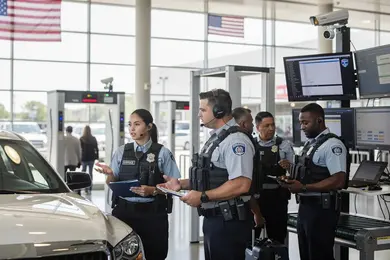
For example, airport security agencies require personnel proficient in integrating real-time intelligence with surveillance technologies, demonstrating the critical homeland security threat analysis capabilities that ensure swift, evidence-based responses.
The Bureau of Labor Statistics projects a 32% increase in information security analyst roles from 2024 to 2034, underscoring the high demand for advanced cyber defense proficiency within homeland security roles. Success depends on mastering network security protocols, threat detection, and incident response, alongside fluency in regulatory frameworks and scenario-based simulations.
However, specialized certificates in information systems security offer quicker access to cyber-specific positions compared to broader homeland security degrees, which develop analytical and leadership competencies essential for diverse agency roles.
Effective professionals exhibit skills in logistical coordination and interagency collaboration during emergencies, enabling them to operate under pressure while managing limited resources. Meeting these criteria prepares candidates not only for current workforce demands but also for challenges across public and private sectors.
Students evaluating educational pathways might consider options like a criminal justice degree online to gain multidisciplinary skills that address practical workforce realities.
Which homeland security degrees and certificates best develop these in-demand skills?
Data literacy and analytics increasingly define the competencies prioritized by employers in homeland security, with 79% of hiring managers valuing these skills in the 2025 St. John's University survey. Candidates wielding degrees and certificates that emphasize technical expertise-such as cybersecurity data analysis, geospatial intelligence, and risk management analytics-are positioned to deliver actionable insights directly applicable to operational and strategic decision-making.
A practical scenario illustrates this: a bachelor's degree holder in homeland security who supplements their education with certificate-level training in data analytics can effectively triage threat intelligence, prioritize vulnerabilities, and generate reports central to federal agency workflows.
This layered credentialing also enables mobility from entry-level roles toward specialized positions demanding mastery in cyber threat analytics or intelligence fusion. Selecting homeland security degrees that develop in-demand skills therefore becomes critical to navigating this landscape.
Employers now expect hands-on experience with tools such as Python programming, GIS software, and statistical modeling, commonly integrated within applied bachelor's and master's programs.
Yet, intensive curricula risk prolonging time-to-degree, creating friction for students balancing workforce entry. In this context, the cyber security fast track program offers a streamlined alternative focusing on relevant analytics skillsets, particularly attractive to working professionals seeking upskilling without full retraining.
Shorter certificate programs are practical stepping stones for those already employed, as employers increasingly reward specialized credentials over generalist degrees for senior roles. Evaluating top certificates for advancing homeland security expertise and integrating them with broader degrees is thus a strategic approach to meeting quantifiable skill thresholds and sustaining employability within a rapidly evolving security environment.
What homeland security jobs can you get and what skills do they require?
Meeting employer expectations in homeland security job opportunities and required skills means navigating a balance between specialized technical expertise and versatile communication capabilities. For example, cybersecurity specialists must interpret complex incident data into accessible reports for non-technical leadership, while emergency management directors rely on precise, concise briefings to coordinate multi-agency disaster responses efficiently.
Data from the 2025 Department of Homeland Security workforce report signals that 62% of DHS supervisors prioritize advanced communication-both written and verbal-as a decisive factor distinguishing promotable personnel. This reveals a workforce pattern where technical proficiency alone is insufficient; communication skills critically shape operational effectiveness and career trajectory.
Key competencies across homeland security careers include:
- Advanced data interpretation and threat assessment for intelligence analysts.
- Network defense, risk mitigation, and incident response for cybersecurity roles.
- Crisis communication, logistical coordination, and regulatory compliance for emergency management.
Another workforce consideration is adaptability: employers emphasize continuous learning via certifications or familiarity with emerging technologies and evolving threat landscapes. Candidates need to develop a blend of deep technical prowess and policy interpretation skills while maintaining agility in interagency collaboration.
These top skills employers seek in homeland security careers reflect real-world tradeoffs between mastering biometrics or cyber defenses and possessing broadly applicable liaison and communication abilities. Those evaluating educational pathways should avoid programs lacking integrated communication training.
For a comparative lens on applied science disciplines, prospective students may find value reviewing careers in forensic science, which also combine technical mastery with operational communication demands.
How do online homeland security programs compare to campus-based options for skill development?
Federal hiring patterns in protective services emphasize operational readiness and practical experience that online homeland security education versus traditional campus programs often reflects differently.
Over 40% of vacancies prioritize candidates already versed in physical and situational awareness tasks, which campus-based programs support through simulation labs and physical training unavailable in purely online courses. This reality sharply influences workforce outcomes, particularly for roles requiring direct crisis response or law enforcement interaction.
Online programs, while limited in hands-on training, provide flexibility essential for working adults or those balancing family obligations, enabling skill development in cyber security and intelligence analysis remotely.
However, students must actively supplement their education with internships or agency certifications, such as federal cybersecurity credentials, to align with employer expectations. This is a critical element for comparative skill development in homeland security online and campus courses.
For example, a candidate pursuing cyber threat analysis via an online program should concurrently engage in real-world exercises offered by FEMA or similar institutions to bridge practical gaps. Meanwhile, campus learners benefit from proximate federal agency partnerships facilitating scenario-based drills and networking critical for accelerated hiring pathways evident in USAJOBS data.
The tradeoff is clear:
- Campus programs cultivate operational skills and direct exposure valued in mission-critical protective services roles.
- Online education requires deliberate pursuit of experiential learning to achieve comparable workforce readiness.
For prospective students weighing options, understanding these distinctions informs realistic planning for employability in Homeland Security careers. Those interested in broader educational opportunities might also consider exploring an online Spanish degree as a complementary asset in law enforcement or intelligence roles where multilingual ability enhances field effectiveness.
What courses and hands-on learning experiences build practical homeland security competencies?
Practical skill acquisition in homeland security education is inseparable from scenario-based simulations and immersive case studies that demand active problem-solving and situational judgment. A Government Accountability Office review identified that over 70% of DHS and DOJ frontline roles require these dual competencies for hiring success.
Training programs that incorporate crisis drills, threat role-plays, and tabletop exercises sharpen decision-making under operational pressure, exemplified by cyber incident response simulations where students prioritize vulnerabilities and communicate clearly with stakeholders, replicating federal cybersecurity challenges.
Beyond classroom simulations, field internships with law enforcement and emergency management agencies expose students to real-world complexities like orchestrating multi-agency responses and handling logistic constraints during critical events.
These experiences nurture analytical agility and adaptability-skills heavily weighted in federal hiring evaluations. However, obtaining such placements frequently poses logistical hurdles, demanding prospective candidates consider the tradeoff between program resources and practical exposure.
Complementing these applied experiences, integrated curricula that blend policy understanding, physical security tactics, and data analysis software proficiency create a multifaceted skill set valued in threat detection and resource deployment.
Yet, access to advanced simulation labs or internships remains uneven. Candidates must therefore evaluate programs on both instructional quality and operational access to ensure readiness for rigorous federal assessment standards.
What admissions requirements do homeland security programs typically have for prospective students?
Federal Homeland Security programs frequently enforce entrance barriers that go beyond basic educational credentials, making certification attainment an unavoidable early hurdle. Over 80% of federal cybersecurity roles mandate professional certifications such as Security+ or CISSP, which many programs require before admission.
This prerequisite introduces a significant time and financial commitment for candidates lacking those credentials, directly affecting their ability to enter and progress within these programs.
Recruiters and federal agencies prioritize candidates who meet strict eligibility requirements, including background checks and clearance status, which often dictate access to internships and employment opportunities tied to homeland security curricula.
Candidates presenting academic records demonstrating STEM proficiency or relevant disciplinary focus improve their competitiveness in specialized tracks, although standardized tests are becoming less common as midcareer entrants increasingly rely on experience.
Applicants should anticipate layered entry criteria, often involving:
- Mandatory industry certifications either prior to or concurrent with enrollment.
- Demonstrated foundational knowledge in computer science, criminal justice, or emergency management.
- Eligibility for security clearance relevant to federal operational roles.
For example, a student aiming for a metropolitan emergency response cybersecurity program must secure Security+ certification upfront. Failure to do so not only delays academic progression but also creates employment obstacles due to federal hiring norms.
Aligning certification timelines with program admission windows and government recruitment cycles is essential to minimize practical friction and maximize workforce readyness.
How long do homeland security programs take to complete, and what do they cost?
Employers now prioritize homeland security candidates who combine traditional knowledge with proficient skills in AI, cybersecurity, and data analysis. The 2026 DHS Homeland Security Threat Forecast reveals over 60% of emerging threats involve misuse of autonomous technologies, pushing demand toward graduates from programs emphasizing technical specialization.
For example, a graduate from a 12-month certificate focused on AI threat detection can have stronger federal employment prospects than someone holding a broader but less tech-focused bachelor's degree.
The choice between compressed certificates or associate degrees versus four-year bachelor's programs centers on timing, cost, and depth. Certificates and associate credentials typically range from 12 to 18 months and cost $5,000-$12,000, enabling faster workforce entry but often require ongoing training as threat landscapes evolve.
Bachelor's degrees usually take around four years, or less if accelerated, with tuition varying from $20,000 to $40,000 for public in-state students and significantly more at private institutions. They deliver comprehensive theory and hands-on experience but at higher upfront investment and opportunity cost.
Many students balance part-time study with employment, which extends program duration but alleviates financial strain. Supplemental certifications in AI or cybersecurity, costing between $1,500 and $4,000, are increasingly essential for career advancement in tech-driven homeland security roles.
What salaries and career advancement can homeland security graduates realistically expect?
Federal homeland security roles notably differentiate salary potential based on specialization, with IT security positions commanding the highest earnings. Those at GS-13 level in IT security can earn between $121,785 and $158,322 annually, reflecting a faster trajectory to premium pay compared to administrative or generalist roles.
This gap illustrates a practical tradeoff: graduates must prioritize continuous technical skill development and certifications like CISSP to access these top tiers, especially within federal agencies.
Advancement beyond GS-11 hinges on demonstrated operational expertise and mastery of evolving security technologies, while state and local civilian roles typically offer lower compensation, requiring strategic targeting of federal openings for substantial salary growth. Transitioning from related fields entails a 1-2 year adjustment period to meet security clearance and federal standards, which can delay progression.
In the private sector, salaries for homeland security contractors vary widely, with cybersecurity practitioners earning $90,000 to $140,000 depending on contract scope and company size. Practical career planning must incorporate relocation demands near federal hubs, security clearance processing timelines, and ongoing credential renewal to avoid salary stagnation.
What certifications, clearances, or licenses strengthen homeland security career prospects?
Security clearances continue to shape access and advancement within homeland security, especially in roles tied to classified information where Department of Defense Secret and Top Secret clearances dictate eligibility and pay scales. Candidates without these clearances face delays, as the vetting process often surpasses six months, creating a timing challenge against acquiring certifications promptly.
For example, border security professionals deployed rapidly to joint task forces depend on active clearances combined with anti-terrorism credentials to respond effectively across agencies.
Professional certifications validate critical expertise beyond clearances. The Certified Protection Professional (CPP) and Physical Security Professional (PSP) attest to practical skills in infrastructure protection and risk management.
Cybersecurity credentials like CISSP and CompTIA Security+ have become indispensable amid rising IT threats within counterterrorism units. Meanwhile, the Transportation Security Administration's Certified Security Manager credential fills an operational leadership niche in transit security-a specialization often overlooked by candidates.
Soft skills and resiliency training are emerging as mandated components in more than half of DHS agencies, directly linked to lowering burnout and improving retention. These programs address teamwork and adaptability deficits frequently underappreciated in technical hiring criteria.
Practical career strategy requires balancing regional licensing demands, such as armed security permits, with jurisdictional timelines and clearance processes. Those navigating this matrix must prioritize obtaining clearances alongside targeted certifications to integrate swiftly and sustain operational readiness in complex homeland security environments.
How can you evaluate and choose an accredited, reputable homeland security program?
Selecting a homeland security program requires scrutiny beyond accreditation to ensure alignment with employer expectations and practical job requirements. Regional or national accreditation bodies such as the Council for Higher Education Accreditation (CHEA) and the U.S. Department of Education validate academic rigor, but confirm the curriculum covers core DHS competencies like risk analysis, emergency management, and cyber defense.
Programs linked to agencies such as TSA, CBP, or FEMA often provide stronger employment pipelines, an important factor given frontline hiring challenges.
Recently, a 35% increase in TSA and CBP applicants failing cognitive and judgment assessments highlighted a critical hiring bottleneck. Programs integrating test-taking strategies and critical-thinking skill development better prepare candidates for these hurdles, translating to improved workforce readiness. This practical emphasis differentiates candidates in competitive hiring environments.
Modality choice impacts skill acquisition and flexibility. Working professionals may prefer hybrid or online asynchronous formats, while immersive in-person training offers realistic security simulations essential for demonstrating applied competencies. Verify skill validation methods such as certifications, capstone projects, or simulations to match actual agency demands.
Request detailed syllabi showing current threat scenarios and up-to-date technology integration to avoid obsolete training. Tuition costs should be weighed against measurable outcomes like job placement support or DHS-recognized credentials to avoid investing in programs with weak employment returns.
Other Things You Should Know About Homeland Security
The dynamic nature of homeland security requires professionals to manage both technical expertise and leadership capabilities. Prioritizing one over the other can limit career advancement since employers expect operators who understand emerging technologies while also leading diverse teams. Candidates should assess job descriptions closely and choose programs that integrate technical training with strategic management to remain competitive.
Security clearances are often prerequisites for many homeland security positions, but the process can extend hiring timelines by several months and requires a detailed background investigation. Candidates without clearances may face limited entry-level options or lower salary offers. It is strategic to pursue clearances early when possible, as having one substantially expands accessible roles and signals trustworthiness to employers.
Specializing in areas like cybersecurity or emergency management can lead to higher salaries and targeted job roles but carries risk if that niche's demand fluctuates. Conversely, a broader skill set offers flexibility to adapt to shifting priorities but may reduce depth of expertise. For those early in their careers, it is advisable to develop a broad foundation first, then intentionally specialize based on regional job market data or personal strengths.
When choosing between public and private sector careers in homeland security for 2027, consider differences in job stability, salary prospects, and security clearance requirements. The public sector may offer more job security and diverse projects, while the private sector can provide higher salaries and innovation-driven environments. Evaluating personal career goals and lifestyle preferences is essential.
References
- Audit finds huge cyber skills gaps at US Department of Homeland Security - Global Government Forum https://www.globalgovernmentforum.com/audit-finds-huge-cyber-skills-gaps-at-us-department-of-homeland-security/
- Homeland Security Degree Online | Find Top Programs & Information https://www.firescience.org/homeland-security-degree-programs-online/
- Top Online Master’s Degree Programs in Homeland Security for 2025 https://www.onlinemastersdegrees.org/best-programs/homeland-security/
- Bachelor of Science in Homeland Security https://www.trident.edu/bachelors-online/homeland-security-degree/
- Homeland Security Degree Programs https://www.criminaljusticedegreeschools.com/degrees/homeland-security-degree/
- Online Bachelor's Degree: Homeland Security https://www.umgc.edu/online-degrees/bachelors/homeland-security
- Courses in Emergency Preparedness, Homeland Security and Cybersecurity https://www.albany.edu/undergraduate_bulletin_archive/2021-2022/cehc_courses.html
- Choosing a bachelor's in homeland security | edX https://www.edx.org/resources/how-to-choose-a-bachelors-in-homeland-security