2027 Online Homeland Security Degrees for Students Who Want Risk and Resilience Roles

Co-Founder and Chief Data Scientist
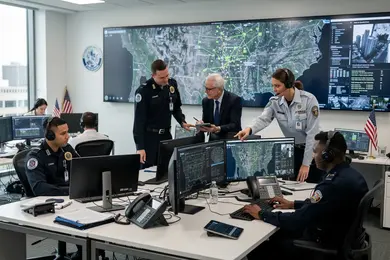
Emergency managers face intense pressure to quickly analyze cyber threats and natural disaster risks while coordinating scarce resources across agencies. As operational complexity grows, so does demand for specialists trained in resilient systems and risk mitigation, with the Department of Homeland Security projecting a 14% workforce increase through 2031.
Yet, many prospective students balance full-time jobs or family commitments, making rigid campus schedules untenable. Recent government data shows that 62% of adult learners prefer online programs for this exact flexibility, highlighting a structural shift toward remote education. This article navigates online homeland security degrees tailored for risk and resilience careers, helping candidates align education choices with real-world workforce demands and lifestyle constraints.
Key Things You Should Know
- Homeland Security degrees emphasize risk and resilience but often lack direct operational training, limiting immediate entry to tactical roles; a 2024 DHS workforce report shows 62% of entry-level hires prioritize practical incident response experience over theoretical knowledge.
- Employers increasingly seek hybrid skill sets combining cybersecurity and crisis management, with the 2024 Bureau of Labor Statistics indicating a 15% faster growth rate in integrated roles, pressuring candidates to supplement degrees with specialized certifications.
- Online program cost-saving benefits are offset by extended completion timelines-average degree duration for working adults is 3.8 years per NCES data-delaying entry into mid-career salary brackets and real-world risk assignments.
What is an online homeland security degree and who is it designed for?
Pursuing online homeland security degree programs in the United States can be a pragmatic choice for professionals balancing demanding roles in law enforcement, emergency management, or private security while maintaining employment. These programs offer targeted academic preparation and practical skills specifically aligned with risk management, crisis communication, and interagency coordination necessary for resilience-focused positions.
Consider a police detective retaining full-time duties who applies newly developed analytical frameworks from coursework to active investigations. This exemplifies the real-world advantage of flexible online formats that do not disrupt existing employment or geographic constraints. However, success in these fields often requires evaluating program accreditation rigor and ensuring alignment with employer expectations, especially for roles demanding security clearances.
The financial implication of this degree path is considerable. For example, federally employed police and detectives-a key homeland security cohort-reported a median annual salary of $75,570 in 2023, with top earners exceeding $120,000 according to the U.S. Bureau of Labor Statistics. This wage premium reflects sector demand for workers equipped with specialized threat analysis and emergency management competencies.
Students should also consider how competency development in threats assessment, emergency planning, and policy implementation directly affects career trajectories within public safety and corporate risk mitigation. Due to varying program quality and delivery modes, professionals often need to research accredited options carefully.
For those exploring related undergraduate credentials, an accredited online criminal justice associate degree can serve as a foundational step toward homeland security specialization and career entry.
How do online homeland security programs differ from campus-based degrees?
The decision between online homeland security degree programs versus campus-based options hinges on the tradeoff between flexibility and practical engagement critical to workforce readiness. Online programs, characterized by asynchronous and synchronous delivery models, allow working professionals to maintain employment while upgrading skills, fitting well for those pursuing strategic, policy, or analytical roles in resilience fields.
However, this flexibility comes at a cost: limited access to the immersive, hands-on experiences that campus-based degrees provide, such as emergency response drills, incident command exercises, and infrastructure assessments essential for frontline operational competence.
Employers in policing and emergency management, sectors expecting 4% job growth and a median wage of $77,270 according to the U.S. Bureau of Labor Statistics, emphasize demonstrated practical ability alongside academic knowledge.
Online students often need to independently secure internships, ride-alongs, or volunteer assignments to match the field exposure campus programs more readily facilitate. This gap can influence employer scrutiny of how candidates validate their hands-on training, impacting long-term employability in homeland security risk and resilience careers.
- Online programs offer broader geographic access and accommodate existing job commitments making them suitable for professionals balancing work and study.
- Campus programs offer immersive environments essential for mastering operational protocols and collaborative emergency responses.
- Selection should align with career goals, weighing direct skill application for frontline roles against analytical positions often served by online curricula.
Prospective students evaluating the flexibility and career outcomes of homeland security online degrees must consider the nuances of skill acquisition and credential validation. For example, those seeking a practical skill set similar to a paralegal studies associate degree often find campus environments indispensable.
Careful assessment of how online programs compensate for practical experience deficits through virtual labs or regional partnerships is critical to avoid gaps that limit their workforce impact.
What types of homeland security degrees and specializations can you earn online?
Choosing an online homeland security degree specialization in the United States requires careful alignment with employer expectations and operational demands. Programs catering to risk management and resilience degrees in homeland security often focus on applied skills like interagency coordination, hazard mitigation, and incident command system implementation, which are critical for federal and state emergency response roles.
For example, a student targeting emergency management agencies will benefit from training in logistical coordination and policy development, whereas those aiming for intelligence fields should emphasize analytical rigor and data interpretation.
Cybersecurity tracks address the growing threat to digital infrastructure by equipping graduates with capabilities to identify and counter cyberattacks, a skill increasingly valued by both public and private sectors. Alternatively, resilience-oriented curricula train professionals to develop recovery frameworks applicable in healthcare, utilities, or transportation, directly influencing operational continuity post-crisis.
Employers prioritize degrees blending technical expertise with real-world problem-solving, so students should seek programs that include live simulations, government partnerships, or capstone projects in practical risk assessment.
Practitioners contemplating an online homeland security degree must also weigh accreditation and curriculum relevance, as some programs emphasize theory over practical application. Virginia Commonwealth University alumni report median salaries around $99,382 for master's graduates, consistent with OnlineU's analysis showcasing typical earnings between $90,000 and $100,000 for online graduates.
Working professionals balancing time and cost must consider that advanced roles demand continuous upskilling beyond degree completion.
For those exploring credentials beyond degrees, a paralegal certificate online can offer complementary skills in regulatory compliance and legal frameworks that intersect with homeland security operations.
How can you tell if an online homeland security program is properly accredited?
Credible accreditation for an online homeland security degree accreditation verification hinges primarily on regional agency recognition, such as from the Middle States Commission on Higher Education or the Southern Association of Colleges and Schools. These accreditors ensure programs meet academically rigorous standards sought by federal agencies and employers, which becomes critical when security clearances or funding opportunities are involved.
Beyond regional accreditation, specialized programmatic endorsements-like the Department of Homeland Security's Center of Excellence designation or criminal justice accreditors-signal alignment with operational standards and regulatory skill demands of homeland security work. Without these, graduates risk entering the job market with credentials viewed as insufficient for roles requiring real-time risk responsiveness.
Employers in emergency management and critical infrastructure sectors frequently prioritize candidates from accredited online homeland security programs in the United States, especially when transparency metrics such as graduation rates and employment outcomes are available. These data points differentiate programs offering practical, workforce-ready skills versus theoretically driven curricula detached from field realities.
Cost considerations also matter: programs can charge as low as $5,760 annually, according to OnlineU, making affordability a key factor for mid-career professionals balancing education with job demands. Practical accreditation verification involves consulting databases like the Council for Higher Education Accreditation, confirming federal student aid eligibility, and contacting accrediting bodies directly.
For those comparing pathways, exploring related fields such as an environmental health and safety degree online may also provide relevant career flexibility depending on sector needs.
What courses, skills, and practical training do online homeland security programs include?
Homeland security education prioritizes operational readiness by combining tactical coursework with practical applications tailored for real-world emergency roles. Students engage in core subjects such as threat assessment, cybersecurity, and critical infrastructure protection while advanced curricula focus on policy integration and intelligence collaboration that mirror multi-agency crisis response environments.
Hands-on exercises simulate scenarios like coordinating natural disaster responses or gathering counterterrorism intelligence, essential for roles within emergency operations centers across federal, state, and local agencies. This training develops proficiencies in resource allocation and interagency communication critical in high-stakes settings.
Technical skills cover data analytics for risk modeling, incident command protocols, and secure communications technology, equipping graduates to apply resilience frameworks relevant to sectors including transportation and energy. The primary qualification in the field remains a bachelor's degree; associate degrees and certificates typically restrict access to analytic and managerial positions.
Soft skills-crisis communication, cultural awareness, and ethical decision-making-are integrated with theoretical knowledge to prepare graduates for evolving threat landscapes that increasingly involve cyber-physical interactions. Programs incorporating practicum or internships provide measurable incident management experience, a factor prioritized by employers when evaluating candidates.
What are typical admission requirements and application steps for online homeland security degrees?
Online homeland security degree admissions heavily weigh proven academic readiness and relevant practical experience, reflecting employer preferences for capable candidates in a security-sensitive field. Bachelor's programs typically demand a high school diploma or GED with a minimum 2.5 to 3.0 GPA, alongside official transcripts and a career-focused personal statement. Letters of recommendation may be necessary for more competitive tracks.
Graduate admissions usually require a bachelor's degree from an accredited institution, often favoring backgrounds in criminal justice or emergency management. Work experience in public safety or security roles can differentiate applicants, as real-world exposure aligns with workforce demand for resilience expertise.
Application processes generally start with submitting transcripts online, and standardized tests are often optional. Fees vary and some programs mandate interviews or purpose statements clarifying applicants' motivations for risk and resilience roles. For example, emergency management directors earn a national median salary of $74,590 with steady growth, emphasizing the strategic value of a clear career trajectory in applications.
Applicants must verify they meet technical requirements for online study, since inadequate hardware or bandwidth affects enrollment timelines and progress. U.S. residency or citizenship is frequently required to access federal aid or government internships.
Professionals transitioning to homeland security benefit from submitting documentation of prior clearances, certifications, or training to shorten degree completion and reduce costs through credit exemptions. Understanding these operational admission details enables candidates to make informed decisions that align credentials with evolving workforce expectations in risk sectors.
How long do online homeland security programs take, and what do they cost?
Program duration in homeland security directly impacts employability, particularly where federal roles mandate a bachelor's degree combined with meaningful intelligence or emergency management experience. Associate degrees typically require two years, while bachelor's programs stretch three to four years full-time, with part-time or accelerated options influencing timelines up to two additional years.
Graduate certificates and master's degrees generally take one to two years but often cater to professionals balancing existing careers.
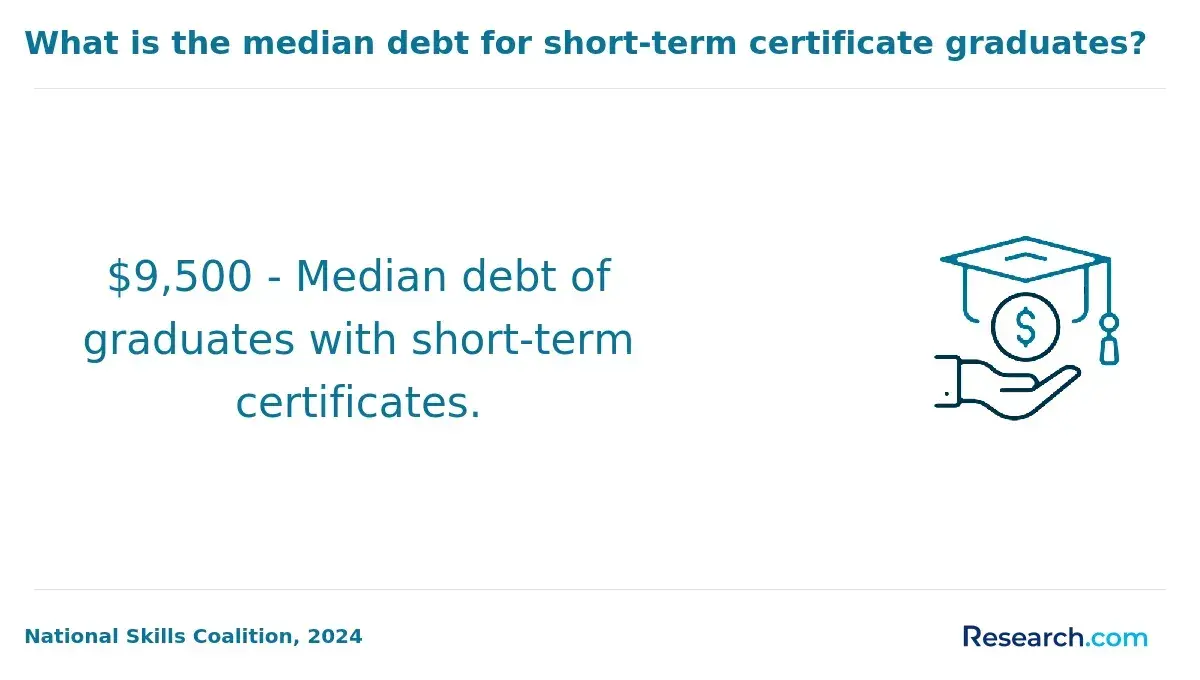
Cost structures vary widely and must be examined alongside program length. Public universities enroll in-state online students at roughly $8,000 to $15,000 annually, with out-of-state fees nearing $20,000, whereas private institutions frequently exceed $25,000 per year. Shorter certificate courses, while less expensive-$3,000 to $7,000 total-may not carry the same weight with employers seeking comprehensive education and practical experience.
Students positioned near regional homeland security hubs-such as Charles Town, WV; Albany, NY; and Ankeny, IA-can leverage local industry connections that sometimes offset the cost or duration drawbacks through enhanced job placement opportunities. Balancing program length, tuition, and hands-on training requirements becomes critical for roles focused on risk analysis or resilience planning, where academic credentials alone rarely suffice.
What risk and resilience careers can you pursue with a homeland security degree?
Risk and resilience careers tied to a homeland security degree often require balancing specialized skills with realistic workforce challenges. Emergency preparedness coordinators, for example, design protocols for natural disasters or terrorist incidents but face rising demands for technical proficiency and interagency coordination.
In contrast, resilience analysts concentrate on fortifying critical infrastructure such as utilities and transportation, a role growing in complexity due to evolving threats.
Federal law enforcement offers a notable wage advantage, with median pay at $75,570 annually per Bureau of Labor Statistics figures cited by Southern New Hampshire University. However, these positions demand rigorous vetting, extensive training, and significant geographic flexibility. Conversely, state and local law enforcement roles deliver more community-level influence but generally lack comparable salaries and career mobility.
Cybersecurity specialists occupy a critical niche defending digital assets across government and private sectors. Such roles increasingly require certifications alongside degrees, reflecting employer preference for candidates with industry-relevant credentials and practical experience. Students and professionals should evaluate:
- Certification and internship requirements adding entry barriers
- Differences in wage scales and advancement between federal, state, and local roles
- Impact of mandatory relocation or travel in federal positions
Aligning a homeland security degree with specific risk and resilience sectors involves a calculated tradeoff between accessibility, compensation, and specialization. Strategic decisions must consider long-term career flexibility beyond initial placement.
What salary ranges and job outlook can homeland security graduates expect?
Salary expectations for homeland security graduates vary significantly based on sector, expertise, and location, typically ranging from $65,000 to over $110,000 annually.
Positions within federal and state agencies frequently start in the mid-$60,000s but can increase substantially with supervisory responsibilities or specialized skills. Management and security roles tied to homeland security degrees often command salaries above $100,000, illustrating an industry preference for candidates who combine analytical capabilities with leadership experience.
The labor market for homeland security-related roles, such as emergency management and protective services, is projected to grow 3-6% through the mid-2020s. This growth corresponds to heightened investment in disaster preparedness, infrastructure resilience, and counterterrorism initiatives, perpetuating demand for qualified professionals.
Career trajectories diverge notably within the field. Cybersecurity analysts with homeland security backgrounds typically encounter faster salary growth and shorter hiring cycles, driven by a shortage of skilled individuals and increasing cyber threats. In contrast, public sector emergency coordinators may see more predictable but modest growth, reflecting stable budgets and institutional frameworks.
Graduates face decisions involving tradeoffs between public sector stability and private sector salary premiums. Employers increasingly seek candidates with a combination of formal homeland security education and hands-on experience in risk assessment tools, regulatory compliance, or incident management. Pursuing advanced certifications and operational roles in crisis response can significantly enhance employability and income potential.
How should students compare and choose reputable online homeland security schools?
Accreditation aligned with U.S. Department of Education or Council for Higher Education Accreditation standards remains a critical filter when assessing online homeland security programs. Prospective students must verify that curricula deliver current frameworks encompassing risk analysis, cybersecurity, emergency management, infrastructure protection, and policy-elements increasingly demanded by employers responding to evolving threats and regulatory landscapes.
Outcomes data such as graduate employment rates in targeted roles provide material evidence of program effectiveness. For example, a 6% projected job growth through 2026 for Texas detectives and criminal investigators, with a median wage above $82,000, signals valuable workforce alignment for students aiming at these roles.
Those oriented toward cyber resilience versus disaster preparedness should prioritize schools offering certifications and courses tailored to these distinct career trajectories.
Program delivery logistics also impact feasibility: asynchronous classes suit working professionals, yet the absence of practical simulations or virtual labs can impair real-world readiness. Support services focusing on career placement and licensure advising prove essential, especially for public-sector employment eligibility.
Consider a mid-career military veteran transitioning to civilian risk management. Choosing a program blending accredited theoretical knowledge with verified employer partnerships and hands-on training fosters a smoother shift to marketable expertise than selecting generalized or purely academic options. Evaluating tuition against such tangible benefits helps avoid overpaying for credentials with limited employability returns.
Other Things You Should Know About Homeland Security
Online homeland security degrees often incorporate simulations, case studies, and virtual labs as practical components. Students might also engage in internships or fieldwork coordinated through local agencies, offering real-world experience alongside their risk and resilience specialization.
Employers often value the degree's accreditation and the candidate's demonstrated competencies over the mode of delivery, but skepticism towards online degrees still exists in certain federal and local agencies. Candidates must ensure their online degree comes from a regionally accredited institution and bolster their profiles with certifications, practical experience, or federal security clearances where possible.
Prioritizing programs with employer connections or government partnerships can mitigate these concerns and improve job market competitiveness.
Working professionals must realistically assess their capacity to manage the workload as online homeland security programs demand substantial independent study and time management, especially in specialized courses like crisis management or cybersecurity. Prioritizing programs with flexible pacing or asynchronous classes helps maintain work-life balance without sacrificing academic rigor.
Underestimating the time commitment often leads to extended program duration or burnout, so aligning program demands with personal and professional schedules is critical for successful completion and practical learning.
Specializing in risk and resilience online narrows immediate job options but deepens expertise in high-demand areas like disaster response planning and infrastructure protection. Students should weigh their career goals before committing, as a broader homeland security degree offers more generalist roles but may dilute specialized competencies employers seek in resilience fields.
For those targeting leadership or analyst roles in risk management, prioritizing focused curricula with applied tools and case studies is a better investment despite somewhat limited lateral mobility.
References
- Online Bachelor's Degree: Homeland Security https://www.umgc.edu/online-degrees/bachelors/homeland-security
- Long Island University https://liu.edu/Riverhead/academics/MS-homeland-security-management
- Homeland Security Career And Salary Information https://www.criminaljusticedegreeschools.com/careers/homeland-security/
- Homeland Security Requirements (Degrees, Jobs & Salary) https://www.allcriminaljusticeschools.com/federal-law-enforcement/homeland-security/
- Online Homeland Security Degrees: Explore Top Programs https://www.degreesforgood.org/online-degrees/homeland-security-programs/
- Online Master's in Homeland Security https://www.coloradotech.edu/degrees/masters/criminal-justice/homeland-security
- Seven Jobs You Can Do with a Degree in Emergency Management and Homeland Security https://www.albany.edu/graduate/news/2025-seven-jobs-you-can-do-degree-emergency-management-and-homeland-security
- Top Online Master’s Degree Programs in Homeland Security for 2025 https://www.onlinemastersdegrees.org/best-programs/homeland-security/
- Online Master of Science in Homeland Security at UMFK https://online.umfk.edu/homeland-security/