2027 Online Homeland Security Degrees With the Best Support for Returning Adults

Co-Founder and Chief Data Scientist
Balancing full-time employment with advancing expertise in homeland security presents a significant barrier for many mid-career professionals. Employers increasingly expect candidates to demonstrate both practical knowledge and relevant credentials, yet traditional degree timelines and rigid class schedules often exclude adults juggling work and family responsibilities. A 2024 National Center for Education Statistics report reveals that over 40% of online higher education enrollees are aged 25 or older, reflecting growing demand for flexible learning models tailored to adult learners.
This shift underscores the need to identify online homeland security programs offering comprehensive support structures that align with complex life circumstances. This article evaluates programs delivering such support to guide adults making strategic educational investments without sacrificing career momentum.
Key Things You Should Know
- Despite an 8% projected workforce growth through 2032, the median salary for online homeland security graduates trails traditional counterparts by 12%, revealing a strategic tradeoff between cost savings and immediate earning potential, per BLS data 2024.
- Employers increasingly prioritize candidates with threat analysis and cyber risk specialization, with 67% of DHS sector leads in 2024 emphasizing certifications linked to digital security over generalist degrees, impacting hiring and advancement.
- Online programs with accelerated pathways reduce time-to-degree by 30%, yet 45% of returning adults report insufficient career services access, constraining post-graduation transition efficacy, according to a 2024 Urban Institute survey.
What is an online homeland security degree?
Securing meaningful career shifts within homeland security requires rigorous, applicable training that online programs may variably deliver. An online homeland security degree equips students-often working adults, who represent 66% of online college students-with knowledge spanning terrorism prevention, emergency management, cybersecurity, and relevant legal frameworks. These flexible online homeland security degree options for returning students allow mid-career professionals to upskill without relocating or interrupting employment, addressing real workforce demands.
However, candidates must critically evaluate programs for hands-on experience provisions, such as virtual simulations or internships, which impact employability and practical readiness. Without them, graduates risk leaving gaps between academic theory and field competencies valued by employers.
Interdisciplinary curricula typically blend policy, risk assessment, and operational procedures suited to government, private security, and nonprofit sectors. Programs embedding certifications in emergency management software or cybersecurity tools can significantly boost candidates' marketability. Yet, these should be weighed against accreditation rigor and career support services targeting adult learners, which influence long-term return on investment.
For U.S. professionals assessing degree costs and outcomes, examining comparative data on criminal justice degree price frameworks supplies a useful benchmark for budgeting within related public safety fields.
Which accreditations should returning adults verify first?
Returning adults pursuing accredited homeland security programs for returning adults must prioritize institutional and programmatic accreditation because these credentials often determine eligibility for advanced roles and professional certifications. Regional accreditation recognized by the U.S. Department of Education or the Council for Higher Education Accreditation remains the baseline for employer credibility and degree transferability. Beyond this, specialized accreditation such as from the Emergency Management Accreditation Program (EMAP) aligns curriculum rigor with industry demands and federal standards.
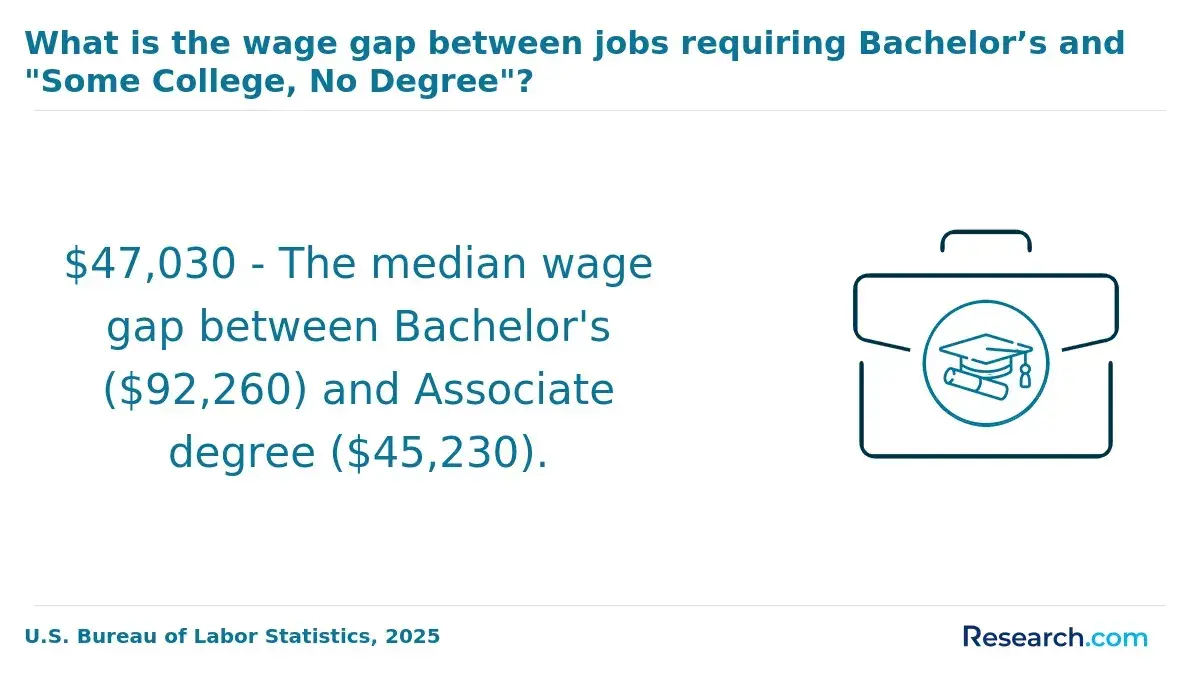
Consider an adult professional aiming for a promotion to emergency management director-a position with a median salary of $84,900 [according to U.S. Bureau of Labor Statistics]. Degrees lacking recognized accreditation may disqualify candidates from these roles or from certifications like Certified Emergency Manager (CEM), frequently required by employers. This institutional validation also affects access to financial aid and military benefits, critical factors for students balancing work and education.
The risk of overlooking accreditation includes stalled career progression, reduced licensing opportunities, and diminished return on investment. Practical vetting involves verifying accreditation status on official government or accreditor websites and consulting admissions advisors.
Key homeland security certifications to verify for adult learners must be considered upfront to ensure alignment with career objectives. For a broader understanding of educational pathways in related fields, the paralegal studies associate degree illustrates how accreditation and certification interplay impacts salary and employment opportunities across disciplines.
How do online and campus homeland security programs compare?
Selecting between online homeland security degree programs versus campus programs should be grounded in how well the delivery mode aligns with one's professional context and skill acquisition needs. For returning adult student support in homeland security education, online formats offer substantial flexibility, allowing full-time professionals to maintain employment while advancing. For instance, a mid-career emergency management analyst can practically apply theoretical insights gained online without relocating or interrupting income streams.
Campus-based programs, by contrast, provide critical experiential learning, such as in-person simulations and secure labs, which federal employers often prefer for operational roles requiring security clearances. However, these programs carry higher costs linked to physical infrastructure and relocation and offer less scheduling flexibility.
Consider these tradeoffs when evaluating:
- Online programs minimize expenses; for example, Thomas Edison State University charges $7,044 annually in-state, a figure notably lower than many campus-based equivalents.
- Campus programs emphasize hands-on practice essential for certain clearance-dependent roles.
- Online students must proactively seek internships or workplace training to compensate for limited direct experiential access.
Ultimately, career goals and employer expectations dictate the best pathway. For those wondering, what is the best degree for a convicted felon can also hinge on program format and access to practical experience, making informed program selection vital.
What admissions requirements do adult learners usually need?
Admissions requirements for adult learners pursuing online admissions requirements for adult homeland security students often reflect a balance between prior experience and academic credentials, tailored to the demands of accelerated or flexible programs. While a high school diploma is a minimum baseline, many programs, especially at the bachelor's or graduate level, expect some college coursework. Professional backgrounds in public safety, emergency management, military service, or law enforcement can substitute for some formal requirements or reduce credit loads, responding to the practical needs valued by employers.
Applicants must typically provide official transcripts and a statement of purpose demonstrating genuine career intent. Additionally, hybrid programs increasingly demand background checks and immunization records due to security clearance processes and hands-on training prerequisites. Despite fading reliance on standardized tests, some programs still request scores to assess applicants with inconsistent academic histories.
Over 60% of institutions by 2024 offered fully online or hybrid homeland security programs, indicating growing necessity for technical proficiency with learning platforms. Pre-admission assessments often verify digital literacy, crucial for retention and credential completion. A practical example is a firefighter with 5+ years of field experience pivoting to homeland security management, who must verify both security clearance and digital skills to succeed.
Understanding these layered eligibility criteria for adult learners pursuing homeland security degrees prevents costly enrollment setbacks and better aligns training with immediate workforce re-entry or advancement. For those seeking compressed timelines, exploring a fast track architecture degree offers insight into accelerated online program structures that can inform strategic educational choices in homeland security fields.
What courses are included in homeland security curricula?
Homeland security education demands a balance between technical skills and strategic insight, reflecting the complex threat environment professionals face. Risk assessment training teaches the evaluation of vulnerabilities-such as weaknesses in hospital operations or transportation systems-requiring nuanced judgment to recalibrate security measures appropriately. Cybersecurity, integral to sectors holding sensitive data like finance and government, focuses on defending against and responding to digital intrusions.
Legal and ethical understanding of federal regulations, including the Homeland Security Act and the Patriot Act, is not merely academic but a practical necessity to maintain compliance and operational integrity. Emergency management instruction centers on orchestrating disaster preparedness and interagency coordination, skills tested in scenarios like hurricanes or coordinated terrorist attacks.
Intelligence analysis hones the ability to synthesize information in real time, a skill essential across federal, state, and local law enforcement. Protecting critical infrastructure-ranging from physical facilities to cyber assets in utilities and energy-requires adapting to rapidly shifting threat patterns. Simulation exercises and case studies sharpen decision-making, replicating crisis conditions to reduce risk in real events.
Graduates face logistical challenges in managing demanding interdisciplinary coursework alongside personal and professional responsibilities. Notably, over 70% of adult learners highlight the indispensable role of proactive advising and career services for persistence, emphasizing the need for institutional support tailored to working adults balancing workforce demands and family obligations.
How long does an online homeland security degree take?
Completion time for an online homeland security degree hinges largely on prior credits and enrollment intensity, influencing workforce readiness and relevance. For working adults with transferable general education credits, such as those documented by George Washington University's bachelor's completion program, credit transfer often cuts required residency by over 15%, trimming degree duration by several months. This compression is more than calendar math; it affects employability by reducing the risk of skill atrophy and ensuring updated knowledge when entering or advancing within federal agencies or private security sectors.
Full-time students typically finish in about two years, while part-time learners balancing employment commonly extend studies to three or four years. This variance introduces a tradeoff between steady job income and faster credential acquisition, a crucial consideration since prolonged timelines may dampen competitiveness in a field where timely expertise matters.
Those pivoting toward specialized cybersecurity roles within homeland security benefit from accelerated programs, whereas aspiring government leaders often invest more time in capstone and practicum components that deepen operational readiness. Institutions that credit military service or prior professional experience reduce redundant coursework, streamlining the path compared to novices.
Logistical factors including course sequencing and asynchronous class formats directly support balancing employment and study, enabling steady progress without unplanned delays. Employers prioritize candidates demonstrating both current knowledge and practical agility, making program length and structure integral to career decision-making.
How much do online homeland security degrees cost?
Online homeland security master's degrees priced per credit offer a flexible financial model that aligns with the realities of working adults balancing job demands. For example, Penn State World Campus charges $1,048 per credit, allowing students to pay for only the coursework they enroll in rather than a flat tuition payment exceeding $30,000 annually. This flexibility suits professionals who need to maintain their employment while advancing their education without incurring significant upfront costs.
For military veterans or federal employees managing 6 to 9 credits per semester, this payment structure helps control expenses and minimizes opportunity costs such as lost wages or unpaid leave. However, tuition alone does not capture the full financial picture; additional fees, textbooks, and technology expenses must be anticipated as part of overall budgeting.
Employers in security, emergency management, and intelligence prioritize candidates' relevant work experience alongside academic credentials. This makes programs that enable part-time study without delaying professional engagement especially valuable. A typical master's degree requires 30 to 36 credits, so tuition can total between approximately $31,440 and $37,728 at Penn State rates.
This pay-per-credit model might impact educational timelines differently compared to cohort programs that demand full-time study, affecting how quickly a student completes their degree and enters new roles. Comparing these tradeoffs with local or specialized institutions-often lacking similar tuition flexibility-is essential for prospective students focused on cost-efficiency and career timing.
What jobs can you get with a homeland security degree?
Choosing a homeland security degree involves balancing workforce demand with the pragmatic constraints of credentialing and clearance timelines. Positions such as information security analysts, with a projected 32% growth through 2034, reflect strong labor market momentum driven by escalating cyber threats and critical infrastructure protection needs. However, obstacles like multi-month security clearance processes frequently delay entry-level hiring, particularly within federal agencies.
Key employment outcomes tend to cluster in federal and state agencies, private security, and disaster response sectors, requiring diverse skill sets from data analysis to physical readiness. For example, intelligence analysts must integrate complex data to anticipate security risks, while emergency management directors handle logistics for disaster mitigation-a role increasingly vital amid climate change.
Career entrants with backgrounds in IT, law enforcement, or emergency services can leverage prior experience for accelerated advancement, but credential specificity remains important; certifications such as CISSP or CISM often separate competitive cybersecurity candidates from generalists. Prospective students should weigh program access to internship placements with governmental or defense contractors to ease the pathway through clearance hurdles.
The geographic distribution of opportunities is uneven, with federal government positions concentrated near Washington, D.C., contrasting with a more widespread private sector and emergency management job market. This reality requires targeted regional consideration alongside skill development when planning a homeland security career pivot.
What salaries do homeland security graduates earn?
Salary trajectories for homeland security graduates reveal a pronounced divide shaped by employer type, credential accumulation, and experience depth. Typical entry-level roles in local or state emergency management hover near $50,000 annually, while federal positions-especially within agencies such as FEMA or the Department of Homeland Security-commonly begin above $75,000. Individuals advancing to senior analyst or cybersecurity specialist roles with graduate degrees and recognized certifications can surpass $90,000 nationwide.
The credentialing path profoundly impacts earning potential. Over 40% of institutions offer stackable certificates allowing working professionals to incrementally build qualifications without leaving their jobs. However, salary growth stagnates without specialized training or advanced degrees focused on areas like critical infrastructure protection or cybersecurity.
A practical example: a graduate entering an analyst role post-certificate might start around $55,000, but the jump to $80,000+ roles typically requires a master's degree or targeted technical certifications. Additionally, federal security clearances and sector-specific credentials often deliver a salary premium exceeding 10%, particularly within intelligence or counterterrorism fields.
These distinctions emphasize the importance of aligning educational investments with chosen workforce sectors and employer expectations for sustainable career and salary advancement in homeland security.
How do you choose the best program for returning adults?
Selecting an online homeland security degree for returning adults hinges on reconciling flexible learning formats with industry-driven competencies. Programs that accommodate asynchronous study and offer credit for prior experience minimize conflict with work and family demands. Cohort models or robust peer networks further enhance retention and application of coursework for professionals juggling multiple obligations.
Employer expectations demand curricula grounded in federal and state homeland security frameworks, covering specialized skills such as cybersecurity, emergency management, and intelligence analysis. Generalized degrees risk producing skill gaps that hiring managers identify as liabilities, particularly in federal agency transitions where targeted expertise, like counterterrorism or cyber defense, can determine promotion eligibility.
Key considerations include:
- Evaluating transparent program outcomes, including graduation rates and job placement statistics sourced from independent entities like the U.S. Department of Education's College Scorecard
- Assessing whether career services provide tailored support for veterans and adult learners with direct employer connections
- Ensuring faculty possess practical homeland security experience rather than purely academic credentials
For example, George Washington University's bachelor's completion program reports a median alumni salary of $95,000, reflecting tangible financial returns for adults completing specialized pathways. This underscores the importance of accrediting bodies and programs designed specifically for experienced professionals seeking credible, workforce-aligned credentials.
Other Things You Should Know About Homeland Security
Recognition depends heavily on the program's reputation, accreditation, and faculty expertise rather than the delivery format alone. Employers in homeland security prioritize degrees from regionally accredited institutions with faculty who have direct experience or research in the field. Returning adults should verify that an online program maintains strong employer connections and practical components like internships or capstone projects, as these factors significantly impact hiring potential.
Online homeland security programs often demand substantial self-discipline due to asynchronous coursework and heavy reading or writing assignments. Balancing coursework with a full-time job requires careful time management, especially since many courses involve analysis of complex policies and crisis scenarios. Adult learners should select programs that offer flexible pacing and realistic workload expectations to avoid burnout and ensure consistent progress toward graduation.
Employers prioritize skills like risk assessment, emergency response coordination, cybersecurity awareness, and interagency communication, which might be superficially addressed in some curricula. Programs lacking hands-on simulations, live exercises, or real-world case studies can leave graduates underprepared. Returning adults should seek programs emphasizing applied learning and partnerships with agencies or industry to develop skills relevant to operational roles.
References
- Careers | New Jersey OHSP https://www.njohsp.gov/connect/about-njohsp/careers
- How to Verify a US Partner School's Accreditation Before Committing https://www.amerigoeducation.com/news/how-to-verify-a-us-partner-schools-accreditation-before-committing
- Adults can return to college, finish, and thrive—with a little support https://www.luminafoundation.org/news-and-views/adults-can-return-to-college-finish-and-thrive-with-a-little-support/
- College Admissions for Adult Learners https://www.mefa.org/article/college-admissions-for-adult-learners/
- Support For Adults Returning To College https://www.learnhowtobecome.org/career-resource-center/adults-returning-to-college/
- How to Verify Online University Accreditation https://expandinghorizonuniversity.com/how-to-verify-online-university-accreditation/
- Homeland Security https://www.monroecc.edu/academics/majors-programs/community-engagement/homeland-security-associate-degree/
- Streamline Adult Learner Enrollment: Best Practices Guide - Collegis Education https://collegiseducation.com/insights/streamline-adult-learner-enrollment-best-practices-guide/
- Balancing Act: Tips for Adults Returning to College - National Association for College Admission Counseling (NACAC) https://www.nacacnet.org/balancing-act-tips-for-adults-returning-to-college/
- Going Back to School as an Adult: How to Do It https://www.umassglobal.edu/blog-news/going-back-school-adult-do