2027 Online Homeland Security Degrees With Public Safety Administration Concentrations

Co-Founder and Chief Data Scientist
Federal and state homeland security professionals often confront the challenge of rapidly acquiring specialized skills while managing unpredictable work schedules and personal obligations. With over 60% of adult learners balancing employment and education, according to the National Center for Education Statistics, online degree programs have become critical for flexible upskilling.
However, choosing a program with a public safety administration concentration requires evaluating curriculum relevance to emerging threats, alignment with federal qualifications, and employer recognition. This article examines online homeland security degrees emphasizing public safety administration to help prospective students navigate program quality, accessibility, and career impact for effective workforce advancement.
Key Things You Should Know
- Employment projections from the U.S. Bureau of Labor Statistics indicate a 6% growth in homeland security occupations through 2032, but most agencies prioritize candidates with field experience over solely online credentials, pressuring students toward hybrid models.
- Programs emphasizing public safety administration integrate strategic incident command training, directly impacting readiness; however, this specialization narrows graduate eligibility for roles requiring broader intelligence analysis skills.
- Cost analysis by the National Center for Education Statistics shows average online degrees with public safety concentrations cost 20% less than on-campus alternatives, yet extended completion times often increase total financial and opportunity costs for working professionals.
What is an online homeland security degree with a public safety administration concentration?
An online homeland security degree with public safety administration focus is a pragmatic route for professionals aiming to lead resource coordination, personnel management, and policy enforcement within emergency response and disaster agencies. This specialization combines operational homeland security protocols with strategic leadership, equipping graduates to address complex challenges especially relevant at local, state, and federal tiers.
For instance, a hospital emergency management director might leverage this education to develop integrated response plans that prioritize law enforcement collaboration alongside medical resource distribution during mass casualty events.
The degree's practical worth is closely linked to the U.S. Department of Homeland Security's fiscal year 2024 budget of $176.18 billion, which indicates ongoing federal emphasis on security infrastructure and workforce expansion.
Roles such as emergency management coordinators, intelligence analysts, and security operations managers demand professionals who can translate evolving funding priorities into effective local initiatives. Students considering a public safety administration specialization in homeland security programs must reconcile academic theory with real-time technology adaption and strict federal compliance.
Employers in this sector seek candidates with tangible skills in grant administration, crisis resource management, and interagency communication. Graduates without hands-on exposure to public safety protocols frequently encounter obstacles transitioning into frontline leadership. Therefore, evaluating program partnerships with government agencies or simulation labs is crucial to graduating career-ready professionals.
Online formats offer flexibility but require self-discipline to engage with scenario-based learning pivotal for decision-making under pressure.
Prospective students exploring this pathway should also consider comparing related options like a criminology degree online to weigh curricula and career trajectories.
How do online homeland security programs compare to campus-based options for public safety careers?
Employers in federal and state agencies typically favor candidates with practical experience and security clearance eligibility, which heavily influences the value of online homeland security degree programs for public safety careers. While campus-based programs offer structured networking, internships, and on-site labs facilitating access to clearance processes, online programs place greater responsibility on students to secure these opportunities independently.
This tradeoff can delay workforce entry despite curricular equivalence.
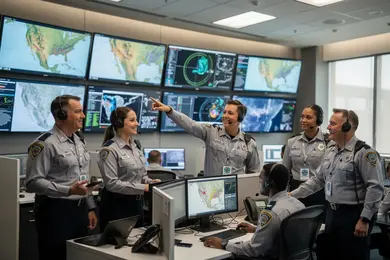
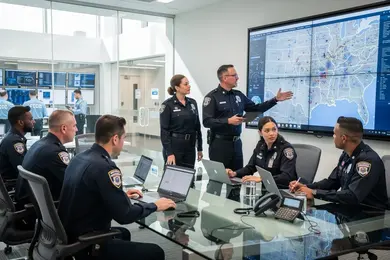
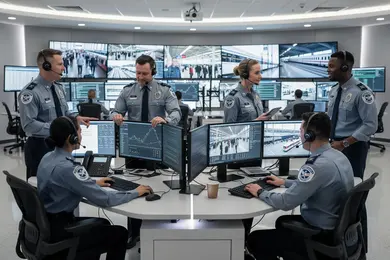
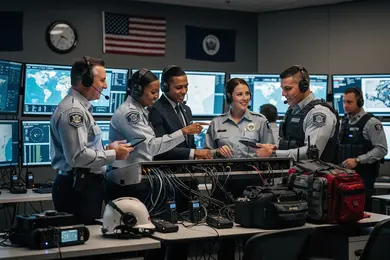
Public safety degrees obtained on campus better simulate command center environments, enhancing face-to-face collaboration essential in crisis response roles. Online learners, often mid-career professionals balancing employment, benefit from immediate application of coursework to current roles but may face challenges in immersive training scenarios. Recruitment pipelines for those without clearance typically run smoother through campus programs due to direct agency partnerships.
Job growth for positions requiring security clearance surged by more than 300% between 2015 and 2025, underscoring the critical need for qualified homeland security professionals. Candidates must weigh the importance of immersive, experiential learning against flexible scheduling options. Online degrees in this context demand disciplined time management and proactive networking strategies to compensate for reduced institutional support.
Those investigating options should also consider the broader spectrum of cybersecurity and public safety credentials; resources like best cybersecurity courses provide valuable insights for aligning technical competencies with security-focused roles.
Comparing campus-based homeland security education vs online public safety degrees highlights a continuum where students' career stages, job flexibility, and need for immersive training dictate optimal pathways.
Which U.S. colleges offer accredited online homeland security degrees with public safety administration?
Deciding on an accredited online homeland security degree with a focus on public safety administration requires evaluating how well programs translate to workforce needs, not just academic reputation. Schools like the University of Maryland Global Campus (UMGC) and Arizona State University (ASU) align their curricula with leadership, emergency response coordination, policy management, and crisis communication.
Yet, prospective students must recognize that accreditation, such as from the Middle States Commission on Higher Education or the Higher Learning Commission, matters less if practical experience opportunities are absent.
Emergency management director roles command a median income of $89,240 in 2024, reflecting steady demand for crisis planners skilled in policy and operations. However, students shifting careers-such as fire service professionals entering homeland security-face a crucial decision: programs offering practicum or internships with local agencies improve applied skills, which employers often prioritize over purely academic credentials.
Given the diversity in program rigor and transfer credit policies, those evaluating the best U.S. colleges for online homeland security and public safety administration degrees should verify how each institution integrates professional development aligned with certifications like FEMA's series. These factors influence employability and advancement.
Working professionals balancing schedules benefit from online formats, but must avoid programs that merely provide credentialing without real-world application. For some, understanding alternative pathways, such as exploring paralegal courses online, may complement public safety administration skills or offer a strategic pivot depending on workforce demands.
What admission requirements and prerequisites do online homeland security programs typically have?
Online homeland security degree admission criteria reflect a balance between academic readiness and practical experience, tailoring access to individuals who can demonstrate both knowledge and workforce relevance. Programs generally require a high school diploma or equivalent for bachelor's entry and a relevant bachelor's degree for master's admission, with minimum GPAs around 2.5 to 3.0.
Professional experience often influences admission decisions, particularly for public safety administration prerequisites for online programs that have a managerial or applied focus.
Standardized tests like the GRE are commonly requested but frequently waived for candidates with substantial work experience or advanced degrees, emphasizing flexibility for mid-career professionals. For instance, a public safety administrator transitioning from emergency management might bypass testing by documenting at least three years of relevant employment, shortening time to enrollment.
Prerequisite courses in risk management, organizational behavior, or legal frameworks are typical, and students without this background may need to complete bridge courses, which can extend program duration and impact working professionals' timelines. This requirement highlights a tradeoff between foundational knowledge and accelerated progression.
Employers increasingly expect graduates to combine theoretical understanding with practical skills, reinforcing demand for programs that validate applied competence. By 2031, 42% of U.S. jobs will require at least a bachelor's degree, underscoring the importance of credential selection aligned with labor market realities.
Prospective students researching program admissions should also consider pathways offered by related fields such as environmental health and safety online degree programs for complementary skill sets.
What core courses and specialized public safety administration topics are covered in these programs?
Leadership in public safety administration within online homeland security degrees demands more than theory-it requires the capacity to coordinate multi-agency responses under pressure while balancing civil liberties and operational mandates. Graduates must navigate complex public safety challenges that vary significantly between urban and rural settings, such as differing infrastructure and resource availability.
Key coursework centers on strategic topics including risk assessment, crisis communication, and continuity of government operations, equipping students to handle realistic operational tradeoffs. The integration of intelligence analysis with field operations is critical for transforming raw threat data into actionable safety protocols, especially in cyber defense where evolving threats necessitate adaptive strategies informed by data on current attack trends.
Workforce implications include the ability to manage budgeting constraints and federal grant complexities, which directly affect agency readiness. For example, a public safety leader's effectiveness often hinges on securing sustainable funding; without it, response capabilities degrade despite strong tactical knowledge.
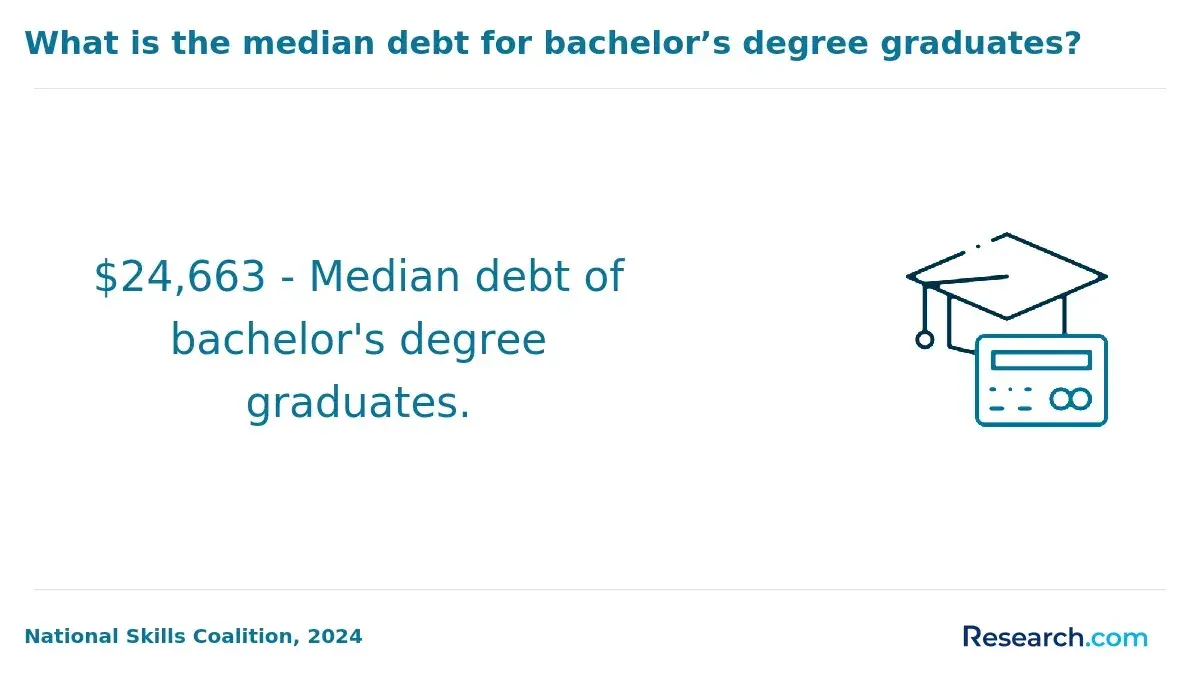
Liberty University's online MS in Public Safety - Homeland Security concentration charges $580 per credit, a factor that must be weighed against return on investment, particularly for professionals balancing education costs with career disruption risks.
Graduates are expected to deliver more than technical skills-they lead information systems management, liaison with fusion centers, and oversee incident command structures. Programs also prepare students for navigating shifting regulations and maintaining workforce resilience, which are vital in a field marked by evolving threats and administrative complexities.
How long do online homeland security degrees take, and what do they cost overall?
Completion time for online homeland security degrees with public safety administration concentrations varies notably, influencing professional trajectories and opportunity costs. Associate degrees take about two years full-time, bachelor's degrees three to four years depending on enrollment intensity, and master's degrees typically 18 to 24 months; accelerated options may shrink this to a year for those with relevant experience.
For mid-career professionals balancing agency demands and personal obligations, these durations affect not only eligibility for promotion but also the ability to meet evolving credential requirements.
Tuition costs fluctuate by institution type and residency. Public universities charge roughly $7,000 to $15,000 for bachelor's programs and $10,000 to $25,000 for master's degrees, while private institutions often exceed $30,000. Budgeting must also consider technology fees and materials, despite potential savings from online delivery.
Employers in government and private sectors prioritize candidates who complete degrees on time and demonstrate coursework relevant to public safety administration. Programs that offer flexibility, recognize professional experience for credit, and maintain transparent tuition structures can ease these pressures.
Substantial resources reflective of sector growth mean graduates must strategically balance education pace with workforce demands to remain competitive in a landscape shaped by contracting and partnership-driven recruitment.
What careers can graduates pursue with a homeland security degree focused on public safety administration?
Employers increasingly seek homeland security graduates specialized in public safety administration for roles that demand coordination across agencies and complex policy enforcement rather than frontline law enforcement duties. This shift reflects rising requirements for administrative acumen in budgeting, legal compliance, and intergovernmental collaboration within police, fire, and emergency management sectors.
Positions within federal entities such as the Department of Homeland Security, FBI, and TSA require security clearance, a barrier that extends hiring timelines and influences job onboarding. Hiring for clearance-dependent roles grew over 300% from 2015 to 2025, emphasizing the premium placed on candidates who maintain or can obtain clearances through accredited pathways.
Graduates working in municipal emergency management face challenges like real-time resource allocation and public communication under pressure, highlighting the importance of strategic decision-making and risk assessment. Candidates without clearance or leadership experience often encounter limited upward mobility, making internships or federal entry programs critical for breaking into competitive roles.
Effective community relations and adapting to evolving technologies such as cybersecurity and biometric identification are increasingly important, especially for private sector roles in infrastructure security. Aligning a public safety administration track with industry-recognized certifications enhances employability in both government and corporate environments.
What are the salary expectations and earning potential in homeland security and public safety roles?
Graduates equipped with at least a bachelor's degree in homeland security and public safety administration access notably higher salary ranges and career mobility than those without degrees, particularly within nuanced sector roles.
Median wages vary, approximately $50,000 for emergency management specialists, extending past $90,000 for senior security managers and federal protective officers. Such disparities reflect how specialized certifications and experience significantly influence compensation.
Projected workforce shifts indicate 42% of new U.S. roles will require at least a bachelor's degree by 2031, creating a clear differentiation in earnings potential and role advancement. For example, a roadside security analyst starting at about $55,000 can progress into management roles earning $75,000 or more within five years. Without a degree, many entry-level positions stall below $45,000 annually.
Public safety administrators in local government make roughly $60,000 to $80,000 but those taking on regional or federal coordination roles surpass $100,000. Private sector positions tied to risk assessment or infrastructure protection pay premiums for advanced education combined with targeted training.
Decision-makers weighing educational investment should consider:
- Strategic leadership and policy roles typically require bachelor-level credentials for advancement.
- Frontline operational positions often depend more heavily on certifications and direct experience.
- Sector-specific employment trends differ between federal, state, and municipal services, influencing salary outcomes.
Accurately forecasting salary and career pathways demands recognizing these nuances to align educational choices with realistic workforce expectations and long-term viability.
What is the job outlook and demand for homeland security and public safety administration professionals?
Employment for homeland security and public safety administration professionals demands a broad skill set that addresses modern threats beyond traditional terrorism. The U.S. Bureau of Labor Statistics projects a 10% growth in related occupations from 2024 to 2034, driven largely by escalating cyber risks, pandemics, and vulnerabilities in critical infrastructure. This signals a shift towards multidisciplinary expertise, especially in risk analysis across diverse hazard domains.
For example, urban public safety departments must balance responses to terrorism alongside public health emergencies, while private infrastructure companies prioritize cyber resilience and supply chain stability. Professionals equipped with combined knowledge of public safety fundamentals and emerging hazard areas gain a competitive advantage but face barriers linked to limited prior tactical or governmental experience.
The practical challenge for graduates is frequently the need for integrated internships or apprenticeships to bridge this gap. Successfully navigating these hurdles often results in placements within federal agencies, infrastructure protection, or risk consultancy. Long-term career viability hinges on continuous upskilling, particularly in cyber defense and crisis management technologies.
Employers give weight to candidates demonstrating strong communication skills and the ability to operate effectively within multi-agency, multi-jurisdictional frameworks. The alignment of educational programs with evolving high-impact threats thus carries significant weight when assessing the program's practical value for workforce entry and advancement.
How can students evaluate and choose a reputable, well-supported online homeland security program?
Quality online programs in homeland security and public safety administration must move beyond accreditation alone to demonstrate practical workforce readiness. Accreditation from bodies like ABET signals academic legitimacy, but employers increasingly expect applied learning, such as crisis simulations and internships, to bridge theory with field realities.
For instance, emergency management directors earn a median annual wage of $89,240, emphasizing how hands-on skills directly affect advancement in competitive roles.
Faculty expertise is a critical differentiator. Students should confirm instructors have current operational experience in homeland security or related government agencies rather than solely academic credentials, as practical insights influence employer perceptions. Additionally, robust student support systems-career advising, technical assistance, and networking-can meaningfully impact certification preparation and professional integration in high-stress environments.
Working professionals pivoting into leadership roles must weigh program flexibility and credit transfer policies carefully. A public safety officer transitioning from fieldwork benefits from programs recognizing prior certifications while offering management training aligned with employer standards. Evaluating employer connections and alumni job placement data reveals how effectively programs convert education into leadership opportunities.
Other Things You Should Know About Homeland Security
Online programs often emphasize theory and policy but may provide limited hands-on training compared to in-person options. Students should prioritize programs that incorporate simulations, scenario-based assignments, or partnerships with agencies to gain applied skills.
Without these elements, graduates may face a steeper learning curve when entering operational roles that demand immediate proficiency. Verifying how the curriculum integrates practical exercises is essential to avoid gaps in skill readiness.
Employers in homeland security expect candidates to demonstrate both relevant knowledge and contextual judgment under pressure. Those applying for leadership roles should prioritize programs with capstone projects or internships that provide evidence of management capabilities.
Additionally, they should balance academic credentials with certifications or experience that affirm operational competence, as a degree alone rarely guarantees advancement.
Balancing full-time work and rigorous course demands is a significant obstacle. These programs typically require substantial reading, research, and project work beyond synchronous class sessions. Candidates must assess their ability to dedicate consistent weekly hours and manage high-stakes assignments without immediate in-person support. Choosing programs with flexible deadlines or modular formats can mitigate these challenges but may extend time to completion.
References
- Homeland Security Degree Online | Find Top Programs & Information https://www.firescience.org/homeland-security-degree-programs-online/
- Best Public Safety Administration Degree Programs of 2026 https://policeofficer.org/degree-programs/public-safety-administration/
- Is a degree in homeland security worth it? | edX https://www.edx.org/resources/is-a-degree-in-homeland-security-worth-it
- 2025 Most Affordable Homeland Security Degrees Online https://www.onlineu.com/most-affordable-colleges/homeland-security-degrees
- Seven Jobs You Can Do with a Degree in Emergency Management and Homeland Security https://www.albany.edu/graduate/news/2025-seven-jobs-you-can-do-degree-emergency-management-and-homeland-security
- Homeland Security Requirements (Degrees, Jobs & Salary) https://www.allcriminaljusticeschools.com/federal-law-enforcement/homeland-security/
- Online Degree Programs from GMC Online https://online.gmc.edu/programs/bachelor-of-applied-science-in-homeland-security-emergency-management/
- What is a Bachelor's Degree in Public Safety Administration? https://learn.neumann.edu/neuperspectives/what-is-a-bachelors-degree-in-public-safety-administration
- Homeland Security Career And Salary Information https://www.criminaljusticedegreeschools.com/careers/homeland-security/