2027 Best Online Homeland Security Degrees for Risk and Resilience Careers

Co-Founder and Chief Data Scientist
Facing an escalating threat landscape, homeland security professionals must rapidly adapt to complex risk and resilience demands while balancing career advancement and personal responsibilities. The challenge intensifies as nearly 60% of adult learners, according to the National Center for Education Statistics, now favor flexible online programs to manage work and study concurrently.
This shift signals critical consideration for candidates seeking degrees that accommodate nontraditional schedules without compromising academic rigor or employer recognition. Prospective students must evaluate which online homeland security programs genuinely deliver practical skills, accreditation, and networking opportunities that align with career pivot strategies or advancement in emergency preparedness and risk management roles.
This article examines the best online homeland security degrees designed for risk and resilience careers, helping readers navigate program quality, flexibility, and labor market alignment to make informed enrollment decisions.
Key Things You Should Know
- Employer demand increasingly favors specialized degrees integrating cyber risk and resilience analytics; BLS data shows 14% faster job growth for candidates with combined technical and policy skills, creating entry barriers for broad-focus grads.
- Programs emphasizing federally recognized certifications align with DHS hiring protocols, meaning non-aligned degrees risk slower recruitment, impacting workforce mobility and long-term advancement opportunities.
- Median program costs rose 9% in 2024 per NCES, pressuring non-traditional students; accelerated degree tracks reduce time-to-employment but often require full-time availability, limiting access for working professionals.
What is an online homeland security degree and how does it prepare you for risk and resilience careers?
Choosing an online homeland security degree program for risk management requires weighing the balance between theoretical knowledge and practical application. These degrees train professionals to assess threats and implement crisis response strategies remotely, but often with limited access to hands-on fieldwork, an essential factor for roles demanding operational readiness.
A plausible scenario is a working professional who must design emergency response plans for federal agencies while juggling full-time employment. The remote format offers scheduling flexibility but may necessitate external internships to gain real-world experience.
Programs emphasize multidisciplinary approaches including public safety law, intelligence analysis, and interagency coordination, which serve as foundational skills for resilience careers. Such blended curricula align with employer expectations in government and private sectors, where analytical tools and risk evaluation frameworks are baseline competencies.
The U.S. homeland security job family projects a 3% growth from 2024 to 2034, signaling steady demand for qualified candidates. However, accreditation and agency recognition remain decisive for actual job placement success. Students opting for online pathways should prioritize programs with practicum opportunities or agency partnerships to mitigate experiential gaps.
For those exploring educational affordability in related fields, consider the cheapest online PhD in criminal justice as a complementary option in strategic planning.
Which accredited online homeland security programs are considered the best for U.S. students today?
Choices among accredited online homeland security degree programs in the United States must weigh practical workforce applicability against program design constraints. Programs that integrate CAHSI or DHS-recognized accreditation confirm alignment with government knowledge standards, a non-negotiable for candidates targeting federal or defense agency roles.
Yet, rigidity in internship logistics or clearance requirements may extend completion time, impacting those balancing current employment.
For working professionals within state homeland security operations, selecting programs offering scenario-based training and flexible pacing preserves career momentum while enhancing operational readiness. Conversely, individuals pivoting from law enforcement to corporate risk management must scrutinize how curricula map to private-sector expectations, which often emphasize applied risk analysis and emergency management skills familiar to resilience jobs.
Given the median annual wage near $45,020 for protective service jobs per May 2024 Bureau of Labor Statistics data, programs demonstrating explicit pathways linked to such roles offer clearer return-on-investment. Established partnerships facilitating internships with government agencies or defense contractors provide strategic pipelines that purely academic programs may lack.
Prospective students should also consider complementing their studies with specialized technical skills, such as those offered in cyber security courses online, to enhance multiskilled employability in dynamic threat environments. The best online homeland security programs for U.S. students blend federal accreditation, practical exercises, and realistic timelines to meet employer demand across evolving resilience careers.
How do online homeland security degrees compare to campus-based programs in quality and outcomes?
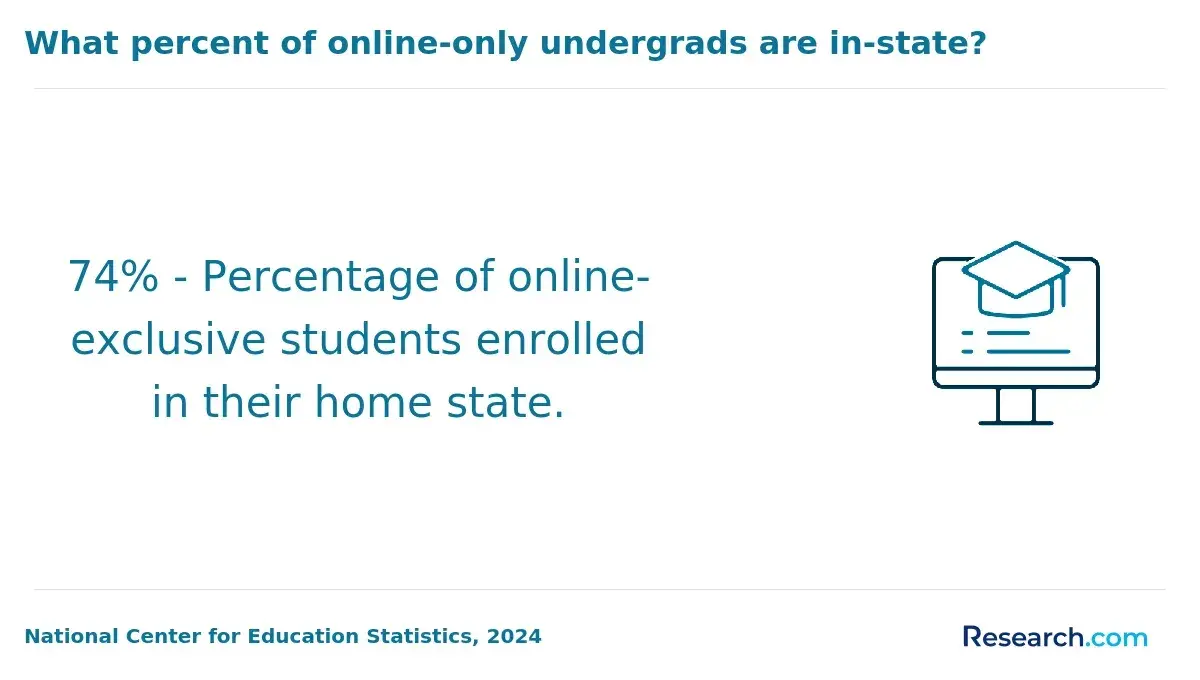
The choice between campus-based and online homeland security programs hinges largely on the balance between hands-on experience and flexible accessibility. Online homeland security degree quality comparison shows both formats adhere to core competencies like risk analysis and emergency management.
However, online curricula typically substitute direct field exercises with virtual simulations, which impacts readiness for roles that demand operational proficiency, such as disaster response or counterterrorism units.
Working professionals seeking career pivots or promotions in agencies like FEMA or private security firms often benefit from online programs since they mitigate geographic and time constraints. Still, employer perceptions emphasize accredited curriculum and demonstrable ROI. For example, 2026 data indicates Bellevue University's online homeland security graduates earn a median salary of $73,896, illustrating comparable economic outcomes to some campus graduates.
Understanding campus-based vs online homeland security program outcomes means recognizing where practical training gaps appear. Roles focused on policy analysis, cybersecurity risk, or intelligence tend to align better with online education, while frontline operational jobs prefer campus experience or additional certifications.
Students evaluating this pathway should consider:
- Maximizing online synchronous sessions and securing local internships to offset reduced lab access.
- Prioritizing programs with strong accreditation to ensure workforce credibility.
- Leveraging online networking platforms to develop professional connections.
- Targeting career fields favoring analytical skillsets when choosing online study.
For those weighing broader career options informed by graduate outcomes, exploring resources on jobs I can get with a masters in forensic psychology offers additional insights into adjacent security and investigative roles.
What concentrations and core courses are offered in online homeland security degree curricula?
Homeland security degree concentrations and core courses must align closely with evolving employer expectations for both technical proficiency and operational leadership. Emergency management, cybersecurity, risk analysis, critical infrastructure protection, and intelligence analysis represent distinct pathways reflecting workplace demands ranging from disaster response coordination to safeguarding critical systems.
A cybersecurity focus, for example, directly prepares graduates to manage threats in sectors like energy or finance, where failure can trigger substantial economic damage. In contrast, emergency management emphasizes rapid decision-making and resource allocation to maintain community resilience under pressure.
Risk and resilience career coursework in homeland security programs extends beyond theory, involving practical incident command systems and interagency coordination for real-world multi-jurisdictional operations. The curriculum increasingly includes data analytics, addressing workforce needs in quantitative threat assessment amid complex security environments.
Employers expect candidates to navigate cross-disciplinary challenges, blending policy understanding with technological and organizational skills.
Given a median annual wage of $83,960 for emergency management directors in May 2024, students must weigh concentration choices alongside certifications like FEMA's Professional Development Series. Flexibility in delivery format affects accessibility for working professionals balancing hands-on training with program demands.
For those considering related fields, examining cost-efficiency and return on investment is essential. Resources such as masters in digital marketing provide comparative insights into online degree value across disciplines.
What admission requirements and prior experience do online homeland security programs typically expect?
Admission into online homeland security programs heavily depends on proven professional competence rather than just academic credentials. A bachelor's degree in related areas like criminal justice or emergency management is foundational, but candidates who can demonstrate 2 to 5 years of relevant experience in fields such as intelligence analysis, emergency response, or cyber defense have a measurable edge.
Employers prioritize applicants who bring operational leadership and crisis management skills that enable immediate application of theoretical knowledge in real-world environments.
Standardized tests like the GRE are often required but can be waived for those with significant security, law enforcement, or military backgrounds. Admissions committees pay close attention to letters of recommendation and personal statements that highlight career trajectories focused on problem-solving within homeland security challenges. Background checks and clearance eligibility are standard parts of the process, reflecting post-graduation job requirements that frequently involve national security clearances.
Transferring into this field from roles such as cybersecurity demands reframing technical expertise into protective threat assessments and policy development. Candidates without direct experience must leverage certifications or volunteer work to prove applicable skills. Specialization tracks, intelligence versus disaster resilience, alter how practical experience is weighted in admissions decisions.
According to OnlineU's 2026 data, homeland security master's graduates from Virginia Commonwealth University earn a median salary of $99,382, validating the financial benefits of aligning credentials with employer expectations and practical expertise.
How long do online homeland security degrees take, and what do they cost to complete?
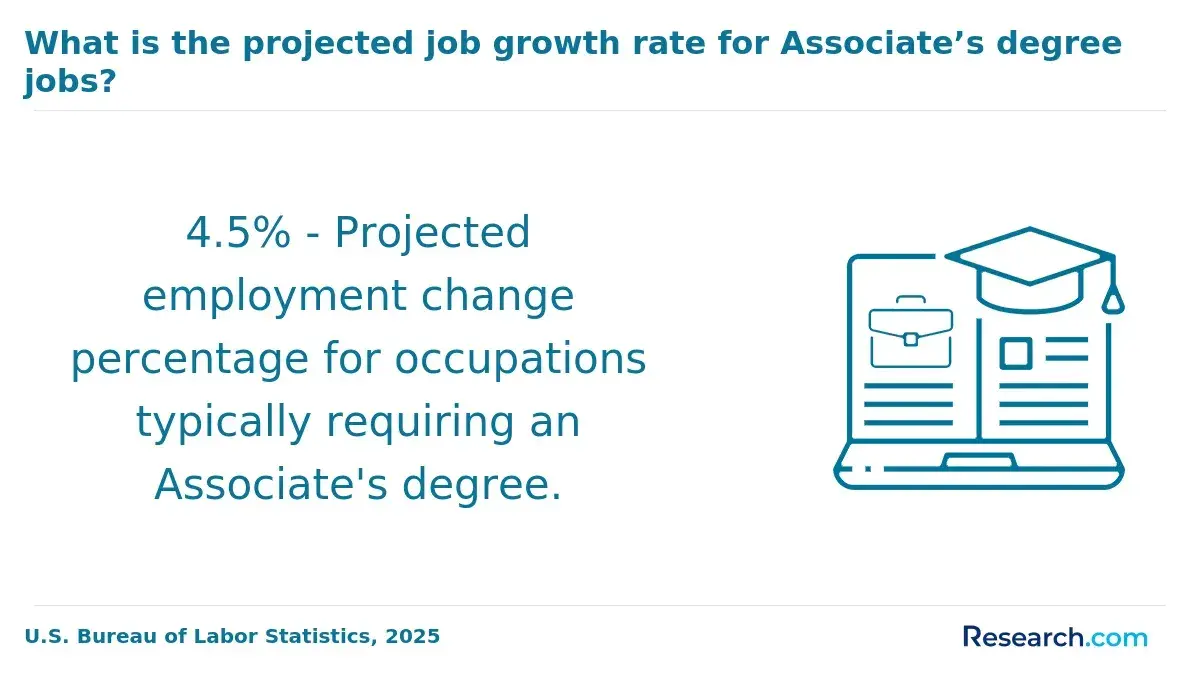
Choosing an online homeland security degree requires weighing time-to-completion against the target role and long-term employability. Associate programs typically span 18 to 24 months and are suited for operational or entry-level emergency management roles where rapid workforce entry is essential.
By contrast, bachelor's degrees demand 3 to 4 years full-time, but part-time options may extend beyond five years, which can strain working professionals balancing career demands.
Master's degrees demand 18 to 24 months and target specialized roles in cyber-resilience and advanced risk management—skills increasingly critical as cyber incidents remain a leading threat. However, these programs carry higher tuition costs ranging from $25,000 to $60,000, not including additional fees and potential travel for residencies. Associate degrees at community colleges cost substantially less, between $6,000 and $15,000, but generally offer narrower advancement potential.
For example, a government employee aiming to shift into cyber-risk analysis will likely find a master's degree indispensable despite the upfront investment and extended time commitment. Meanwhile, those targeting tactical emergency response positions may opt for associate programs to expedite employment with more immediate operational readiness.
What homeland security and emergency management careers can you pursue with an online degree?
Choosing an online degree in homeland security commits students to navigating a complex 120-credit curriculum that balances strategic planning with operational preparedness across public and private sectors.
Roles like emergency management director or intelligence analyst demand not only academic foundation but proven competence in risk software and inter-agency coordination—skills often verified through certifications such as Certified Emergency Manager (CEM). For example, emergency managers coordinating disaster response routinely interact with FEMA and local authorities, requiring nuanced familiarity with federal protocols beyond textbook knowledge.
The workforce landscape poses a clear tradeoff: while technical roles in cybersecurity and disaster logistics see growth, government budget fluctuations can limit hiring and stability, influencing job security unpredictably. Salaries vary broadly between $75,000 and $110,000 depending on specialization and geography, reflecting differing operational demands and sector priorities.
Professionals weighing this degree must assess if their program's technical depth aligns with private sector need, particularly cyber credentials crucial for corporate security roles. Career progress typically hinges on practical experience layered atop academic training, with employers prioritizing candidates capable of translating classroom concepts into actionable field performance.
What are the salary ranges and job outlook for homeland security and resilience-related roles?
Salary prospects in homeland security vary significantly based on role complexity and skill sets, typically ranging from $50,000 to over $120,000 annually. Entry-level positions like analysts or emergency management coordinators start around $50,000 to $65,000, while seasoned professionals with specialized certifications, including security directors and resilience planners, often surpass $110,000.
A practical consideration involves urban infrastructure roles, where integrated cybersecurity capabilities and multi-agency collaboration elevate compensation compared to purely administrative or compliance-focused jobs.
The U.S. Bureau of Labor Statistics projects a faster-than-average 11% employment growth for emergency management directors from 2024 to 2034, driven by increasing public investment in disaster preparedness and resilience infrastructure. This signals heightened demand for candidates combining technical proficiencies, such as GIS mapping and data analytics, with crisis management experience.
Educational costs and credentialing impact career entry and advancement significantly. For example, programs like those at Thomas Edison State University, with annual tuition around $7,044, offer a financially accessible pathway for working professionals.
However, advanced certifications and graduate degrees more strongly influence upward mobility and wage ceilings than undergraduate credentials alone. Aligning studies with current federal resilience standards and practical workforce demands is critical for long-term employability, particularly when considering career pivots.
Prospective students should weigh upfront tuition against expected wage growth, recognizing that workplaces increasingly value continuous skill upgrades and specialized knowledge over generic degrees.
Are licenses, clearances, or professional certifications required for homeland security careers, and how do degrees help?
Securing federal homeland security roles is contingent on navigating stringent prerequisites, especially security clearances that demand U.S. citizenship and extensive background checks sometimes spanning months. These requirements create a significant bottleneck for candidates, placing a premium on preparatory degree programs that integrate certification pathways and clearance support rather than treating credentials as isolated milestones.
For many specialized roles, certifications such as Certified Protection Professional (CPP) or FEMA's Professional Development Series are not optional add-ons but practical necessities that validate applied expertise in emergency management and risk assessment. Meanwhile, degrees serve a dual function: providing foundational knowledge in areas like threat analysis and cybersecurity and establishing eligibility for advanced clearances.
Private sector positions may tilt more towards valuing certifications, but rarely do they forgo the analytical rigor demonstrated by a relevant degree. For example, a cybersecurity analyst in a federal agency requires both a technical degree and a top-secret clearance before beginning operational duties, underscoring the combined weight of these qualifications.
Prospective students must evaluate programs not only on curriculum but on access to clearance facilitation and certification alignment to avoid costly setbacks and improve real-world readiness.
How can you evaluate and choose a reputable, properly accredited online homeland security program?
Choosing an online homeland security program involves navigating critical tradeoffs between academic rigor, practical readiness, and labor market alignment. Accreditation recognized by the U.S. Department of Education or the Council for Higher Education Accreditation is non-negotiable. It ensures the curriculum meets established standards and that employers recognize the credential.
For instance, the Emergency Management & Homeland Security ASU Online program's requirement of 120 credit hours demonstrates a commitment to depth, but quantity alone won't guarantee job preparedness.
A program's balance between theoretical foundations and applied skills directly impacts workforce readiness. Insufficient hands-on training may leave graduates ill-equipped for emergency response roles, delaying their operational contribution and career momentum. For example, emergency management directors need robust exposure to disaster response leadership and public policy, while risk analysts require specialized coursework in cybersecurity and resilience planning.
Employment projections add a practical dimension. The Bureau of Labor Statistics anticipates a 6% growth in emergency management directors from 2024 to 2034. Aligning coursework with this labor demand increases the likelihood of return on investment, but this should be corroborated by published graduation and job placement rates to avoid pursuing programs with limited support or outdated content.
Other vital considerations include program flexibility for professionals, access to experienced faculty, and availability of practicums or internships emphasizing real-world scenarios. Graduates entering the field without this exposure may face steeper learning curves in high-stakes environments. These criteria form a framework for selecting a program that genuinely supports career goals and equips students for the evolving homeland security landscape.
Other Things You Should Know About Homeland Security
Online homeland security degrees tend to favor working professionals due to their flexible schedules and asynchronous coursework. Recent graduates without relevant experience may find some programs less practical since many courses assume foundational knowledge or work exposure to emergency management or security fields. Candidates should prioritize programs that offer experiential learning opportunities or internships if they lack professional background, as this can impact employability after graduation.
Employers in homeland security increasingly accept online degrees, especially when the institution is regionally accredited and the curriculum aligns with industry standards. However, some federal and state agencies still prefer candidates with on-campus training for operational roles due to perceived rigor and networking opportunities. For career advancement, degrees combined with relevant security clearances and certifications carry more weight than the delivery format alone.
In 2027, online homeland security degrees incorporate advanced technologies like AI-driven simulations, virtual reality, and real-time data analytics to enhance interactive learning. These tools provide practical training experiences that closely mirror real-life situations, offering students a comprehensive understanding of risk and resilience in security careers.
Programs with focused homeland security specializations align better with employers seeking candidates for risk analysis, counterterrorism, or cyber resilience roles, offering targeted skillsets valued in federal and private sectors. Broader emergency management degrees provide versatility but may dilute expertise, potentially limiting immediate job placement in homeland security niches. Students aiming for specialized careers should prioritize programs with clear concentration pathways and relevant practicum options.
References
- Differences Between a Criminal Justice and Homeland Security Degree https://www.nec.edu/news/criminal-justice-vs-homeland-security-degree
- How Long Does it Take to Complete a Degree in Homeland Security? https://legalcareerpath.com/how-long-to-complete-a-degree-in-homeland-security/
- 2025 Most Affordable Homeland Security Degrees Online https://www.onlineu.com/most-affordable-colleges/homeland-security-degrees
- Homeland Security Requirements (Degrees, Jobs & Salary) https://www.allcriminaljusticeschools.com/federal-law-enforcement/homeland-security/
- Online Bachelor's Degree: Homeland Security https://www.umgc.edu/online-degrees/bachelors/homeland-security
- Bachelor of Science in Homeland Security https://www.trident.edu/bachelors-online/homeland-security-degree/
- Online Homeland Security Degrees: Explore Top Programs https://www.degreesforgood.org/online-degrees/homeland-security-programs/
- Homeland Security Degree Online | Find Top Programs & Information https://www.firescience.org/homeland-security-degree-programs-online/