2027 Online Homeland Security Degrees That Work Well With Employer Sponsorship

Co-Founder and Chief Data Scientist
Professionals balancing active roles in homeland security face a persistent dilemma: how to advance qualifications without risking current employment. Employer-sponsored education often demands programs that integrate seamlessly with nontraditional schedules and yield credentials valued by agencies.
Recent federal workforce data reveals a 21% surge in online enrollment among adult learners over the past two years, signaling rising demand for flexible, credible degree options that maintain operational readiness. This shift reflects workers' preference for programs minimizing leave while maximizing relevant skill acquisition amid evolving security threats.
This article identifies online homeland security degrees aligned with employer sponsorship, enabling strategic career growth without sacrificing job stability.
Key Things You Should Know
- Completion of employer-sponsored online homeland security degrees shows a 27% higher retention rate but extends time-to-degree by an average 8 months due to simultaneous work commitments, restricting some mid-career pivots.
- Federal agencies favor candidates with degrees featuring applied cybersecurity and emergency management integration-programs lacking these decrease employability by up to 35%, per Department of Homeland Security workforce analytics.
- Employer reimbursement often caps at $5,250 annually under tax-advantaged plans, pushing candidates toward programs with accelerated, lower-credit curricula to optimize employer sponsorship and reduce out-of-pocket costs.
What is an online homeland security degree, and how does employer sponsorship work?
A strategic selection of online homeland security degree programs with employer sponsorship hinges on navigating accreditation rigor, employer alignment, and post-graduation commitments. Employer-sponsored education often covers tuition while retaining employees in essential operational roles, reducing financial barriers but sometimes tying graduates to service agreements or project-specific applications of new skills.
For example, a mid-level analyst at a state emergency management agency may pursue an online homeland security degree funded by their employer to move into strategic planning roles demanding enhanced analytical capabilities. Such sponsorships typically prioritize degrees aligned with National Security Education standards, reflecting real-world workforce expectations within federal and state agencies.
Key considerations include credit transferability, program scheduling flexibility, and timelines for degree completion dictated by employers. Private sector sponsors frequently impose conditions to ensure tangible returns on investment, which can constrain post-degree mobility or flexibility.
Because the Department of Homeland Security employs over 260,000 personnel, the demand for qualified candidates continues unabated, increasing the value of credentialed expertise. However, candidates must weigh these benefits of employer-sponsored online homeland security education against potential contractual obligations that may affect career trajectories.
Prospective students should also explore pathways related to how to become a profiler to understand specialized roles within the security field that intersect with broader homeland security education.
Are online homeland security degrees from U.S. schools credible and properly accredited?
The value of an online homeland security degree accreditation in the U.S. hinges on regional recognition by agencies overseen by the U.S. Department of Education or CHEA. Such accreditation ensures that curricula meet stringent academic standards and that earned credits maintain transferability, which is critical for both academic progression and employer trust.
Employers within federal and state agencies, emergency management, cybersecurity, and private security sectors prioritize candidates with accredited credentials due to the compliance, specialized knowledge, and vetted skill sets these programs provide.
Practical relevance is a decisive factor: programs aligned with accreditation often embed exercises such as risk assessment scenarios and policy analysis reflective of homeland security challenges. For instance, military veterans pursuing a transition into federal emergency management benefit significantly from curricula that align with Department of Homeland Security hiring standards and certifications, making their credentials directly applicable.
Among homeland security master's programs tracked by OnlineU, Virginia Commonwealth University graduates report the highest median salary of $99,382, an indicator of workforce valuation for accredited online credentials. This data helps students critically evaluate returns on educational investment, contrasting programs that may lack workforce alignment or rigorous standards.
Prospective students should cross-check the credibility of U.S. online homeland security programs via the Council for Higher Education Accreditation or the U.S. Department of Education and assess if program focus aligns with career goals, distinguishing between cybersecurity-oriented tracks versus broader emergency preparedness.
Veterans looking for education pathways should consider an online cyber security degree for veterans, which may complement homeland security expertise while enhancing job market leverage.
How do employer-sponsored online homeland security programs compare to campus-based options?
Employer-sponsored online homeland security degree benefits center on operational flexibility and real-time application, offering a critical advantage for professionals balancing shift work and full-time roles. Unlike campus programs, these online options allow learners to immediately integrate new strategies within their work environment, accelerating competence without disrupting workflow.
For instance, a sheriff's deputy can apply learned concepts to ongoing investigations during enrollment rather than waiting until after graduation.
This flexibility, however, entails tradeoffs. Online programs lack campus-based access to specialized internships and simulation labs that are often essential for tactical readiness and physical skill development. Learners must therefore seek external field experiences or agency endorsements to compensate for these deficiencies.
From a workforce perspective, employers prioritize credentials that build on existing experience and support advancement, reflecting a practical view favoring online models that do not necessitate time away from duty.
Projected job growth for police and sheriffs' patrol officers is 3.1% through 2034, signaling steady demand for homeland security-adjacent roles especially suited to working students. Employer tuition support further reduces financial barriers for these online pathways, contrasting with campus programs that typically require relocation and commuting costs.
A comparison of campus-based and online homeland security programs reveals that decision-makers must balance immersive, resource-rich environments against the continuity of employment and employer funding. Selecting a pathway depends on personal learning preferences and career goals.
Prospective students interested in parallel fields may also explore online paralegal programs as an alternative credentialing route within the wider security and legal domains.
What admission requirements and prior experience do online homeland security programs expect?
Admission criteria for online homeland security degree programs often hinge on prior work experience requirements for homeland security programs as much as academic records. Candidates typically need a bachelor's degree in fields like criminal justice or emergency management with a minimum GPA of 3.0, though programs may consider professional experience or military service in lieu of strict grade requirements.
For example, applicants with security clearances or veteran status may bypass some academic prerequisites, gaining access to expedited pathways tied to federal initiatives such as DHS PATHS, which align education with workforce commitments.
Master's-level programs frequently necessitate prior knowledge in areas like cybersecurity fundamentals or risk assessment, prompting some students without this background to complete bridging courses. Employer sponsorship and federal work commitments can be decisive, especially when study-to-work channels demand formal commitments in writing before enrollment.
This structure impacts working professionals needing flexible, asynchronous course schedules and explicit credit for relevant experience, allowing them to balance ongoing duties with educational progress.
Applicants should compile detailed portfolios documenting operational roles and security clearances, as failing to substantiate practical involvement often results in provisional admission requiring internships or additional coursework.
Those with less stringent academic records might pursue graduate certificates or bachelor's completions, compensating through demonstrated experience. Given these variables, programs that mirror the practical conditions of homeland security roles offer better long-term workforce alignment.
Prospective students interested in optimizing their education timeline might also explore comparative programs such as short Spanish degrees online for perspective on balancing duration, cost, and employability.
What courses and specializations are typically offered in online homeland security degrees?
Selecting an online homeland security degree requires weighing specialization value against workforce realities. For instance, a federal law enforcement officer targeting improved threat detection benefits more from courses in intelligence analysis than a broad cybersecurity foundation. Conversely, security professionals in infrastructure protection prioritize resilience planning skills tailored to critical sectors like energy or transportation.
Core curriculum elements such as risk analysis, emergency management, and cybersecurity fundamentals form a necessary foundation, yet true employability gains arise when students align focus with sector-specific demands. Coursework emphasizing Department of Homeland Security standards, practical case studies, and legal frameworks enhances readiness for compliance and operational roles.
Tuition costs present a practical hurdle. With rates near $1,048 per credit at institutions like Penn State World Campus, employer sponsorship decisions often require mapping credit expenses directly against anticipated salary increments and promotion timelines.
How long do online homeland security degrees take, and what do they cost with sponsorship?
Completion time for online homeland security degrees varies significantly with credential level and pacing, often stretching from 18 to 36 months. Bachelor's programs typically take longer, around four years part-time, especially when combined with ongoing employment. While employer sponsorship can alleviate tuition expenses, it rarely shortens the overall timeframe, which hinges on credit requirements and course availability.
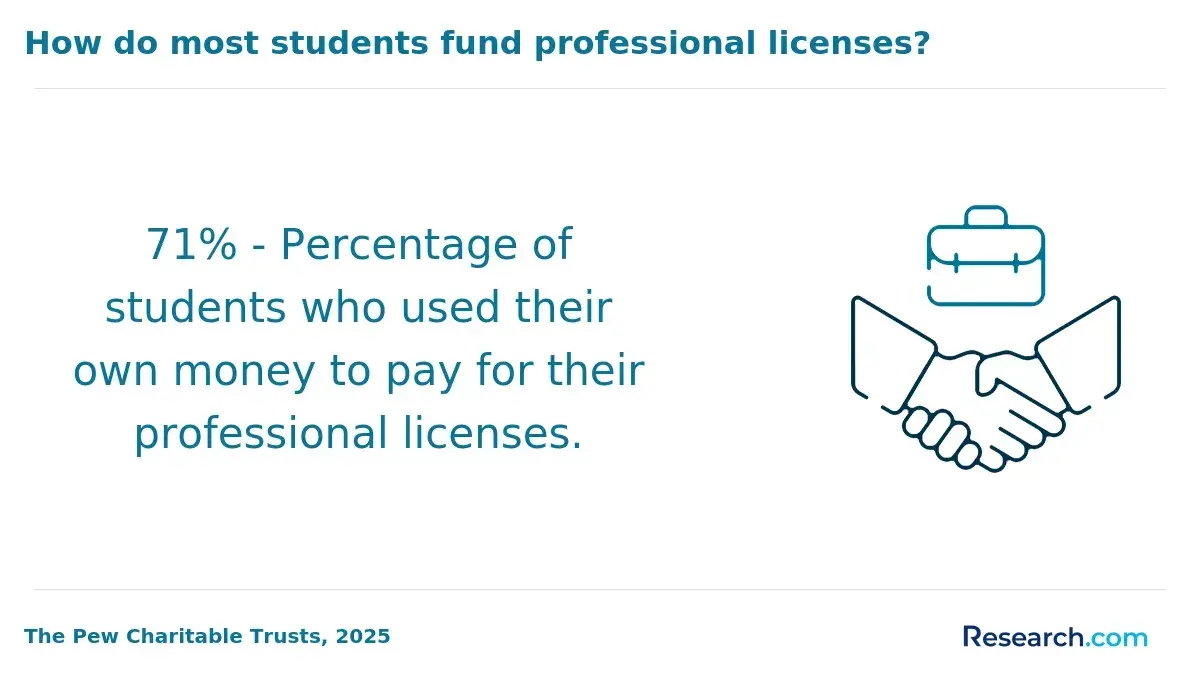
For professionals balancing work and study, accelerated paths demand consistent weekly commitments, usually between 12 and 20 hours, making disciplined time management and employer flexibility essential. Tuition costs-ranging widely from under $10,000 to over $40,000-must be weighed carefully against sponsorship policies, which often include caps on reimbursement or mandatory grade thresholds.
Consider these practical scenarios: a federal law enforcement officer aiming for promotion may find a two-year bachelor's program costing roughly $15,000 after sponsorship offers a strong strategic balance. Conversely, a private security manager could pursue a shorter certificate priced near $7,000 with partial employer funding to shift career trajectories more rapidly.
Decision-making should incorporate employer leave policies, reimbursement limits, and program rigor upfront to avoid pitfalls that could delay completion or diminish career leverage. Balancing workforce demands, financial capacity, and education duration helps ensure alignment between program choice and professional goals.
Which homeland security career paths align best with employer-sponsored online degrees?
Online homeland security degrees that receive employer sponsorship serve as critical investments, particularly for personnel aiming to maintain operational effectiveness while advancing academically. These programs are designed to balance the demands of rigorous agency schedules with relevant credentialing, targeting roles such as law enforcement, intelligence analysis, emergency management, cybersecurity, and border security coordination.
For example, patrol officers typically require education that integrates criminal justice foundations with applied skills like digital forensics and crisis response. Such targeted curricula facilitate smoother promotions within agencies, where practical scenarios reflect daily job challenges.
Intelligence analysts, by contrast, must navigate complex threat assessment tools and data analytics under federal mandates, emphasizing flexible, competency-based education that accommodates classified workloads and rapid policy shifts.
Emergency management students benefit from degrees aligned with certifications such as National Incident Management System (NIMS), directly impacting their ability to lead interagency responses efficiently. However, prospective students should consider the operational tradeoffs, including asynchronous learning's limitations in hands-on training and the challenge of synchronizing coursework with stringent agency certification timelines.
Key employer expectations include:
- Modular design enabling study amid unpredictable work hours.
- Applied coursework emphasizing problem-solving over theory.
- Sponsorship that often mandates curriculum relevance to current agency standards.
These factors underscore that while online degrees open pathways in homeland security, their true value depends on how well they integrate with real-world job roles and organizational priorities. Prospective candidates need to assess whether a program's flexibility and content align with their operational realities and long-term workforce trajectories.
What salary ranges and promotion opportunities can homeland security graduates expect?
Starting salaries for homeland security graduates typically range between $50,000 and $70,000, with federal roles offering the upper end and often higher stability. Mid-career positions in government agencies like the Department of Homeland Security or FEMA usually pay $75,000 to $95,000, while specialized roles-particularly in cybersecurity, intelligence, or emergency management-can surpass $110,000. A bachelor's degree remains the practical baseline credential for accessing these jobs, particularly entry- and mid-level roles.
Promotion paths vary significantly based on sector and credentials. For instance, an analyst in a federal agency might expect to move into supervisory roles within 5 to 7 years if security clearances and advanced degrees, such as a master's, are secured.
Within private sector firms supporting homeland security, advancement often depends on adding cross-disciplinary skills, including IT security or project management, but salary progression may outpace federal tracks despite less formalized promotion structures.
Tradeoffs between federal and private sectors include federal jobs offering predictable career ladders and comprehensive benefits but slower salary growth, while private employers may provide rapid pay increases but with less job security. Many employer tuition sponsorships require multi-year service commitments, making the financial and time investment a critical factor in career planning and salary maximization.
Graduates aiming to increase earnings and promotion opportunities should consider pursuing advanced degrees and certifications such as CISSP or PMP and target agencies with established career pathways. Candidates without bachelor's degrees face limited options, emphasizing the credential's central role in long-term prospects in this field.
Do homeland security roles require certifications, clearances, or licensing beyond a degree?
Possessing a bachelor's or master's degree in homeland security materially aids theoretical understanding but rarely suffices for entry or advancement without meeting stringent clearance and credential requirements.
Federal agencies such as the Department of Homeland Security, FBI, and TSA impose multi-tiered security clearances, from Confidential to Top Secret, that involve rigorous background investigations often lasting several months. These clearances are non-negotiable; lacking them bars access to classified duties regardless of academic achievements.
Certification demands also vary widely by specialization and employer. For law enforcement roles, state POST certification or equivalents are typically mandatory. Cybersecurity professionals in homeland security environments are expected to hold credentials like CISSP, CEH, or CISM to verify technical expertise sought by employers.
Emergency management positions often require FEMA's National Incident Management System (NIMS) certification or comparable state-level qualifications to validate disaster response readiness.
Real-world employment outcomes highlight these credentials' critical role. For instance, Arizona State University Online reported 134 graduates from its homeland security master's program last year, but degree holders still face competitive credentialing pressures and clearance hurdles that strongly influence hiring.
Thus, aspirants must budget time, financial resources, and effort to navigate clearance procedures and certification processes concurrently with academic studies. Employers frequently mandate immediate initiation of clearance post conditional offer to prevent operational delays, underscoring a complex, multi-factor evaluation beyond education alone.
How can working adults choose a reputable online homeland security program their employer will fund?
Employer funding for online homeland security degrees depends heavily on accreditation and curriculum alignment with federal roles. Regional accreditation or programmatic recognition tied to law enforcement, emergency management, or cybersecurity frameworks are de facto minimum requirements.
Programs emphasizing applied competencies-such as preparation for federal or state certifications-hold significantly more weight with employers than those focused primarily on theory.
For example, an IT professional transitioning to cybersecurity within homeland security must confirm the program's modules correspond to DHS or agency standards to qualify for reimbursement and meaningful career shifts. Without this, even a reputable degree might not advance employment outcomes.
Employers also prioritize partnerships embedded in workforce pipelines like the DHS PATHS initiative, which directly channels candidates into government roles. This connection reflects a higher return on investment (ROI) for employers compared to generic online credentials.
Practical steps include:
- Consulting HR or benefits coordinators about approved programs aligned with corporate education policies.
- Requesting course descriptions and competency outcomes to verify relevance to federal job requirements.
- Ensuring program flexibility, such as asynchronous courses, to fit demanding work schedules and improve employer backing.
Cost containment matters: programs exceeding $30,000 must clearly support career advancement or certification pathways. The documented DHS PATHS program underscores how education tied directly to federal hiring pipelines enables measurable employer ROI and workforce readiness.
Other Things You Should Know About Homeland Security
Most online Homeland Security degrees designed for employer-sponsored students expect learners to manage substantial weekly workloads, often including group projects and timed assessments. While asynchronous content offers flexibility, students with highly unpredictable shifts or overtime demands should prioritize programs with robust deadline leniency and extended course availability. Programs lacking adaptable structures risk conflicts with work responsibilities, potentially delaying completion or reducing engagement.
Federal agencies recognize online Homeland Security degrees from accredited institutions, but they weigh program rigor and reputation heavily during hiring. Employer sponsorship may indicate practical alignment but does not guarantee agency preference. Applicants should ensure their program includes curricula relevant to federal standards and explore internships or work projects that demonstrate applied competencies.
The technical demands of online Homeland Security programs include secure platforms, simulation tools, and real-time communication software. Students lacking access to reliable technology or those who struggle with self-directed learning should reconsider enrolling without support systems in place. Prioritizing programs offering comprehensive technical support and structured pacing can reduce drop-out risk and improve learning outcomes.
References
- Homeland Security Career And Salary Information https://www.criminaljusticedegreeschools.com/careers/homeland-security/
- Top Online Master’s Degree Programs in Homeland Security for 2025 https://www.onlinemastersdegrees.org/best-programs/homeland-security/
- Homeland Security Requirements (Degrees, Jobs & Salary) https://www.allcriminaljusticeschools.com/federal-law-enforcement/homeland-security/
- Online Homeland Security Degrees: Explore Top Programs https://www.degreesforgood.org/online-degrees/homeland-security-programs/
- What Is a Homeland Security Degree? https://www.trident.edu/articles/what-is-a-homeland-security-degree/
- Security Officer Certifications and Their Benefits: Building a Career, Not Just a Job - NITA https://investigativeacademy.com/security-officer-certifications/
- Types of Homeland Security Degrees | Compare Schools https://www.criminaljusticeprograms.com/specialty/homeland-security-degrees/
- Online Master of Science in Homeland Security at UMFK https://online.umfk.edu/homeland-security/
- Homeland Security Degree Online | Find Top Programs & Information https://www.firescience.org/homeland-security-degree-programs-online/
- Online Bachelor's Degree: Homeland Security https://www.umgc.edu/online-degrees/bachelors/homeland-security