2027 Online Homeland Security Degrees for Students Who Want Infrastructure Protection Roles

Co-Founder and Chief Data Scientist
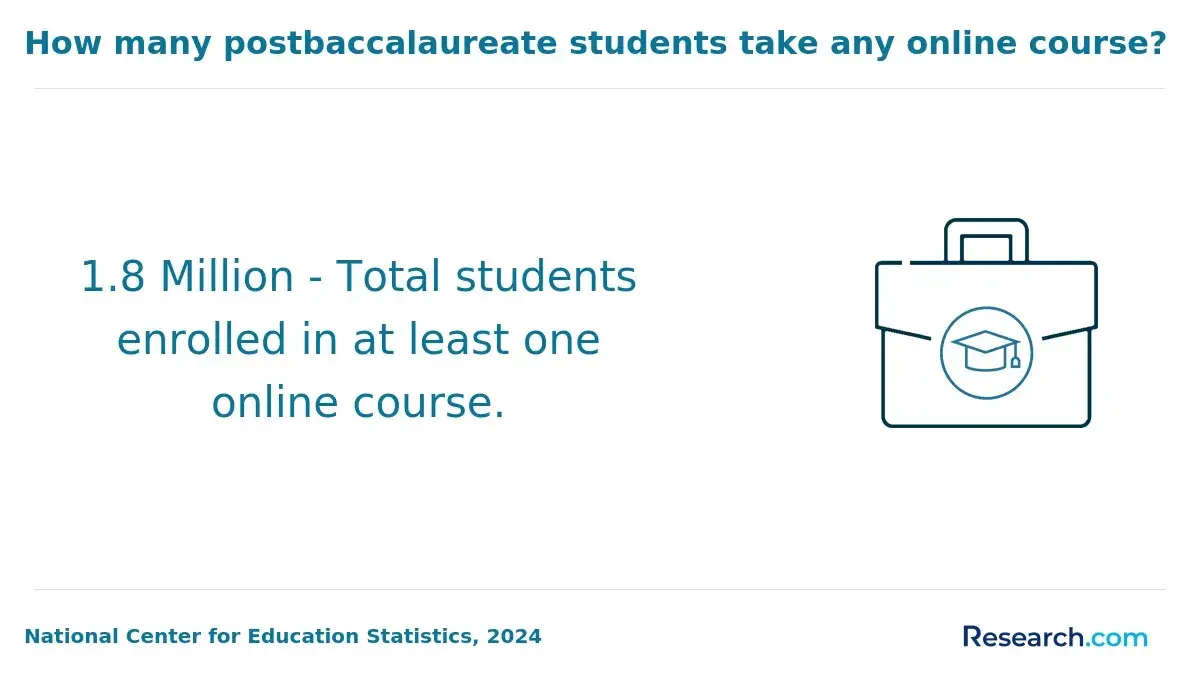
Facing an escalating volume of infrastructure threats, security professionals must swiftly acquire specialized competencies to counter complex risks in urban transit, energy grids, and communication networks. Employers now demand candidates with flexible, job-relevant education that supports immediate application in critical protection roles. According to the National Center for Education Statistics, 41% of graduate students enrolled exclusively in online programs in 2024, a shift that reflects growing demand for accessible learning amid workforce obligations and geographic constraints.
This article evaluates online homeland security degrees for students targeting infrastructure protection roles, examining program features, practical return on investment, and alignment with evolving employer expectations to guide informed enrollment decisions.
Key Things You Should Know
- Online homeland security degrees focusing on infrastructure protection often require 18-24 months part-time, with average tuition around $22,000, impeding rapid reskilling amid growing cyber-physical threats quantified by DHS at a 15% annual attack increase.
- Employers prioritize candidates with combined technical and policy expertise; graduates from programs lacking applied risk assessment or federal regulatory training face a 25% lower job placement in infrastructure roles, per National Security Studies data.
- The sector's projected 10% job growth through 2030 contrasts with uneven state authorization for online degrees, creating credential recognition bottlenecks that limit early-career mobility in strategic infrastructure defense positions.
What is an online homeland security degree?
Online homeland security degree programs in the United States must be evaluated through their capacity to deliver applicable skills in risk assessment, cybersecurity, and emergency management, tailored for infrastructure protection roles where strategic and technical expertise converge. Graduates might manage security operations for utilities or transportation, balancing the complexities of physical and digital threat environments.
Employers expect candidates to have both theoretical foundation and practical experience with cybersecurity tools and incident response. Programs that incorporate virtual labs, simulations, and real-world case studies aligned with federal guidelines such as the National Infrastructure Protection Plan offer crucial advantages. However, the inability to replicate hands-on fieldwork and secure internships remotely remains a notable limitation for some online learners pursuing flexible homeland security degrees for infrastructure protection careers.
Employment outlook reinforces this pathway's viability: information security analysts are projected to grow by 33% over the next decade, markedly higher than the national average. This demand signals opportunities but also increased competition that favors candidates who combine flexible, online study with active professional networking, often easier on campus.
Prospective students must critically assess program accreditation, curricular rigor, and job placement outcomes to align education with career objectives in government, private security, or intelligence sectors. For insight on related educational costs, see criminal justice degree cost.
Which accreditation should an online homeland security program have?
Choosing an online homeland security program without rigorous accreditation risks undermining career prospects, particularly for federal roles requiring security clearances. Programs with regional accreditation and recognition by the Council on Education for Public Health (CEPH) or FEMA's Emergency Management Institute offer a critical edge by validating expertise in public health emergencies and infrastructure protection. These credentials matter because a bachelor's degree lacking regional accreditation may block entry into federal emergency management jobs and restrict access to advanced professional training.
The U.S. Bureau of Labor Statistics reports emergency management directors earn a median wage of $83,960, reflecting demand for candidates holding a credible degree combined with practical experience in disaster planning or public administration. Without recognized accreditation, mid-career professionals in infrastructure security likely encounter promotion barriers or missed credentialing opportunities. Programs integrating industry-standard certifications like Certified Emergency Manager (CEM) preparation aligned with FEMA frameworks provide more direct applicability to protecting critical sectors, including energy, transportation, and communications.
Students evaluating accreditation standards for online homeland security programs should also consider credit transferability and employer recognition, since these factors strongly affect workforce mobility and hiring outcomes. Practical coursework tied to FEMA standards drives operational knowledge essential in complex infrastructure roles. For context on degree value comparison, see this analysis on paralegal salary associate's degree.
How do online and campus homeland security programs compare?
Practical readiness differentiates campus and online homeland security degree benefits, particularly where infrastructure protection demands hands-on skill and real-time response. For candidates targeting roles such as federal infrastructure analysts, campus programs provide immersive, experiential training that simulates cyber defense scenarios essential to counter the $10.5 trillion global cybercrime threat projected by 2025. This direct engagement cultivates operational familiarity with threat mitigation tools seldom matched by online learning environments.
Conversely, online paralegal programs and comparable homeland security programs offer flexibility valued by working professionals pursuing career pivots or advanced qualifications, though often at the cost of limited access to physical labs and collaborative networks integral to traditional programs. Employers frequently weigh evidence of verified practical experience or intensive campus training heavily, especially in sectors like utilities and transportation where hands-on competence underpins effective cybersecurity and physical protection.
Students must balance job flexibility, access to institutional resources, and employer expectations. Those within federal agencies might blend online theoretical study with sponsored drills, whereas recent graduates typically benefit more from campus programs through direct networking and skill development tailored to immediate workforce entry. Evaluating differences between online and traditional homeland security programs through this operational lens clarifies which pathway aligns best with a student's professional context and long-term employability.
For prospective students comparing education pathways, exploring specialized options such as online paralegal programs offers insights into program structures balancing flexible learning and practical application within security-related disciplines.
What courses are in an infrastructure protection curriculum?
Infrastructure protection degree courses online emphasize a critical blend of cybersecurity and physical security curriculum for infrastructure protection that matches the nuanced demands of contemporary threat landscapes. Graduates must navigate vulnerabilities spanning electric grids, water systems, and transportation networks, where failure to integrate both cyber defense and physical system safeguards risks operational paralysis.
Curriculums prioritize skills in intrusion detection, threat intelligence, and incident response, reflecting a 29% projected employment growth for information security analysts from 2024 to 2034. Students gain practical exposure to systems like SCADA to manage risks in energy and manufacturing environments, essential for real-world industrial control protection. Employers increasingly expect professionals who understand compliance with standards such as NIST and CISA guidelines, bridging technical operations and regulatory frameworks.
Decision-making under threat scenarios is strengthened through risk analysis tools and simulations replicating cyber-physical attacks, preparing graduates to allocate resources effectively. Programs that lack hands-on components may leave graduates unprepared for workforce realities, including the need to balance technical acumen with strategic communication to leadership amidst budget constraints.
Those evaluating pathways should be aware that cyber and physical security integration is essential for resilience but demands continuous learning to address evolving risks. Prospective students may also consider exploring online environmental health and safety programs accredited as a complementary or alternative focus within infrastructure protection.
What admission requirements do these programs usually require?
Admissions criteria for online homeland security degrees focused on infrastructure protection are shaped by employer demands for demonstrated rigor and relevant experience. Programs typically require a bachelor's degree from an accredited institution, often in criminal justice, security, or related fields, with a minimum cumulative GPA around 2.5. Candidates must submit official transcripts and frequently a personal statement that connects prior work or military experience with their professional objectives.
Standardized tests such as the GRE are not universally required but remain a barrier at selective schools. Background checks and eligibility for security clearances affect admission, especially for programs with direct government or defense ties, narrowing access for some candidates. Letters of recommendation from supervisors or faculty help programs evaluate applicant readiness for applied and sensitive coursework.
For mid-career professionals-like those with 3 to 5 years in emergency management-navigating admission demands means balancing formal academic credentials with demonstrated experiential qualifications. Programs valuing prior security certifications or clearances reduce redundant training but may conditionally admit applicants falling short on GPA or documentation. According to National University data, infrastructure protection roles command a median salary of $104,158, over 100% above the national average, reflecting market premiums for candidates meeting these exacting criteria.
How long does an online homeland security degree take?
Completing an online homeland security degree involves key tradeoffs impacting workforce entry and progression. A bachelor's degree, often the minimum requirement for infrastructure protection roles, typically takes four years full-time but can stretch to six years part-time, affecting employment timing and financial planning. Associate degrees offer faster access, roughly two years, suitable for entry-level positions but with limited upward mobility.
Employers increasingly demand a bachelor's or higher; projections from the University of Maryland Global Campus indicate 42% of new U.S. jobs by 2031 will require this level. For working professionals, part-time study extends completion but offers necessary flexibility against job demands. Prerequisites pose another challenge: lacking a security or criminal justice foundation can add semesters, complicating schedules.
The choice between accelerated or competency-based programs and traditional semester models hinges on individual discipline and time management. Accelerated paths reduce duration and cost but require self-motivation; semester-based pacing benefits those needing structured guidance.
Background investigations for top-secret clearances frequently delay employment regardless of academic speed, introducing external unpredictability. Aligning program length with career timelines demands consideration of credential expectations, work responsibilities, and realistic progress benchmarks, not simply academic completion.
What do online homeland security degrees cost?
Tuition costs for online homeland security degrees present a distinct budgeting challenge, especially for mid-career professionals eyeing infrastructure protection roles. At approximately $1,000 per credit hour, with St. John's University's 36-credit master's program totaling around $36,000, these expenses often require payment on a per-credit basis rather than a flat rate. This structure demands careful financial planning since candidates may also face supplementary fees like technology costs, textbooks, proctoring, and background checks, adding several thousand dollars to the total investment.
Federal agencies and critical infrastructure employers typically expect advanced degrees or specialized certifications, which justifies this financial commitment only if weighed against potential salary improvements-generally ranging from $75,000 to over $100,000 annually in relevant roles. A working professional must consider the opportunity cost of time, as online programs often extend two to three years, creating a delicate balance between ongoing employment and academic progress.
Funding strategies that can offset these costs include employer tuition reimbursement, federal student aid, and scholarships targeted at emergency management fields. Selecting accredited programs with direct alignment to federal infrastructure protection standards and proven industry connections can improve job placement prospects, accelerating return on investment through faster integration into relevant roles.
What jobs use a homeland security degree in infrastructure protection?
Infrastructure protection roles within homeland security require a precise balance between safeguarding critical physical assets and managing digital threats. For instance, a specialist working in metropolitan transit must integrate physical security-such as monitoring access points-with cybersecurity defenses to counteract sabotage or infiltration risks. This operational complexity differs markedly from a cybersecurity analyst at a utility company focused primarily on grid control systems and network integrity.
Positions in government law enforcement tasked with infrastructure protection reflect heightened risk levels, justifying median salaries near $75,570 as reported by the U.S. Bureau of Labor Statistics. These roles demand expertise in threat assessment and emergency response combined with collaborative coordination across agencies like the Department of Homeland Security and the FBI.
Employers expect candidates to demonstrate practical competencies beyond theoretical knowledge. This includes proficiency in real-world technologies, risk management under crisis conditions, and adaptable communication across multidisciplinary teams. Students should seek programs emphasizing simulation exercises and exposure to sector-specific scenarios to navigate the tradeoffs between preventive security and maintaining operational continuity during emergencies.
- Focus areas vary by sector: physical security integration in transit versus digital defense in utilities
- Government policing roles involve higher-risk assignments with commensurate compensation
- Success requires technology skills, risk analysis, and inter-agency cooperation
- Hands-on training is critical to meet field demands and balance security and service
How much can infrastructure protection graduates earn?
Entry-level salaries for graduates holding online homeland security degrees with a focus on infrastructure protection generally fall between $60,000 and $90,000, reflecting federal and private sector roles that demand varying expertise. Federal positions often align with GS-7 to GS-9 salary bands, approximately $50,000 to $70,000, while mid-career roles at GS-11 to GS-13 levels offer $75,000 to $110,000 or more. Private sector jobs-especially in energy or transportation protection-may meet or exceed these ranges but require continual upskilling, including certifications like Certified Protection Professional (CPP) or cybersecurity credentials.
Practical work experience with federal security clearances and incident response strongly influences employability and wage negotiation. Specialists limited to physical infrastructure security generally face salary ceilings without complementary cyber or intelligence skills.
For example, professionals focusing on urban transit system resilience typically start around $65,000 but can reach $95,000 with operational expertise in the field.
- Salary growth frequently depends on integrating multidisciplinary protection disciplines amid evolving threats.
- Graduates lacking cross-sector skills may see slower advancement.
Federal hiring trends emphasize candidates who combine infrastructure protection roles with intelligence and emergency management capabilities, requiring targeted practical training or federal work experience to maximize early and long-term earnings.
What certifications strengthen an infrastructure protection career?
Credentials like Certified Protection Professional (CPP), Physical Security Professional (PSP), and Certified Information Systems Security Professional (CISSP) serve distinct operational purposes in infrastructure protection careers. For instance, a CPP credential signals competence in managing security programs crucial for safeguarding energy grids, while the PSP credential emphasizes technical threat analysis essential for transportation or water system security roles.
Certifications such as FEMA's National Incident Management System (NIMS) and Certified Emergency Manager (CEM) enhance multi-agency coordination during infrastructure emergencies, a factor weighed heavily by federal and state employers. Balancing the time and financial costs of these certifications with the accelerated credential layering possible through master's programs in homeland security-often completed in 12 to 18 months, according to Keiser University is a critical strategic decision.
The increasing intersection of IT and physical security domains demands candidates with cross-disciplinary certifications, like CISSP or CompTIA Security+, to address converging threats comprehensively. Mid-level and senior roles now typically require integrating academic qualifications with certifications to satisfy regulatory complexity and oversight expectations.
Prospective professionals must align education and certification paths tightly with sector-specific demands-energy, transportation, or emergency management-to avoid skill gaps that reduce placement or promotion chances. Streamlined graduate programs that shorten credential timelines offer a tactical advantage, but candidates must evaluate these paths against practical constraints and employer expectations within the homeland security landscape.
Other Things You Should Know About Homeland Security
In 2027, students in online homeland security programs often face challenges in balancing academic workload with personal responsibilities. Time management is crucial as students may juggle work, family, and other commitments. Effective planning and utilizing available academic resources can help manage these challenges efficiently.
Employers in infrastructure protection prioritize candidates with hands-on experience, such as internships or government-related projects, more than just academic qualifications. Online degree holders must actively seek fieldwork opportunities or certifications that validate practical skills. Programs that integrate applied projects or partnerships with agencies better position graduates to meet real-world expectations, and prospective students should prioritize these features when selecting a program.
Specializing in areas like cybersecurity, emergency management, or critical infrastructure within a homeland security degree can narrow job prospects if the specialization is too narrow or not aligned with current market demand. Broad-based programs with flexible elective options allow graduates to pivot into diverse infrastructure protection roles. Candidates should evaluate labor market trends and employer requirements before committing to a specialty that might limit initial employment opportunities.
Although acceptance of online degrees has grown, some government agencies and contractors remain selective, preferring candidates from programs with robust reputations and applied learning components. Graduates from less recognized online programs may need to compensate with stronger practical experience or certifications. Prioritizing online degrees with active advisory boards, government affiliations, and clear outcomes reporting can improve credibility with employers.
References
- The 10 Best Certifications to Boost Your Infrastructure Career - ExamSnap https://www.examsnap.com/certification/the-10-best-certifications-to-boost-your-infrastructure-career/
- Cyber Security Salary: 7 Highest-Paid Cyber Security Jobs | NEIT https://www.neit.edu/blog/cyber-security-salary
- Critical Infrastructure Protection Training https://www.s2institute.com/critical-infrastructure-protection-training-course/
- Differences Between a Criminal Justice and Homeland Security Degree https://www.nec.edu/news/criminal-justice-vs-homeland-security-degree
- Infrastructure Security Careers | CISA https://www.cisa.gov/infrastructure-security-careers
- OT Security Training & Certification https://opswatacademy.com/introduction-critical-infrastructure-protection
- Online Bachelor's Degree: Homeland Security https://www.umgc.edu/online-degrees/bachelors/homeland-security
- Top Online Master’s Degree Programs in Homeland Security for 2025 https://www.onlinemastersdegrees.org/best-programs/homeland-security/
- What Can You Do With A Homeland Security Degree? https://www.criminaljusticeprograms.com/articles/what-can-you-do-with-a-homeland-security-degree/
- Search icon https://waldorf.edu/degree-programs/bachelors/ba-homeland-security/