2027 Best Online Homeland Security Degrees for Government Promotion Paths

Co-Founder and Chief Data Scientist
Federal employees in homeland security roles often face a critical bottleneck: advancing their careers while fulfilling demanding schedules and duty shifts. Traditional on-campus programs rarely accommodate these constraints, leading many to postpone crucial degree completion.
A 2024 Government Accountability Office report notes a 32% rise in online graduate enrollment among working adults in security-related fields, reflecting a shift toward flexible education that meets employees' operational demands and supports timely promotion eligibility. This trend underscores the need for programs that balance rigor with accessibility.
This article evaluates the best online homeland security degrees tailored to government promotion paths, guiding readers through key program features and career impact considerations.
Key Things You Should Know
- Government agencies prioritize online homeland security degrees with practical cybersecurity or counterterrorism emphases, as 62% of DHS hiring panels in 2025 favored candidates demonstrating directly applicable skills over purely theoretical credentials.
- Online programs averaging 24 months can delay promotion timing; a 2024 FEMA workforce survey found 38% of employees cited degree program length and cost as primary barriers to timely career advancement in federal roles.
- Tradeoffs between accredited program cost and employer recognition are critical; programs exceeding $25,000 often yield higher starting salaries but may exclude enlisted personnel reliant on tuition assistance limitations, impacting workforce demographics.
What is an online homeland security degree and how can it support government promotion?
Online homeland security degree benefits for government careers hinge on the alignment of curriculum with federal hiring priorities and practical operational needs. Candidates with degrees reflecting competencies tied to homeland security funding, such as cybersecurity, threat assessment, and crisis management, gain significant leverage in promotion considerations, particularly within agencies where the 2024 U.S. Department of Homeland Security budget of $176.18 billion sustains ongoing demand for specialized skill sets.
Professionals transitioning from roles in law enforcement, emergency management, or the military often rely on these degrees to fulfill eligibility criteria for GS-13 positions and supervisory roles. For example, a federal agent preparing for leadership must demonstrate advanced proficiency in policy execution and interagency coordination, areas that well-structured online programs emphasize.
However, differentiating programs by their recognition from the Department of Homeland Security and preparation for clearance processes is critical. The pace of program completion and availability of capstone practicum projects directly impact how quickly students become promotion-eligible.
Working adults seeking to advance government promotion with homeland security education must weigh program flexibility and tangible alignment with agency competency frameworks. Programs integrating practical simulations and intelligence methodologies equip graduates to perform at operational levels immediately, but program selection requires scrutiny to avoid degrees that fail to produce measurable career returns.
A strategic approach includes considering cost-effectiveness alongside outcomes. Those interested in accessible options might consult rankings for the cheapest online criminal justice degree programs as part of a broader evaluation.
Which online homeland security degrees are best for advancing in federal and state agencies?
Online homeland security degrees for federal career advancement demand programs that integrate operational skills with policy fluency tailored to agency standards.
For federal employees, especially those targeting supervisory roles within departments like Homeland Security or the FBI, proficiency in counterterrorism, intelligence analysis, and risk mitigation is essential. The best online homeland security programs for state agency promotion similarly emphasize practical competencies anchored in government frameworks rather than private-sector security models.
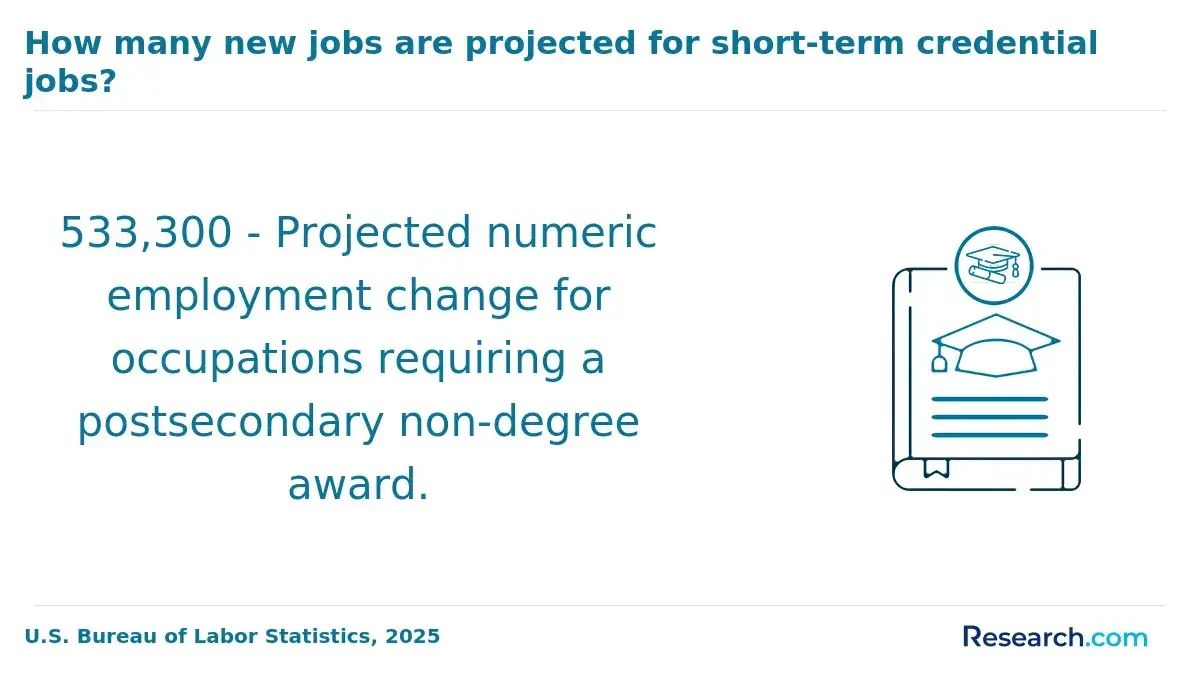
By 2031, 42% of U.S. jobs will require a bachelor's degree or higher, making formal credentials critical for leadership tracks in this sector. Programs featuring accredited internships or capstone projects provide practical experience to build portfolios that stand out on federal advancement boards. Candidates should prioritize degrees aligned with NICCS standards and recognized accreditation accepted across federal agencies.
Working professionals benefit from flexible scheduling options that allow simultaneous full-time employment and credential attainment. However, navigating federal credentialing gaps or programs lacking direct government relevance can hinder promotion timelines. A realist evaluation also weighs the tradeoff between specialized cyber defense knowledge and broader emergency management expertise.
Supplementing homeland security knowledge with cybersecurity expertise can further enhance career prospects. Veterans and others may consider the best online cybersecurity degree programs for veterans as a complementary pathway to strengthen skills applicable in both federal and state agencies.
Are online homeland security programs respected and accredited for government career advancement?
Accreditation significantly impacts the practicality of online homeland security degrees for government jobs, as federal agencies and contractors generally require credentials from accredited programs to satisfy promotion criteria.
Degrees from unaccredited institutions often lack the recognized rigor tied to national competency standards and hold limited weight in security clearance adjudications. For professionals seeking federal advancement, selecting accredited homeland security programs for federal promotion is essential to avoid barriers in clearance eligibility and role suitability.
Employers prioritize programs that align coursework with federally endorsed frameworks focusing on risk management, intelligence analysis, emergency preparedness, and cybersecurity. These areas represent core competencies for positions tied to heightened security demands. Job market data reveals a 300% increase in security clearance-required roles from 2015 to 2025, underlining the growing operational necessity of having targeted, verifiable education.
Key selection factors include:
- Curriculum mapping to Department of Homeland Security or Office of Personnel Management standards
- Access to internships or partnerships with federal agencies providing hands-on experience
- Documented alumni success in roles requiring security clearance
- Support for clearance application processes offered by the program
Consider a mid-career federal employee aiming for GS-13. An accredited online degree with verified coursework in intelligence or emergency management directly supports promotion eligibility and clearance processes. Without such credentials, advancement can be delayed or denied. Decisions here represent critical tradeoffs between program cost, time investment, and strategic relevance to public sector career pathways.
Interested learners can also explore online paralegal certificate programs as an alternative credential path in related federal frameworks.
What are the main differences between online and campus homeland security degrees?
Online and campus homeland security degrees diverge primarily in how they align with workforce demands and skill acquisition timelines. For government workers, online homeland security degree benefits emerge in flexibility and direct application of concepts on the job, especially for personnel balancing shifts or deployment schedules. However, this path often requires proactive pursuit of practical experience outside structured programs, which can delay operational readiness.
Campus-based programs inherently provide hands-on training through labs, simulations, and face-to-face crisis response exercises critical for roles in cyber defense or intelligence analysis. These immersive experiences often lead to stronger hiring endorsements and accelerated integration into specialized teams. By contrast, online degrees may suit those targeting policy, administrative, or strategic analysis roles that emphasize competencies over fieldwork.
Employers prioritize demonstrated ability and real-world competencies beyond just educational credentials. For example, graduates from Bellevue University's online homeland security program report median alumni earnings near $73,896, below the sector median of $81,270 but competitive when factoring in practical job performance.
Such data reflects the nuanced tradeoff between accessibility of online learning and the often faster career trajectories campus-trained students may experience.
Students weighing these options should consider immediate workforce demands and long-term career objectives. Tactical leadership roles often benefit from campus programs, whereas flexible online study better suits those with existing job commitments. Evaluating these factors alongside costs and outcomes, as seen in analyses like masters in digital marketing programs, can inform balanced decisions about educational investments and career focus.
What courses and specializations do online homeland security degree programs typically include?
Homeland security degree programs must prioritize practical skill sets that meet evolving government needs, rather than relying solely on generalized curriculum.
Cybersecurity training, for example, addresses specific threat detection methods vital to federal digital defense, while counterterrorism modules focus on behavioral analysis and incident response skills crucial for law enforcement agencies. This specialization enables focused career trajectories such as disaster response coordination or infrastructure protection.
Students benefit most from programs integrating legal frameworks, policy development, and interagency communication reflective of real operational demands. Practical exercises, incident simulations, data analytics, and communication strategy drills, are central to preparing graduates for frontline roles.
For instance, those targeting emergency management leadership must develop competencies in resource allocation and public information dissemination during crises.
Cost remains a critical consideration. Data from 2026 indicates some quality programs offer in-state tuition as low as $8,340 annually. However, more expensive tuition does not guarantee superior career outcomes or access to government promotion tracks, making a balance between affordability and curriculum rigor essential.
Certification alignment, like obtaining FEMA-approved training or recognized cybersecurity credentials, often accelerates federal hiring and internal advancement. Those pivoting careers should evaluate courses through this lens to ensure strategic investment in credentials that are genuinely valued within homeland security agencies.
What admission requirements and prior experience are needed for online homeland security degrees?
Admission into online homeland security degree programs is less about academic credentials alone and more about aligning with workforce service requirements, especially in federal agencies. Applicants frequently need verified security clearances, reflecting sensitive information handling expectations at DHS or FEMA.
For instance, mid-career law enforcement or intelligence professionals with 3-5 years of experience often bypass GRE requirements to meet urgent leadership development needs, emphasizing practical expertise over standardized testing.
Prospective students should anticipate clearance investigations that may exceed six months, a timeline affecting enrollment and career planning. Employers typically request transcripts, supervisory recommendations, and statements linking education to operational objectives, ensuring degrees support real-world mission readiness.
Financially, programs demonstrating stable tuition inflation, like Liberty University's sub-5% decade-long increase, offer predictability valued by working professionals balancing budgets and employer tuition assistance. Regional agencies' limited training budgets also amplify the impact of program affordability on sponsorship decisions.
Maintaining ongoing professional certifications and continuing education credits is often mandated for promotional eligibility, making program alignment with employer policies essential to avoid stalled advancement despite degree completion.
The decision to pursue such degrees demands weighing clearance eligibility, employer requirements, and cost alongside educational content, shaping achievable paths to leadership within homeland security roles.
How long do online homeland security degrees take, and what do they cost?
Effective planning for online homeland security degrees requires careful balancing of program duration, cost, and professional obligations. Bachelor's degrees typically span 18 to 24 months for working students, while master's programs vary from 12 to 20 months depending on full- or part-time status and credit transfer policies. Students, often mid-career law enforcement or emergency management personnel, must weigh accelerated tracks' quicker completion against reduced scheduling flexibility.
Costs vary widely, with bachelor's programs ranging roughly $20,000 to $45,000 and master's programs $15,000 to $35,000. These figures reflect per-credit charges generally between $300 and $550 and additional expenses such as textbooks and technology fees. On-site requirements in some programs can increase both time and financial commitment.
Employers in this sector often mandate degrees from regionally accredited institutions focused on applied specialties like cybersecurity or counterterrorism. Typical candidates aim for 15-20 credits annually to sustain learning efficacy while working full-time and prevent burnout.
For example, police officers pursuing roles in federal agencies use these degrees to fulfill supervisory prerequisites without interrupting employment, accepting compressed schedules as a tradeoff for faster eligibility. Southern New Hampshire University Online's 895 graduates in homeland security in 2026 illustrate demand within government sectors prioritizing practical credentialing.
What homeland security careers and promotion paths can these degrees help you access?
Securing roles in intelligence, counterterrorism, cybersecurity, and emergency management through online homeland security degrees demands more than academic credentials; these programs often serve as foundational prerequisites for entry into agencies like the Department of Homeland Security or the FBI.
Realistically, advancing beyond entry-level positions typically requires integrating degree knowledge with multi-year federal, military, or operational experience and obtaining security clearances.
An intelligence analyst holding a bachelor's or master's in homeland security can progress into supervisory roles or join specialized units focused on geopolitical risks. However, this upward mobility depends on developing practical skills in data analysis, operational planning, and interagency coordination alongside formal education.
Cybersecurity roles connected to homeland security degrees offer a relatively direct path to median salaries around $81,270 with steady job growth, but candidates must complement academic instruction with hands-on incident response and network defense experience. Similarly, emergency management professionals require both academic grounding and operational work in disaster response to effectively manage crisis coordination across various government layers.
Key workforce implications include these tradeoffs:
What is the salary potential and job outlook for homeland security professionals with degrees?
Degrees in homeland security produce tangible salary variations largely tied to specialization and employer type. For example, emergency management coordinators earn around $76,000 annually on median, while cybersecurity specialists often surpass $100,000, reflecting how technical competencies command higher pay. Border patrol agents, with median wages near $62,000, illustrate a steady demand driven by ongoing national security priorities at various government levels.
The sector's projected growth near 7% through 2032 exceeds general occupational expansion, reflecting increasing threats and the cross-agency integration of intelligence, cyber defense, and border security functions. However, entry and progression in state or local roles often require federal clearances or certifications whose complexity varies by function and jurisdiction, adding real-world friction to career mobility.
Pragmatically, graduates who combine academic credentials with proven operational experience, such as internships within government emergency response units or cybersecurity teams, hold a distinct advantage. Employers prioritize candidates demonstrating both analytical skills and familiarity with evolving security technologies.
How can prospective students evaluate and choose a reputable online homeland security program?
Programs without accreditation from entities like the Council on Education for Public Health (CEPH) or the Higher Learning Commission risk limiting federal employment and advancement prospects within homeland security. Accreditation confirms federal recognition, which is often non-negotiable for government roles.
Employer preferences stress applied experience. Many quality online homeland security degrees integrate mandatory practicum or internship components, often in hybrid formats. For instance, a DHS analyst pursuing promotion must show tangible skills gained through these experiences to satisfy operational readiness requirements, a hurdle purely virtual programs frequently fail to address.
Assessment should include graduate employment rates in government agencies and explicit alignment with Homeland Security workforce frameworks. Programs offering clear preparation for certifications such as the Certified Homeland Protection Professional (CHPP) provide measurable metrics for career relevance.
Avoid curricula heavily focused on generic criminal justice that lack homeland security specialization, as this reduces applicability within government specialty roles. Also, candidates must weigh time flexibility against the demands of government work schedules and the tuition cost relative to federal salary scales and return on investment.
Engaging current alumni or agency professionals reveals how program training influences promotion trajectories beyond official data. Prioritizing hybrid experiential models with verified accreditation correlates with stronger career outcomes in homeland security fields.
Other Things You Should Know About Homeland Security
The recognition of an online program's institution is crucial for career advancement in government roles because it assures employers of the program's credibility and quality. Accredited institutions often provide a higher level of education, equipping graduates with the skills and knowledge necessary for government positions, which can influence promotion opportunities and career growth.
Many online programs expect 15 to 20 hours per week, including study, assignments, and discussion participation. Programs balancing asynchronous coursework with occasional synchronous sessions reduce conflict with government work schedules. Candidates should prioritize programs with flexible pacing and realistic deadlines to avoid burnout, especially when balancing career duties and family obligations.
Shorter certificates can supplement existing experience but rarely replace degrees in promotion criteria for federal positions. Agencies often require a bachelor's or master's degree for mid- to senior-level roles despite certificates enhancing specific skills. Prioritize full degree programs if your goal is a substantial rank increase rather than targeted skill enhancement.
Employer recognition strongly influences promotion potential, especially within federal agencies with formal education verification. Programs affiliated with well-known, regionally accredited universities carry more weight than lesser-known institutions. When evaluating programs, prioritize those with established reputations and transparent accreditation status to avoid time and resource loss on credentials that won't meet employer standards.
References
- Homeland Security Degree Online | Find Top Programs & Information https://www.firescience.org/homeland-security-degree-programs-online/
- 2025 Most Affordable Homeland Security Degrees Online https://www.onlineu.com/most-affordable-colleges/homeland-security-degrees
- Reasons to Pursue an Online Criminal Justice Degree Program in Homeland Security https://www.aiuniv.edu/degrees/criminal-justice/articles/online-criminal-justice-homeland-security
- Homeland Security Career And Salary Information https://www.criminaljusticedegreeschools.com/careers/homeland-security/
- Online Bachelor's Degree: Homeland Security https://www.umgc.edu/online-degrees/bachelors/homeland-security
- Homeland Security Requirements (Degrees, Jobs & Salary) https://www.allcriminaljusticeschools.com/federal-law-enforcement/homeland-security/
- What Is a Homeland Security Degree? https://www.trident.edu/articles/what-is-a-homeland-security-degree/
- What Can You Do With A Homeland Security Degree? https://www.criminaljusticeprograms.com/articles/what-can-you-do-with-a-homeland-security-degree/
- Differences Between a Criminal Justice and Homeland Security Degree https://www.nec.edu/news/criminal-justice-vs-homeland-security-degree