2027 Online Homeland Security Degrees for Students Who Want Public Safety Administrator Roles

Co-Founder and Chief Data Scientist
Public safety administrators increasingly confront an urgent need to rapidly upskill while balancing full-time employment, family obligations, and unpredictable security demands. The Bureau of Labor Statistics projects a 7% growth in public administration roles focused on security over the next decade, driving a surge in demand for qualified professionals who can pivot quickly without sacrificing current job responsibilities.
This creates a critical tension: how to find flexible, accredited educational routes that align with operational realities and employer expectations for both foundational knowledge and practical leadership skills. This article evaluates online homeland security degrees tailored for aspiring public safety administrators and offers actionable insights to navigate enrollment, program selection, and career relevance effectively.
Key Things You Should Know
- Graduate employment rates for online homeland security degrees vary by specialization; cybersecurity-focused tracks yield 23% higher job placements, emphasizing the tradeoff between broader curriculum and niche marketability per 2024 National Center for Education Statistics data.
- Federal agencies now prioritize candidates with certifications paired with degrees, meaning online programs lacking integrated credential paths may delay entry or promotion in public safety administration roles, according to 2024 DHS workforce analyses.
- Average total costs for fully online programs range from $18,000 to $35,000, with time-to-completion extending 30% longer in part-time formats, disproportionately impacting mid-career professionals balancing upskilling and sustained income, per Education Data Initiative 2024.
What is an online homeland security degree for public safety administrator roles?
The value of an online homeland security degree for public safety administration lies in its alignment with operational realities and employer expectations rather than solely academic credentials. Candidates aiming for leadership roles must navigate not only the technical curriculum-covering risk assessment, crisis response, and legal frameworks-but also practical hurdles such as security clearances and hands-on experience through internships or agency partnerships.
Public safety administrator careers with homeland security degree credentials often require balancing flexible online learning with in-person clearance vetting, which remains indispensable for many agencies. A mid-career professional transitioning from emergency services to federal security leadership, for example, benefits most from programs emphasizing interagency coordination and strategic resource allocation.
Coursework typically includes intelligence analysis and cybersecurity fundamentals but gains real value when paired with case studies reflecting high-stakes decision-making environments. Job growth projections exceeding 300% in security-cleared roles underscore the demand, yet the path demands practical competencies beyond theoretical knowledge.
For prospective students evaluating program costs, it's important to compare tuition carefully. Resources reflecting criminal justice degree price variation, such as those listed at criminal justice degree price, offer insight into investment scale relative to outcomes.
The operational complexity of homeland security demands more than credentials; it requires demonstrated leadership in multi-jurisdictional crises, fluency with federal compliance, and verified security vetting. Graduates unable to navigate these elements may struggle to advance despite holding the degree.
How do accredited online homeland security programs differ from campus programs?
Choosing between accredited online homeland security degree differences and traditional campus programs requires weighing accessibility against experiential depth. Online programs accommodate working professionals through asynchronous coursework, a critical factor for mid-career shifts or balancing family commitments. However, these programs often rely on virtual simulations that, while sophisticated, lack the tactile immersion of campus-based drills, meaning students might need external internships for direct operational experience.
The campus vs online homeland security program benefits are evident in networking and mentorship. Campus learners gain immediate access to faculty and peer networks that enhance career opportunities-a significant advantage in a field where personal recommendations often influence hiring for public safety leadership. Conversely, online students must cultivate virtual professional communities, demanding proactive engagement to build a comparable resume profile.
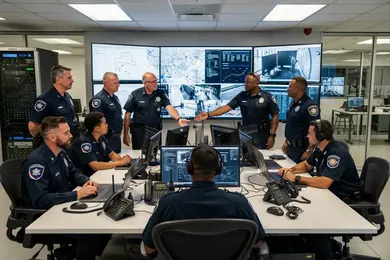
Employer demand increasingly favors candidates skilled in digital coordination and real-time crisis management. For example, emergency operations center managers navigate specialized software like GIS and resource dashboards-skills that accredited online courses attempt to replicate through tailored modules.
Public safety agencies operate within a rapidly expanding global market projected to surpass $598 billion in 2026 with 47% growth by 2031, intensifying competition for versatile leaders.
Prospective students considering this pathway should also evaluate related workforce factors such as pay structures; for instance, understanding the paralegal salary associate's degree landscape can provide insight into how degree level and specialization affect salary and job prospects in adjacent public service fields.
What accreditation should a homeland security degree program have?
Employers in public safety and government sectors consistently prioritize candidates whose degrees hold regional accreditation recognized by the U.S. Department of Education or the Council for Higher Education Accreditation. For roles like public safety administrators, degrees accredited by bodies such as the Higher Learning Commission or the Middle States Commission on Higher Education assure that academic and administrative standards meet federal workforce benchmarks. Specialized accreditations, including those from IFSAC or CALEA, offer additional validation, particularly for emergency management or law enforcement career tracks within homeland security.
The choice between flexible accredited online homeland security degree programs and traditional offerings often hinges on accreditation status. Candidates opting for nonaccredited or solely nationally accredited programs risk limited federal financial aid access and might face barriers qualifying for over 62,000 annual openings in police or detective roles noted by the U.S. Bureau of Labor Statistics. This makes verifying both institutional and programmatic accreditation essential to avoid wasted time and impede career progression.
Prospective students should also evaluate program alignment with professional organizations like the American Society for Public Administration, as these reflect employer demands for practical competencies. Additionally, those needing flexible options may find resources on online colleges that accept felons helpful when considering accredited online homeland security degree programs designed for diverse student needs.
What courses are included in an online homeland security curriculum?
Online homeland security degree courses for public safety administrators prioritize operational competencies over theoretical breadth, reflecting the demands of emergency management roles where decisions must be timely and well-grounded. Core classes typically cover risk assessment and disaster response, areas essential for orchestrating multi-agency incidents such as transportation system failures or public health crises. Cybersecurity fundamentals are increasingly integral, given the intertwining of digital vulnerabilities with physical safety systems.
Curriculum subjects in online homeland security programs also emphasize policy and legal frameworks to navigate the complex regulatory landscape affecting public safety agencies across federal, state, and local levels. Crisis communication training prepares administrators to manage information flow during high-stakes scenarios like terrorism or natural disasters, coordinating diverse stakeholders effectively.
Practical skill-building is often uneven; programs integrating budgeting, resource management, and leadership with ethics better prepare students for the persistent challenge of balancing limited resources against sprawling jurisdictional responsibilities. Without hands-on simulations or internship opportunities, graduates may struggle to apply classroom knowledge under pressure.
The workforce implications are clear: administrators must handle intelligence data analytically while maintaining operational readiness. Salaries range broadly, with typical public safety administration roles earning $70,000-$85,000 annually and senior directors exceeding $147,870. Students should also consider alternative pathways, such as online degrees in Spanish, if language skills complement their homeland security focus or professional strategy.
What are the admission requirements for online homeland security degrees?
Admission to online homeland security degree programs demands more than basic academic eligibility; it requires alignment with professional standards tied to public safety administration. While a high school diploma or GED is the minimal entry point, competitive applicants typically present an associate degree or college credits, particularly for bachelor's programs. A cumulative GPA of 2.5 or higher on official transcripts is standard, emphasizing foundational knowledge in criminal justice or related disciplines.
Practical experience remains a decisive factor. Candidates with law enforcement or emergency management backgrounds have a measurable advantage, as admissions committees weigh this alongside academic credentials. Personal statements describing career intent and alignment with homeland security roles, as well as letters of recommendation from supervisors in public safety, are common requirements to assess candidate suitability.
For federal career pathways, background checks and security clearances are mandatory either during or post-admission, reflecting the sensitive nature of these roles. Graduate programs often expect a relevant bachelor's degree, and some retain GRE requirements, although many prioritize demonstrated work history instead.
From an employability perspective, public safety administrators are tasked with managing federal compliance and interagency cooperation. Analysis by College Transitions shows federal law enforcement positions accessible via homeland security degrees typically yield salaries above $97,000 annually when factoring in GS scales and locality pay, illustrating significant financial justification for rigorous program entry standards.
How long does an online homeland security degree usually take?
Completion time for an online homeland security degree typically ranges from 18 to 24 months full time, with part-time options extending beyond three years depending on other commitments. Accelerated formats can shorten this to about 12 months but demand significant time investment and limited external obligations. For professionals in emergency services or federal roles requiring clearance, asynchronous online classes allow progress outside rigid semester schedules and shift restrictions, which on-campus programs seldom accommodate.
This flexibility addresses geographic and scheduling constraints that previously prevented timely entry or promotion into public safety leadership positions. However, students must weigh their capacity for accelerated pacing against the need to maintain professional certifications or federal training timelines.
Employers filling emergency management director or senior public safety administrator roles often mandate completed master's credentials aligned with federal and state standards. Programs that enable faster completion can enhance competitiveness in hiring cycles while minimizing debt accumulation.
Financially, reduced tuition and living costs associated with online programs help graduates in these roles, where median salaries reach $79,180, to recoup educational expenses within a few years. Prospective students should critically evaluate program length, delivery mode, and credential recognition in the context of their career timing, license renewal requirements, and employer expectations.
How much do online homeland security degrees cost?
Online homeland security degrees vary widely in cost, ranging from about $15,000 to $45,000 for full programs, with public institutions often offering tuition under $10,000 annually for in-state students. In contrast, private or specialized programs may charge over $1,000 per credit, pushing total expenses beyond $40,000. Beyond tuition, students must budget for supplementary costs like technology fees, textbooks, and exam proctoring. Financial aid availability depends heavily on program accreditation, with federal aid generally accessible but private loans or employer tuition reimbursement often required for pricier options.
The choice of program should weigh affordability against curriculum relevance, particularly for mid-career professionals targeting leadership roles in public safety administration. Programs focusing on emergency management, risk assessment, and executive decision-making equip students with critical skills demanded by employers and tied to higher earning potential. For example, chief executives in public service sectors earn a median salary of $213,990 with a 4.3% growth rate, illustrating the substantial economic upside of skills-aligned degrees.
Prospective students must assess tradeoffs between cost and quality of leadership training since degrees lacking applied competencies may limit career acceleration. Prioritizing programs that emphasize interagency coordination and executive leadership-even at a higher price-can yield a stronger return on investment through expedited advancement in homeland security roles.
What jobs can you get with a homeland security degree?
Graduates with a degree in homeland security face distinct workforce realities shaped by the public safety sector's operational demands and security protocols. For example, emergency management directors-central to disaster response coordination-must integrate intelligence from fire, police, and medical agencies, requiring both technical knowledge and leadership cultivated through targeted homeland security programs. Median salaries near $79,180 and a modest 3% growth rate through 2032 indicate a stable but competitive field. However, federal roles typically demand rigorous vetting and security clearances, while state and local positions offer quicker access but less consistent compensation and progression.
Beyond emergency management, career paths include intelligence analysis and border security supervision, both requiring hands-on experience often gained through internships or federal placements. Cybersecurity within homeland security presents a technical niche with potentially higher pay but necessitates additional IT certifications, highlighting a tradeoff between specialized skills and entry barriers.
Prospective students should weigh key factors: agency type, job location, and clearance requirements significantly influence career trajectory and earning potential. Understanding these dynamics helps align educational investments with realistic entry points and advancement opportunities in homeland security administration.
What do public safety administrators earn in the United States?
Compensation for public safety administrators in the U.S. varies sharply by location and role specialization, significantly impacting career planning for those pursuing online homeland security programs. Emergency management directors earn as low as $50,920 in states like Mississippi but can exceed $122,000 in California, reflecting how regional risk, local budgets, and demand shape salary scales.
Choosing a program without aligning it to targeted regional markets risks producing credentials that carry limited wage growth or job mobility. California's higher salaries correspond to complex environments requiring advanced certifications, operational expertise, and readiness for extended work hours. Conversely, lower-cost states offer less pay but may involve more predictable schedules and less operational intensity.
Practical decisions include:
- Prioritizing skills and credentials recognized by employers in desired jurisdictions
- Balancing potential salary advantages with workforce mobility and relocation challenges
- Considering local emergency management practices and public safety policies as part of credential value
Continuous professional development is essential to maintain competitiveness, particularly in large metropolitan areas and industrial hubs where operational complexity and demand for leadership skills rise. Workforce professionals should weigh regional salary benchmarks alongside personal flexibility, given that relocating to maximize earnings often requires careful planning and entails tradeoffs in lifestyle and job stability.
What certifications help homeland security graduates qualify for administrator roles?
Certification choices for homeland security graduates directly influence eligibility for administrative roles, with practical impact on hiring and operational authority. The Certified Emergency Manager (CEM) credential remains a preferred benchmark for those coordinating multi-agency emergency responses, particularly within local government contexts. Conversely, the Certified Homeland Protection Professional (CHPP) aligns with federal and state agencies that emphasize intelligence analysis and security clearances, reflecting workforce demands in high-security environments.
Operational tradeoffs arise when candidates weigh experience-heavy certifications like the Physical Security Professional (PSP), focused on infrastructure protection, against faster-track options that prioritize tactical knowledge. For example, a public safety administrator managing interagency budgets might prioritize the FEMA Professional Development Series for immediate applicability in disaster preparedness over longer credential pathways.
Workforce dynamics also reveal growing pressures: security clearance-related roles surged 300% from 2015 to 2025, driving employer preference for certifications that validate both clearance eligibility and functional expertise. Budget constraints and maintenance fees further complicate these decisions.
Sector specificity matters-local emergency agencies often require CEM, whereas federal contractors mandate CHPP plus active clearances. Given the projected 47% growth in the global public safety sector by 2031, professionals should strategically combine at least two certifications to balance administrative authority with technical credibility.
Other Things You Should Know About Homeland Security
Employers in public safety administration often regard online homeland security degrees as equivalent to campus degrees if the program is regionally accredited and has a solid reputation. However, programs without accreditation or those from less-recognized institutions may raise concerns about the rigor and practical training students receive. When choosing an online degree, prioritize programs with proven employer connections and applied learning components like simulations or internships to ensure workforce readiness.
Hands-on training is critical for public safety administration roles, yet online programs differ widely in providing practical experiences. Some integrate virtual labs, scenario-based exercises, or require local internships, while others rely heavily on theory. Prospective students must evaluate how a program supports skill application and whether it facilitates field placements or partnerships with agencies, as these components directly influence employability and real-world preparedness.
Choosing a specialized homeland security track can deepen expertise in areas like cybersecurity, emergency management, or counterterrorism but might limit exposure to broader administrative skills necessary for leadership roles. Conversely, a general public safety administration focus provides wider management and policy knowledge but with less technical depth. For career advancement into senior administration, prioritizing well-rounded managerial competencies is advisable, while specialization is better suited for technical or niche positions.
References
- Homeland Security and Public Safety, B.S. - Vincennes University https://www.vinu.edu/major/homeland-security-public-safety.html
- Types of Homeland Security Degrees | Compare Schools https://www.criminaljusticeprograms.com/specialty/homeland-security-degrees/
- Emergency Management & Homeland Security Accreditation | CAEMHSE https://www.caemhse.education/
- Online Bachelor's Degree: Homeland Security https://www.umgc.edu/online-degrees/bachelors/homeland-security
- The Case to Accredit Homeland Security Programs: Why Outcomes-based Accreditation Makes Sense https://jsire.org/the-case-to-accredit-homeland-security-programs-why-outcomes-based-accreditation-makes-sense/
- Is a degree in homeland security worth it? | edX https://www.edx.org/resources/is-a-degree-in-homeland-security-worth-it
- Homeland Security Requirements (Degrees, Jobs & Salary) https://www.allcriminaljusticeschools.com/federal-law-enforcement/homeland-security/
- Online Homeland Security Degrees: Explore Top Programs https://www.degreesforgood.org/online-degrees/homeland-security-programs/
- Differences Between a Criminal Justice and Homeland Security Degree https://www.nec.edu/news/criminal-justice-vs-homeland-security-degree
- Top 10 Careers in Public Safety Administration https://learn.neumann.edu/neuperspectives/top-10-careers-in-public-safety-administration