2027 Online Homeland Security Degrees for Students Who Want Leadership Paths in Public Safety

Co-Founder and Chief Data Scientist
Frontline public safety leaders increasingly confront complex threats requiring rapid, informed decision-making amid shifting political and technological landscapes. Yet, aspiring professionals often struggle to balance ongoing duties with advancing education-a challenge intensified as nearly 45% of adult learners in the U. S. pursue degrees online, according to the National Center for Education Statistics. This trend reflects a shift toward accessible program formats essential for workforce mobility and timely credential attainment. Understanding how online homeland security degrees integrate leadership training with flexible learning models is vital for those targeting supervisory roles in public safety sectors. This article evaluates these programs' features to guide strategic enrollment choices that align with career goals.
Key Things You Should Know
- The 12% projected growth in public safety management roles through 2031 noted by the Bureau of Labor Statistics pressures students to balance accelerated online degrees with employer preference for 3-5 years of field experience over academic credentials alone.
- Employers increasingly focus on cyber threat specialization within homeland security, with 59% prioritizing candidates possessing technical certifications alongside leadership degrees, creating a competency tradeoff for purely policy-focused online programs.
- Rising tuition for online homeland security leadership degrees, averaging $18,500 nationally per bachelor's equivalent in 2024, disproportionately affects mid-career professionals seeking quick pivots without sacrificing income, amplifying cost-access tensions.
What is an online homeland security degree?
Leadership career paths in homeland security studies demand more than foundational knowledge; they require the ability to navigate complex operational and interagency dynamics. An online homeland security degree program in the United States equips students with applied skills in crisis management, intelligence synthesis, and resource prioritization that directly address the growing intricacies of public safety threats.
Consider a mid-career law enforcement officer seeking specialization beyond traditional policing. This degree provides expertise in counterterrorism and disaster preparedness, enhancing qualifications for command roles that coordinate multi-jurisdictional security efforts. Conversely, cybersecurity professionals transitioning into physical security leadership gain a curriculum that integrates intelligence methods with public safety policy frameworks, expanding their operational competence across domains.
The expanding public safety market, projected to reach $598 billion in 2026 with a 47% growth between 2026 and 2031 per Research and Markets' forecast, highlights demand for leaders adept in infrastructure protection, bioterrorism response, and digital threat mitigation. However, candidates must weigh the rigor of self-paced virtual programs, which require disciplined time management and technical self-sufficiency-challenges that may limit accessibility for some.
Employers in federal agencies like FEMA and the Department of Homeland Security expect graduates to exhibit hands-on crisis leadership and seamless interorganizational communication. Programs emphasizing internships or simulations significantly increase employability compared to theory-only curricula. Prospective students evaluating online homeland security degree programs in the United States should prioritize those with current policy alignment and practical components to ensure relevance in a rapidly evolving field.
For those also considering allied pathways, resources on affordable alternatives such as a bachelor's degree in criminal justice may provide complementary or foundational options to support sector entry or transition.
Which accreditation matters for online homeland security programs?
Accreditation by recognized agencies is the definitive standard that shapes employability and credit transfer for online homeland security programs. Degrees lacking regional or national accreditation recognized by the U.S. Department of Education or CHEA risk being dismissed by federal employers and law enforcement agencies, which demand rigorous vetting of credentials. For instance, leadership roles in law enforcement frequently require degrees from regionally accredited programs, which influence eligibility for promotions and federal grant applications.
The best accreditation for online homeland security degrees often comes from agencies like the Higher Learning Commission, Middle States Commission on Higher Education, or Southern Association of Colleges and Schools, depending on the institution's region. While programmatic accreditation exists, it is rare and typically not essential for federal employment or career advancement.
Practical workforce effects are significant: graduates from accredited programs benefit from streamlined background checks and enhanced security clearance prospects. By contrast, credentials from non-accredited or solely nationally accredited schools may constrain upward mobility and access to specialized federal roles amid a competitive environment projected to add 62,000 police and detective jobs per year with 3% growth from 2024 to 2034.
Students should also verify curriculum alignment with current federal homeland security standards and operational realities. Without this, graduates risk undertaking coursework that does not reflect evolving public safety demands or credential expectations in critical hiring pools. Veterans and others exploring specialized fields might also consider related cybersecurity programs online for veterans as complementary pathways.
How do online and campus homeland security programs compare?
Choosing between campus and online homeland security programs hinges on critical tradeoffs in accessibility, training depth, and networking relevant to leadership readiness. Campus programs provide immersive, hands-on environments, including simulation labs that cultivate situational skills essential for federal roles or crisis response leadership. These settings naturally support clearance sponsorships and federal internships, aligning with employer demands in high-clearance sectors.
On the other hand, online degrees for felons or other working professionals offer flexible pacing and modular content supporting adult learners balancing jobs and family responsibilities. However, this format often lacks direct mentorship and real-time tactical exercises, compelling students to seek supplemental field experience to develop operational leadership abilities. Online students must also be proactive in leveraging local military or government connections to access clearance pathways comparable to those more readily available on campus.
Employers increasingly prioritize candidates with security clearances, reflecting a more than 300% surge in related hiring demand from 2015 to 2025, per ClearanceJobs' 2026 report. The choice between campus versus online homeland security programs advantages depends on weighing immediate networking needs, geographic proximity to agencies, and the scope of hands-on training available. Prospective students should factor these elements critically when evaluating their educational options for a strategic career pivot.
Decision points include:
- Campus programs enable immersive leadership skill-building with peer collaboration and practical drills.
- Online formats grant scheduling flexibility but require deliberate efforts to secure experiential training and clearance support.
- Federal role aspirants often benefit from campus-based experiences due to employer recruitment patterns favoring in-person pipelines.
For detailed options balancing practical constraints and credentials, explore online degrees for felons that align with evolving workforce realities.
What courses are included in homeland security curricula?
Programs offering online homeland security degree courses in the United States prioritize a strategic mix of risk management, emergency response, intelligence analysis, and leadership instruction aligned with employer expectations. Core curricula often balance foundational and specialized content such as risk and vulnerability assessment, critical infrastructure protection, cyber security fundamentals, and emergency management principles to prepare candidates for roles requiring operational as well as supervisory competence.
Leadership training within these homeland security programs targets public safety leadership training in homeland security programs, emphasizing crisis decision-making, interagency coordination, and policy formulation. Graduates are expected to navigate complex environments, such as federal emergency management, requiring mastery over real-time incident command systems and legal frameworks critical for effective public safety operations.
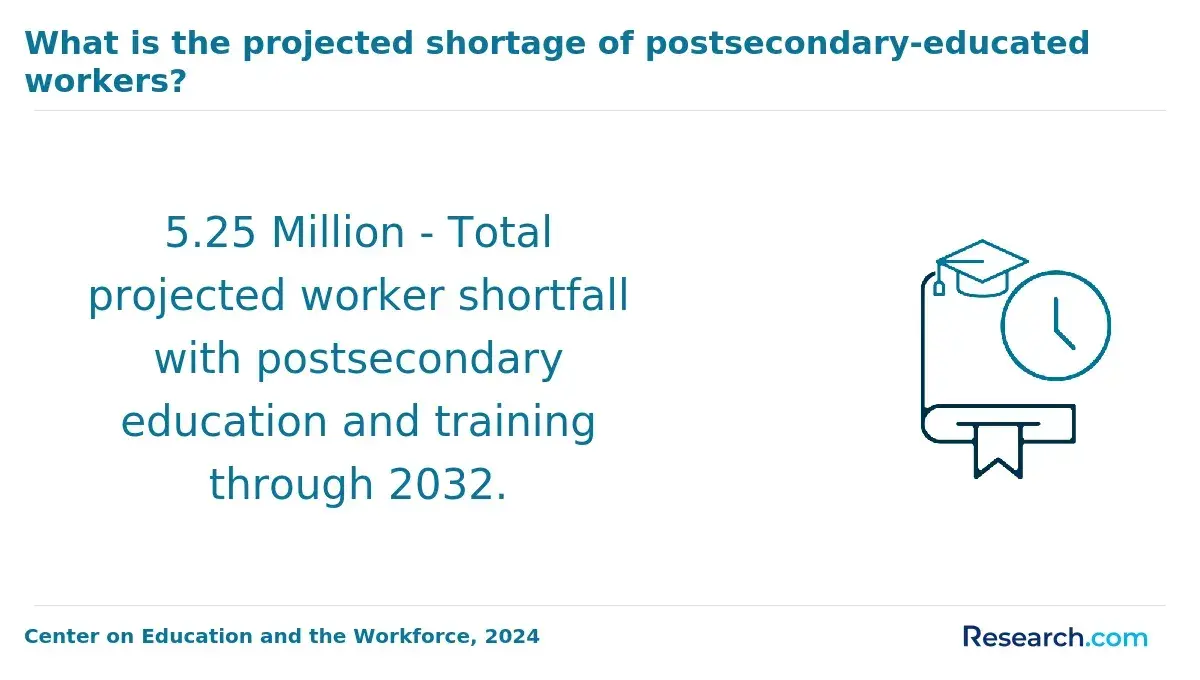
Employers increasingly demand bachelor's-level credentials with multidisciplinary expertise, a trend supported by projections indicating that by 2031, 42% of all new U.S. jobs will require at least a bachelor's degree. This underscores that entry-level certifications fall short when pursuing advancing roles within homeland security sectors. Electives permit customization toward areas like aviation security, cyber defense, or border control but introduce academic and professional tradeoffs related to course load and evolving threat landscapes.
Prospective students evaluating program options should consider practical training components integral to program quality-disaster logistics, public health emergency planning, and counterterrorism strategies-which distinguish programs worthy of consideration. Continuous professional development remains necessary after graduation to sustain adaptive leadership capabilities aligned with shifting workforce demands. For those researching complementary educational pathways, resources such as best online environmental health and safety programs provide relevant context and options to fortify public safety expertise.
What admission requirements do homeland security programs usually have?
Admission criteria for homeland security programs often reflect the sector's operational demands rather than purely academic rigor. Undergraduate entry typically requires a high school diploma or GED, with a preference for candidates presenting backgrounds in law enforcement, military, or emergency management. Programs at the bachelor's and graduate levels demand official transcripts verifying prerequisite coursework in areas such as criminal justice or political science. Standardized tests like the SAT or ACT may be required but are increasingly optional. At the master's level, a bachelor's degree from an accredited institution is mandatory alongside professional references and leadership statements, emphasizing practical experience in public safety roles.
Applicants with military or policing experience benefit from accelerated admissions or credit for prior learning, a pragmatic recognition of operational expertise where practical leadership often trumps theoretical study. This is critical given the projected 62,000 annual openings for police officers and detectives through 2026, illustrating intense market demand alongside a need for foundational knowledge paired with leadership capability.
Security clearance requirements and background checks are typical for programs linked to federal or state agencies and can be a decisive factor for internships and post-graduation employment. Part-time and online formats often target active professionals who must demonstrate supervisory roles to ensure alignment with applied leadership goals. Admissions committees weigh these operational credentials heavily, prioritizing detailed resumes that reflect hands-on leadership over purely academic records.
How long does an online homeland security degree take?
Choosing the length and format of an online homeland security degree significantly affects a student's career trajectory and financial outlay. Associate degrees typically take around two years, while full-time bachelor's programs often span three to four years. Accelerated bachelor's options, or those granting credit for past experience, can reduce this to 18-24 months. Master's degrees generally require 18 to 24 months but may extend if pursued part-time in parallel with full-time employment.
Working professionals frequently prioritize part-time or accelerated programs to maintain job responsibilities while advancing credentials. For instance, a mid-level emergency management officer aiming for leadership might choose an 18-month online master's program with evening or weekend classes, enabling immediate application of new skills without career disruption.
The choice between program duration and depth involves practical tradeoffs:
- Longer programs offer deeper specialization but increase opportunity costs and delay workforce advancement.
- Faster completion aligns candidates to emerging leadership roles amid a sector projected to grow 47% from 2026 to 2031, per Research and Markets (2026).
Employers favor candidates demonstrating both relevant expertise and timely readiness. Prospective students should examine degree plans, credit transfer options, and course schedules to avoid delays that hinder entering a rapidly evolving homeland security workforce.
How much do online homeland security degrees cost?
Online homeland security bachelor's degrees in 2026 generally demand an investment ranging from $15,000 to $40,000, influenced chiefly by institution type and residency status. Public universities typically set tuition between $300 and $500 per credit hour for in-state students, whereas private institutions often exceed $700 per credit hour. Beyond tuition, students should anticipate ancillary costs such as technology fees, course materials, and certification exam expenses, potentially adding $1,000 or more to the program's total cost.
For professionals targeting leadership roles in homeland security or public safety, these tuition figures must be weighed against labor market realities. UMGC projects that over 40% of new homeland security jobs by 2031 will require at least a bachelor's degree, signaling a growing demand for advanced credentials directly tied to upward mobility. However, not all degrees hold equal value-programs aligning with federal competencies and possessing recognized accreditation can better position graduates for competitive federal and state employment.
Working students often face tradeoffs between upfront tuition costs and available financial support such as employer tuition assistance or GI Bill benefits. Accelerated online degrees may carry higher per-credit prices but can reduce overall expenses by shortening time to completion and minimizing opportunity costs. Geographic factors further complicate pricing, making in-state online programs a financially prudent choice for currently employed public safety personnel aiming to limit out-of-pocket expenditure.
What jobs can you get with a homeland security degree?
Leadership roles in homeland security demand more than foundational knowledge; they require navigating complex, multi-agency environments and managing extensive security operations. Positions such as intelligence analysts, emergency management directors, cybersecurity managers, and border security supervisors emphasize strategic coordination and regulatory compliance, not just technical skill.
Security clearances create a significant barrier and filter in the hiring process. Demand for clearance-requiring roles rose over 300% from 2015 to 2025, which means graduates must prepare for lengthy vetting that delays onboarding. Practical experience-through internships with clearance-eligible agencies and simulation-based training-can mitigate these delays while demonstrating candidate reliability.
Consider an intelligence analyst role within a federal agency: reading and interpreting classified material necessitates strong analytical capabilities and leadership to integrate insights across disciplines, influencing threat prevention. Meanwhile, emergency management directors manage disaster responses that require calm, decisive leadership under acute stress.
Students should critically assess programs blending law enforcement, IT, and crisis management with experiential learning. Understanding employer preferences for operational versus strategic leadership roles can shape whether graduates pursue hands-on emergency response duties or cybersecurity policy development, aligning career objectives with workforce needs and clearance realities.
How much can homeland security graduates earn?
Salaries for homeland security graduates in public safety leadership roles vary widely based on position, location, and experience, often ranging from $60,000 to over $100,000 annually. Entry-level roles such as public safety managers or coordinators tend to start near $60,000, while specialized or supervisory positions like detectives or special agents typically exceed $90,000. Senior leadership within federal or police agencies can command salaries above $100,000, demonstrating a direct link between hierarchical responsibility and compensation.
Geographic factors heavily influence earning potential: urban and suburban areas generally offer higher wages due to greater budgets and demand, while smaller or rural jurisdictions may start below $60,000, posing a tradeoff between cost of living and advancement opportunities. The U.S. Department of Labor anticipates approximately 62,000 annual job openings in police and detective fields up to 2034, signaling stable demand but also the necessity for candidates to differentiate through credentials and leadership skills.
Advancement often hinges on acquiring specialized knowledge in emergency management or counterterrorism, alongside certifications and field experience. The private sector offers competitive pay in roles tied to corporate security or cybersecurity within homeland security, though these typically require technical credentials beyond standard public safety qualifications.
Benefits such as pensions, healthcare, and retirement plans vary significantly between municipal, state, federal, and private employers, making relocation and shift schedules integral considerations. Without ongoing certification and career development, salary progression may stagnate despite steady job openings, underscoring the importance of a strategic, credential-focused approach to career planning.
What certifications help homeland security graduates advance?
Certification in homeland security fields reflects specific employer expectations that vary significantly across sectors and roles. For instance, the Certified Protection Professional (CPP) credential is often non-negotiable for leadership positions in physical security management within critical infrastructure agencies or corporate environments. Conversely, Certified Emergency Manager (CEM) credentials are prioritized by state and local governments tasked with disaster response, where hands-on incident command capabilities shape operational decisions.
Employers seek measurable competencies in threat analysis, crisis leadership, and interagency coordination, not just certificates. For example, a transit authority's security director managing layered threats must align with rigorous CPP standards to maintain compliance with federal mandates. Meanwhile, FEMA's Professional Development Series (PDS) is critical for foundational expertise in national incident management, preferred by public safety departments nationwide.
Prospective candidates should weigh practical tradeoffs: certification processes commonly require 6 to 12 months of commitment and costs between $800 and $1,500. Choices should reflect target sectors-law enforcement professionals may focus on criminal intelligence certifications, whereas private-sector risk managers derive more value from CPP or specialized physical security credentials. Maintaining certification demands ongoing education, adding a recurring prerequisite for employed professionals.
Strategically integrating certifications with specialized degrees offers clear workforce advantages by signaling leadership readiness and operational reliability, a combination increasingly valued as public safety challenges evolve.
Other Things You Should Know About Homeland Security
Yes, practical experience is essential for leadership roles in homeland security despite completing an online degree. Employers in public safety highly value demonstrated operational knowledge and situational judgment, which cannot be fully developed through coursework alone. Students should prioritize programs that integrate internships, simulations, or partnerships with agencies to gain real-world exposure parallel to their studies.
Programs that emphasize applied skills and case-based learning better prepare students for public safety leadership challenges than those focusing heavily on theory. Online degrees skewed toward abstract policy or academic research may limit immediate job readiness and recognition by employers focused on tactical and strategic decision-making. Students aiming for leadership in operational settings should choose curricula with a clear practical orientation and opportunities to develop critical analysis of real incidents.
Yes, students targeting leadership roles should prioritize programs offering specialized leadership tracks or concentrations that go beyond foundational knowledge. These options typically cover organizational management, crisis communication, and interagency coordination critical to public safety leadership. Choosing a generalized degree without leadership-specific training may slow advancement or require additional certification or experience to qualify for management positions.
Online homeland security degrees in 2027 focus on cultivating key leadership skills such as crisis management, strategic decision-making, and effective communication. These programs often integrate real-world scenarios and simulations to prepare students for leadership roles in public safety environments.
References
- Online Homeland Security Degrees: Explore Top Programs https://www.degreesforgood.org/online-degrees/homeland-security-programs/
- Homeland Security Requirements (Degrees, Jobs & Salary) https://www.allcriminaljusticeschools.com/federal-law-enforcement/homeland-security/
- Online Bachelor's Degree: Homeland Security https://www.umgc.edu/online-degrees/bachelors/homeland-security
- Search icon https://waldorf.edu/degree-programs/bachelors/ba-homeland-security/
- 2025 Most Affordable Homeland Security Degrees Online https://www.onlineu.com/most-affordable-colleges/homeland-security-degrees
- Bachelor's in homeland security | edX https://www.edx.org/bachelors/homeland-security
- Differences Between a Criminal Justice and Homeland Security Degree https://www.nec.edu/news/criminal-justice-vs-homeland-security-degree
- Types of Homeland Security Degrees | Compare Schools https://www.criminaljusticeprograms.com/specialty/homeland-security-degrees/
- Top Online Master’s Degree Programs in Homeland Security for 2025 https://www.onlinemastersdegrees.org/best-programs/homeland-security/