2027 Online Homeland Security Degrees That Help Build Risk and Resilience Skills

Co-Founder and Chief Data Scientist
Facing rapidly evolving threats, homeland security professionals must master complex risk assessment and resilience-building techniques without pausing their careers. Many practitioners juggle irregular schedules and urgent deployments, limiting traditional classroom attendance.
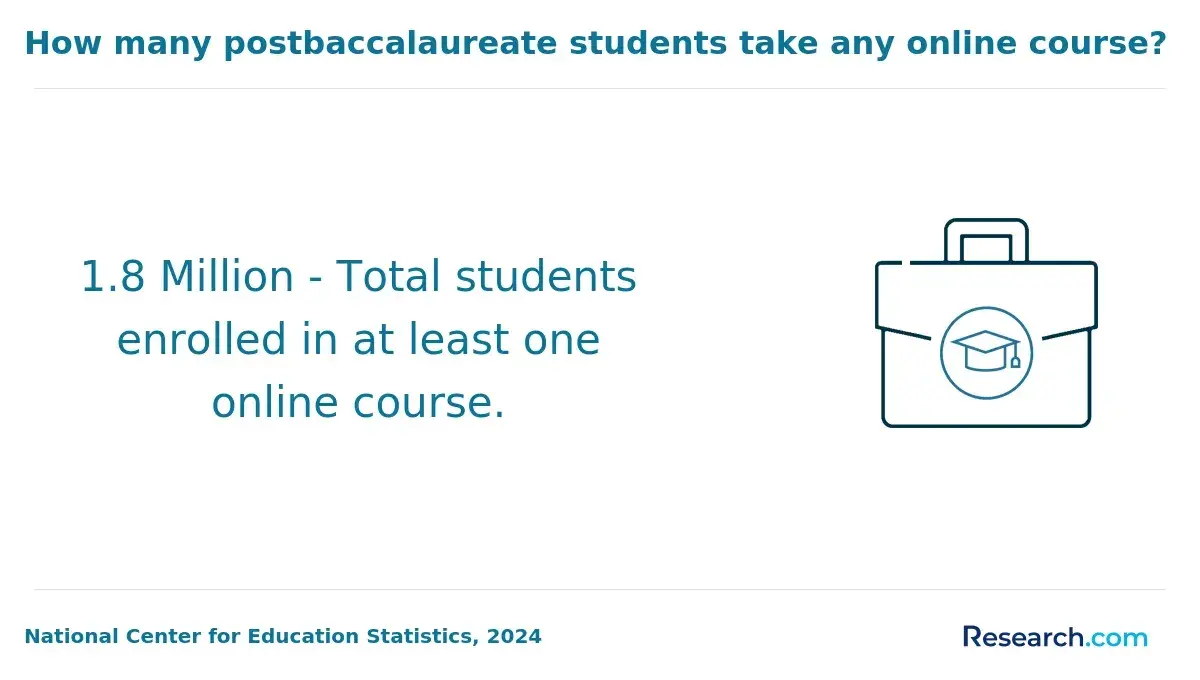
A 2024 report from the National Center for Education Statistics shows a 15% increase in adult enrollment in online degree programs over the past two years, signaling a shift toward flexible learning. This trend reflects workforce demands for accessible education that accommodates active professionals while accelerating skill acquisition.
This article evaluates online homeland security degree options designed to help learners efficiently build critical risk management and resilience capabilities, addressing the practical constraints of modern security roles.
Key Things You Should Know
- Recent DHS workforce data shows a 15% hiring increase in resilience-focused roles, emphasizing certifications over traditional degrees, forcing candidates to weigh practical credentialing against broader academic credentials.
- Employers prioritize graduates with applied risk analysis experience; programs lacking direct agency partnerships see up to 30% lower placement rates, impacting career-launch effectiveness for purely theoretical curricula.
- Average program costs rose 8% since 2023 per NCES reports, with fully online degrees offering 25%-40% savings but extending completion-key for working professionals balancing income loss versus credential timing.
What are online homeland security degrees?
Choosing an online homeland security degree program demands a nuanced understanding of practical workforce requirements and educational rigor. Candidates often encounter a tradeoff between specialized counterterrorism training and broader curricula that include risk modeling, resilience theory, and incident command systems, which better prepare graduates for diverse roles across cybersecurity, critical infrastructure protection, and disaster management.
For instance, professionals in urban infrastructure protection benefit from coursework in risk analysis and crisis communication to limit operational disruption during emergencies.
Online programs designed for working professionals must be scrutinized for accreditation and alignment with National Institute of Standards and Technology (NIST) frameworks, as these criteria significantly affect employer recognition and job readiness in fields demanding security clearances and hands-on experience.
Most online homeland security degree programs in the United States integrate simulations, case studies, or internships to replicate experiential learning but rarely fully incorporate clearance processes or real-world fieldwork.
Demand trends underscore the pathway's urgency: labor projections estimate 39,063 annual openings in emergency management and homeland security roles by 2025, covering policy implementation, operational command, and resilience engineering positions. This diversity necessitates degrees that balance versatility with specialization while preparing students to navigate evolving regulatory and threat landscapes.
Prospective students should also consider how this pathway compares with related disciplines; exploring the best online criminal justice degree options can help clarify distinctions in career trajectories and credentialing.
Success in homeland security careers often hinges on managing the practical challenges of gaining security clearances and relevant experience not always addressed in online instruction but critical for operational effectiveness.
How do accredited online programs ensure credibility?
Accredited online homeland security degree programs carry tangible employer weight by ensuring alignment with stringent federal hiring criteria, especially for roles requiring security clearances. Without recognized accreditation, degrees often face rejection during clearance vetting, delaying or blocking entry into intelligence, emergency management, or critical infrastructure positions.
For instance, an agency hiring security analysts mandates applicants hold credentials accredited by bodies like the Council for Higher Education Accreditation or the U.S. Department of Education, reinforcing essential coursework in threat assessment, emergency preparedness, and cybersecurity fundamentals.
Programs emphasizing online risk and resilience education credibility frequently integrate applied components such as scenario-based training, internships verified by employers, or targeted research projects. These practical experiences help bridge theoretical knowledge gaps employers flag when recruiting for fast-growing cleared positions, which surged more than 300% from 2015 to 2025 per University of Maryland Global Campus data.
Faculty expertise is another critical verification point, where instructors' government, military, or security sector backgrounds directly impact curriculum relevance and student preparedness. Prospective students should prioritize programs transparent about accreditation status, employer partnerships, and documented clearance-focused placement outcomes to avoid common pitfalls of unaccredited alternatives.
Cost and value considerations also matter. For working professionals, ensuring fiscal efficiency while securing a credible credential limits wasted time and opaque training that can stall clearance eligibility. Exploring options at well-ranked cyber security schools online can inform financially sound decisions aligned with practical workforce demands.
What admission requirements do homeland security programs usually require?
Admission criteria for homeland security online degree programs prioritize candidates who combine foundational academic credentials with practical experience to meet labor market demands. Bachelor's degrees usually expect a high school diploma or GED plus transcripts proving competence in English, math, and social sciences. Associate degree holders often leverage prior coursework credits when seeking program entry for career progression.
Graduate-level admission typically requires a completed undergraduate degree, ideally focused on criminal justice or emergency management, alongside a minimum GPA near 3.0. Relevant professional experience in emergency services, law enforcement, or the military frequently weighs more than GPA for mid-career professionals aiming to pivot fields. This reflects employer preferences for applied knowledge over theoretical credentials.
Applicants should also prepare materials demonstrating interdisciplinary skills, such as technical writing samples or purpose statements aligned with homeland security goals. Though security clearances seldom impact admission, they become essential for many government roles after graduation, distinguishing program eligibility from job requirements.
With employment projections showing over 39,000 openings by 2025 in related fields-according to UCF Emergency Management and Homeland Security estimates-fulfilling typical requirements for enrolling in homeland security programs is a practical gateway to competitive roles in disaster recovery and risk management.
Prospective students who seek related but alternative pathways may explore best paralegal certificate programs for complementary skills useful in regulatory and compliance areas intersecting with homeland security.
What homeland security courses build risk and resilience skills?
Effective online homeland security degree programs for risk management demand a pragmatic balance between technical content and real-world application, especially in resilience and rapid decision-making. Courses focusing on resilience and risk assessment embed applied frameworks that integrate threat analysis, crisis management, and infrastructure protection-essential for roles where timely risk mitigation is critical.
Core class offerings typically include Risk Analysis and Vulnerability Assessment, teaching hazard quantification aligned with federal standards from FEMA and DHS. Resilience Planning targets continuity strategies for vulnerable sectors such as healthcare and energy, emphasizing adaptive operational responses during extended disruptions.
Emergency Management and Incident Command System (ICS) training employ scenario-driven exercises for coordinated multi-agency action against natural disasters or cyber events. Cybersecurity Risk Management addresses evolving threats to federal and corporate information systems, reflecting employer demands for swift defensive measures.
For example, cybersecurity analysts in finance leverage these competencies to defend against ransomware attacks while maintaining operational continuity, aligning with rising workforce expectations amid escalating cyber incidents.
However, logistical tradeoffs persist: full-time professionals must juggle course loads with work, and tuition-such as St. John's University's 36-credit master's costing around $36,000 at $1,000 per credit-represents a significant investment. Practical exposure to tools like ICS protocols or risk modeling software remains critical but limited in many online environments.
Programs incorporating federally recognized certifications, such as FEMA IS series or PCII training, enhance employability, while partnerships offering advanced simulation tools deliver an experiential advantage.
Prospective students considering online homeland security degree programs for risk management should also assess alternative pathways that align with career goals and financial constraints, such as Spanish degree online options, which sometimes offer differing credit structures and cost models to inform strategic planning.
How do online and campus homeland security programs compare?
Campus and online homeland security programs deliver similar foundational knowledge but diverge significantly in practical application and career outcomes.
Campus programs provide immersive, on-site experiences including simulations, direct faculty engagement, and networking opportunities-critical advantages for roles requiring physical presence or security clearances, such as federal agents or emergency responders. These environments also facilitate access to advanced labs and internships, which remain decisive factors for hands-on skill development.
Conversely, online programs prioritize flexibility for working professionals, relying on asynchronous learning and digital scenario-based training. While suitable for cybersecurity roles or intelligence analysis-positions often valuing demonstrated competencies and certifications alongside degrees-online students must proactively secure external practical experiences to mitigate limited tactical training and spontaneous peer collaboration.
Employer hiring practices increasingly emphasize measurable skills and relevant experience over the mode of instruction. Graduates from reputable online master's programs in homeland security frequently qualify for information security analyst jobs, with median salaries surpassing $100,000, as reported by the U.S. Bureau of Labor Statistics and noted within St. John's University's criminal justice and homeland security curriculum.
Choosing between delivery methods should hinge on specific career objectives and logistical constraints: campus immersion favors operational disaster management and law enforcement trajectories, while comprehensive online curriculums combined with industry certifications can suffice for cyber risk roles.
How long does an online homeland security degree take?
Online homeland security degree durations present a strategic tradeoff between depth of learning and timely workforce entry. Full-time students typically complete these programs within 18 to 24 months, whereas part-time learners may extend beyond three years due to course load flexibility.
Accelerated pathways are rare and often impractical for working professionals lacking prior experience, highlighting the tension between program intensity and external commitments such as employment and family obligations.
Master's-level credit requirements usually fall between 30 and 36 credits, with targeted cybersecurity and privacy law coursework comprising 4-6 credits at institutions like Seton Hall University. This curriculum integration responds to the evolving operational demand for candidates skilled in both cyber risk management and traditional homeland security domains.
Employer expectations emphasize relevant, current skills that align with dynamic threat environments. Extended program timelines can delay career progression, while overly compressed programs risk insufficient applied training. Candidates should weigh options based on:
- Availability of part-time study maintaining income stability
- Flexible class formats accommodating irregular work shifts
- Inclusion of practical simulations and risk assessment exercises tied directly to operational readiness
For example, a mid-career analyst shifting toward cyber risk management must prioritize early completion of specialized modules to circumvent skill obsolescence. Government workforce analyses demonstrate faster degree completion correlates with accelerated promotion in homeland security roles, underscoring the operational impact of pacing educational commitments.
How much do online homeland security degrees cost?
Choosing an online homeland security degree involves balancing total tuition against credit hour requirements and real-world applicability. Programs typically range between $15,000 and $45,000 in total cost, depending largely on credit load and institutional pricing-most charge $450 to $1,200 per credit.
For example, Arizona State University's Community Resilience master's with an Emergency Management and Homeland Security focus demands 33 credits, a structure that optimizes depth without inflating costs unnecessarily.
When assessing programs, candidates should factor in non-tuition expenses such as technology fees, material costs, and occasional travel for internships or capstones, which may be required despite online delivery. Employers in government and critical infrastructure sectors increasingly emphasize demonstrable skills over institutional prestige. This means a program's practical rigor and direct skill alignment can carry more weight than high brand recognition.
Consider these points:
- Programs offering concise credit requirements aligned with emergency management competencies often provide better returns by accelerating workforce entry.
- Excessively long programs with 40+ credits may hinder mid-career students due to opportunity costs from delayed employment.
- Degrees focused narrowly on actionable risk and resilience skills translate more clearly into job readiness than broadly scoped degrees with unclear career pathways.
Effective cost analysis should juxtapose tuition against employer recognition and delivered skill sets, highlighting the tradeoffs between upfront investment and long-term employability.
What jobs can a homeland security degree prepare you for?
Securing a role in homeland security demands more than a degree; practical experience and targeted skills significantly shape employability and career trajectory. For instance, emergency management directors must not only develop disaster preparedness plans but also coordinate federal and local agency responses, applying resilience and risk mitigation strategies learned academically in real-time crisis settings.
Financial factors critically influence access to training and impact long-term returns. At the University of Central Florida, the online Emergency Management and Homeland Security program charges $327.32 per credit hour for in-state students and $1,234.15 for out-of-state students, a disparity that requires careful evaluation against median salaries-such as the approximately $80,000 annual income for emergency management directors reported by the U.S. Bureau of Labor Statistics.
Employers frequently expect candidates to possess internships, operational knowledge, or military backgrounds, especially for federal roles involving security clearances. Without such experience, graduates may face obstacles in initial placement, underscoring the necessity of combining academic credentials with hands-on training or relevant certifications.
In cybersecurity-related positions, foundational homeland security degrees need supplementation through ongoing technical certifications due to rapid technological shifts. Critical infrastructure roles demand cross-disciplinary expertise in public policy and crisis communication often fostered through advanced graduate study or agency work. These tradeoffs between immediate job readiness and longer-term specialization influence educational and career planning choices.
What salaries do homeland security graduates earn?
Salaries for homeland security graduates vary significantly by role and geographic location, with entry-level positions generally earning between $60,000 and $70,000 annually, while leadership roles can exceed $100,000. Federal agencies and metropolitan hubs offer the highest compensation, but candidates must weigh these benefits against higher living costs and competitive hiring standards.
Employers prioritize candidates who combine technical expertise in cybersecurity or intelligence with skills in crisis communication and project coordination. For instance, a professional managing urban resilience programs often balances budget constraints alongside community engagement, which can influence their negotiation power for salary.
Key workforce implications include:
- Leadership and specialized roles in terrorism response and disaster management are concentrated within federal and state emergency agencies, necessitating strategic decision-making and policy analysis skills.
- Field internships paired with online degrees improve employability and may lead to higher starting salaries, reflecting the sector's emphasis on practical experience.
- Holding federal clearances or advanced certifications typically adds $10,000 to $20,000 in annual salary premiums.
- Geographic variances require careful consideration of cost of living versus salary potential.
Graduates must assess how these factors align with their career objectives and the credential recognition they seek, especially when evaluating online homeland security degree programs.
What certifications strengthen a homeland security career?
Credentials in homeland security target distinct professional needs, with choices directly shaping career trajectories and employer perceptions. For example, in metropolitan transit authorities, a risk analyst lacking Certified Protection Professional (CPP) certification may encounter stalled advancement due to the industry's reliance on demonstrated security management expertise.
Key certifications carry differentiated operational value:
- CPP signals senior-level competence in security management, investigative techniques, and personnel protection.
- Certified Information Systems Security Professional (CISSP) is critical for cyber-threat resilience roles, emphasizing advanced information security frameworks.
- Certified Emergency Manager (CEM) works best for those managing disaster preparation and recovery coordination.
- Security+ serves as an entry-level baseline for federal or contracted positions requiring security clearance.
This spectrum reflects employer demand patterns, as federal and defense sectors report over 300% job growth in clearance-reliant roles from 2015 to 2025, increasing the premium on such credentials. However, professionals must evaluate the tradeoffs-credentialing involves not only upfront costs but recurring continuing education and recertification fees.
Choosing the wrong certification misaligned with specific job functions creates financial and temporal drag without immediate labor market payoff. Selecting certifications strategically according to targeted roles helps avoid these pitfalls, ensuring educational investments translate into tangible work outcomes.
Other Things You Should Know About Homeland Security
Online homeland security degrees are increasingly recognized in 2027, as they provide flexibility and essential skills for critical risk management roles. Accreditation and curriculum focusing on current industry standards are vital. Employers value degrees from reputable institutions, ensuring they meet the demands of risk and resilience skills.
Online homeland security programs typically demand 15-20 hours per week of study, including reading, assignments, and project work. Working professionals must prioritize programs with flexible deadlines and asynchronous content to balance job responsibilities. Intensive, cohort-based formats with fixed schedules may impede steady progress, so carefully assessing program structure against personal time availability is essential to avoid burnout and delayed completion.
Federal agencies often require candidates to complete specialized training beyond academic degrees, such as federal law enforcement certification or security clearance processes. Online homeland security degrees alone rarely fulfill these prerequisite requirements. Prospective students targeting federal employment should prioritize programs that offer clear linkage to required training pipelines or internships with federal entities to avoid credential gaps.
Specialization tracks, such as cybersecurity or emergency management, typically yield faster career advancement within focused roles due to targeted expertise in high-demand areas. Broad homeland security degrees provide flexibility but may dilute candidacy when competing for niche positions. Students aiming for specific career paths should choose programs with relevant specializations aligned to employer demand to maximize return on education investment.
References
- Online Bachelor's Degree: Homeland Security https://www.umgc.edu/online-degrees/bachelors/homeland-security
- Building a Safer Tomorrow: Earn Your Homeland Security Degree Online https://www.calcoast.edu/news/building-a-safer-tomorrow-earn-your-homeland-security-degree-online
- Bachelor of Science in Homeland Security https://asia.umgc.edu/online-degrees/bachelors/homeland-security
- Public Security and National Resilience Course: Strengthening Institutional Preparedness https://upskilldevelopment.com/public-security-and-national-resilience-course-strengthening-institutional-preparedness
- Courses in Emergency Management & Homeland Security https://www.albany.edu/undergraduate-bulletin/emergency-preparedness-homeland-security-cybersecurity-courses.php
- Online Homeland Security Degrees: Explore Top Programs https://www.degreesforgood.org/online-degrees/homeland-security-programs/
- Online Master of Science in Homeland Security at UMFK https://online.umfk.edu/homeland-security/
- Accredited Online Courses: How to Pick Programs That Actually Count https://www.upskillist.com/blog/accredited-online-courses-how-to-pick-programs-that-actually-count/
- Essential Certifications to Enhance Your Career in the Security Field https://www.trackforce.com/blog/top-security-guard-career-certifications/