2027 Best Online Homeland Security Degrees for Mid-Career Public Safety Professionals

Co-Founder and Chief Data Scientist
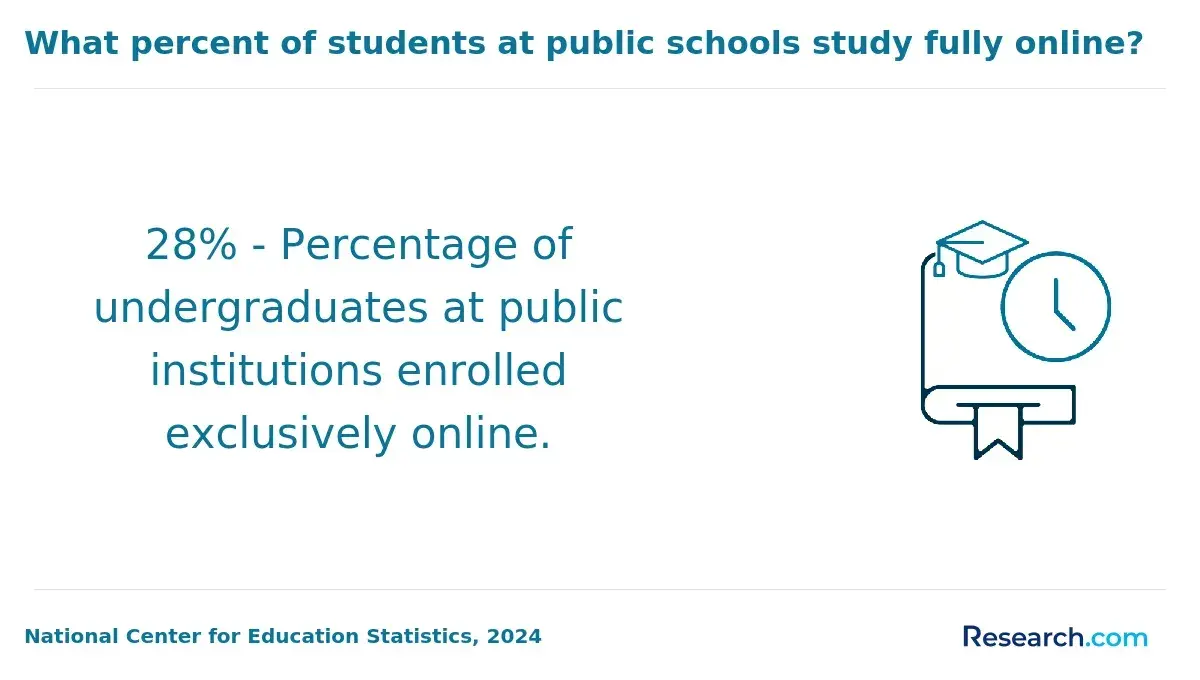
Mid-career public safety professionals face mounting pressure to quickly acquire advanced skills that align with evolving homeland security threats and agency expectations. With frontline demands leaving little room for full-time study, enrolling in flexible programs becomes essential. Recent National Center for Education Statistics data show that nearly 70% of online college students juggle work alongside coursework, spotlighting the growing demand for adaptable learning models that accommodate unpredictable schedules.
This shift challenges candidates to identify degrees that deliver applicable expertise without derailing current employment or slowing career momentum. This article evaluates the best online homeland security degrees designed to meet these real-world constraints, guiding professionals to strategic educational choices that maximize career growth and operational readiness.
Key Things You Should Know
- Mid-career public safety professionals face a tradeoff: accelerated Homeland Security degree tracks reduce time but often limit specialization depth, impacting readiness for niche federal roles demanding advanced technical expertise, per DHS workforce reports 2025.
- Employers prioritize candidates with degrees emphasizing cyber threat intelligence and emergency management integration; recent GAO analyses show 62% of DHS recruiters prefer interdisciplinary programs aligning with evolving multi-agency collaboration.
- Rising tuition inflation, averaging 5.4% annually in public institutions, disproportionately affects part-time learners balancing shift work, reducing access to extended on-campus research opportunities crucial for career advancement, as per NCES 2024 data.
What is an online homeland security degree and how does it serve mid-career public safety professionals?
Online homeland security degree benefits for public safety professionals are most apparent when balancing rigorous expertise with on-the-job demands. These programs provide targeted education in risk assessment, intelligence analysis, and emergency management while accommodating unpredictable shift work common in law enforcement and emergency response roles. For instance, a mid-career police officer aiming to shift into a homeland security analyst role gains skills in threat assessment and data interpretation not accessible through field experience alone.
Advanced homeland security education for mid-career public safety officials must account for program quality and accreditation, as these impact eligibility for federal roles and hiring competitiveness. Students face tradeoffs between asynchronous content flexibility and the necessity for validated outcomes. According to OnlineU's 2026 data, graduates of certain programs, like those at Bellevue University, report median earnings nearing $74,000, reflecting strong workforce applicability and return on investment.
Practically, these degrees act as strategic credentials enabling both lateral moves into intelligence positions and upward mobility within agencies. Decision-makers should weigh program rigor, scheduling compatibility, and workforce alignment before committing. For detailed financial considerations, prospective students may consult criminal justice degree tuition data, which frequently parallels homeland security tuition trends.
Success in this pathway hinges on integrating academic knowledge with operational experience, ultimately meeting evolving security demands in public safety sectors.
How do online homeland security programs compare to campus-based options for working public safety professionals?
Mid-career public safety professionals evaluating online homeland security degree programs for working public safety professionals should consider the tradeoffs between online and campus-based formats through the lens of workforce demands and operational realities. Online programs offer the flexibility required to manage shift work, deployments, and other unpredictable assignments typical in firefighting, law enforcement, and emergency management-constraints that campus schedules often cannot accommodate. For example, Virginia Commonwealth University's online master's alumni report median salaries near $99,382, indicating parity or advantage in financial outcomes versus traditional pathways.
Still, online study requires heightened self-discipline and effective time management, as the lack of in-person interaction challenges engagement and networking opportunities. Employers increasingly accept online degrees provided they come from regionally accredited institutions that embed practical elements such as crisis response simulations and policy analysis, which are crucial for roles demanding technical specialization or leadership in the field.
Decision-makers must also weigh the reduction in lost work hours and commuting costs against potential disadvantages like limited access to campus facilities, impacting experiential learning. Strong alumni networks and internship pathways remain vital to mitigate isolation risks inherent in online education.
For those seeking relevant legal insights alongside security studies, understanding the types of paralegals and their salaries provides an additional comparative perspective on public safety and legal career intersections.
Which accredited schools offer reputable online homeland security degrees for experienced public safety workers?
Employers in federal and private sectors increasingly prioritize accredited online homeland security degree programs for public safety professionals that directly correspond to clearance requirements and real-world job functions. UMGC's curriculum addresses this by focusing on federal competencies essential for roles demanding security clearances, where the workforce has experienced exponential growth, especially in intelligence and cybersecurity fields.
Public safety veterans considering a transition will find that schools like APUS offer programs integrating intelligence analysis and counterterrorism designed to meet employer expectations, though the technical depth can require careful assessment to avoid content redundancy relative to prior experience. The key tradeoff lies in balancing advanced, specialized coursework with pragmatic applicability without overextending operational professionals.
Flexibility is another critical factor; Excelsior College's asynchronous format supports those with shift-based schedules, yet prospective students must consider that federal agencies often favor degrees explicitly aligned with the NSA or DHS, which may affect employer recognition of these credentials. Portfolio-building opportunities such as capstone projects or internships play a decisive role in employability outcomes by translating knowledge into practice.
For public safety professionals seeking strategic pivots, narrowly focusing on top online homeland security schools for experienced public safety workers can improve career trajectory when paired with clearance-friendly curricula. Those exploring paths among degrees felons can get should similarly weigh practical curriculum alignment and accreditation in this evolving sector.
What admission requirements and prior experience do online homeland security programs expect from mid-career applicants?
Admission criteria for an online homeland security degree prioritize verified professional experience due to the operational demands of the field. Most programs require between three and five years in public safety, law enforcement, emergency management, or related areas to ensure relevancy and practical application of academic content. This requirement addresses employer expectations for candidates who combine documented field experience with critical academic skills.
Applicants must submit official transcripts showing at least a bachelor's degree from an accredited institution, though some programs allow exceptions for associate degree holders with significant occupational history. A minimum GPA, often between 2.5 and 3.0, reflects an emphasis on sustained academic performance relevant to career goals aligned with homeland security leadership.
Standard admission elements include letters of recommendation from supervisors verifying leadership potential, personal statements outlining clear career objectives, and occasionally interviews or situational assessments that test decision-making under pressure. These screens are essential given the workforce realities where professionals balance irregular schedules and ongoing job duties while pursuing advanced education.
Financially, leading affordable online homeland security programs start at $5,472 annually, providing a feasible option for mid-career professionals. For those interested in related advanced degrees, an online master's degree in forensic psychology can offer complementary expertise, broadening operational and investigative skill sets within security sectors.
What core courses and specializations are included in online homeland security degree curricula?
Degree programs focused on homeland security demand targeted skill development in areas like threat assessment, cyber defense, emergency management, and legal frameworks. For mid-career professionals, selecting specializations aligned with employer needs-such as a public safety officer transitioning to cyber defense or disaster resilience-can determine job market competitiveness.
Core coursework involves data-driven risk analysis and policy development essential for decision-making under uncertainty. Given projections that 42% of new U.S. jobs by 2031 will require a bachelor's degree, completion of such programs improves eligibility for positions within federal agencies, emergency services, or private security firms.
Students often encounter scenario-based simulations and internships that simulate interagency coordination and evolving threats. This hands-on experience bridges theory with real operational challenges, a priority for employers seeking applied expertise.
Tradeoffs include managing rigorous curricula alongside full-time employment and recognizing the need for supplementary certifications in niches like cybersecurity or intelligence analysis, which can be decisive in hiring. The increasing preference for candidates with cross-disciplinary skills-combining technology and policy knowledge-demands careful program selection.
Points to consider:
- Specializations must reflect specific workforce demands rather than broad security topics.
- Balancing practical experience through internships or labs is critical.
- Complementing degrees with targeted certifications enhances marketability.
Employers assess not only academic credentials but demonstrated operational competence, making real-world application integral to program value.
How long do online homeland security degrees take, and what schedules fit full-time public safety work?
Completing an online homeland security degree while maintaining active public safety roles demands balancing flexible delivery formats with career realities. Programs designed for mid-career learners typically span two to three years part-time, addressing shift work and unpredictable schedules common among first responders. Full-time enrollment may shorten this to 18-24 months but requires significant time flexibility often unavailable to officers and emergency personnel who must maintain operational readiness.
The value of asynchronous, modular curricula lies in accommodating high-duty periods such as disaster mobilizations by enabling work during off-shift hours without synchronous attendance requirements. Credentials that recognize prior public safety experience reduce total coursework and expedite program completion, offering practical leverage for working professionals aiming to minimize disruptions.
Arizona State University's emergency management and homeland security degree programs, for instance, align with real labor market data where emergency managers earn a median $93,330 and face steady growth near 3.0%. However, the tradeoff involves careful workload management over a multi-year period to avoid burnout or job performance compromises.
- Flexibility in course pacing is essential for unpredictable schedules like paramedics or state troopers.
- Rigid cohort models increase dropout risks and delay workforce progression.
- Planning for a 2-3 year completion window balances credentialing speed with job reliability.
Prospective students must weigh these factors against employer expectations and operational demands to effectively align education pathways with practical career advancement opportunities.
What do online homeland security degrees cost, and what financial aid options are available?
Choosing an online homeland security degree requires careful consideration of cost relative to long-term employability and funding availability. Tuition typically ranges from $15,000 to $45,000 for bachelor's or master's programs, reflecting differences in institutional prestige and residency status. Public universities generally provide more affordable in-state rates, but textbook fees and technology costs can add several thousand dollars. Professionals aiming to pivot or advance in public safety must factor in these incremental expenses alongside tuition.
Available financial aid options include federal Pell Grants for undergraduates and Direct Loans for graduate students, both with varying eligibility. Employer tuition reimbursement and graduate assistantships can reduce costs but often demand continued employment in relevant public safety roles, presenting a tradeoff between immediate financial relief and job commitment. Veterans accessing the GI Bill may receive substantial tuition support at accredited online schools.
The workforce outlook emphasizes pragmatic return on investment: security management roles average around $106,660 annually with moderate growth forecasts. For mid-career candidates, weighing upfront educational costs against the potential for employer sponsorship or loan forgiveness programs tailored to public safety work significantly impacts the decision to pursue advanced credentials online.
What homeland security and public safety leadership careers can these online degrees support?
Online homeland security degrees cater primarily to professionals seeking leadership roles that demand advanced threat assessment and strategic coordination skills. Positions such as emergency management directors and cybersecurity managers require not only theoretical knowledge but also applied competencies in interagency collaboration and operational oversight.
For example, a firefighter aiming to shift into emergency management must develop expertise beyond tactical response, including grant administration and policy formulation-areas integrated into well-rounded online curricula. These programs support workforce entry with practical skill-building tailored to complex crisis environments, though they offer less in-person networking opportunities.
The reported 895 graduates from Southern New Hampshire University's online homeland security programs in 2026 suggests substantial employer recognition of online pathways, yet students should verify accreditation and alignment with credentials like FEMA's Professional Development Series to improve marketability.
Key tradeoffs for working adults include balancing flexibility against limited face-to-face interaction and prioritizing certifications alongside degrees. The field values demonstrable leadership outcomes and relevant experience, meaning program prestige is secondary to practical readiness and certifications that meet sector standards.
- Emphasis on applied leadership and risk analysis skills
- Curriculum integration of disaster response and grant management
- Workforce acceptance seen in graduate volume data
- Importance of accreditation and recognized certifications
- Tradeoffs: networking limitations versus flexible delivery
What salary ranges and promotion prospects can graduates in homeland security and public safety expect?
Starting salaries for homeland security and public safety graduates typically range from $50,000 to $75,000, with potential mid-career earnings rising to $80,000-$110,000 based on agency size, location, and specialization. Federal roles, such as with the Department of Homeland Security or the Federal Emergency Management Agency, offer median salaries near $85,000 for analysts and program managers, while state and local positions show wider variation due to budget and regional factors.
The trajectory from operational to supervisory or policy roles frequently depends on practical experience combined with targeted education. For example, a mid-career public safety officer holding a bachelor's degree in homeland security can often transition into command or advisory positions within 3 to 5 years, accelerating advancement when paired with consistent performance.
Tuition differentials also impact financial ROI. Active-duty servicemembers accessing discounted rates-for instance, from $360 to $250 per credit at institutions like American Public University System-can reduce debt and shorten completion time, increasing net earnings over time. This is particularly relevant for professionals balancing employment while upgrading qualifications.
Graduates should weigh tuition against potential salary uplifts, where a $10,000+ annual increase within 2 to 3 years post-degree can justify education costs. Degrees emphasizing applied skills in emergency management, cybersecurity, or intelligence analysis tend to correlate with faster promotions and higher income ceilings, reflecting employer demand for those competencies.
What certifications, security clearances, and professional standards relate to homeland security degree holders?
Homeland security degrees require navigating a demanding matrix of certifications, security clearances, and professional standards that vary significantly by career path. For example, certified credentials such as the Certified Homeland Protection Professional (CHPP) or Certified Emergency Manager (CEM) validate expertise in emergency response and risk mitigation, but these alone might not suffice for federal roles requiring security clearances from Confidential to Top Secret, dependent on exhaustive background checks. Careers involving classified information or critical infrastructure demand such clearances, which can delay hiring and require ongoing reinvestigation.
Professionals must also align with National Incident Management System (NIMS) protocols and Department of Homeland Security credentialing, ensuring operational interoperability. Those pivoting toward private cybersecurity or resilience sectors typically supplement their degrees with industry-recognized certifications like CISSP or PMP to demonstrate cross-disciplinary skills vital for competitive advantage.
Arizona State University's data underscore that homeland security analytical skills can translate to lucrative risk management opportunities, as reflected in the 14.8% projected growth and $166,570 median salary for investment fund managers-a nontraditional but viable career pivot. Students weighing this pathway should consider the extensive time and resources required to maintain clearances, ongoing credential updates, and employer expectations, which can significantly influence long-term mobility and job placement outcomes.
Other Things You Should Know About Homeland Security
Most federal and state agencies recognize online homeland security degrees when the program is accredited and from an institution with an established reputation. However, some agencies maintain a preference for degrees completed in traditional, on-campus settings, especially for senior or sensitive roles. Mid-career professionals should verify employer preferences and consider programs with clear connections to government or industry partnerships to avoid credential skepticism.
In 2027, an online homeland security degree can significantly enhance career prospects even without prior security clearances by equipping professionals with critical skills and knowledge sought by employers. Graduates can access mid- to senior-level roles in federal, state, or private organizations, where expertise in homeland security is prioritized over clearances.
Online programs tend to offer fewer organic networking moments than in-person programs, which can limit informal peer connections and mentorship that are critical in homeland security careers. Selecting programs with live cohort sessions, strong alumni networks, or partnerships with public safety agencies improves access to professional contacts. Students focused on career advancement should value these interactive components as key criteria when comparing programs.
References
- What Can You Do With A Homeland Security Degree? https://www.criminaljusticeprograms.com/articles/what-can-you-do-with-a-homeland-security-degree/
- Online Degree Programs from GMC Online https://online.gmc.edu/programs/bachelor-of-applied-science-in-homeland-security-emergency-management/
- Bachelor of Science in Homeland Security https://www.trident.edu/bachelors-online/homeland-security-degree/
- Graduate Certificate: Homeland Security - Rosemont College https://rosemont.edu/college/academics/professional-studies/graduate/homeland-security-emergency-management-graduate-certificate/
- Online MPA Programs with a Specialization in Homeland Security https://www.onlinempaprograms.com/specializations/homeland-security
- Grow Your Career with an Online Master’s in Public Safety Leadership | UMGC https://www.umgc.edu/blog/grow-career-online-masters-public-safety-leadership
- ACADEMY | C4SEM | GLOBAL https://www.c4sem.org/homeland-security
- Online Homeland Security Degrees: Explore Top Programs https://www.degreesforgood.org/online-degrees/homeland-security-programs/
- Explore | Columbus State Community College https://explore.cscc.edu/programs/HMLNDSCTY.ICRT/homeland-security-certificate
- Homeland Security Requirements (Degrees, Jobs & Salary) https://www.allcriminaljusticeschools.com/federal-law-enforcement/homeland-security/