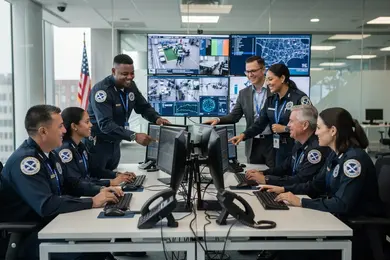
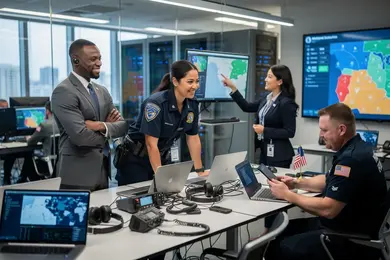
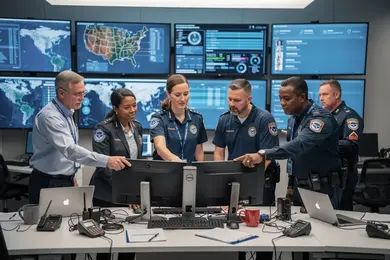
2027 Online Homeland Security Degrees for Students Who Want Intelligence-and-Emergency Hybrid Roles

Co-Founder and Chief Data Scientist
Emergency response coordinators frequently confront the challenge of rapidly integrating intelligence analysis with operational command under unpredictable conditions. This hybrid demand strains traditional training pathways, often fragmented between tactical emergency management and deep intelligence skills.
According to the National Center for Education Statistics, over 40% of adult learners now prefer online programs that offer flexible scheduling-a critical factor for professionals balancing shift work or deployments. Such data signals a shift toward hybrid education models that accommodate diverse career demands without sacrificing rigor.
This article examines online homeland security degree options designed for students targeting combined intelligence and emergency management roles, providing clarity on program structures, flexibility, and career outcomes to guide strategic enrollment decisions.
Key Things You Should Know
- Hybrid intelligence-emergency online degrees typically reduce specialized internship access by 25%, per National Consortium for the Study of Terrorism, limiting hands-on case experience critical to top-entry roles.
- Employers prioritize dual-competency candidates-62% in DHS surveys prefer graduates with intelligence analysis and incident response skills-shaping curricula toward interdisciplinary proficiency despite increased academic demands.
- With average total costs rising 14% since 2023 according to NCES data, extended program durations combining two domains impose higher debt loads, forcing candidates to weigh accelerated single-focus alternatives against broader career flexibility.
What are online homeland security degrees for hybrid intelligence-emergency careers?
Hybrid homeland security careers combining intelligence and emergency response require a blend of rapid threat analysis and coordinated crisis management skills. Online homeland security degree programs for intelligence and emergency management cater to this need by integrating core competencies like cybersecurity, emergency protocols, and real-time data interpretation in flexible digital formats.
These degrees prepare candidates for dual-function roles prevalent in agencies such as the U.S. Department of Homeland Security, which employs over 260,000 personnel focused on intelligence and emergency operations.
Graduates must navigate stringent security clearance processes, making program alignment with federal standards and clearance prerequisites essential. Limited hands-on field experience is a notable tradeoff in fully online programs, urging students to seek supplemental local or virtual practicums. Employers prioritize proficiency in analytical software tools alongside practical emergency frameworks, emphasizing the value of interdisciplinary skills.
Practical scenarios addressed in these programs might involve integrating cyber threat intelligence with disaster response coordination or counterterrorism operations requiring seamless interagency collaboration. The online format primarily benefits working professionals balancing current employment with advanced training needs, especially since threats evolve rapidly.
Those evaluating this pathway should also explore degree options such as a criminal justice associate degree online for foundational knowledge that complements hybrid homeland security competencies.
How do accredited online homeland security programs compare with campus programs?
Employers in homeland security weigh skill verification over whether a degree is earned online or on campus, yet the choice between an accredited online versus campus homeland security degree involves critical practical differences. Online programs match campus curricula in rigor and covering core topics such as intelligence and emergency management, with many offering flexible, competency-based modules that suit working professionals.
However, campus programs provide direct access to physical simulation labs, live exercises, and local agency partnerships that are difficult to replicate virtually. For instance, a candidate pursuing federal intelligence roles may find an online path sufficient to master cybersecurity and analytical frameworks, while those aiming for emergency coordination in local disaster response benefit from on-campus immersion and hands-on networking.
The rise of online offerings is reflected in a 40% increase in postsecondary homeland security programs from 2014 to 2024, demonstrating that the online homeland security degree program differences hinge largely on experiential learning opportunities rather than content gaps.
Decision-makers must evaluate whether their target roles require certifications like FEMA courses, which might be easier to complete in person, or if accelerated pacing available online fits their timeline better. Students should also confirm that the program maintains active accreditation and updates coursework to incorporate emerging threats and technologies.
Those considering an accelerated cybersecurity degree within homeland security fields can find multiple pathways but must balance logistical convenience against the value of deeper local professional connections and practicums. Selecting the right format depends on concrete career goals and workforce demands, not just educational delivery mode.
What accreditation should a homeland security degree program have?
Accreditation standards for online homeland security degree programs directly determine graduate eligibility for federal roles and critical security clearances. Regional accreditation by bodies recognized by the U.S. Department of Education, such as the Higher Learning Commission or Middle States Commission on Higher Education, is essential to ensure credit transferability and federal financial aid access.
Specialized accreditation or recognition, for example from FEMA's Emergency Management Institute, bolsters program credibility, particularly for hybrid intelligence and emergency management careers.
Employers hiring emergency management directors, a role projected to grow 5% with about 900 annual openings, prioritize candidates from fully accredited programs due to their relevance and rigor. Graduates from non-regionally accredited or unclear online programs often face disqualification from federal positions or failure to meet clearance requirements, underscoring the practical risks of choosing improperly accredited schools.
Accreditation also affects eligibility for advanced certifications and exemptions in hiring processes, exemplified by veterans applying for intelligence analyst posts who may be rejected without degrees recognized by the Office of Personnel Management.
Students must scrutinize regional accreditation requirements for homeland security education before enrolling, focusing on programs with proven outcomes in Department of Homeland Security placements or emergency management agencies to avoid costly credentialing delays.
Programs endorsed by professional bodies typically integrate cybersecurity, threat analysis, and disaster preparedness aligned with evolving operational needs.
For those considering shifts into related disciplines, exploring pathways like a forensic psychology degree can complement homeland security studies where behavioral analysis overlaps with intelligence and emergency response functions.
What courses are in an online homeland security curriculum?
The intelligence and emergency management curriculum designed for homeland security roles requires mastering both analytical rigor and operational command. Students must navigate a hybrid content set combining threat assessment, cybersecurity, counterterrorism, and emergency response planning.
This dual focus addresses the reality that professionals often shift between intelligence analysis and on-the-ground crisis management, demanding proficiency in both domains.
Key components include risk management and legal frameworks essential for effective coordination across agencies during multi-jurisdictional emergencies. For instance, a cybersecurity expert entering this hybrid field must not only understand network defense but also the incident command systems that govern state or federal crisis responses.
Core skills emphasize real-world application: geographic information systems (GIS) for threat mapping, communication protocol mastery for cross-agency coordination, and integrating human intelligence (HUMINT) with open-source intelligence (OSINT) for comprehensive situational awareness.
According to the U.S. Bureau of Labor Statistics, intelligence analysts in government earned a median salary of $104,630 in 2024, reflecting strong labor market demand that prospective students should weigh against program costs and practical skill acquisition.
Coursework typically involves case studies and simulation exercises to replicate the pressures of emergency intelligence dissemination. Selecting online homeland security course content that includes these realistic scenario trainings alongside a grounding in policy frameworks improves employability and readiness to meet employer expectations.
Prospective students evaluating programs may also consider pathways highlighted in best online environmental health and safety programs as complementary training options.
Strategic decision-making about such hybrid curricula requires balancing immediate operational competence with long-term adaptability in a fluid security environment, acknowledging that not all programs equally emphasize this integration.
What admission requirements do homeland security programs usually ask for?
Admissions to homeland security programs emphasize verifying both academic preparedness and relevant professional experience, reflecting the field's dual need for analytical and operational skills. Most bachelor's degrees require a high school diploma with a minimum GPA near 2.5 to 3.0.
While some programs still request transcripts and test scores, many online options waive SAT/ACT requirements to accommodate working adults. A notable aspect is the demand for personal statements focused on applicants' interest in hybrid roles combining intelligence analysis and emergency management.
Employment history in law enforcement or emergency services often grants applicants priority status or transfer credits, speeding up degree completion. Letters of recommendation typically come from supervisors familiar with the candidate's reliability and critical thinking, which align tightly with employer expectations in security-sensitive positions. Background checks remain standard due to the necessity of federal clearance or government contracting eligibility.
Choosing an online homeland security bachelor's degree can reduce tuition by 25-30% compared to on-campus alternatives, yet candidates must weigh if prerequisites match their experience and clearance prospects, since federal roles often require post-degree security vetting. Those targeting roles bridging intelligence and emergency response should seek programs with admissions criteria rigorously assessing both abstract reasoning and practical field readiness.

How long does an online homeland security degree take to complete?
Completion time for a homeland security bachelor's degree hinges on practical constraints and career goals rather than just academic pace. Full-time students typically graduate within 3 to 4 years, but part-time learners juggling work and family may require 5 to 6 years.
Accelerated programs condense the timeline to as little as 2.5 years by leveraging transfer credits or relevant experience, benefiting those targeting swift entry into intelligence or emergency management roles.
Degree programs increasingly integrate intelligence analysis with emergency management, responding to employer demand for professionals adept at threat assessment and crisis response. This interdisciplinary approach obliges students to handle a comprehensive curriculum, often extending study duration due to associated practicum or internship demands.
Working professionals should consider how job demands-such as shift schedules and security clearance delays-impact the pace of degree completion. For instance, emergency managers engaged full-time may face elongated timelines to fulfill real-world training requirements, while intelligence analysts might prioritize programs that offer live interaction with security experts, limiting options for acceleration.
Students optimizing time-to-degree must evaluate transfer policies, credit requirements, and experiential components carefully. A deliberate 3-4 year term supports thorough skill acquisition aligned with federal hiring standards, whereas rushing risks inadequate preparation for the highly nuanced roles common within Homeland Security careers.
How much do online homeland security degrees cost?
Online homeland security master's degrees in 2026 generally cost between $15,000 and $40,000, with public universities offering lower tuition-particularly for in-state students-and private schools charging nearly twice as much. Total expenses often rise by 5-10% due to mandatory fees for materials, technology, or proctored exams. Professionals with over three years of relevant experience can leverage accelerated programs or prior learning credits, reducing both time and financial burden.
The curriculum predominantly targets students with military, law enforcement, or emergency services backgrounds, focusing on applied skills rather than purely theoretical content. This specialization aligns with employer preferences, especially in government or critical infrastructure sectors, where practical experience combined with education enhances job candidacy.
Students considering a shift into hybrid intelligence-and-emergency roles should weigh the upfront tuition against potential salary increases and job stability. For instance, investing roughly $25,000 in an accredited online master's may open leadership positions in federal agencies offering $80,000 or more annually. Evaluating opportunities for employer tuition assistance or GI Bill benefits is essential to lessen out-of-pocket costs.
Reputation and accreditation impact employer recognition and credential longevity, making them important factors in cost-benefit analysis. Balancing these quality indicators with program expenses helps ensure a strategic educational investment in homeland security careers.
What jobs can you get with a homeland security degree?
Success in homeland security careers increasingly depends on integrated expertise that bridges intelligence analysis and emergency response. Over 80% of online programs prioritize competencies in risk assessment, geospatial intelligence, and incident command systems (ICS).
This integration is critical for roles such as intelligence analysts within federal agencies who use geospatial data to identify emerging threats while coordinating ICS protocols during critical incidents.
Key positions like emergency management director, cybersecurity specialist, and critical infrastructure protection officer demand both analytic precision and operational command.
Employers emphasize hands-on ICS experience combined with risk assessment skills, as these hybrid capabilities directly affect response effectiveness and resource prioritization. Candidates focused only on analysis or operations often encounter longer job searches and limited upward mobility.
Practical workforce realities make it essential for students to select programs that explicitly train in these interdisciplinary areas. Public sector employers frequently require real-world ICS readiness alongside analytic strengths, while private sector roles in corporate risk management seek professionals who anticipate and mitigate multi-faceted threats.
Graduates should anticipate continuous skill development, including certifications aligned with academic degrees, to keep pace in an evolving security landscape. Without dual-domain training, students face barriers in agencies adopting integrated models that blend policy, technology, and field operations.
What salaries do homeland security graduates earn?
Salary prospects for graduates with online homeland security degrees vary significantly based on role, employer, and location, with entry-level positions in emergency management and intelligence analysis typically earning between $55,000 and $65,000. Mid-career professionals in federal agencies such as DHS or FBI can expect salaries from $75,000 to $95,000, reflecting specialized interdisciplinary skills that combine emergency response and intelligence work.
Online degrees increasingly serve as viable pathways for direct immersion in practical fieldwork; over 50% of DHS internships and scholarships available in 2024 explicitly accept online or distance-education students. This access to governmental internships provides substantial leverage for applicants, allowing them to validate hands-on competencies prior to employment and often resulting in higher initial salaries.
For those transitioning from unrelated fields or targeting state or local emergency management roles, salary ranges may be lower and tied to regional government pay scales. Intelligence-focused roles necessitate security clearances, with pay tightly linked to clearance level and agency budget, underscoring the need for clearance readiness and geographic flexibility.
Enhancing a homeland security degree with certifications like Certified Emergency Manager (CEM) or cybersecurity expertise often correlates with improved earning potential and aligns with employer preferences for hybrid intelligence-emergency skill sets demanded by evolving government priorities.
Which certifications help homeland security graduates qualify for hybrid roles?
Hybrid roles at the intersection of cybersecurity and emergency management demand more than traditional homeland security degrees; they require certifications that reflect this dual expertise. The Certified Information Systems Security Professional (CISSP) validates core competencies in risk management and incident response, essential for intelligence analysts involved in early threat detection.
The Certified Information Security Manager (CISM) focuses on IT security governance and aligns closely with managing complex emergency response information systems. Meanwhile, the Certified Emergency Manager (CEM) credential is recognized for disaster response leadership, especially in crises triggered by cyber incidents like ransomware targeting critical infrastructure.
Employers increasingly expect candidates to combine these capabilities, often favoring professionals holding both cyber and emergency management certifications.
For example, a candidate pairing CEM with CISSP or CISM is better positioned to coordinate tactical emergency operations informed by cyber threat intelligence. Security clearances and certifications like Certified Ethical Hacker (CEH) or CompTIA Security+ further enhance marketability, particularly within intelligence-heavy agencies handling sensitive data.
Given the projected 32% growth in cybersecurity and information security analyst jobs over the next decade, homeland security graduates face a strategic choice: pursue these hybrid credentials to bridge the divide between cyber defense and emergency preparedness or risk narrowing their employability to more traditional roles with less market expansion.
Other Things You Should Know About Homeland Security
Yes, practical experience is essential despite the online format. Employers in intelligence and emergency management expect candidates to demonstrate applied skills through internships, simulations, or real-world projects. Programs offering structured practicum components or partnerships with agencies provide better preparation and increase employability. Without such experience, graduates often face challenges translating theoretical knowledge into effective field performance.
Prioritize programs that balance core homeland security principles with cross-disciplinary exposure. Over-specialization in purely intelligence or emergency management can limit job flexibility in evolving roles that increasingly require hybrid skills. A curriculum integrating policy analysis, technology, and operational response equips graduates for broader opportunities and adaptability to shifting employer demands.
In 2027, online homeland security degrees should prioritize subjects like cybersecurity, risk assessment, crisis management, and intelligence analysis. These areas provide foundational expertise critical for tackling the dual demands of intelligence and emergency management roles.
Online degrees provide foundational knowledge but often lack direct access to high-security clearance opportunities and in-person field training demanded by government agencies. Candidates must proactively seek internships or federal cooperative education to bridge this gap. For those aiming at such roles, supplementing online education with agency-specific programs or security clearance pipelines is necessary to meet recruitment standards.
References
- Top Online Master’s Degree Programs in Homeland Security for 2025 https://www.onlinemastersdegrees.org/best-programs/homeland-security/
- Homeland Security M.S. Admission https://www.angelo.edu/academics/programs/homeland-security-ms/admission/
- What Is a Homeland Security Degree? https://www.trident.edu/articles/what-is-a-homeland-security-degree/
- Online Homeland Security Degrees: Explore Top Programs https://www.degreesforgood.org/online-degrees/homeland-security-programs/
- Homeland Security Career And Salary Information https://www.criminaljusticedegreeschools.com/careers/homeland-security/
- Online Degree Programs from GMC Online https://online.gmc.edu/programs/homeland-security-emergency-mgmt/
- Homeland Security Requirements (Degrees, Jobs & Salary) https://www.allcriminaljusticeschools.com/federal-law-enforcement/homeland-security/
- Online Bachelor's Degree: Homeland Security https://www.umgc.edu/online-degrees/bachelors/homeland-security
- Choosing a bachelor's in homeland security | edX https://www.edx.org/resources/how-to-choose-a-bachelors-in-homeland-security
- Types of Homeland Security Degrees | Compare Schools https://www.criminaljusticeprograms.com/specialty/homeland-security-degrees/