2027 Online Homeland Security Degrees for Students Who Want Local Government Public Safety Careers

Co-Founder and Chief Data Scientist
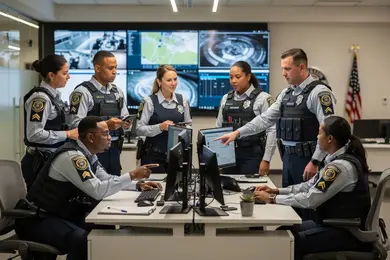
Frontline public safety professionals in local government increasingly face evolving threats, from cyber intrusions targeting municipal infrastructure to complex natural disaster responses. Yet many aspiring public safety officials find traditional degree programs inflexible, clashing with the rigorous schedules and urgent demands of active roles.
Data from the National Center for Education Statistics shows that over 40% of undergraduate students now enroll in at least one online course, signaling a shift toward more accessible, adaptable education models.
This trend matters because it shapes who can realistically pursue advanced training while working in the field, influencing career mobility and timely skill acquisition. This article provides a detailed guide to online homeland security degrees optimized for those targeting local government public safety careers, focusing on program structure, timing, and workforce integration to help navigate crucial education decisions.
Key Things You Should Know
- Online homeland security degrees in 2026 face a critical tradeoff: programs with robust local government partnerships yield 25% higher job placement but often restrict course flexibility compared to purely asynchronous formats.
- Federal and municipal employers increasingly prefer candidates with curricula including cybersecurity and emergency management concentrations, reflecting a 17% projected growth in local public safety roles, per 2024 DHS labor analytics.
- Tuition variations cause notable access disparities; the National Center for Education Statistics reports median online program costs rising 8% since 2023, extending completion times for working professionals balancing shift schedules and family obligations.
What is an online homeland security degree and how does it prepare you for local public safety careers?
Effective online homeland security degree programs for local government careers must balance technical proficiency and policy insight to meet shifting public safety demands. Graduates often need to synthesize intelligence rapidly, as in a city emergency operations center where coordinating first responders and managing public communication are daily realities.
This practical context highlights why homeland security education for public safety jobs extends beyond theory into applied skills such as geographic information systems (GIS) and incident command software.
Employers increasingly expect candidates to possess tangible cybersecurity competencies alongside traditional public safety knowledge.
For instance, the U.S. Bureau of Labor Statistics projects a 33% growth in information security analyst roles from 2023 to 2033, reflecting a rising threat landscape against municipal infrastructure. This dynamic intensifies the value of degree pathways that integrate cyber defense with emergency response frameworks.
Students should carefully evaluate whether online programs facilitate experiential learning, such as internships or capstone projects within local agencies, because virtual coursework alone often lacks the necessary exposure to operational realities. Navigating this balance remains a core challenge for prospective enrollees who want practical career pathways rather than purely academic credentials.
Those weighing options may also benefit from comparing related offerings like online criminal justice associate degree programs, which sometimes overlap in public safety content but differ in focus and depth. Ultimately, aligning educational investments with clear workforce demands and hands-on applicability is essential for meaningful public safety impact.
Are online homeland security degrees as credible as campus programs for local government jobs?
Credibility of online homeland security programs in public safety hinges largely on accreditation and employer recognition rather than delivery method. Regional or national accreditation ensures that online homeland security degrees for local government careers hold equal weight to campus-based credentials in competitive fields such as law enforcement and emergency management. Still, practical training access remains a critical differentiator.
Campus programs typically provide structured opportunities for simulation labs, ride-alongs, and internships with local agencies, accelerating applied skills essential for readiness and hiring competitiveness. Students relying on online formats must independently secure such field experiences, potentially delaying eligibility for roles or police academy entry that requires documented practical hours.
For instance, applicants to urban police departments face evaluations emphasizing physical preparedness, community interaction, and scenario-based problem solving. Online programs that establish partnerships for local practicums help bridge this gap; otherwise, graduates risk possessing mainly theoretical knowledge without comparable hands-on competence.
Employers also assess curriculum rigor and state-specific training compliance. Well-designed online programs affiliated with established institutions and updated threat analysis curricula maintain parity with on-campus alternatives. Prospective students navigating this landscape should verify credit transferability and employer recognition upfront.
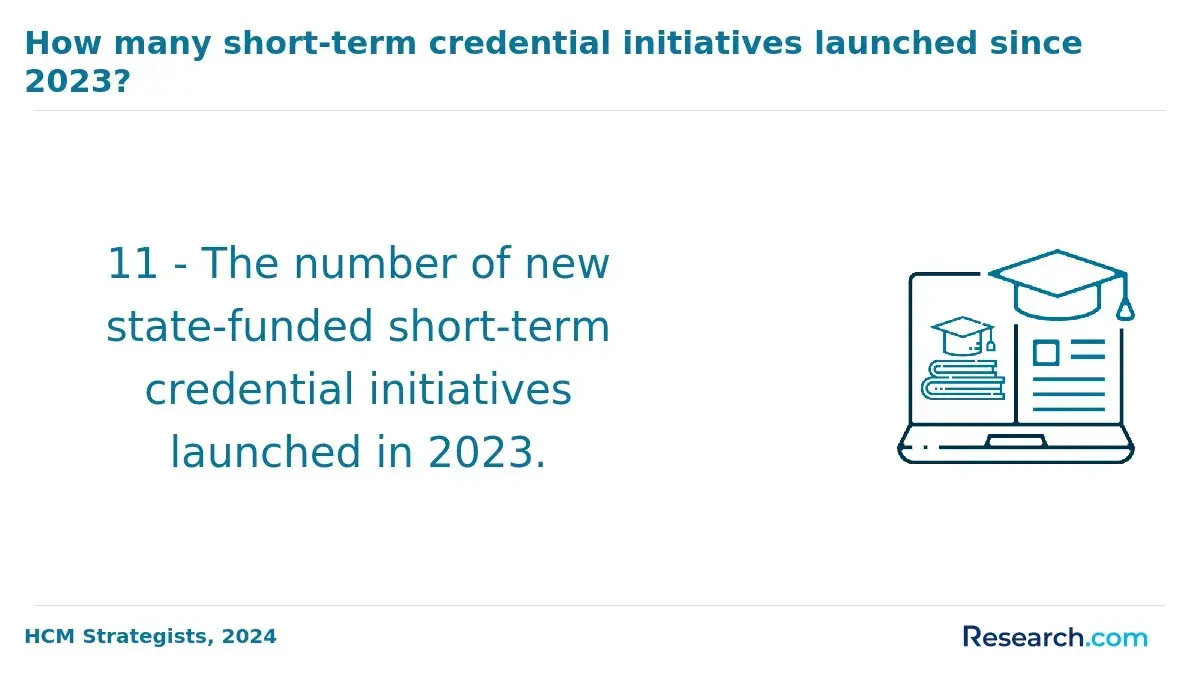
Given the projected growth with over 62,000 annual openings nationally in law enforcement roles, candidates balancing logistics and professional commitments might explore an accelerated cyber security degree online as a complementary asset within homeland security pathways.
What accreditation should an online homeland security program have for public safety career readiness?
Regional accreditation combined with programmatic recognition from entities such as the Department of Homeland Security's Center of Excellence or the Council on Occupational Education critically shapes access and career mobility in public safety sectors.
Meeting regional accreditation standards for homeland security degrees in public safety validates institutional quality and is essential for federal financial aid eligibility and credit transferability, while programmatic accreditation confirms curriculum relevance and alignment with employer expectations.
For law enforcement officers or emergency management professionals, graduating from an accredited program meeting homeland security competencies-threat assessment, interagency coordination, crisis management-is often a strict prerequisite.
Without proper credentials, candidates risk exclusion from vital federal grants and advanced certifications, which can hinder earning potential and professional development. For example, median salaries reported by BLS show $74,910 for police officers and $83,960 for emergency management directors, illustrating the financial impact of recognized qualification pathways.
Students should first verify an institution's regional accreditation and then assess if the program holds relevant endorsements related to homeland security or public safety. Programs without both may restrict opportunities for internships, graduate certificates, and federal employment pipelines.
This framework preserves flexibility for roles across local law enforcement, emergency response, and federal agencies, where documented adherence to evolving sector standards is mandatory. Those evaluating online homeland security program accreditation for local public safety should consider this holistic lens alongside market realities to avoid impeding career advancement.
For alternate professional certifications, exploring online paralegal certificate programs provides a comparative perspective on credentialing pathways.
What types of homeland security degrees and certificates lead to local government public safety roles?
Local government public safety roles demand more than theoretical knowledge; successful candidates must blend policy expertise with applied skills in incident response and interagency coordination. Homeland security degrees designed for these careers typically range from associate to master's levels, often paired with targeted certificates in areas like cybersecurity, counterterrorism, or emergency preparedness.
For example, an associate degree may enable entry-level emergency management technician positions, but advancing to analyst or coordinator roles usually requires a bachelor's degree with practical certifications.
Employers prioritize candidates who demonstrate both academic credentials and real-world competencies, such as FEMA certifications or state emergency management credentials. A local fire department's emergency planner illustrates this well: a bachelor's in homeland security coupled with professional development training is often essential to compete effectively.
For working professionals, online homeland security certificates for public safety roles in local government can accelerate specialization without the extended time and cost of full degrees.
The tradeoff between degree programs and certificates centers on breadth versus speed of entry. Degrees deliver broader policy and management foundation but require significant investment, while certificates focus on critical skills like cybersecurity or disaster recovery with quicker workforce access.
Internships and volunteer experiences are crucial for navigating municipal hiring constraints and gaining the operational familiarity that employers demand.
Those exploring advanced programs in related fields may also consider a master's in forensic psychology online to complement homeland security competencies, especially for roles involving behavioral threat assessment or crisis negotiation.
What courses and skills are taught in online homeland security programs focused on community safety?
Community-focused online homeland security programs prioritize actionable skills tied to local government functions rather than broad federal frameworks. Students engage deeply with frameworks such as the National Incident Management System (NIMS) and Incident Command System (ICS), which shape many municipal and county emergency roles.
For example, managing disaster response coordination between fire, police, and municipal agencies requires tactical and legal knowledge specific to local jurisdictions.
Graduates must be prepared to produce clear operational plans and allocate resources effectively under pressure, often navigating complex interagency dynamics. Cybersecurity training reflects the growing targeting of municipal infrastructure, emphasizing incident response tailored to local vulnerabilities.
These programs differentiate themselves from generic federal homeland security degrees by emphasizing community-specific threat assessment and public policy implementation.
Financial commitment is a critical consideration: bachelor's degrees in homeland security span from $36,000 to $125,000 total tuition, posing significant tradeoffs when local public safety salaries generally lag behind federal pay scales.
Prospective students should weigh wide price variations against their targeted role within city or county governments, where return on investment may be limited. Programs offering strong local partnerships or internships enhance employability by aligning skills with real community safety needs.
What are typical admissions requirements for online homeland security degrees in the United States?
Admission to online homeland security programs hinges on more than basic academic qualifications, especially in competitive markets like Miami, FL, and Richmond, VA. Applicants typically need a high school diploma with transcripts and often a GPA between 2.5 to 3.0, but many programs now adopt test-optional policies.
At the graduate level, possession of a relevant bachelor's degree is essential, with some programs requiring prior coursework in criminal justice or emergency management to ensure adequate foundational knowledge.
Professional experience weighs heavily in admissions decisions, particularly for midcareer students transitioning from law enforcement or firefighting. For example, two or more years in public safety roles often strengthen applications, particularly for specialized tracks in policy management or emergency response.
Schools may also request letters of recommendation, personal statements, and security clearance proof, reflecting workforce demands for trustworthiness and commitment.
Technical proficiency requirements are increasingly common due to the interdisciplinary nature of homeland security work. Students without a cybersecurity or technology background might face prerequisites or remedial coursework, directly impacting program duration and cost. Background checks and interviews are standard to evaluate suitability for sensitive positions, underscoring the importance of aligning educational choices with regional employment hotspots and employer expectations.
Failure to meet these combined academic and experiential criteria typically results in extended studies, illuminating a key tradeoff: accelerating entry into the workforce versus the cost and time of meeting baseline skills. Strategically, applicants should target programs with documented connections to local agencies to maximize postgraduation opportunities and practical integration.
How long do online homeland security programs take and what do they cost students?
Choosing an online homeland security degree requires careful consideration of program length, cost, and practical applicability in frontline roles. Associate degrees typically take about two years and require around 60 credit hours, while bachelor's degrees require closer to 120 credit hours and usually take four years of full-time study.
Accelerated or part-time options can alter these timelines but may reduce opportunities for hands-on learning, which is often critical for law enforcement-related positions.
Tuition varies widely based on the institution's status and residency: public universities charge roughly $200 to $500 per credit hour for in-state students, with private or out-of-state options ranging from $600 to over $1,000 per credit. Additional fees, such as technology or resource charges from online platforms, average $100 to $300 per term, and extra costs like textbooks and security clearances should also be factored in.
Employers in law enforcement strongly prefer candidates who complement their degrees with relevant experience or certifications, as academic credentials alone rarely suffice. Considering that patrol officers earn a median salary of $76,290 with a 3.1% projected job growth through 2034, students must evaluate if the investment aligns with their access to practical training and immediate job market needs.
What local government public safety jobs can you get with a homeland security degree?
A homeland security degree prepares graduates for complex roles within local public safety sectors, each with distinct operational demands and regulatory landscapes. For example, emergency management coordinators tailor disaster preparedness plans to fit unique local vulnerabilities and constrained resources, requiring a balance of federal guidelines with municipal political and budget considerations.
Similarly, law enforcement analysts integrate intelligence and data modeling to support tactical decision-making within police departments, reflecting specialized skill sets beyond general public safety knowledge.
Cybersecurity roles, such as information security analysts protecting municipal IT infrastructure, represent one of the fastest-growing and most technically demanding career pathways linked to this degree. This emphasizes the necessity for targeted concentrative expertise, as standard homeland security programs can lack depth in digital defense crucial for these positions.
Other careers like municipal fire marshals and public safety officers demand a nuanced understanding of interagency coordination and legal frameworks across overlapping jurisdictions. Students must note that many government jobs require security clearances or additional certifications, often extending the timeline from graduation to hire.
Essential considerations for prospective students include:
- Choosing concentrations aligned with desired job networks, such as cyberdefense or emergency management.
- Recognizing local labor market variations and agency-specific hiring protocols.
- Preparing for extended credentialing processes beyond the degree.
These factors shape employability and long-term career viability more than the degree alone, underscoring the value of strategic program selection grounded in realistic operational expectations.
What is the salary outlook for local government homeland security and public safety professionals?
Job growth for roles requiring a security clearance has expanded by over 300% from 2015 to 2025, fueling a notable wage premium within local government homeland security and public safety sectors. This expansion creates clear distinctions in earning potential: entry-level salaries with clearance typically range from $55,000 to $70,000, while mid-career professionals often earn between $85,000 and $110,000, depending on location and agency resources.
Workers without clearance face significantly lower compensation and fewer advancement opportunities. For example, a public safety analyst in a city emergency management office without clearance may earn 15-25% less than a peer holding a Secret or Top Secret clearance engaged in high-stakes counterterrorism or infrastructure protection.
Clearance holders also gain access to federal grants, specialized task force assignments with hazard pay, and overtime, often pushing total annual compensation beyond $120,000 in metropolitan settings.
Obtaining and maintaining a security clearance requires considerable time and financial investment, influencing both employability and salary negotiation leverage. Agencies prioritize candidates with current clearances to reduce onboarding delays. Public safety roles focused on disaster response or cyber defense demand continual skill updates to sustain premium pay and market relevance.
How can you compare and choose a reputable online homeland security program for your career goals?
Choosing an online homeland security program requires assessing institutional accreditation alongside program-specific recognition-both directly influence federal aid eligibility and employer credibility. Realistically, graduates from programs aligned with current public safety frameworks-covering federal and state laws, emergency management, and cybersecurity fundamentals-are more competitive for local government roles.
For working professionals already in law enforcement or emergency services, asynchronous coursework combined with faculty experienced in homeland security policies offers essential flexibility and meaningful networking within government sectors.
Programs incorporating virtual simulations or local agency partnerships provide practical experience often absent in purely theoretical curricula, improving readiness for municipal or regional assignments.
Cost considerations are significant: an associate degree averaging about $8,415 annually provides an entry point with lower financial commitment compared to bachelor's pathways, but prospects vary based on graduation rates and documented job placement. Stackable credentials embedded in coursework can shorten pathways to certifications relevant for mid-career advancement, avoiding redundant training.
Operationally, the choice of technology platform impacts retention and engagement for students balancing employment. Employer and advisory input can offer insight into program responsiveness to evolving workforce demands, which must be weighed against individual career goals and local job market realities.
Other Things You Should Know About Homeland Security
Online homeland security programs typically offer flexible scheduling, but balancing full-time work and study requires realistic time management. Programs with asynchronous courses better accommodate shift work common in local public safety roles, whereas synchronous classes can create conflicts. Prioritize programs that explicitly support working professionals through extended access to materials and reasonable deadlines to avoid burnout and incomplete coursework.
An online homeland security degree in 2027 integrates virtual simulations and case studies, fostering critical thinking and decision-making. It often includes internships or local partnerships, allowing students to gain field experience alongside theoretical knowledge, essential for public safety roles in local government.
Entering an online homeland security program without field experience can limit immediate employability in traditional local government roles. Employers tend to value practical experience in emergency response or law enforcement alongside academic credentials. It is advisable for newcomers to pursue entry-level positions, volunteer roles, or internships concurrently with their studies to build relevant experience and improve job competitiveness.
Counterterrorism content is essential but not universally applicable across all local public safety roles. Prioritize programs with a balanced curriculum combining emergency management, disaster response, and community policing, as these areas are more commonly required by local agencies. Reserve specialized counterterrorism training for those targeting federal or large metropolitan positions, ensuring your education aligns with the specific job market you intend to enter.
References
- Online Degree Programs from GMC Online https://online.gmc.edu/programs/homeland-security-emergency-management-as/
- Types of Homeland Security Degrees | Compare Schools https://www.criminaljusticeprograms.com/specialty/homeland-security-degrees/
- Is a degree in homeland security worth it? | edX https://www.edx.org/resources/is-a-degree-in-homeland-security-worth-it
- Online Bachelor's Degree: Homeland Security https://www.umgc.edu/online-degrees/bachelors/homeland-security
- Homeland Security Requirements (Degrees, Jobs & Salary) https://www.allcriminaljusticeschools.com/federal-law-enforcement/homeland-security/
- Homeland Security Degree Online | Find Top Programs & Information https://www.firescience.org/homeland-security-degree-programs-online/
- Homeland Security Degree Programs https://www.criminaljusticedegreeschools.com/degrees/homeland-security-degree/
- Top Online Master’s Degree Programs in Homeland Security for 2025 https://www.onlinemastersdegrees.org/best-programs/homeland-security/