2027 Online Homeland Security Degrees With Low Total Student Debt Potential

Co-Founder and Chief Data Scientist
Professionals seeking to advance in homeland security face a critical challenge: securing a degree that aligns with strict budget constraints without incurring prohibitive debt. This issue is intensified by the Bureau of Labor Statistics projecting 6% job growth in homeland security roles through the end of the decade, creating urgency for timely, affordable credentials.
Meanwhile, nearly 60% of adult learners opt for online programs to balance work and study, according to the National Center for Education Statistics, reflecting a shift that demands flexible yet credible degree options. This article evaluates online homeland security degrees offering low total student debt potential, guiding strategic choices for meaningful career advancement under financial pressure.
Key Things You Should Know
- Online homeland security degrees in 2026 show a median total student debt of $21,300, per the National Center for Education Statistics, creating a debt burden notably lower than the $32,731 average for comparable public safety fields, yet often paired with entry-level roles paying below the national median wage, complicating ROI assessments.
- Employers increasingly demand practical cybersecurity and emergency management experience alongside academic credentials, according to a 2024 Department of Labor report, pressuring online learners without integrated internships or cooperative work components to pursue costly supplementary certifications.
- Program completion timelines vary widely from 18 to 36 months, with accelerated tracks reducing living costs but increasing workload intensity; longer durations may allow for employer tuition assistance but delay workforce entry, impacting overall career advancement speed.
What is an online homeland security degree and how does it prepare you for the field?
Online homeland security degree programs focus on imparting actionable skills in risk assessment, emergency management, cybersecurity, and intelligence analysis aligned with operational roles in federal, state, or local agencies. This applied approach benefits working professionals, such as a cybersecurity analyst at a municipal utility, who can advance their expertise in critical infrastructure protection without leaving their positions.
Employers prioritize candidates with proficiency in interoperable communications, data-driven threat identification, and incident mitigation. However, the value of earning an online homeland security degree hinges significantly on securing relevant employment and, often, specialized security clearances.
Without these, graduates may encounter limited return on investment given the approximately $41,000 cost for a four-year, full-time program before financial aid.
Students and professionals assessing how an online homeland security degree prepares students should weigh program accreditation, the inclusion of simulation exercises or internships, and modality flexibility. These factors mitigate online learning barriers by fostering practical experience, which remains crucial in this field.
For those comparing related options, resources evaluating programs such as a criminal justice degree online may offer additional context on cost-efficiency and curriculum alignment.
How can you identify accredited online homeland security programs that minimize student debt?
Choosing accredited online homeland security programs with low student debt requires scrutiny beyond institutional prestige. Accreditation recognized by the U.S. Department of Education or the Council for Higher Education Accreditation is a baseline, but specialized accreditation in homeland security or related fields signals curricula aligned with employer demands and regulatory standards.
In practice, annual in-state tuition for affordable online homeland security degrees with debt reduction options falls between $7,044 and $7,119, a range that substantially limits upfront financial burden compared to national averages.
Students must weigh program outcomes, graduation rates, average debt at completion, and job placement metrics, published by authoritative sources.
For example, a federal employee transitioning to cybersecurity within homeland security should consider programs offering direct pathways to government certifications instead of broader criminal justice degrees that often carry higher costs without tailored professional focus. These decisions affect the return on investment and long-term career mobility.
Practical considerations also include financial aid availability and tuition structures allowing part-time study or competency-based credits to reduce debt by balancing work and study. Students should avoid programs with limited credit transfer, which inflate time and cost.
Employer partnerships and structured internships can offer paid experience or tuition assistance, critical for managing debt while gaining applicable skills. Those exploring specialized training might consult cyber security online courses to supplement or pivot within homeland security roles.
What are the typical costs, financial aid options, and debt risks for online homeland security degrees?
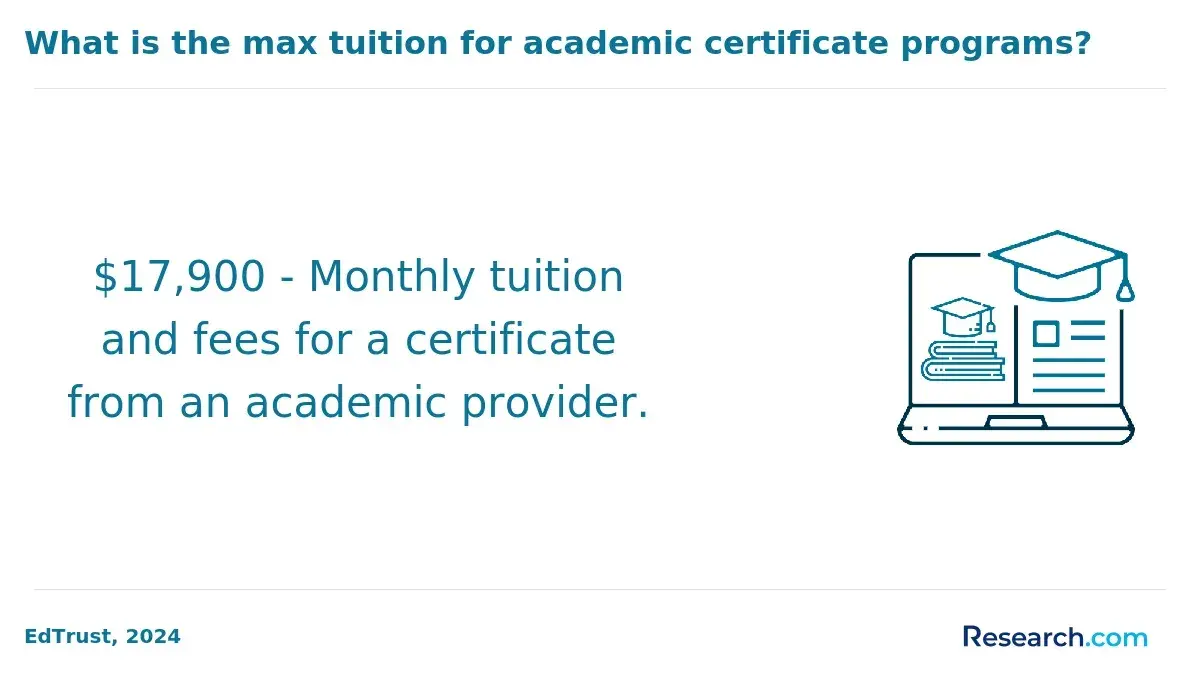
Tuition costs for online homeland security bachelor's degrees vary dramatically, with per-credit rates ranging from $41.67 at the lowest-cost in-state programs to over $350 at premium institutions.
This disparity requires prospective students to weigh not only the immediate financial burden but the impact of total debt on career flexibility, especially in public sector roles where salary caps limit repayment capacity. Selecting programs with lower tuition can significantly reduce debt risk but may limit access to employer-valued networking or capstone experiences.
Federal financial aid-including Pell Grants and subsidized loans-remains the primary funding source, yet many online learners face challenges accessing these benefits fully due to income thresholds and part-time status. Employer tuition assistance may offset costs but often demands program alignment with current job responsibilities.
State-level scholarships targeting public safety professions vary widely, affecting affordability. Students with active-duty military or visa statuses must validate eligibility to leverage aid effectively. These practical constraints illustrate why tailored financial strategies are essential when considering typical costs and financial aid options for online homeland security degrees.
When tuition nears $300+ per credit hour, total borrowing can exceed $30,000, creating debt profiles that hamper mobility and may detract from credential-focused efforts.
By contrast, students who strategically minimize expenses and maximize aid mitigate these risks, aligning more closely with employer expectations for technical expertise balanced by fiscal prudence. For working professionals or those seeking a pivot within public safety, evaluating these financial tradeoffs is critical.
For individuals navigating complex backgrounds, such as those considering online degrees for felons, careful program selection combined with informed repayment strategies becomes even more vital.
How do online homeland security programs compare with on-campus degrees for quality and outcomes?
Employers increasingly regard online homeland security programs as meeting competency standards nearly equal to on-campus options, particularly for roles emphasizing policy, analysis, and cyber defense.
Yet, the quality comparison between online homeland security degree formats reveals that physical situational training and hands-on exercises remain more robust in campus environments, an important factor for positions requiring tactical readiness or emergency response simulations.
For instance, a federal department hiring cybersecurity analysts may value theory-based online training equivalently but prefer in-person candidates for field operations demanding physical security expertise.
Job outcomes for online vs on-campus homeland security programs show that graduates with verified practical experiences, such as internships or live virtual labs, secure employer trust more readily.
Online formats serve working adults and military-connected students well, who face constraints balancing job responsibilities; notably, military-affiliated learners benefit from tuition rates as low as $250 per credit hour online, compared to $320+ in on-campus settings, distinguishing these pathways in affordability and accessibility.
Students should strategically select educational delivery based on career goals: campus programs suit roles with state licensure or in-person testing requirements, while online tracks maximize flexibility and accelerate workforce entry.
Candidates aiming to optimize employer recognition must prioritize programs integrating industry-standard certifications alongside academic coursework. For insights on balancing cost and program value in related fields, see masters degree in marketing.
What admission requirements and prior experience are needed for online homeland security degrees?
Admission criteria for online homeland security degrees often reflect a balance between baseline academic qualifications and practical experience, directly impacting student suitability and workforce integration. Most programs require at least a high school diploma and a minimum GPA around 2.5 to 3.0.
Standardized tests like the SAT or ACT may be waived for applicants with relevant professional backgrounds or prior college credits, recognizing the value of experiential knowledge in this security-sensitive field.
Degree level dictates experience demands: bachelor's programs typically do not mandate formal work history but favor candidates with law enforcement, emergency management, or military exposure to clarify career goals. Conversely, master's programs often stipulate two to five years of professional experience within homeland security or related federal agencies, which supports advanced engagement with complex subjects such as counterterrorism strategy and cybersecurity policy.
Employers prioritize candidates who merge education with field experience; for example, federal employees transitioning from administrative to operational roles benefit from admissions preferences favoring prior security clearances or agency tenure. This practical intersection influences both hiring and educational trajectories.
Financially, many online programs offer stable, incremental tuition increases; Liberty University's online undergraduate tuition rose by less than 5% over a decade, positioning it among the more affordable options. This slower cost escalation is critical for working adults prioritizing budget management without compromising credential relevance.
What core courses, concentrations, and skills are covered in homeland security degree curricula?
Homeland security degree programs must prioritize actionable skills that reflect employer demands and operational realities rather than theoretical overviews. Core coursework in risk assessment, emergency management, and intelligence analysis directly supports functions like resource allocation, policy compliance, and interagency coordination-skills indispensable during crises.
For instance, an emergency management director's capacity to implement multiagency communication protocols can determine whether a disaster response is effective or further complicated by miscommunication.
Specialized concentrations offer tradeoffs between depth and versatility. Cybersecurity tracks focus tightly on defending networks and conducting incident response, but may lack preparation for biological or public health emergencies, which require integrated knowledge of epidemiology and crisis communication. This split means students must carefully weigh sector-specific skills against career flexibility in an evolving threat landscape.
Employers increasingly seek graduates proficient in federal regulatory frameworks like the National Incident Management System (NIMS) alongside threat identification through data analytics and leadership under crisis. Practical, scenario-based training is essential to instill these competencies, as theoretical familiarity alone does not translate into field readiness.
While Bureau of Labor Statistics projects 3% employment growth for emergency management directors through 2033 with a median wage near $87,360, programs neglecting applied intelligence or interagency coordination risk producing graduates unprepared for the nuanced demands of modern homeland security roles.
Aspiring students must assess programs on how well they balance applied skills, sector alignment, and interagency operational familiarity to optimize employability.
How long do online homeland security degrees take and what flexible study options exist?
Optimal timelines for online homeland security degrees directly impact both debt burden and workforce reintegration. While standard bachelor's programs span four years, accelerated tracks leverage transfer credits and intensive coursework to shorten completion to 2.5-3 years.
However, extended part-time study, common among working professionals such as law enforcement officers balancing shifts, may stretch to five years or more-delaying potential salary increases and risking tuition inflation.
Course delivery models matter significantly for applicability and engagement. Asynchronous formats provide vital flexibility for irregular schedules prevalent in emergency response roles, enabling self-paced access to lectures and assignments.
Conversely, synchronous sessions facilitate immediate interaction and scenario-based learning invaluable for analytical and crisis management skills. Hybrid structures add practical value by combining online theory with on-site residencies or cybersecurity labs, addressing the skills gap many employers expect, especially for candidates transitioning into federal or private sector homeland security roles.
Financially, median student debt around $30,000 paired with mid-career earnings near $65,000 demands strategic pacing. Prolonged degree paths can erode return on investment and postpone workforce advancement. Students must evaluate program formats and duration within their personal and professional context to optimize outcomes.
What homeland security careers can graduates pursue, and in which government or private sectors?
Graduates with an online homeland security degree encounter distinct workforce tradeoffs between government and private sectors. Federal agencies like the DHS, FEMA, TSA, and FBI emphasize rigorous security clearances, strict adherence to protocols, and skills in threat assessment and incident response.
For instance, an intelligence analyst at DHS synthesizes interagency data to preempt emerging threats. Conversely, private sector roles often prioritize agility, commercial risk management, and cybersecurity expertise to protect critical infrastructure and corporate assets under regulatory constraints.
Cost considerations materially affect return on investment. According to BestAccreditedColleges.org's 2025 affordability rankings, the average online homeland security degree costs about $41,000, with top programs offering per-credit tuition rates as low as $260-$270. Graduates entering the field typically earn between $50,000 and $70,000 initially, making debt management crucial.
Practical career advancement hinges on more than a degree. Employers generally require prior experience or certifications such as CISSP or FEMA ICS, alongside ongoing training mandates. Degree programs incorporating structured internships or government fellowships substantially improve job placement by providing direct exposure to operational environments.
Key considerations for prospective students include:
- Evaluating whether government or private sector employment better aligns with their tolerance for clearance processes and operational tempo.
- Assessing affordability metrics to minimize debt relative to realistic starting salaries.
- Seeking degree pathways that integrate hands-on internships or fellowships to bridge theory and practice effectively.
What are the salary ranges and long-term earning potential in homeland security-related roles?
Salary trajectories in homeland security reveal a direct link between strategic educational investment and long-term earning power. Entry-level roles typically earn between $40,000 and $60,000 annually, but specialization and experience push mid-career salaries into the $75,000 to $95,000 range, with senior management roles exceeding $110,000.
These figures reflect workforce realities documented by the U.S. Bureau of Labor Statistics and underscore how practical experience intersects with targeted academic preparation.
Consider a cybersecurity analyst who completes their degree with minimal debt by applying community-college transfer credits and optimizing federal aid-methods. This financial strategy reduces early financial strain, enabling more aggressive salary negotiation and faster career advancement compared to peers burdened by heavier student loans.
Employers increasingly prioritize candidates who combine operational experience with relevant certifications, not just generic degrees. For example, emergency management professionals with specific risk analysis credentials command notable salary premiums, creating a divide between credentialed insiders and less specialized peers.
Without hands-on experience, however, salary growth often plateaus between $50,000 and $65,000 regardless of degree completion.
In short, minimizing educational debt and accumulating field experience both factor heavily into maximizing career flexibility and advancement. This reality demands a pragmatic approach to educational pathways, where focusing on cost-control, credential relevance, and real-world skills yields stronger financial outcomes over time.
Are certifications, clearances, or professional standards required for homeland security careers?
Security clearances and professional certifications fundamentally shape employability and earnings in homeland security fields, particularly within federal agencies and law enforcement. For instance, obtaining a Top Secret clearance entails months of rigorous background checks that can delay hiring and demand careful planning.
Certifications such as Certified Emergency Manager (CEM) or Certified Protection Professional (CPP) are not mere endorsements but gatekeepers that distinguish candidates in a crowded field.
In the private sector or state-level homeland security roles, security clearances often carry less weight; however, recognized certifications remain critical benchmarks for compliance and operational capability. Without these credentials, professionals face constrained career trajectories and diminished salary prospects.
Budgeting for exam fees and managing time off for certification preparation are practical challenges that candidates must navigate. These investments align with mid-career median salaries ranging between $80,000 and $100,000, surpassing averages for other occupations. Practical workforce implications include weighing the upfront costs and time commitment against access to better-paying roles that expect documented expertise and vetted trustworthiness.
Employers emphasize a combination of clearance status and certification to ensure employees meet stringent federal and organizational standards, particularly for roles involving sensitive information or emergency response coordination.
Other Things You Should Know About Homeland Security
Online homeland security degree programs often require self-discipline and strong time management, as students must balance coursework with personal and professional responsibilities. The workload is typically comparable to on-campus programs in terms of credit hours and assignments, but the lack of in-person structure means students must proactively engage with materials and deadlines. For working adults, this can be a significant tradeoff: flexible scheduling aids completion but increases the risk of falling behind without consistent effort.
Practical experience is essential in homeland security fields and often mandatory for job readiness, but many online programs have limited direct internship coordination compared to traditional campuses. Students should prioritize programs that integrate practicum options, simulation exercises, or strong employer relationships. Without these, graduates may face challenges demonstrating applied skills to employers despite holding a degree.
Employer acceptance varies widely; some federal and state homeland security agencies value accredited online degrees equally to on-campus credentials, especially when paired with relevant security clearances and experience. However, advanced roles often prioritize demonstrated competencies and internships over degree modality. Prospective students should seek programs with accreditation recognized in government hiring and opportunities for applied learning to minimize employer hesitation.
In 2027, Georgia State University and Southern New Hampshire University offer Online Homeland Security degrees with the lowest total student debt potential. They provide affordable tuition rates and flexible payment plans, helping students manage their finances while earning a valuable degree.
References
- Homeland Security Degree Programs https://www.criminaljusticedegreeschools.com/degrees/homeland-security-degree/
- Best Homeland Security Degree Programs | No GRE, High Acceptance, Affordable https://criminaljusticeschoolscentral.com/degrees/guide-homeland-security-degree-program/
- Online Bachelor's Degree: Homeland Security https://www.umgc.edu/online-degrees/bachelors/homeland-security
- Bachelor of Science in Homeland Security https://asia.umgc.edu/online-degrees/bachelors/homeland-security
- Online Homeland Security Degrees: Explore Top Programs https://www.degreesforgood.org/online-degrees/homeland-security-programs/
- Homeland Security Degree Online | Find Top Programs & Information https://www.firescience.org/homeland-security-degree-programs-online/
- Seven Jobs You Can Do with a Degree in Emergency Management and Homeland Security https://www.albany.edu/graduate/news/2025-seven-jobs-you-can-do-degree-emergency-management-and-homeland-security
- Differences Between a Criminal Justice and Homeland Security Degree https://www.nec.edu/news/criminal-justice-vs-homeland-security-degree
- 2025 Most Affordable Homeland Security Degrees Online https://www.onlineu.com/most-affordable-colleges/homeland-security-degrees