2027 Online Homeland Security Degrees With Veteran-Friendly Funding Support

Co-Founder and Chief Data Scientist
Mid-career professionals balancing irregular shifts in law enforcement or emergency response often struggle to find flexible education that matches evolving operational demands. According to the National Center for Education Statistics, online enrollment among adult students rose 7% in 2023, reflecting a significant shift toward remote learning that can accommodate unpredictable schedules. This trend matters because it broadens access to timely credentialing necessary for upward mobility in homeland security roles where field readiness and theoretical expertise must align.
This article analyzes online homeland security degrees with veteran-friendly funding, helping prospective students identify programs that optimize accessibility, affordability, and career impact.
Key Things You Should Know
- Veteran benefits cover up to 40% of online homeland security degree costs, but uneven credit transfer policies across institutions prolong degree completion by 15% on average, increasing total expenses despite funding.
- Employers prioritize candidates with interdisciplinary skills integrating cybersecurity and emergency management; 68% of federal agencies report preference for degrees combining technical and operational homeland security competencies.
- Post-2024 federal workforce expansion predicts 12% job growth in homeland security, stressing accelerated degree programs; however, compressed timelines risk lower practical training exposure, affecting long-term readiness.
What is an online homeland security degree and how does it prepare you for careers?
Online homeland security degree programs for veterans must be assessed with attention to role-specific demands and clearance prerequisites that cannot be fully met by coursework alone. Graduates often enter federal agencies, military support units, or private sector firms where operational readiness and multi-agency coordination matter more than generic credentials. For example, cybersecurity specialists who have completed such degrees might transition into defense contractor roles requiring mastery of both cyber threat intelligence and regulatory compliance, reflecting employer expectations beyond foundational knowledge.
The curriculum typically emphasizes applied skills like crisis communication, incident action planning, and interpreting intelligence data, aligning with the practical realities of emergency management and counterterrorism jobs. George Washington University's bachelor's completion program reported a median graduate salary of $95,000 in 2026, confirming tangible workforce outcomes tied to skill proficiency rather than program prestige. Understanding these nuances is crucial when navigating career paths with an online homeland security degree.
Financial considerations are significant, especially for service members seeking funding that complements military experience. Programs that integrate veteran-friendly options reduce barriers to entry while preparing candidates for positions in agencies like FEMA or the Department of Homeland Security.
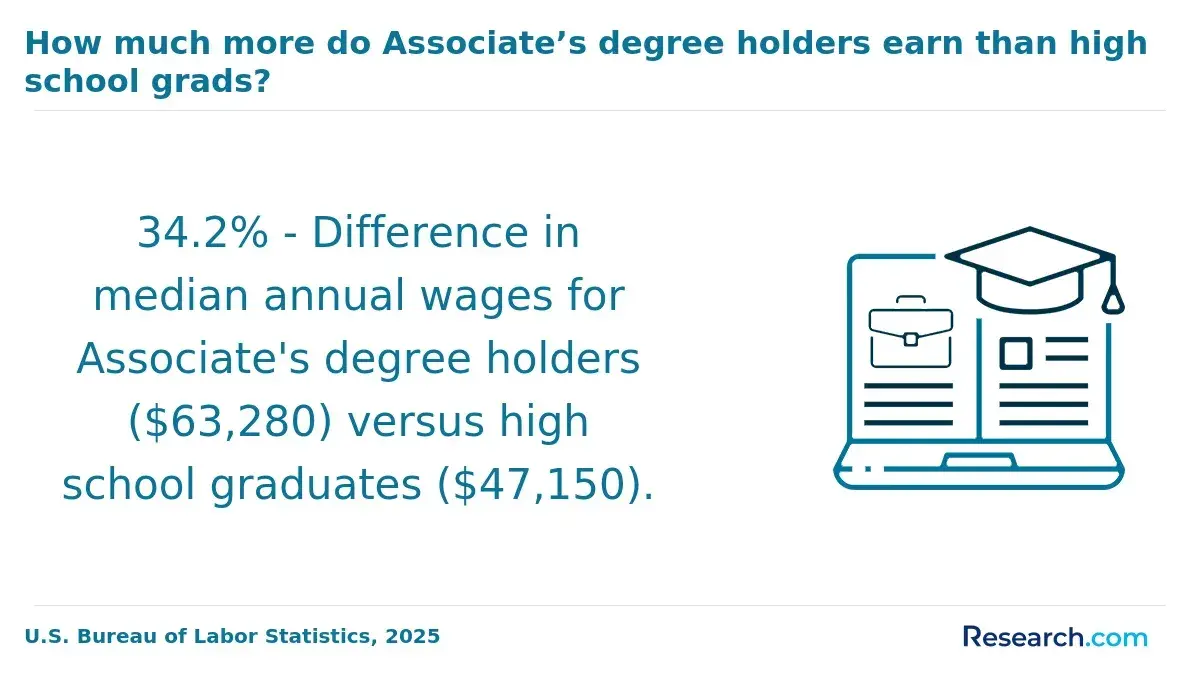
Prospective students should also review foundational education, such as the best online associates in criminal justice, since the choice of preparatory degrees influences both eligibility and advancement potential within homeland security career tracks.
How do online homeland security programs compare to campus-based options for flexibility and outcomes?
Online homeland security degree flexibility offers a decisive advantage for professionals balancing work and family responsibilities, enabling asynchronous study and removing commuting barriers. This flexibility often leads to faster degree completion, a benefit not typically achievable through campus options. However, in-person programs excel in delivering hands-on training and access to specialized simulation labs, vital for roles requiring operational field skills and scenario-based competencies.
Employers prioritize skill proficiency and relevant experience over delivery mode, increasingly recognizing online degrees from accredited programs that align tightly with practical homeland security demands. The U.S. Bureau of Labor Statistics anticipates a stable 3% growth for emergency management directors through 2032, indicating steady workforce needs driven by retirements and transfers. Prospective students must consider these labor market trends when weighing program formats.
For veterans, online programs provide significant advantages by facilitating use of the GI Bill and other veteran-friendly funding options for homeland security programs without geographic limitations. Those eyeing federal or tactical field positions should verify that their chosen programs prepare candidates for required security clearances and hands-on proficiencies, which campus offerings typically emphasize.
Deciding between online and campus paths hinges on evaluating immediate life constraints and long-term career objectives: online study suits strategic, management, and policy-focused roles, while campus attendance supports immersive practical training. For veterans exploring educational options, consulting military friendly online cybersecurity degree programs can offer insights related to funding and program design.
Which accredited schools offer online homeland security degrees with veteran-friendly funding support?
Veterans pursuing an online homeland security degree must weigh funding options that address practical hurdles such as balancing operational duties and educational progression. Accredited schools-including Arizona State University, University of Maryland Global Campus, and Bellevue University-offer tailored veteran funding programs leveraging the Post-9/11 GI Bill, which covers up to $29,920.95 per year in net tuition and mandatory fees at private institutions for 2024-2025. The real value lies in how these institutions integrate military-specific tuition discounts and credit transfer policies to shorten degree timelines and reduce out-of-pocket costs.
For military learners aiming at cybersecurity or emergency management roles within homeland security, the choice of program influences employability outcomes through curriculum relevance and veteran support mechanisms. Universities that optimize combined tuition assistance with GI Bill benefits provide crucial financial stability, allowing students to prioritize career pivots without sacrificing income. This dynamic is critical given hiring preferences for candidates with both military experience and academic credentials reflecting current sector demands.
Funding advantages at these accredited schools offering online homeland security degrees for veterans include:
- Use of tuition assistance alongside GI Bill benefits to maximize funding
- Military scholarships and dedicated academic advising
- Recognition of military training as academic credit to accelerate completion
Prospective students should scrutinize veteran funding frameworks to avoid pitfalls like overlapping benefits that increase out-of-pocket expenses or unnecessary lengthening of degree programs. Evaluating these alongside curriculum applicability supports strategic decision-making for measurable employment returns, especially in federal or private homeland security agencies.
Veterans concurrently exploring related credentials might assess how different programs compare against options such as the best online paralegal programs, which also offer expedited pathways but align with distinct legal and regulatory contexts.
What are the typical admission requirements for online homeland security degrees?
Admission criteria for an online homeland security degree reflect the practical balance between academic preparedness and professional relevance. Bachelor's programs typically require a high school diploma or GED and official transcripts verifying secondary or associate-level education. Graduate admission, especially in veteran-friendly programs, mandates a bachelor's degree with preference for related fields like criminal justice or emergency management, though applicants with diverse backgrounds often qualify by demonstrating substantial professional experience.
Applicants should anticipate requirements beyond academics, including standardized tests like the SAT or ACT-although many programs waive these for adult learners or experienced professionals. Submission of resumes and personal statements is standard, emphasizing motivation and real-world skills aligned with public safety or federal employment roles. Background checks and security clearances can be decisive in programs linked to government contracting or sensitive positions.
Financial considerations notably influence decision-making. For instance, Thomas Edison State University offers annual in-state tuition around $7,044 versus private online alternatives costing more than triple that amount-factors critical for veterans and working adults managing education expenses alongside employment. Candidates exploring funding options, including GI Bill benefits, must furnish military documentation and meet specific eligibility criteria.
For students evaluating related academic investments, comparing options such as a masters in forensic psychology online reveals differing cost-to-value tradeoffs and career pathways relevant to homeland security professionals.
How long do online homeland security programs take and what do they cost?
Completing an online homeland security program involves notable time and financial tradeoffs, with durations varying by credential type. Bachelor's completion pathways designed for transfer students typically accelerate degree attainment to about two years, compared with three to four years for full bachelor's programs. Master's degrees generally require 18 to 24 months when enrolled full-time, but part-time study extends this timeline and may postpone eligibility for leadership roles that prefer timely credential completion.
Tuition costs fluctuate widely; for instance, George Washington University's bachelor's completion program totals nearly $61,000. While median annual salaries near $95,000 suggest a positive return on investment-about 1.5 times tuition annually-this ratio depends heavily on students' funding methods and post-graduation debt obligations. Veterans using GI Bill benefits mitigate upfront expenses, accelerating their financial breakeven point, unlike loan-dependent students who face loan servicing challenges in roles with entry-level pay below mid-career averages.
Working professionals must weigh the reduced income disruption of part-time study against slower credential completion and deferred salary growth. This is particularly significant for career changers moving into homeland security from unrelated fields, where credential timing can influence competitive positioning.
Prospective students should critically assess:
- Program duration's effect on career trajectory and advancement opportunities.
- Comprehensive costs including tuition, fees, materials, and potential income loss during study.
- Veteran-specific financial support options that improve return on investment and reduce risk.
What core courses and specialization tracks are included in online homeland security curricula?
Selecting an online homeland security program requires balancing practical workforce demands with logistical constraints, particularly for veterans and working adults. Programs that incorporate core subjects-such as threat analysis, risk management, emergency response, and cybersecurity fundamentals-are essential, but their true value lies in applied skill development. For example, scenario-based projects simulating cyberattack responses at financial institutions or coordinating multi-agency disaster recovery improve situational readiness beyond theory.
Veterans face a significant tradeoff governed by the Post-9/11 GI Bill: fully online coursework limits housing benefits to 50% of the national average Monthly Housing Allowance, whereas hybrid formats with on-campus components can double this support. This financial reality impacts eligibility for adequate funding, influencing decisions between scheduling flexibility and economic viability.
Common specialization tracks include cybersecurity operations-focusing on network defense and digital forensics-and emergency management with disaster mitigation strategies. Another critical area is critical infrastructure protection, emphasizing resilience in energy, transportation, and communications systems.
Employers consistently prefer candidates demonstrating both technological proficiency and operational coordination under pressure. Graduates who complete programs combining foundational coursework, specialized skills, and simulated real-world experiences are better positioned for strategic roles within federal agencies, cybersecurity firms, or state emergency management offices.
What careers can you pursue with an online homeland security degree, and in which sectors?
A degree in homeland security opens access to roles that demand nuanced understanding of interagency coordination, risk analysis, and policy execution rather than just theoretical knowledge. For example, federal agencies such as FEMA and the FBI prioritize candidates who can navigate complex emergency management systems and communicate effectively across governmental boundaries. Mid-level management and analyst positions expect proficiency in crisis management informed by regulatory and operational realities.
In the private sector, homeland security professionals find opportunities mainly in corporate security and supply chain risk management within sectors like energy and telecommunications. These roles require specialized knowledge of compliance standards such as NERC CIP and tailored threat mitigation strategies aligned with industry-specific vulnerabilities.
Nonprofit and international agencies emphasize expertise in emergency preparedness alongside resource and grant management capabilities. Coordinating multi-jurisdictional exercises across states and agencies under fiscal constraints illustrates the real-world challenges this sector presents.
Compared to traditional programs, online homeland security degrees increasingly reduce financial barriers. For instance, Virginia Commonwealth University's online Master's program halved tuition costs to approximately $31,800 for 36 credits, enhancing access to advanced expertise necessary for competitive positions in the field. This cost reduction supports professionals who must balance ongoing work commitments with upskilling demands.
What salary ranges and promotion opportunities can homeland security graduates expect?
Entry-level salaries for homeland security graduates typically range from $45,000 to $60,000 annually, with government roles at agencies like FEMA generally starting between $45,000 and $58,000 at GS-7 or GS-9 pay grades. State and local employers tend to offer somewhat lower base salaries but provide hands-on operational experience valuable for career growth. Mid-career professionals in this field can expect earnings between $70,000 and $90,000, although reaching higher salary brackets often hinges on additional qualifications and specialized skills.
Advancement beyond frontline positions is strongly tied to both educational attainment and relevant work experience. Supervisory and program management roles usually require a bachelor's degree plus substantial field experience. Many online homeland security graduates accelerate upward mobility by obtaining certifications or pursuing graduate studies, targeting senior roles such as regional security directors or senior analysts earning $100,000 or more.
Real-world hiring practices emphasize expertise in cybersecurity, intelligence analysis, and emergency response coordination, areas commanding stronger demand and compensation. Candidates with these competencies, paired with necessary security clearances, are prioritized for promotion fast-tracking. Without these, professional progression risks stagnation despite academic credentials.
For veterans, tuition assistance programs can significantly reduce educational costs-Columbia Southern University, for example, caps tuition at $250 per credit hour aligning with the Department of Defense's limits, making civilian workforce entry more financially feasible, though this benefit requires navigating eligibility and program fit carefully.
How is the job outlook for homeland security roles in government, defense, and private security?
The labor market for homeland security professionals is growing at nearly twice the national average, driven by expanding government and private sector needs. Federal agencies' escalating focus on cybersecurity, immigration enforcement, and counterterrorism increases demand for personnel with security clearances and specialized skills. However, obtaining these federal roles requires navigating lengthy vetting processes and presenting credentials beyond a baseline online bachelor's degree in homeland security.
Private security firms are evolving beyond traditional guard roles, emphasizing expertise in risk assessment, emergency management, and cyber-threat mitigation. Veterans often enter this field with a crucial advantage: employer valuing of military experience, particularly operational leadership and situational awareness.
Key tradeoffs arise between educational credentials and experience. Practical certifications in cybersecurity or emergency response can differentiate candidates in a competitive environment, where on-paper qualifications alone are insufficient. For working professionals, financial considerations matter: institutions like Trident University provide tuition reductions for active-duty and related federal employees, from $49,800 down to about $30,000, easing the economic burden of upskilling.
Career pathway decisions hinge on understanding these real-world dynamics-balancing credential acquisition, experience accumulation, and hiring realities to position oneself effectively within homeland security roles that demand both education and practical military credibility.
How can veterans and adult learners evaluate and choose a reputable online homeland security program?
Evaluating online homeland security programs requires a focused assessment of accreditation, cost, and alignment with measurable career outcomes. Accreditation from recognized agencies like the Department of Education safeguards curriculum relevancy but does not guarantee affordability or market fit. For instance, American University's $2,080 per credit tuition for a 36-credit master's totals $74,880-more than double the cost of many public universities-creating a significant financial burden that veterans leveraging GI Bill benefits or adult learners must scrutinize carefully.
Programs offering veteran-centric services-such as credit for military experience, streamlined tuition assistance, and flexible scheduling-facilitate smoother transitions. Employer demand favors graduates who combine academic credentials with industry certifications like CISSP, especially in technical domains within homeland security. A veteran pivoting toward cybersecurity benefits more from this dual focus than from purely theoretical degrees.
Attention to practical curriculum elements-counterterrorism, emergency management, cybersecurity-and applied learning opportunities, including internships or simulations linked to DHS or federal agencies, strengthens employment prospects. Prospective students should request transparency around graduation rates, job placement, and alumni outcomes, as these metrics reveal real-world program effectiveness.
Networking access within federal, state, and private homeland security sectors is a decisive differentiator, directly affecting job placement. Adult learners and veterans must weigh the tradeoffs between cost, program flexibility, credentialing, and tangible career support to align education with evolving workforce demands.
Other Things You Should Know About Homeland Security
Employers in government and defense prioritize degrees from accredited institutions, but they also assess candidates based on relevant certifications, security clearances, and experience. An online degree from a reputable, regionally accredited school paired with internships or military experience can meet these standards. However, some agencies may prefer candidates with on-campus degree credentials due to networking and hands-on training opportunities missing in purely online programs.
Online homeland security programs often demand strong self-motivation due to asynchronous coursework and compressed timelines for some classes. Veterans with military backgrounds may adapt well to structured study habits but should be aware that online formats lack direct instructor access and peer interaction, potentially increasing independent study time. Prioritize programs offering veteran support services and flexible pacing to balance workload with external commitments.
Employers in private security favor graduates who demonstrate applied skills in risk assessment, incident response, and cybersecurity fundamentals. Online programs that integrate real-world simulations, case studies, and current technology use produce candidates better prepared for operational roles. When choosing a program, prioritize those emphasizing practical exercises over purely theoretical coursework to increase employment competitiveness.
References
- Types of Homeland Security Degrees | Compare Schools https://www.criminaljusticeprograms.com/specialty/homeland-security-degrees/
- Online Homeland Security Degrees: Explore Top Programs https://www.degreesforgood.org/online-degrees/homeland-security-programs/
- Military-friendly Online Master’s Programs for Service Members https://www.onlinemastersdegrees.org/features/military-friendly-programs/
- What Is a Homeland Security Degree? https://www.trident.edu/articles/what-is-a-homeland-security-degree/
- Online Bachelor's Degree: Homeland Security https://www.umgc.edu/online-degrees/bachelors/homeland-security
- Homeland Security Degree | Programs & Career Options https://www.learnhowtobecome.org/best-online-bachelors-in-homeland-security-degree-programs/
- 2025 Most Affordable Homeland Security Degrees Online https://www.onlineu.com/most-affordable-colleges/homeland-security-degrees
- Choosing a bachelor's in homeland security | edX https://www.edx.org/resources/how-to-choose-a-bachelors-in-homeland-security
- Homeland Security Requirements (Degrees, Jobs & Salary) https://www.allcriminaljusticeschools.com/federal-law-enforcement/homeland-security/
- What Can You Do With a Homeland Security Studies Degree? https://sopa.tulane.edu/blog/what-can-you-do-homeland-security-studies-degree