2027 How to Become a School Counselor in Mississippi

Co-Founder and Chief Data Scientist
Becoming a school counselor in Mississippi means preparing for a role that blends academic advising, student mental health support, crisis response, family communication, and career planning. The need is significant: Mississippi faces a shortage of qualified school counselors, and only 38% of public schools meet the recommended counselor-to-student ratio. For students, that can mean less access to timely guidance. For aspiring counselors, it creates a clear reason to understand the licensure path before investing in graduate school.
This guide explains how to become a licensed school counselor in Mississippi, including the degree you need, internship expectations, certification exams, renewal rules, alternative routes, salary considerations, job outlook, and advancement options. It is written for college students, career changers, teachers considering a counseling role, and graduate applicants comparing school counseling programs.
Quick answer: How do you become a school counselor in Mississippi?
To work as a school counselor in Mississippi, you generally need a master’s degree in school counseling or an approved related counseling program, a supervised school-based internship of 600 hours, a passing score on the Praxis School Guidance and Counseling exam, and a Five-Year Educator License issued by the Mississippi Department of Education. Candidates should confirm that their program is approved for Mississippi school counselor licensure before enrolling.
Key things to know before you start
- A graduate degree is required. Mississippi expects aspiring school counselors to complete a master’s-level school counseling program that satisfies state licensure standards.
- Field experience is not optional. Candidates must complete 600 hours of supervised internship experience in a K-12 setting before they can move toward certification.
- The Praxis exam matters. Mississippi uses the Praxis School Guidance and Counseling exam to evaluate whether applicants are prepared for professional school counseling practice.
- Licensure is state-specific. A Mississippi credential does not automatically transfer to every other state, so mobility should be considered before choosing a program.
- School counseling and private counseling are different paths. School counselor licensure allows practice in school settings; private practice typically requires additional clinical licensure.
- What degree do I need to become a school counselor in Mississippi?
- Are school counseling specializations available in Mississippi?
- How long does a Mississippi school counseling degree take?
- What certification do Mississippi school counselors need?
- Can a Mississippi school counseling license transfer to another state?
- How often do Mississippi school counselors renew their credentials?
- What challenges do Mississippi school counselors face?
- What legal and ethical duties apply to Mississippi school counselors?
- How can school counselors qualify for private practice in Mississippi?
- What alternative pathways are available?
- What is the average school counselor salary in Mississippi?
- What is the job outlook for school counselors in Mississippi?
- What advancement options exist for Mississippi school counselors?Additional decision factorsWhat counselors say about the workPrivate practice considerationsBest undergraduate majorsDegree cost questionsPracticum supervisor expectationsReferences
What degree do I need to become a school counselor in Mississippi?
Mississippi’s school counselor pathway is graduate-level. The safest route is to choose a master’s program that is built specifically for school counseling and that prepares students for state licensure, supervised fieldwork, and the required Praxis exam. Before enrolling, ask the university whether the program leads to Mississippi school counselor certification and whether it includes the required school-based internship.
- Master’s degree in school counseling: This is the most direct academic route. A regionally accredited school counseling program typically combines counseling theory, child and adolescent development, ethics, assessment, career development, and supervised school-based practice.
- Master’s degree in counseling psychology with a school counseling track: This may be acceptable when the program includes a school counseling specialization and meets Mississippi’s curriculum and internship expectations.
- Master’s degree in another field plus an approved school counseling program: Applicants who already hold a graduate degree may still need to complete a Mississippi Department of Education-recognized school counseling preparation program.
- Educational Specialist degree in counselor education: An Ed.S. can support advanced licensure and leadership preparation. It generally builds on a master’s degree and at least one year of school counseling experience.
Mississippi candidates must also pass the Professional School Counselor Exam, ETS Praxis Test Code 5421, with a score of 156 or higher. If you are comparing counseling careers before committing to graduate school, Research.com’s guide to counseling career paths and in-demand roles can help you evaluate whether school counseling is the best fit.
| Degree route | Best for | What to verify before enrolling |
| Master’s in school counseling | Students who want the most direct route to K-12 school counselor licensure | Program approval for Mississippi certification, internship placement support, and Praxis preparation |
| Counseling psychology master’s with school counseling track | Students interested in broader counseling theory with a school-based focus | Whether the track satisfies Mississippi school counseling coursework and field experience requirements |
| Master’s in another field plus approved school counseling preparation | Career changers who already have a graduate degree | Which courses, practicum hours, and exams are still required |
| Ed.S. in counselor education | Licensed or experienced counselors seeking advanced credentials or leadership roles | Admission requirements, experience expectations, and license classification benefits |
Are there school counseling specializations in Mississippi?
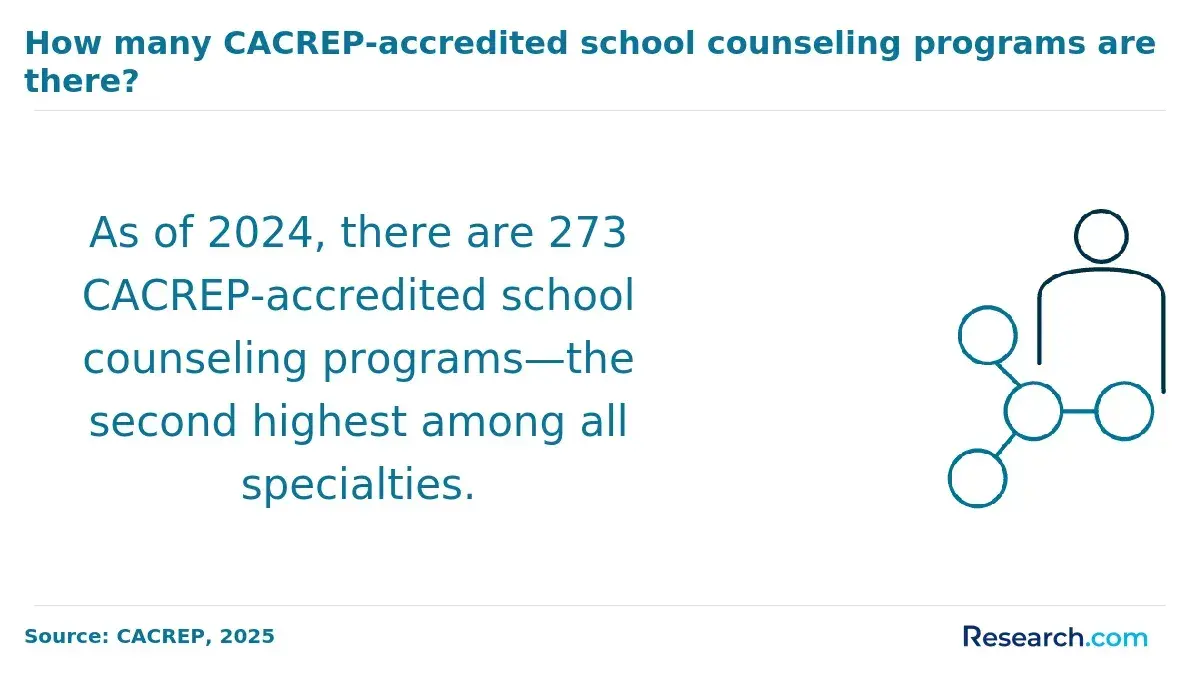
School counseling programs in Mississippi may include focused coursework that helps future counselors serve students across grade levels, communities, and developmental needs. CACREP-accredited counseling programs often emphasize competencies that align with school counseling practice, but applicants should still confirm state approval separately because accreditation and licensure eligibility are not always the same thing.
- School counseling: Prepares students to support academic planning, social-emotional development, family collaboration, and college or career readiness in elementary, middle, and high school settings.
- Developmental counseling and mental health: Emphasizes child and adolescent development, emotional concerns, intervention planning, and appropriate referral practices in schools.
- Career development counseling: Focuses on helping students connect course choices, graduation planning, postsecondary options, and workforce goals.
- Cultural foundations in counseling: Builds skills for working with students from different cultural, racial, geographic, and socioeconomic backgrounds.
- Assessment and testing in educational settings: Trains counselors to understand assessment results, use data responsibly, and support student intervention planning.
Do not choose a specialization only because it sounds interesting. Choose one because it matches the age group, school setting, and student needs you want to serve. Some counseling programs also discuss broader professional exams, such as the National Counselor Exam, but Mississippi school counselor certification described in this guide centers on the Praxis school counselor requirement. If you are comparing school counseling with clinical mental health work, see Research.com’s overview of how long it takes to become a mental health counselor.
| Specialization area | Useful when you want to focus on | Decision tip |
| School counseling | Comprehensive K-12 counseling services | Best default option for Mississippi school counselor licensure |
| Developmental counseling and mental health | Student well-being, emotional needs, and referrals | Helpful if you want to work closely with students facing social-emotional barriers |
| Career development counseling | College readiness, workforce planning, and transitions | Strong fit for middle school, high school, and career pathway programs |
| Cultural foundations in counseling | Equity, access, and culturally responsive student support | Important for counselors serving diverse or under-resourced communities |
| Assessment and testing | Using educational data to guide student supports | Useful for counselors involved in academic intervention teams |
How long does it take to complete a school counseling degree in Mississippi?
A Mississippi school counseling master’s program commonly requires about 60 credit hours and is often designed for two years of full-time study. Programs at institutions such as the University of Mississippi and Delta State University offer Master of Education degrees in Counselor Education or Counseling with school counseling preparation that can be completed in two years when students enroll full time.
Part-time students should plan for a longer timeline. Depending on course availability, work schedules, and field placement timing, completion can stretch to three years or more. Some institutions, including Alcorn State University, may allow part-time students up to six years to finish, although extensions can require a formal appeal.
- Credit load: Programs with approximately 60 graduate credit hours require steady enrollment to finish quickly.
- Practicum and internship scheduling: The 600-hour internship must be completed in a K-12 school setting, which can be difficult to compress if you work full time.
- Exam and licensure timing: After graduation, candidates still need to pass the Praxis exam and submit licensure materials to the Mississippi Department of Education.
- Program format: Evening, hybrid, and online coursework can help working adults, but fieldwork still requires school-site availability.
For many candidates, the academic portion takes two years full time. The full path from enrollment to an active credential can take longer once internship, Praxis scheduling, background checks, and state processing are included. For part-time students, the overall timeline may fall between three and six years.
| Path | Typical timeline | What can slow it down |
| Full-time master’s student | Two years for the academic program | Internship placement timing, Praxis scheduling, and licensure processing |
| Part-time graduate student | Three years or more | Limited course rotation, employment schedule, and school-day fieldwork requirements |
| Career changer with a prior master’s degree | Varies by transcript review | Additional coursework, practicum requirements, and program approval rules |
| Advanced Ed.S. student | Depends on program structure and prior experience | Admission requirements, license level, and professional experience documentation |
What certification is required to work as a school counselor in Mississippi?
Mississippi school counselors need a state-issued Five-Year Educator License for school counseling. This credential is separate from general teaching licenses and from clinical counseling licenses. The Mississippi Department of Education reviews whether applicants have the required graduate preparation, field experience, exam results, and background clearance.
- Praxis II exam: Applicants must pass the Praxis II: Professional School Counselor exam, test code 5421, with a minimum score of 156.
- Approved supervised internship: Candidates must document completion of a supervised school counseling internship through their preparation program.
- Licensure application: Applicants submit degree records, test scores, internship verification, and other required materials to the Mississippi Department of Education.
- Background check and fingerprinting: Because school counselors work with minors, criminal background screening and fingerprinting are part of the licensure process.
- Five-Year Educator License issuance: After the Mississippi Department of Education approves the file, the candidate can work as a licensed school counselor in Mississippi public schools.
Advanced license classifications, including Class AAA and AAAA licenses, may be available to counselors with additional graduate education. These credentials can support advancement and may affect district compensation structures.
| Requirement | Why it matters | Common mistake to avoid |
| Approved graduate program | Shows that your education matches Mississippi school counselor standards | Assuming any counseling master’s degree qualifies automatically |
| 600-hour internship | Demonstrates supervised experience in K-12 school counseling | Waiting until the last semester to plan field placement logistics |
| Praxis test code 5421 | Confirms readiness for professional school counselor responsibilities | Taking the wrong counseling exam or missing the required score of 156 |
| Background check | Protects students and satisfies school employment requirements | Delaying fingerprinting until after a job offer |
| MDE application | Creates the official state credential needed for employment | Submitting incomplete documentation or unofficial records when official records are required |
Can I transfer my Mississippi school counseling license between states?
A Mississippi school counseling license cannot simply be carried into another state as an automatic credential. Mississippi does not participate in formal reciprocity agreements for school counseling licenses, so counselors who relocate must apply under the new state’s rules. The receiving state may use terms such as endorsement, credentials review, provisional licensure, or out-of-state applicant review.
Expect to provide official transcripts, proof of your Mississippi license, exam scores, supervised experience documentation, and employment records when requested. Another state may compare your coursework and internship hours with its own standards. If gaps exist, you may need additional coursework, field experience, a state-specific exam, a jurisprudence exam, or a new fingerprint-based background check.
The practical lesson is simple: start the transfer process before you move. Licensing reviews can create delays, extra costs, and uncertainty, especially when states define school counseling preparation differently. A Mississippi counselor who relocated described the process as “a challenging but eye-opening experience,” explaining that the extra steps were frustrating but helped her understand student needs in a new educational system.
How often do Mississippi school counselors need to renew their credentials?
Mississippi school counseling credentials must be renewed every five years. Renewal keeps the educator license active and helps confirm that counselors remain engaged in professional learning. Requirements can change, so counselors should verify current instructions through the Mississippi Department of Education before the license expiration date.
- Continuing Education Units: Counselors complete approved professional learning related to school counseling, student services, or education practice.
- Accepted providers: Professional learning should come from approved sources, such as regionally or nationally accredited colleges, universities, or recognized organizations including the NBCC.
- Documentation: Counselors may need official completion records, sealed transcripts, or other accepted evidence uploaded electronically.
- Online renewal: Renewal applications are submitted through the Mississippi Educator Licensure Management System, with required documents generally uploaded as PDF files.
- Fee verification: Renewal fees should be checked directly with the Mississippi Department of Education because fees can change.
- Employment verification: Current or recent school employment may be requested, particularly when reinstating a credential after a lapse.
- Background screening: A new criminal background check may be required if licensure has lapsed or if the state requests it.
- Deadline management: Counselors should submit renewal materials before expiration to avoid interruptions in eligibility for school employment.
What are the common challenges faced by school counselors in Mississippi?
School counselors in Mississippi often manage heavy caseloads, limited local resources, and competing duties that can reduce time for direct student counseling. In some settings, counselors may be asked to handle testing coordination, scheduling, administrative tasks, crisis response, parent communication, and student support with limited staff assistance.
Rural districts may face different barriers than urban districts. Rural counselors may have fewer referral partners nearby, while urban counselors may encounter higher student volume and complex social service needs. Strong preparation matters because the role can require fast decisions, careful documentation, and collaboration with teachers, administrators, families, and community agencies. If speed is a major concern, compare program requirements carefully and review Research.com’s guide to the fastest way to become a counselor in Mississippi.
| Challenge | Why it affects the job | Practical preparation strategy |
| High caseloads | Less time may be available for individual student support | Learn group counseling, data tracking, and triage skills during internship |
| Limited referral resources | Students may need services beyond what the school can provide | Build a local referral list and understand mandatory reporting procedures |
| Administrative duties | Non-counseling tasks can crowd out counseling time | Ask employers how counselor time is protected before accepting a position |
| Professional isolation | New counselors may have limited mentorship in smaller districts | Join professional networks and seek supervision or peer consultation |
| Complex student needs | Academic, mental health, family, and career issues often overlap | Choose field placements that expose you to realistic school counseling responsibilities |
What legal and ethical responsibilities do school counselors have in Mississippi?
Mississippi school counselors must protect student welfare while following state law, federal privacy rules, district policy, and professional ethics. Core responsibilities include confidentiality, appropriate record handling, mandated reporting, informed communication with parents or guardians, and careful referral when students need services beyond the counselor’s school-based role.
Ethical practice also requires clear professional boundaries. Counselors should avoid conflicts of interest, document significant decisions, consult when cases are complex, and understand how confidentiality changes when there is risk of harm, abuse, neglect, or legal disclosure obligations. Because school counselors often work on multidisciplinary teams, they must know what information can be shared, with whom, and for what purpose. For a related student support career with different training expectations, see Research.com’s guide on how to become a school psychologist in Mississippi.
How can school counselors obtain additional licensure for private practice in Mississippi?
A school counseling license does not automatically authorize independent private counseling practice. Mississippi school counselors who want to provide clinical counseling outside the school system typically need to pursue Licensed Professional Counselor credentials. That route involves additional clinical preparation, supervised post-master’s experience, and a separate licensing exam.
This distinction matters for career planning. School counselors focus on student development, academic success, school-based interventions, crisis response, and educational systems. Licensed Professional Counselors can provide broader clinical mental health services when they meet the state’s separate requirements. If private practice is part of your long-term goal, review the LPC licensure requirements in Mississippi before selecting graduate electives or post-master’s training.
What are the alternative pathways to become a school counselor in Mississippi?
Mississippi offers options for people who did not begin in a traditional school counseling program. These pathways are most relevant for teachers, career changers, and graduate degree holders who want to move into K-12 counseling without repeating unnecessary coursework. However, “alternative” does not mean “requirements-free.” Candidates still need approved graduate preparation, supervised school experience, the Praxis exam, and an official licensure application.
- Educational Specialist degree: A 49–55 credit-hour Ed.S. route may help non-counseling master’s graduates complete school counseling foundations and supervised fieldwork.
- Post-baccalaureate certificate programs: These can serve candidates with degrees in other fields who need targeted graduate coursework and practicum experience for licensure recommendation.
- Provisional or conditional licensure: Some candidates enrolled in approved programs may be able to work under supervision while completing remaining requirements.
- Relevant professional background: Prior counseling-related work and graduate coursework may reduce some program requirements, but the supervised internship requirement remains important.
- Alternative certification programs: Certain universities may combine coursework, internship placement, and Praxis preparation for applicants who already hold advanced degrees.
When comparing non-traditional school counselor programs in Mississippi, ask for a written transcript review. You need to know which credits transfer, which field hours are required, whether the program recommends graduates for licensure, and how much the remaining coursework will cost. Research.com’s guide to different counseling degree types and costs can help you compare options before applying.
The chart below shows the sectors where school counselors are employed. Because many work in education settings, Mississippi uses specific certification checkpoints to protect students and ensure consistent preparation.
What is the average salary of school counselors in Mississippi?
The median salary for school counselors in Mississippi is approximately $62,568, which is below the national median for this occupation. Actual earnings depend on district salary schedules, education level, experience, location, school type, and added duties.
- Education and license level: Advanced degrees and higher license classifications can influence salary placement in some districts.
- Experience: New counselors typically start lower on salary schedules, while experienced counselors may move upward over time.
- Location: Urban and suburban districts may pay differently than rural districts because of funding, staffing needs, and local cost factors.
- School type: Public schools often use formal salary scales and benefits structures; private and charter schools may vary more.
- Extra responsibilities: Counselors who coordinate programs, lead initiatives, or take on additional duties may receive stipends or salary adjustments depending on district policy.
One Mississippi school counselor who graduated from a local university described the financial side of the work as gradual rather than immediate. He said the starting salary felt modest, but raises tied to experience and added credentials improved his earnings over time. He also noted that leading a peer mentoring program brought some financial recognition and made the role feel more sustainable.
| Salary factor | How it can affect pay | Question to ask employers |
| Advanced degree | May qualify the counselor for a higher salary lane or license classification | How does the district compensate Class AAA or AAAA credentials? |
| Years of experience | Can increase salary through scheduled steps | How many years of prior experience will be credited? |
| District location | Pay can vary across rural, suburban, and urban districts | What is the full salary schedule for school counselors? |
| Additional duties | Leadership or program coordination may add stipends in some districts | Are extra duties paid, expected, or voluntary? |
| Benefits | Total compensation may include retirement, insurance, and paid leave | What is the total compensation package beyond base salary? |
What is the job outlook for school counselors in Mississippi?
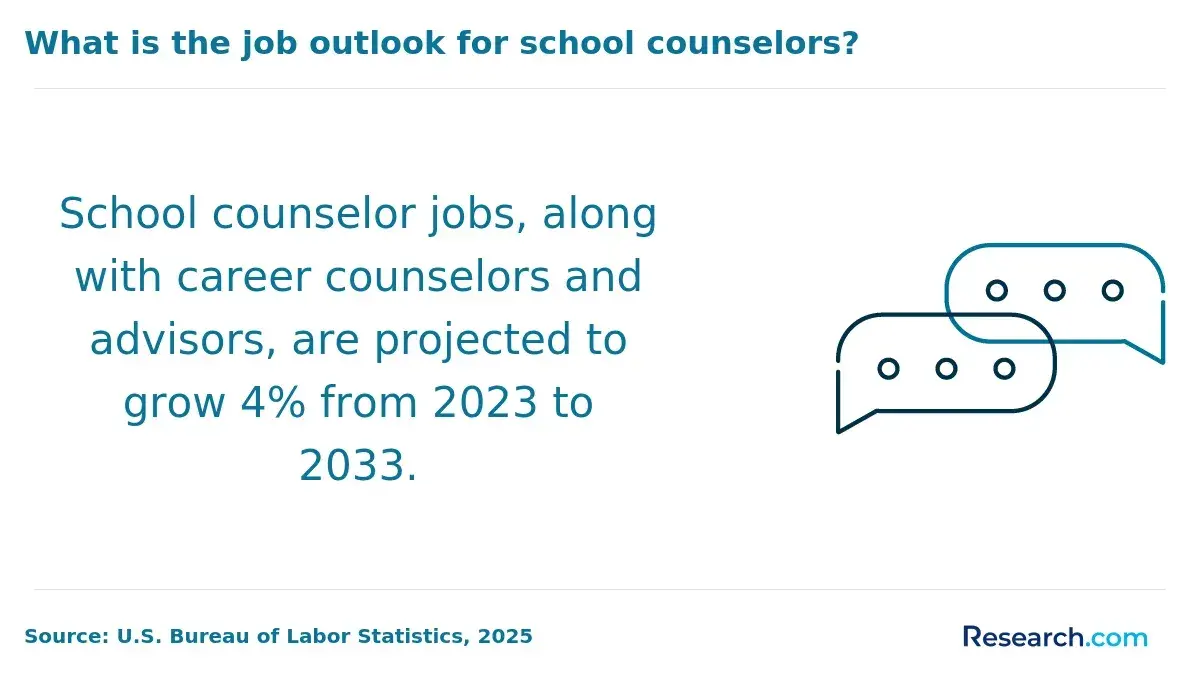
Demand for school counselors in Mississippi is supported by student needs, counselor shortages, and the continuing importance of academic, emotional, and career guidance in K-12 schools. Nationally, the Bureau of Labor Statistics projects 4% employment growth for school and career counselors and advisors from 2023 to 2033, which is in line with average occupational growth.
- Student support needs: Schools continue to need counselors who can support academic planning, mental health concerns, crisis response, and postsecondary readiness.
- Mental health awareness: Greater attention to student well-being has increased the visibility of counseling services in schools.
- Education policy priorities: Student achievement, attendance, graduation, and college or career readiness all depend in part on effective counseling systems.
- Salary range: Reported salaries range broadly from $45,500 to $65,800, with room for advancement depending on credentials, district, and experience.
- National comparison: Mississippi ranks last among states for school counselor salaries, which can make recruitment difficult but may also keep the need for qualified professionals visible.
- Employment projections: Recent Mississippi projections from 2023–2025 do not show specific job growth for school counselors, although the broader education sector is expected to have moderate increases and thousands of annual openings in related fields.
Students who are interested in counseling-related work but want a different entry point may also compare adjacent programs, such as Research.com’s list of affordable online bachelor’s degrees in substance abuse counseling.
What are the career advancement opportunities for school counselors in Mississippi?
Career growth for Mississippi school counselors usually comes from a combination of experience, advanced education, leadership responsibilities, and additional licensure. Advancement may mean earning a higher educator license classification, supervising other counselors, moving into district leadership, or pursuing clinical credentials for work outside schools.
- Lead school counselor or counseling program director: Experienced counselors with advanced preparation may coordinate counseling services, mentor colleagues, and improve program delivery.
- District-level counseling leadership: These roles involve supporting counseling services across multiple schools and often require strong program evaluation and data-use skills.
- Licensed Professional Counselor: Counselors who complete additional clinical requirements can expand into mental health services beyond the school setting.
- Clinical supervisor: Advanced counselors may help train interns, new counselors, or clinicians, depending on licensure and experience.
- College or university counseling faculty: Teaching and research roles generally require terminal degrees and evidence of scholarship or advanced professional expertise.
- Specialist licensure such as AAA School Counselor: This advanced tier requires an Ed.S. degree, an AA license, and significant counseling experience.
- Professional development leadership: Experienced counselors may provide training, technical assistance, or statewide support for counseling program improvement.
If you already hold a master’s degree and want to advance without overspending, compare tuition, accreditation, licensure fit, and fieldwork requirements carefully. Research.com’s list of affordable online school counseling degrees can be a useful starting point for cost-conscious program research.
| Advancement goal | Typical preparation | Best fit for counselors who want to |
| Lead counselor | Experience, advanced coursework, and strong program management skills | Improve counseling systems within one school |
| District counseling coordinator | Advanced degree, leadership experience, and data-driven planning ability | Support counselors across multiple schools |
| LPC pathway | Additional clinical training, supervised hours, and licensing exam | Provide counseling services beyond school employment |
| Faculty or researcher | Terminal degree and scholarly preparation | Teach future counselors or study counseling practice |
| Professional development trainer | Demonstrated expertise and strong communication skills | Train educators and counselors statewide or regionally |
Is becoming a school counselor in Mississippi worth it?
Becoming a school counselor in Mississippi can be worth it if you want a student-centered career, are comfortable working within public education systems, and understand that compensation may be lower than in some other counseling or administrative paths. The role offers meaningful impact, school-year employment structures in many settings, and opportunities for advancement, but it also comes with caseload pressure and administrative demands.
| This path may be a strong fit if you | Consider another path if you |
| Want to work directly with K-12 students in academic, social-emotional, and career development | Want independent clinical private practice immediately after graduation |
| Are willing to complete a master’s degree, 600 internship hours, and state licensure steps | Need the shortest possible route into a counseling-related job |
| Value long-term community impact over rapid income growth | Are primarily motivated by high salary potential |
| Can handle crisis situations, documentation, collaboration, and school schedules | Prefer one-on-one therapy without school system responsibilities |
| Are interested in leadership, district roles, or advanced educator licensure later | Do not want ongoing license renewal or professional development requirements |
Common mistakes to avoid when choosing a Mississippi school counseling program
- Assuming accreditation equals licensure approval: Accreditation is important, but you still need to confirm that the program prepares graduates for Mississippi school counselor certification.
- Ignoring internship logistics: The 600-hour school-based internship can be difficult if you work full time or live far from placement sites.
- Looking only at tuition: Fees, books, commuting, exam costs, background checks, and lost work hours can affect the real cost.
- Choosing a program without Praxis support: Since Mississippi requires Praxis test code 5421 and a score of 156, exam preparation should be part of your planning.
- Assuming licenses transfer easily: If you may move, compare out-of-state licensure rules before enrolling.
- Confusing school counseling with LPC practice: School counselor licensure and private clinical practice licensure are separate professional pathways.
- Relying only on rankings: A highly ranked program is not useful if it does not match your schedule, budget, field placement needs, and licensure goal.
Questions to ask before applying to a Mississippi school counseling program
- Is this program approved for Mississippi school counselor licensure?
- Does the program include the required 600-hour internship in a K-12 school setting?
- Who arranges practicum and internship placements: the student or the university?
- What is the program’s process for preparing students for Praxis test code 5421?
- Can working adults complete the program part time, and how long does that usually take?
- Are online students eligible for the same licensure recommendation as campus students?
- What graduate credits can transfer if I already have a master’s degree?
- What support is available for students seeking rural, urban, or high-need school placements?
- What are the total costs beyond tuition?
- How does the program help graduates apply for the Five-Year Educator License?
Can Mississippi school counselors work in private practice?
Mississippi school counselors can work in schools under the appropriate educator license, but private practice is a separate legal and professional category. To counsel clients independently outside a school setting, a counselor generally needs additional clinical licensure, such as the Licensed Professional Counselor credential, after meeting Mississippi’s separate education, supervised experience, and examination requirements.
If your long-term plan includes both school employment and private practice, map both credential paths early. The courses that satisfy school counseling may not automatically satisfy every clinical licensure requirement.
Which majors are best for aspiring school counselors in Mississippi?
Mississippi school counselor licensure is based on graduate preparation, so your undergraduate major does not have to be school counseling. However, certain majors can help you build a stronger foundation before applying to a master’s program.
- Psychology: Useful for understanding development, behavior, research, and mental health concepts.
- Education: Helpful for learning how schools operate and how teachers support student learning.
- Human development or family studies: Strong preparation for working with children, adolescents, and families.
- Social work: Relevant for students interested in community resources, advocacy, and social service systems.
- Sociology: Helpful for understanding inequality, culture, community context, and institutional systems.
The best major is one that helps you earn strong grades, gain experience with youth or schools, and prepare for graduate-level counseling coursework.
How much does a school counseling degree in Mississippi cost?
The cost of a Mississippi school counseling degree depends on the institution, residency status, program format, fees, books, commuting, technology requirements, and field placement expenses. Because tuition alone does not show the full price, applicants should request a complete cost estimate from each school.
| Cost category | What to check | Why it matters |
| Tuition | In-state, out-of-state, online, and graduate tuition rates | This is usually the largest direct program expense |
| University fees | Technology, student services, clinical, and program fees | Fees can make two programs with similar tuition differ significantly |
| Books and materials | Required textbooks, testing tools, and software | Counseling courses may require specialized materials |
| Field placement costs | Travel, background checks, fingerprinting, and schedule changes | Internship requirements may affect work hours and transportation |
| Exam and licensure costs | Praxis registration, score reporting, and state application fees | These expenses arrive near graduation and should be budgeted early |
What do supervisors look for in a school counseling practicum student in Mississippi?
Supervisors want practicum and internship students who are dependable, ethical, prepared, and ready to learn from feedback. Technical knowledge matters, but professional behavior often determines whether a placement succeeds.
- Confidentiality: Students must understand privacy rules and ask before sharing sensitive information.
- Professional communication: Clear emails, respectful conversations, and timely follow-up build trust with staff and families.
- Documentation habits: Accurate notes, logs, and supervision records are essential for both learning and licensure verification.
- Openness to feedback: Interns should be willing to revise their approach after supervision.
- Cultural responsiveness: Effective interns show respect for students’ backgrounds, family structures, and community contexts.
- Reliability: Schools depend on interns to arrive on time, follow procedures, and communicate schedule conflicts early.
What do school counselors in Mississippi say about their careers?
- Earning my school counseling certification through the University of Mississippi changed how I understood student support. Working in a local school helped me build real relationships with students facing challenges common in rural Mississippi communities. The stability of the role and the encouragement from my district helped me grow, and seeing students make academic and emotional progress keeps the work meaningful. Carla
- My school counseling preparation at Jackson State University gave me practical tools for supporting students in Mississippi’s urban schools. I value that the profession requires continued learning, because workshops and added training have made me more effective. Being seen as a mentor and advocate in a community dealing with economic and social pressure is both a responsibility and a privilege. Beverly
- The counseling program at Mississippi State University helped me serve students in communities with deep cultural and historical roots. When I began working in a local school, limited resources were a real challenge, but they also pushed me to be creative in supporting student mental health and career readiness. This career has allowed me to keep developing professionally while contributing to young people’s resilience. Dennis
Key Insights
- Mississippi school counselors generally need a master’s-level school counseling education, 600 hours of supervised internship experience, a passing Praxis score, and a Five-Year Educator License.
- The most direct degree route is a master’s in school counseling, but career changers may qualify through approved post-master’s, certificate, Ed.S., or alternative certification pathways.
- Program approval matters as much as program name. Before enrolling, confirm that the school prepares graduates specifically for Mississippi school counselor licensure.
- The full-time academic path commonly takes two years, but part-time study, internship scheduling, testing, and licensure processing can extend the timeline.
- Mississippi credentials renew every five years, so continuing education and deadline tracking are part of the profession.
- Private practice is not covered by a school counseling license alone. Counselors who want independent clinical work should plan for LPC requirements.
- The median salary for Mississippi school counselors is approximately $62,568, with reported salaries ranging from $45,500 to $65,800 depending on credentials, district, location, and experience.
- The career can be highly meaningful, but candidates should enter with realistic expectations about caseloads, administrative duties, salary limits, and the importance of ethical decision-making.
Related Articles for Nearby States
- 2027 How to Become a School Counselor in Louisiana
- 2027 How to Become a School Counselor in Alabama
- 2027 How to Become a School Counselor in Arkansas
- 2027 How to Become a School Counselor in Tennessee
- 2027 How to Become a School Counselor in Florida
- 2027 How to Become a School Counselor in Missouri
- 2027 How to Become a School Counselor in Georgia
- 2027 How to Become a School Counselor in Kentucky
- 2027 How to Become a School Counselor in Texas
- 2027 How to Become a School Counselor in Indiana
References:
- All Psychology Schools. (n.d.). How Much Do School Counselors Make? allpsychologyschools.com.
- American School Counselor Association. (n.d.). The School Counselor and Career Development. ASCA.
- Career Explorer. (2025). The job market for school counselors in the United States. careerexplorer.com.
- Muic, K. (n.d.). How You can Advance Your Career with a Master’s Degree in School Counseling. Graduate Programs for Educators.
- Providence College. (2024, December 10). Six Rewards of a Career in School Counseling. Providence College.
- School Counselor Certification. (2025, January 14). Certification Renewal Process for School Counselors. schoolcounselorcertification.com.
- Simply.Coach. (2024, October 27). School Counselor Certification Requirements by State 2024. Simply.Coach.
- Teach.com. (n.d.). School Counselor Salary and Career Outlook. teach.com.
- United States Bureau of Labor Statistics. (2025, April 18). Occupational Outlook Handbook | School and Career Counselors and Advisors. BLS.
- Zippia. (2025). School counselor demographics and statistics in the US. Zippia.
Other Things You Should Know About Becoming a School Counselor in Mississippi
The Mississippi Department of Education issues the Class AA School Counselor License. Applicants must first hold a valid educator license, complete a master’s degree in school counseling, and submit the required licensure application through the state’s educator licensing system.
To become a school counselor in Mississippi, you must earn a master's degree in school counseling from an accredited institution. Additionally, the program should include at least 48 semester hours of graduate coursework and an internship that provides practical experience in a school setting.